Nissan Opens Pre-Sales for NX7 PHEV in China with 320 km EV Range and 1,666 km Combined

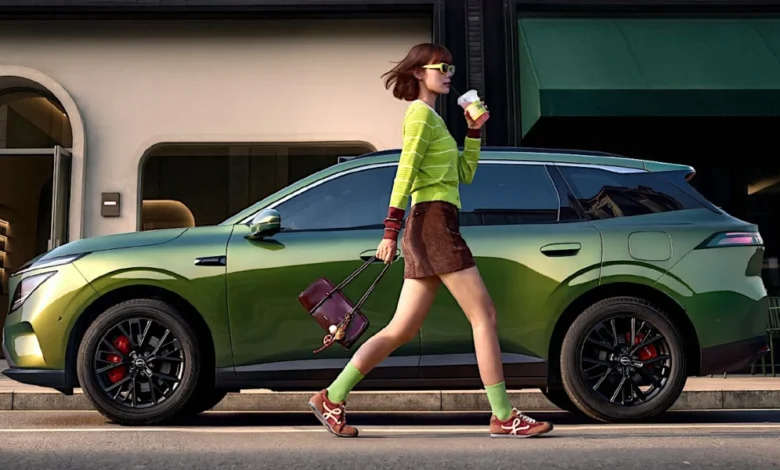
Dongfeng Nissan has officially opened the pre-sale order books for its highly anticipated NX7 plug-in hybrid electric vehicle (PHEV) in China, introducing a competitive option that combines substantial all-electric driving capabilities with exceptional total driving range. Starting at a base price of approximately 129,900 yuan—roughly equivalent to $20,000 USD—the NX7 targets the heart of the mainstream crossover market by offering specifications typically reserved for higher-tier luxury electric and hybrid vehicles.
The vehicle’s standout feature is its robust 40 kWh lithium iron phosphate (LFP) battery pack, which delivers an impressive 320 kilometers (approximately 198 miles) of all-electric range under standard testing cycles. Supplemented by a traditional internal combustion engine, the crossover achieves a staggering combined driving range of 1,666 kilometers (approximately 1,035 miles) on a full tank of fuel and a fully charged battery. This dual-nature powertrain positions the NX7 as a transitional vehicle designed to alleviate range anxiety for consumers hesitant to rely solely on battery-electric infrastructure for long-distance travel.
The unveiling of the pre-sale campaign marks a significant milestone in Dongfeng Nissan’s ongoing electrification strategy within the hyper-competitive Chinese automotive market. The official public debut of the production-ready NX7 is scheduled for later this month at the prestigious Guangzhou Auto Show, where final specifications, trim levels, and delivery timelines are expected to be confirmed.

Market Context and Strategic Background
The introduction of the NX7 comes at a critical juncture for traditional legacy automakers operating in China. Domestic manufacturers have rapidly accelerated the adoption of advanced new energy vehicles (NEVs), forcing joint-venture brands to adapt or risk losing market share. Dongfeng Nissan, a joint venture between China’s Dongfeng Motor Group and Japan’s Nissan Motor Co., has faced mounting pressure to pivot toward electrification as consumer demand shifts decisively away from pure internal combustion engine (ICE) vehicles.
Historically, Nissan pioneered mass-market electric mobility with the introduction of the Nissan LEAF. While the LEAF achieved substantial cumulative global sales over its lifetime, its early iterations were constrained by limited battery capacity and a lack of thermal management systems, which hindered widespread adoption in markets requiring extensive daily driving ranges. In subsequent years, the industry witnessed a massive surge in consumer preference for crossovers and SUVs, amplifying the demand for vehicles capable of accommodating family travel and utility needs without frequent charging stops.
While plug-in hybrid technology has gained tremendous traction as a bridge between fossil fuels and complete electrification, many early PHEVs offered modest electric-only ranges, often failing to exceed 50 to 80 kilometers on a single charge. The NX7 departs from this convention by providing an electric range that exceeds the daily commuting distance of the vast majority of drivers, effectively functioning as an electric vehicle for daily urban driving while retaining liquid fuel capabilities for infrequent cross-country trips.
Powertrain Engineering and Performance Architecture
Underneath its exterior sheet metal, the Dongfeng Nissan NX7 employs a sophisticated powertrain configuration engineered to maximize efficiency across diverse driving environments. The system pairs a 1.5-liter naturally aspirated internal combustion engine, outputting 98 horsepower, with a high-output electric drive motor capable of delivering 228 horsepower. Energy storage is handled by the aforementioned 40.9 kWh LFP battery pack.

Although exact operational mechanics continue to be scrutinized by automotive engineers, patents filed by Dongfeng regarding its proprietary hybrid technology outline a highly flexible operational matrix. The system is designed to support at least four distinct operating modes:
- Series Hybrid Mode: The internal combustion engine functions solely as a generator to supply electricity to the battery and electric motor, insulating the wheels from direct mechanical propulsion.
- Parallel Hybrid Mode: Both the engine and the electric motor work simultaneously to supply torque directly to the drivetrain, optimizing acceleration and high-load performance.
- Direct Engine Drive: The internal combustion engine couples directly to the wheels for maximum efficiency during sustained high-speed highway cruising.
- Electricity Generation Mode: The vehicle captures kinetic energy or utilizes engine output to replenish the onboard battery reserves.
This dynamic versatility allows the NX7 to seamlessly transition between operating states depending on real-time telemetry, driver inputs, and battery state of charge. Furthermore, the inclusion of a high-capacity LFP chemistry underscores a commitment to thermal stability, longevity, and lower manufacturing costs.
Interior Technology and Comfort Features
Dimensionally, the Dongfeng Nissan NX7 matches the physical footprint of globally recognized mid-size crossovers, offering a cabin volume comparable to top-selling electric SUVs like the Tesla Model Y. However, the interior packaging places a heavy emphasis on localized technological preferences and comfort-driven amenities tailored to modern Chinese consumers.
The dashboard layout is anchored by a prominent 17.3-inch central touchscreen interface, complemented by a fully digital instrument cluster. Higher-tier trim levels feature an expansive 55-inch augmented-reality head-up display (AR-HUD). This advanced display system is driven by Qualcomm’s high-performance Snapdragon 8295P automotive-grade processor and operates on Nissan OS 3.0.

To enhance user interaction, Dongfeng Nissan integrated an artificial intelligence voice assistant developed in collaboration with technology firm iFlytek. The system is engineered to process natural-language commands, retain user preferences over time, and utilize cabin sensors to recognize individual occupants, automatically adjusting climate control, seating positions, and infotainment profiles accordingly.
Comfort innovations are equally prominent in the upper trim configurations. The NX7 introduces what Nissan designates as "AI Zero-Pressure Cloud Blanket" seating. These seats incorporate integrated sensors and dynamic air-cushion arrays that adjust in real-time to relieve pressure points during extended journeys. They feature standard heating, ventilation, and a 12-point multi-mode massage function. Additionally, the front seats possess the capability to recline completely flat, creating a continuous bed-like surface reminiscent of the spatial utility found in legacy utility vehicles like the Nissan Cube.
Addressing passenger well-being, the vehicle is equipped with an integrated onboard refrigerator and an advanced motion-sickness prevention system. According to preliminary manufacturer data, the algorithmic stabilization and environmental adjustments managed by the system can reduce motion-sickness symptoms by up to 83 percent for rear-seat passengers.
Broader Industry Implications and Future Outlook
The launch of the Dongfeng Nissan NX7 highlights a broader trend among Japanese and Western legacy manufacturers relying on Chinese engineering expertise and supply chain efficiencies to remain competitive. By leveraging domestic manufacturing ecosystems, brands like Nissan can introduce feature-rich, technologically advanced vehicles at aggressive price points that challenge indigenous Chinese EV makers directly.

From a macroeconomic perspective, the vehicle’s pricing strategy—set around $20,000 USD for the base variant—demonstrates the deflationary pressure currently impacting the global automotive sector, particularly within the NEV segment in China. While executives have yet to confirm plans for exporting the NX7 to North America or European markets, industry analysts suggest that vehicles of this caliber could serve as a viable transitional product for international buyers who remain hesitant to embrace purely battery-electric vehicles due to infrastructure limitations or geographic constraints.
As the official debut approaches at the Guangzhou Auto Show, attention will turn toward finalized safety certifications, real-world energy consumption figures, and the commercial reception of the pre-sale units. If the NX7 successfully delivers on its ambitious range and pricing promises, it could establish a new benchmark for plug-in hybrid engineering and redefine consumer expectations for the segment moving forward.