Mauricio Pochettino named as new Manchester United head coach following the sacking of Michael Carrick

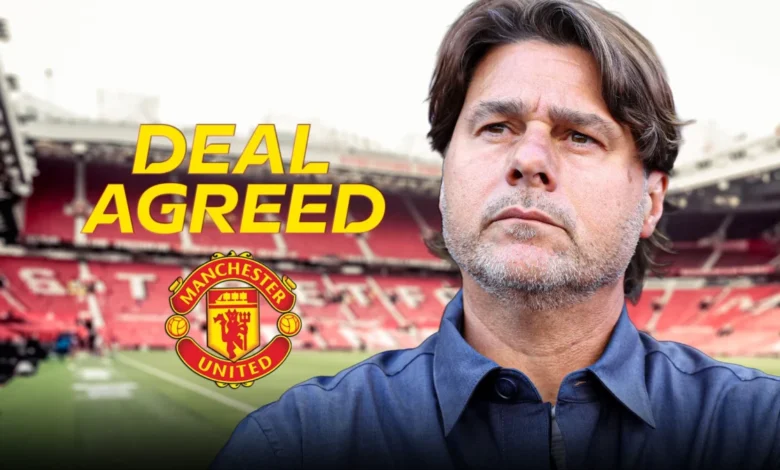
The managerial merry-go-round at Old Trafford has taken another dramatic turn, as Manchester United have confirmed that Mauricio Pochettino has agreed to become the club’s next permanent head coach. The Argentine tactician, who has most recently been overseeing the United States national team, is set to sign a two-and-a-half-year contract with the Red Devils, stepping into a role that has become one of the most pressurized positions in world football.
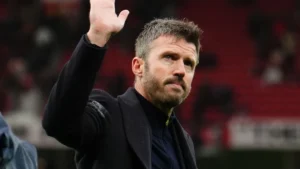
This appointment follows the decisive termination of Michael Carrick’s contract on Thursday morning. The decision, ratified by minority owner Sir Jim Ratcliffe during a high-level summit in Monaco, marks a swift and brutal end to Carrick’s tenure, which began with high promise but concluded in a tactical and statistical collapse.
The End of the Carrick Era
Michael Carrick’s departure comes less than six months after he signed a two-year extension to remain at the helm, a period that was supposed to usher in a new era of stability. However, the reality of the 2026/27 campaign has been starkly different. United currently find themselves languishing in the Premier League relegation zone, having secured only one victory in their opening 10 matches.
The tipping point for the club’s hierarchy—led by chief executive Omar Berrada and director of football Jason Wilcox—was the recent 4-4 draw against Aston Villa. Despite the late-game heroics required to secure a point, the performance was symptomatic of a team struggling for identity and defensive cohesion. Falling 2-0 down within the first four minutes and 4-2 early in the second half, the match underscored a fragility that the club’s leadership deemed untenable.
In a formal statement released on Thursday, the club indicated that they had reached "the extremely difficult conclusion that a change is necessary in order to achieve our ambitions." Alongside Carrick, a significant portion of the backroom staff, including coaches Jonny Evans, Jonathan Woodgate, Steve Holland, Travis Binnion, and goalkeeping coach Craig Mawson, have also departed. Connor King remains the sole survivor of the coaching team, providing a thread of continuity as the club transitions to the Pochettino era.
A Chronology of Instability
To understand the gravity of Pochettino’s appointment, one must look at the tumultuous decade that has followed the retirement of Sir Alex Ferguson in 2013. Pochettino will be the eighth permanent manager to take the reins at Old Trafford in that timeframe.
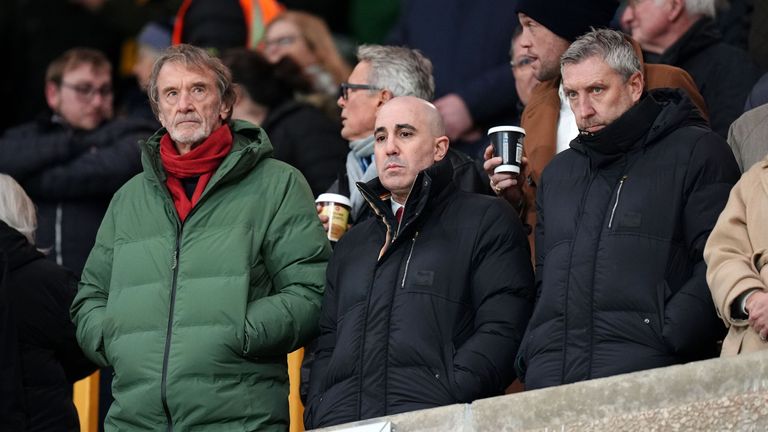
The timeline of INEOS’s involvement, which began in earnest in late 2023, has been marked by a series of aggressive restructuring efforts that have yet to bear fruit on the pitch. From the hiring of Omar Berrada from Manchester City to the appointment and subsequent sacking of Ruben Amorim, the club has cycled through various philosophies and personnel.
- December 2023: Sir Jim Ratcliffe announces his intent to purchase a stake in the club.
- February 2024: INEOS takes control of football operations following the completion of a 27.7% stake acquisition.
- October 2024: Erik ten Hag is dismissed after a poor start to the season.
- November 2024: Ruben Amorim is brought in from Sporting, only to be dismissed 14 months later in January 2026.
- January 2026: Michael Carrick is appointed as interim head coach, later given the permanent job after an impressive 12-win run in 17 matches.
- May 2026: Carrick signs a new two-year deal following a successful third-place finish.
- November 2026: Carrick is sacked following the club’s worst start to a season in 40 years.
Statistical Decline and the Pressure of Performance
The contrast between Carrick’s initial success and his final weeks is jarring. During his interim period and the tail end of last season, Carrick boasted a 70.1% win rate, a figure that briefly gave fans hope that he could be the man to restore United to the pinnacle of English football.
However, the current campaign has seen that efficiency evaporate. With only three wins in 15 matches across all competitions, his win percentage plummeted to 20% for the new season. When factoring in his time as a permanent manager, his overall win rate of 46.9% ranks among the lowest of any post-Ferguson manager.
This decline echoes the trajectory seen under Ole Gunnar Solskjaer, whose own win percentage dropped significantly once the "interim" tag was removed and the pressure of permanent expectation took hold. The United hierarchy, however, maintains that the current squad is significantly stronger than the league table suggests, pointing to the individual quality of the players as evidence that a change in management is the final missing piece.
The Pochettino Challenge
Mauricio Pochettino, a seasoned veteran of the Premier League from his time at Tottenham Hotspur and Chelsea, faces an immediate trial by fire. His first match in charge will be a daunting trip to Anfield to face Liverpool on November 22.
The Argentine’s release clause—valued at £7 million in his contract with the United States—has been triggered, and he is expected to complete his final obligations with the USMNT during their upcoming international fixtures against Haiti before transitioning to Old Trafford.
The expectations on Pochettino are immense. Analysts and former players, including Sky Sports’ Jamie Carragher, have suggested that while Pochettino is the "right man" for the job, his success will depend on how quickly he can impose a tactical structure on a squad that has looked rudderless for months. The broader concern, voiced by club icon Gary Neville, is that changing the manager is a "rinse and repeat" strategy that ignores deeper structural issues within the club’s performance and recruitment departments.
Broader Implications and Club Sentiment
The reaction from the Manchester United fanbase has been a mix of resignation and anger. Supporters’ forums and social media commentary reflect a growing disillusionment with the boardroom. Many fans argue that while the manager takes the fall, the fundamental issues of recruitment, scouting, and long-term planning remain unaddressed.
There is a sense that the club has become a "manager-killer," where even talented coaches with proven track records find their reputations eroded by the immense weight of expectation and a lack of support in the transfer market. The comparison to Arsenal, who showed patience with Mikel Arteta during his early struggles, is frequently cited by fans who believe that stability, rather than constant turnover, is the key to recovery.
The Road Ahead
As the club moves into the winter months, the focus will turn toward the upcoming fixture list. Following the Liverpool clash, United face a challenging schedule, including a Champions League encounter with Sporting and Premier League tests against Newcastle and Brentford.
For Pochettino, the immediate goal is to stabilize a team currently sitting in the relegation zone. He must bridge the gap between the squad’s theoretical potential and their practical output. The INEOS group, having now invested heavily in the recruitment of Pochettino and the restructuring of the football operations, will be looking for a rapid return on their investment.
Whether Pochettino can be the one to finally break the cycle of the "post-Ferguson syndrome" remains the central question. With the club in a precarious position, the next few months will be definitive not only for the new head coach but for the long-term vision of Manchester United’s ownership. The margin for error is non-existent, and the pressure at Old Trafford has never been higher. As the club prepares for the transition, the world of football watches to see if this latest appointment is the start of a genuine resurgence or merely another chapter in a decade of volatility.