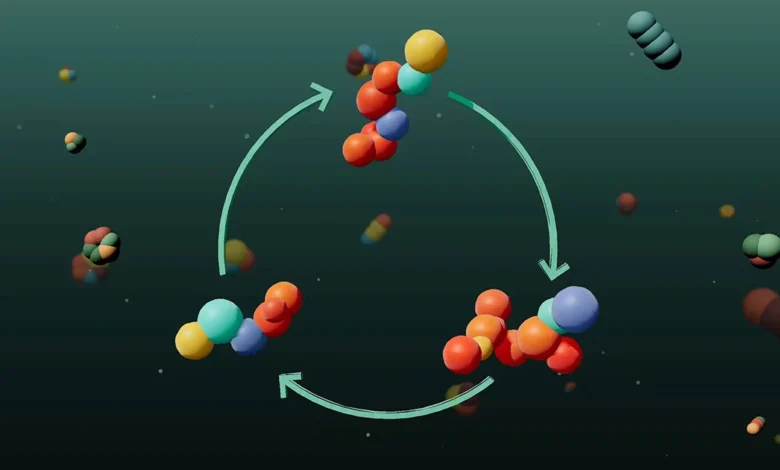
For more than four billion years, the intricate dance of metabolism has served as the energetic engine driving all living things. The fundamental ability of biological systems to capture, transform, and utilize chemical energy from their external environments underpins the dizzying complexity of life on Earth. Yet, a profound chicken-and-egg question has long vexed evolutionary biologists and biochemists: Did complex molecules like DNA and RNA create the metabolic systems that keep cells alive, or did self-sustaining metabolic reactions arise first, paving the way for genetics to follow?
A growing body of scientific research suggests the latter. Proponents of the "metabolism-first" hypothesis argue that life’s earliest precursors were not self-replicating genes, but rather self-sustaining chemical cycles powered by simple inorganic molecules. In this view, energy flowing through geochemical systems gradually organized primitive chemical reactions, birthing the biochemical pathways that eventually led to cellular life.
The Core Argument: Energy Precedes Information
At the heart of the metabolism-first hypothesis is a fundamental thermodynamic reality: without an ongoing, self-sustaining flow of energy, it is mathematically and physically impossible to account for the synthesis of the large, highly complex macromolecules essential for cellular life.
William Martin, an evolutionary biologist at Heinrich Heine University Düsseldorf in Germany, emphasizes that energy and its continuous throughput define the very essence of life. "It synthesizes genes that contain the information to produce the catalysts that keep this reaction going, and those catalysts have changed over time," Martin explains.
According to this framework, nonliving geochemical reactions harnessed ambient environmental energy—such as heat from the sun or geothermal activity—to drive chemical networks. These networks became thermodynamically favored, locking into self-sustaining loops. Over vast stretches of geological time, these primitive loops supposedly grew more complex, eventually stumbling upon mechanisms to store and transmit hereditary information via molecules like RNA and DNA.
A Historical Chronology of Origins
To understand how nonliving chemistry could transition into living biology, scientists trace a conceptual timeline spanning more than half a century:
- 1968: American biophysicist Harold Morowitz proposes that energy flowing through an open thermodynamic system naturally organizes that system. He applies this principle to the origins of life, suggesting that external environmental energy sources could nudge chemical networks into proto-metabolic, self-sustaining reactions.
- Late 1970s: Deep-sea submersibles discover hydrothermal vents—geothermally heated, mineral-rich water fountains bursting from the ocean floor.
- Late 1980s to Early 1990s: Günter Wächtershäuser, a patent lawyer with a doctorate in chemistry, introduces the revolutionary "iron-sulfur world" hypothesis. He argues that iron-sulfide minerals collecting around hydrothermal vents could have chemically catalyzed early, self-sustaining metabolic pathways, such as the acetyl-CoA pathway.
- 2020: Experimental breakthroughs by William Martin’s team and independent organic chemist Ramanarayanan Krishnamurthy demonstrate that core metabolic "spines" can be synthesized under both hydrothermal and tepid, surface-pool conditions, reigniting the debate over where life began.
Deep-Sea Crucibles Versus Tepid Pools
For decades, the leading candidate for Earth’s birthplace was the deep-sea hydrothermal vent. First discovered in the late 1970s, these subterranean fissures pour mineral-rich, superheated water into the dark, crushing depths of the ocean.
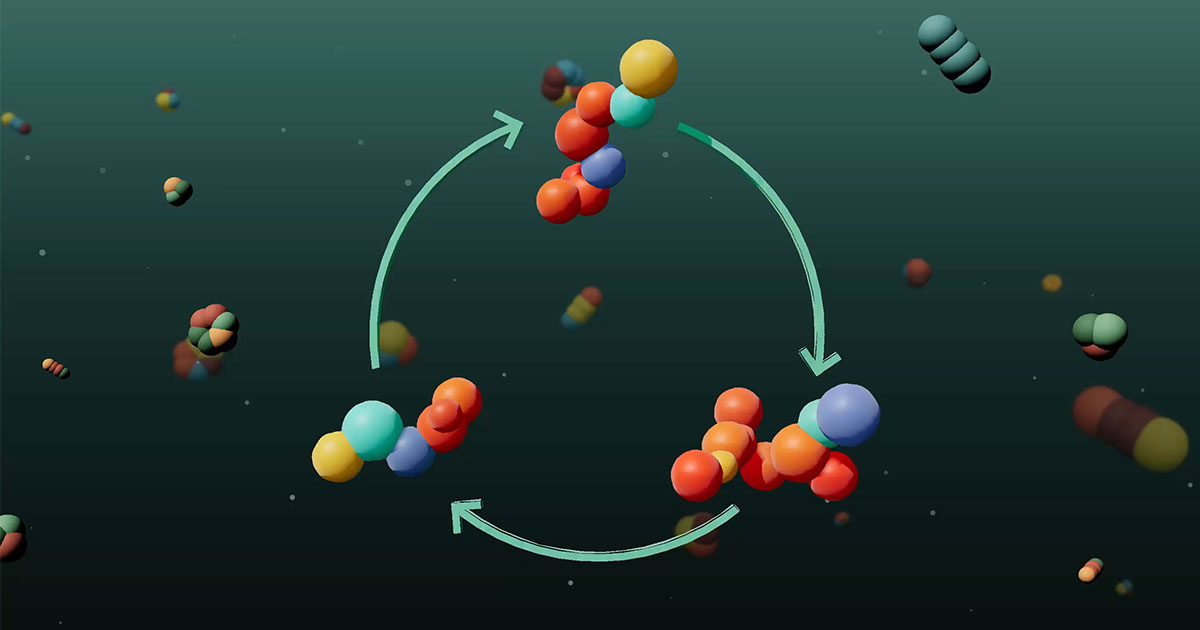
In the late 1980s and early 1990s, German chemist Günter Wächtershäuser formulated the "iron-sulfur world" hypothesis. He proposed that iron-sulfide minerals lining these vents could act as natural chemical catalysts. Under such conditions, simple gases like carbon dioxide and hydrogen could be forced into rudimentary cycles—such as the acetyl-CoA pathway utilized by modern primitive microbes—producing carbon-containing compounds like acetate and pyruvate while releasing energy back into the environment.
Once established, these primitive cycles could build upon themselves, stacking layer upon layer of enzymatic loops to gather and release energy with increasing sophistication, all long before the advent of genetic inheritance.
However, recent laboratory simulations have challenged the monopoly of the deep-sea vent hypothesis. In 2020, a research team led by Martina Preiner, a biochemist at the Max Planck Institute for Terrestrial Microbiology, successfully mimicked the extreme temperature and pressure conditions of hydrothermal vents in the lab. Using carbon dioxide, hydrogen, and minerals like nickel and iron, the team generated formate, acetate, and pyruvate—the essential biochemical "spine" of the acetyl-CoA pathway.
"The findings show that it’s possible to start these reactions before you have anything else," Preiner noted, highlighting that these foundational metabolic steps could occur in the total absence of RNA, DNA, or complex proteins.
Simultaneously, alternative scenarios have gained traction. Also in 2020, Ramanarayanan Krishnamurthy, an organic chemist at Scripps Research in California, led a study demonstrating that two small, plausible early-Earth molecules—pyruvate and glyoxylate—could react to form almost all the components of the reverse citric acid cycle (an analog to the acetyl-CoA cycle). Crucially, this reaction occurred under mild temperatures in regular aqueous environments, entirely without metal catalysts. This breakthrough suggested that metabolism might have kicked off not in a high-pressure submarine crucible, but in a tranquil, tepid surface pool warmed by the sun.
The Hurdles of Transition and Complexity
Despite these compelling laboratory simulations, significant chasms remain in the metabolism-first narrative. Chief among them is the "transition problem": how did these erratic, loose chemical reactions stabilize enough to increase in sophistication without dissolving or collapsing?
Most origin-of-life researchers agree that at some critical juncture, genetic material capable of storing and replicating information became necessary to lock in beneficial metabolic mutations and transmit them faithfully across generations.
Furthermore, scientists face the daunting task of bridging metabolism and genetics experimentally. Researchers must figure out how numerous distinct proto-metabolic reactions could coexist inside primitive cell membranes without interfering with or "sabotaging" one another.
"How best can we mix them together so that we don’t get a complete mess that we can’t analyze?" Krishnamurthy poses. "That is the challenge."
Broader Implications for Astrobiology and Science
Unraveling whether a metabolic spark initiated life carries profound implications that extend far beyond terrestrial biology. Understanding the precise thermodynamic and chemical thresholds required to transition from geochemistry to biochemistry fundamentally alters how humanity searches for life elsewhere in the universe.
If life’s origins rely on universal thermodynamic principles—where energy flow inherently organizes matter into self-sustaining metabolic loops—then life may not require rare, highly evolved genetic molecules to spark. Instead, anywhere geochemical energy flows through mineral-rich environments, whether in the subsurface oceans of Saturn’s moon Enceladus or the ancient, dry lakebeds of Mars, nature may routinely attempt the same metabolic alchemy.
As researchers continue to refine laboratory simulations of prebiotic Earth, the elusive boundary between the living and the nonliving grows increasingly blurred, bringing science ever closer to answering one of its oldest and most profound mysteries.