Nvidia Launches Independent Investigation Into CEO Jensen Huang Amid Allegations of Foreign Intelligence Compromise

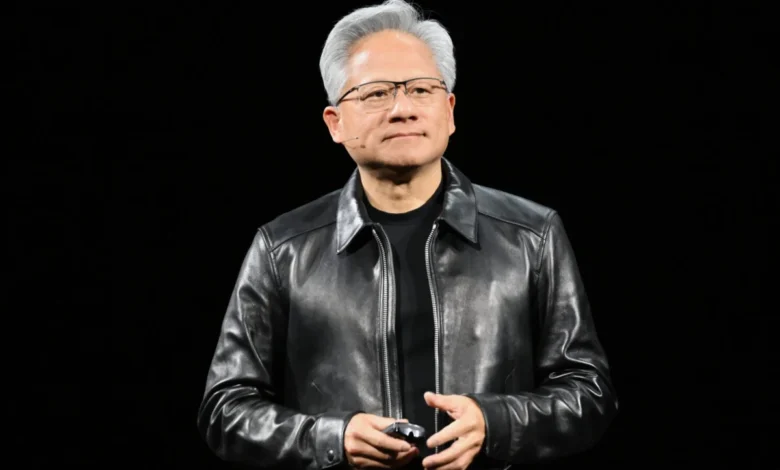
In a development that has sent shockwaves through the global technology sector and Washington’s national security apparatus, Nvidia, the world’s leading manufacturer of artificial intelligence chips, announced on Sunday that its board of directors has launched a formal investigation into reports that CEO Jensen Huang was the target of a sophisticated foreign intelligence operation. The probe, overseen by a committee of independent directors and bolstered by external legal counsel, arrives at a moment of extreme geopolitical volatility, as the United States intensifies its campaign of economic and industrial warfare against major adversaries.
The inquiry centers on allegations that Huang engaged in a romantic relationship with Alice Huang, an executive at Megaspeed—a Singapore-based data center operator that has served as a primary conduit for Nvidia’s hardware in Asia. U.S. intelligence officials have reportedly identified Alice Huang as a potential asset for China’s Ministry of State Security. While the Nvidia board stated it has "no reason to believe that either national security or Nvidia secrets were compromised," the gravity of the potential exposure has necessitated a comprehensive forensic review of the CEO’s communications and recent company interactions.
The Anatomy of the Allegations
The scandal broke following investigative reporting by the New York Times and the Financial Times, which detailed that Jensen Huang—who is not related to Alice Huang—had been involved in a personal relationship that security analysts believe was leveraged for intelligence gathering. According to these reports, the relationship provided a potential backchannel for the Chinese government to gain insights into the proprietary roadmaps of the world’s most valuable AI firm.
In an internal memorandum circulated to Nvidia employees, Jensen Huang addressed the controversy directly, acknowledging the personal failings that precipitated the investigation. "I was unfaithful to my wife. My actions hurt her and our children. There is no excuse for what I did. I am deeply sorry," the CEO wrote. While the personal nature of the admission is clear, the corporate implications are significantly more complex. Nvidia, which holds a dominant position in the manufacturing of chips essential for training large language models (LLMs), operates at the very heart of the U.S. technology defense perimeter.
A Timeline of Escalating Tensions
The intersection of private corporate conduct and national security represents the latest chapter in a multi-year effort by the United States to safeguard its technological edge. To understand the gravity of the current situation, one must look at the recent timeline of the U.S.-China AI rivalry:
- 2023: The U.S. government begins expanding export controls on high-end GPUs, preventing companies like Nvidia from selling their most advanced chips to Chinese entities. Concurrently, initial reports emerge of suspected technology sabotage programs being run by U.S. intelligence.
- April 2026: The Department of Defense establishes the Technology Support Office, an agency dedicated to the disruption of foreign technology programs deemed threatening to U.S. military superiority.
- September 2026: CIA Deputy Director Michael Ellis confirms an expansion of espionage efforts specifically targeting the AI, biotechnology, and semiconductor industries.
- October 2026: The Washington Post reports on a Pentagon program deploying non-official cover officers, disguised as executives, to infiltrate foreign intelligence networks.
- November 2026: Nvidia officially confirms the board-level investigation into CEO Jensen Huang, following reports of his ties to a suspected intelligence operative.
Megaspeed and the Supply Chain Nexus
The role of Megaspeed in this investigation is particularly scrutinized due to its history as a massive customer for Nvidia’s technology. Over the past 24 months, Megaspeed has purchased upwards of $4.8 billion in high-performance chips. However, the company has been under a cloud of suspicion for some time. Last year, federal investigators probed Megaspeed for its alleged role in smuggling restricted AI hardware into China, circumventing the very export controls that the Trump administration has enforced to maintain a lead in the AI arms race.
The connection between the CEO of the world’s primary chip supplier and an executive at a firm accused of being a central hub for sanction-evasion smuggling is viewed by intelligence analysts as a "worst-case scenario" for corporate security. The investigation will now focus on whether any proprietary information—specifically related to future chip architectures or production yields—was accessed during the duration of the relationship.
The Broader Context: Economic Warfare
The investigation into Jensen Huang is occurring against a backdrop of hyper-aggressive U.S. industrial policy. The creation of the Pentagon’s Economic Defense Unit (EDU) under the direction of the Secretary of Defense represents a permanent shift in how the U.S. views the private sector. The EDU is mandated to "deter, deny, and disrupt" foreign adversaries, effectively blurring the lines between private corporate operations and national security mandates.
This trend is not limited to Nvidia. The ongoing friction between the Pentagon and San Francisco-based AI firm Anthropic serves as a precedent. After the startup’s leadership refused to allow its models to be utilized for autonomous weaponry or mass domestic surveillance, the Defense Department moved to blacklist the company’s software, citing it as a "supply-chain risk." Despite a subsequent court ruling that the designation was illegal, the standoff highlighted the limited autonomy remaining for tech CEOs in the current geopolitical climate.
Implications for Nvidia and the AI Market
The uncertainty surrounding the investigation has already begun to affect Nvidia’s market standing. As a foundational pillar of the AI revolution, any disruption to the company’s leadership or its relationships with Asian partners carries systemic risk.
From a corporate governance perspective, the appointment of an independent committee demonstrates that Nvidia’s board is attempting to isolate the company from the personal actions of its CEO. However, the political reality is that the U.S. intelligence community is unlikely to grant the company the benefit of the doubt. If the inquiry uncovers even a minor transfer of sensitive information, Nvidia could face intensified federal oversight, further restrictions on its international operations, or even a forced restructuring of its board.
Furthermore, the case sets a dangerous precedent for Silicon Valley. CEOs of critical infrastructure and technology firms are increasingly being treated as "high-value targets" by foreign intelligence services. This case is likely to force a industry-wide reckoning regarding the vetting of personal relationships, the security of digital communication, and the extent to which private executives must be integrated into national security reporting structures.
Official Responses and Future Outlook
While Nvidia has stated that Huang plans to cooperate fully, the company has remained tight-lipped regarding the specifics of the investigation’s scope. Megaspeed has yet to issue a formal statement regarding the allegations against its executive, and Chinese government representatives have historically denied all accusations of industrial espionage, dismissing them as products of "Cold War mentality."
The Pentagon, meanwhile, continues to maintain its stance on aggressive economic defense. In response to inquiries regarding its involvement in technology-based intelligence programs, the Department of Defense issued a sharp rebuttal to recent reports, stating, "This query appears to be built on information that is simply not true. Whoever is feeding you these claims are either badly misinformed or deliberately leading you astray to peddle their fantasies."
As the probe progresses, the eyes of both Wall Street and the White House will remain fixed on Nvidia. For the shareholders, the concern is the immediate financial and operational stability of the firm. For the national security apparatus, the concern is existential: whether the crown jewels of American AI have been compromised by a rival power, and whether the traditional safeguards of corporate life are sufficient in an era where the boundary between a tech executive and a government asset has been permanently eroded.
The outcome of this investigation will likely dictate not only the future of Nvidia’s leadership but also the next phase of the U.S.-China technology conflict, proving that in the current landscape, the most sensitive code is often protected by the most vulnerable human elements.
Related posts: