The Shift Toward Early Holiday Retail Cycles
The retail landscape has undergone a fundamental transformation over the last decade. Historically, Black Friday was a singular event confined to the day following Thanksgiving. However, in recent years, retailers have adopted a "Black Friday Month" strategy, beginning promotions as early as late October or early November. This shift serves several purposes: it alleviates the logistical strain on supply chains, manages inventory levels more effectively, and captures consumer spending before competitors can secure a foothold.
By discounting home security hardware early, Amazon is signaling a priority toward ecosystem expansion. Every camera or doorbell sold represents a new entry point into the Ring ecosystem, which relies on a recurring revenue model through its subscription service, Ring Protect. For the consumer, this translates to high-value hardware at historically low price points, provided they are willing to navigate the requirements of the platform.
Technical Specifications and Product Utility
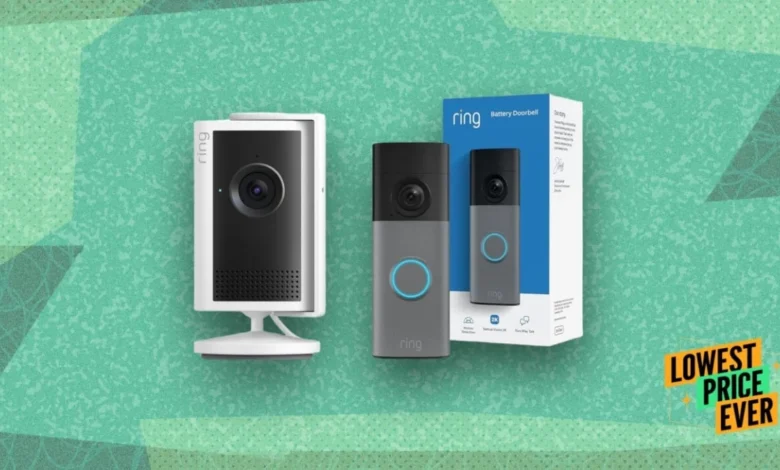
The Ring Indoor Cam 2K is currently retailing at $24.99, representing a 58% reduction from its standard price of $59.99. Designed for interior surveillance, this unit provides 2K resolution video and two-way audio communication. Its utility lies in its simplicity; it is a plug-and-play device that avoids the maintenance associated with battery-powered alternatives. Features such as low-light color video and a physical, removable lens cover are designed to address the balance between security and user privacy.
Conversely, the Ring Battery Doorbell 2K is priced at $39.99, a 60% discount from its $99.99 MSRP. This device is engineered for perimeter security, offering a 140-degree field of view with head-to-toe framing capabilities. The device utilizes a 2.4GHz Wi-Fi connection and is powered by a rechargeable battery, allowing for installation on properties where hardwired electrical connections are not available. The integration of 6x digital zoom allows for more precise identification of visitors or delivery personnel, a critical factor for users concerned with package theft and home monitoring.
The Economics of Home Security Subscriptions
While the hardware acquisition costs have hit record lows, the long-term financial commitment remains a point of consideration for potential buyers. Both devices operate on a tiered subscription structure. Basic functionalities—such as real-time notifications, live video streaming, and two-way talk—are included at no additional cost. However, the archival of video footage, cloud storage, and advanced event detection require a Ring Protect subscription.
Individual device coverage starts at $4.99 per month, or $49.99 annually. For households opting for a more comprehensive security setup involving multiple cameras or doorbells, the "Protect Plus" plan offers coverage for all devices at a single location for $9.99 per month, or $99.99 annually. Consumers are advised to factor these recurring costs into their total cost of ownership (TCO) calculations when evaluating the "deal" value of the hardware.
Strategic Implications of Smart Home Market Saturation
The aggressive pricing of these devices is reflective of a broader industry trend toward smart home saturation. According to recent market analysis from firms like IDC and Counterpoint Research, the growth rate for smart home devices has stabilized as more households integrate connected technology. To maintain market share, manufacturers must lower the barrier to entry for new users.
The move to discount hardware by over 50% suggests that Amazon is prioritizing user base growth over immediate hardware margins. Once a consumer installs a Ring device, they are significantly more likely to purchase additional sensors, alarms, or lighting solutions from the same brand, thereby creating a "sticky" ecosystem that is difficult to leave. This approach is standard for large-scale tech companies that utilize hardware as a vehicle for service-based revenue.

Privacy Considerations and Data Management
As home security cameras become increasingly ubiquitous, privacy advocates and cybersecurity experts have repeatedly called for greater transparency regarding data handling. Ring has previously faced scrutiny regarding its data sharing practices with law enforcement agencies. In response, the company has updated its privacy dashboard, allowing users to opt-out of certain data-sharing programs and providing clearer controls over when the camera is active.
For the privacy-conscious consumer, the physical shutter on the Indoor Cam 2K is a notable inclusion, though users should be aware that the shutter does not automatically mute the microphone. Disabling audio recording requires a specific toggle within the mobile application settings. These nuances underscore the importance of device configuration upon installation. Consumers should review the privacy settings immediately after setup to ensure that the device’s recording and notification parameters align with their individual expectations of privacy.
Comparative Market Analysis
When comparing these early Black Friday deals against competitor offerings, the Ring hardware remains a frontrunner in terms of brand recognition and integration depth. While companies such as Eufy, Arlo, and Google’s Nest offer comparable 2K or 4K security solutions, they often occupy different price tiers or ecosystem requirements.
For example, Eufy often markets its hardware as a "subscription-free" alternative, relying on local storage. While the initial cost of a Eufy camera might be higher than the current $24.99 price point of the Ring Indoor Cam, the lack of a monthly fee makes it a compelling alternative for users who wish to avoid ongoing subscriptions. The decision between platforms often comes down to a trade-off: lower hardware costs with the Ring ecosystem versus higher upfront costs with potentially lower long-term service fees elsewhere.
Timeline and Purchasing Advice
These promotional prices are part of a wider wave of pre-holiday discounting that typically reaches its peak during the week of Black Friday and Cyber Monday. Historically, the prices currently seen are among the lowest that these specific models will hit before the end of the year.
Retail experts generally advise that if a consumer has been planning to invest in these specific models, the current window provides an optimal entry point. Waiting until the actual Black Friday date may yield similar pricing, but carries the risk of stock depletion. Furthermore, as the shipping volume increases throughout November, purchasing earlier can mitigate potential delivery delays.
Conclusion: Evaluating the Value Proposition
The current Ring camera and doorbell deals represent a significant opportunity for homeowners looking to bolster their security without a large upfront capital expenditure. By providing professional-grade 2K video and advanced motion detection at prices well below $50, Amazon is successfully lowering the threshold for smart home adoption.
However, the value of the deal is inherently tied to the user’s willingness to engage with the Ring subscription model. For those who prioritize a low-cost, high-performance monitoring solution for pets, children, or front-door security, these devices offer a robust feature set. Conversely, users who prefer to avoid recurring monthly costs should carefully evaluate whether the hardware’s base features are sufficient for their needs. As the smart home market continues to mature, consumers can expect to see similar competitive pricing strategies, though the emphasis on subscription-based revenue models is likely to remain a permanent fixture of the industry. For now, the early Black Friday period serves as a critical indicator of the aggressive strategies that will define the upcoming holiday shopping season.