U.S. Intelligence Memo Alleges Chinese State Security Recruited Executive to Target Nvidia CEO Jensen Huang

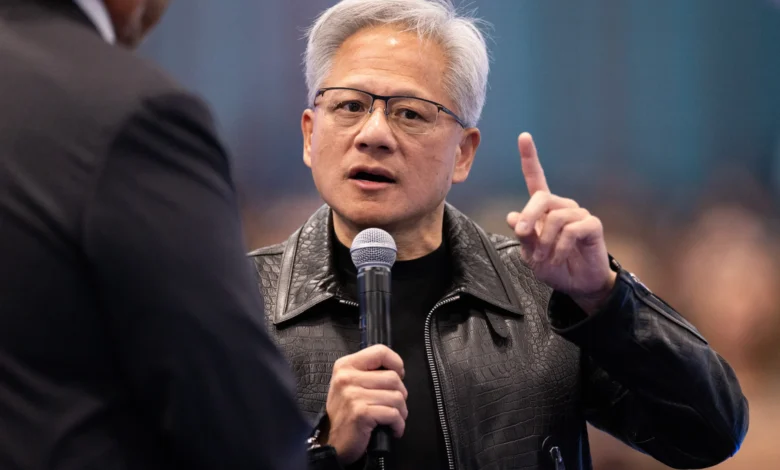
An intelligence memo circulated earlier this year has cast a sharp spotlight on the intersection of geopolitics, corporate espionage, and the global semiconductor industry. According to multiple major investigative reports, the document alleges that technology executive Alice Huang was recruited by China’s Ministry of State Security (MSS) with the explicit objective of spying on Nvidia Chief Executive Officer Jensen Huang.
The disclosures, which emerged publicly in late 2026, underline the escalating vulnerabilities surrounding Silicon Valley leadership as geopolitical tensions between the United States and China reach historic highs. As advanced semiconductors become the foundational building blocks of artificial intelligence, national security agencies on both sides of the Pacific have increasingly turned their attention to the executive suites of the world’s most critical technology firms.
The Intelligence Memo and the Allegations
The existence of the intelligence memo was first brought to light by The New York Times, which detailed that U.S. intelligence assessments had flagged Nvidia’s chief executive as a target of Chinese intelligence operations. Shortly thereafter, The Financial Times published further details from the document, reporting that the memo also alleged a personal relationship had existed between Jensen Huang and Alice Huang, an executive working for Megaspeed, a Singapore-based technology enterprise.
While the memo paints a picture of targeted intelligence gathering, the precise nature of the purported espionage and the depth of the alleged access remain heavily scrutinized. Intelligence analysts note that executive targeting is a standard playbook for state-sponsored actors seeking proprietary insights into supply chains, architectural roadmaps, and the deployment timelines of cutting-edge artificial intelligence hardware.
Nvidia, currently one of the most valuable corporations in the world due to its dominance in the AI chip market, has pushed back against any insinuation of compromised security. A spokesperson for Nvidia addressed the initial reports by characterizing Jensen Huang’s interactions with Alice Huang as "not unusual" given the interconnected nature of the global tech ecosystem. Furthermore, the company firmly maintained that it does not share classified information or unreleased proprietary technology with its customers.
Broader Scrutiny: The "New Matrix" Front Company Investigation
The allegations surrounding the intelligence memo do not exist in a vacuum. They coincide with broader investigative reporting highlighting the complex web of front companies and intermediaries attempting to circumvent U.S. export controls on advanced microelectronics.
In a parallel report published by The New York Times, journalists investigated New Matrix, a Chinese enterprise that had successfully obtained authorization from the U.S. Commerce Department to purchase advanced Nvidia semiconductors. However, upon visiting the physical office address officially registered by New Matrix, reporters discovered only a vacant and inactive facility. This physical discrepancy has heightened fears within regulatory and intelligence circles that the entity may be serving as a covert front for a blacklisted private equity firm or a state-backed procurement network designed to bypass American trade restrictions.
The revelation places additional pressure on the U.S. Department of Commerce and export control authorities to tighten verification processes for foreign buyers. Nvidia, for its part, has continually emphasized its compliance with federal regulations. The company’s spokesperson reiterated that Nvidia sells "the first, best and most of our technology in America," while strictly adhering to the export limitation frameworks established by Washington to protect national security interests.

Background Context: Semiconductors as Geopolitical Assets
To understand the weight of these developments, one must examine the unprecedented strategic value of semiconductors in the 2020s. Often referred to as the "new oil" or the "lifeblood of modern civilization," advanced graphics processing units (GPUs) and specialized AI accelerators are vital for training large language models, powering autonomous systems, and maintaining military superiority.
Jensen Huang, as the co-founder and face of Nvidia, sits at the epicentre of this technological revolution. Under his leadership, Nvidia transitioned from a dominant player in computer graphics to the undisputed monopoly holder of the hardware fueling the generative AI boom. Consequently, Huang and his executive team operate in an intensely scrutinized environment where corporate strategy and national security heavily overlap.
China’s Ministry of State Security has historically prioritized technology acquisition through both legal and illicit means, utilizing industrial espionage, cyber operations, and human intelligence networks to close the technological gap with Western economies. The alleged targeting of a prominent tech CEO represents an aggressive escalation from traditional intellectual property theft toward direct human intelligence operations targeting corporate leadership.
Chronology of Events
- Early 2026: U.S. intelligence agencies circulate an internal memo detailing foreign intelligence activities, which flags an alleged Chinese MSS operation involving tech executive Alice Huang and Nvidia CEO Jensen Huang.
- September 2026: Public awareness begins to build around executive-level security risks within the semiconductor sector, culminating in heightened media inquiries.
- November 6, 2026: The New York Times publishes the initial report regarding the U.S. intelligence memo targeting Nvidia’s chief executive.
- Shortly After (November 2026): The Financial Times releases supplementary details from the memo, highlighting the alleged relationship between Jensen Huang and Alice Huang of Megaspeed.
- November 7, 2026: The New York Times releases a separate investigative report into New Matrix, exposing discrepancies at its registered office address and fueling concerns over illicit chip procurement networks.
- November 7, 2026 (Later): Nvidia issues formal statements defending its security posture, emphasizing adherence to U.S. export laws and characterizing executive interactions as routine.
Official Responses and Industry Stakeholders
The unfolding situation has triggered quiet concerns across Silicon Valley and Washington regarding executive protection protocols. While corporate executives routinely travel internationally and meet with clients, partners, and regional stakeholders, the sophistication of modern state-sponsored intelligence operations suggests that standard corporate security measures may no longer be sufficient.
Nvidia’s official communications have sought to reassure investors and regulators alike. By emphasizing that the company’s most advanced technologies remain prioritized for domestic markets and that regulatory compliance is absolute, Nvidia aims to insulate itself from regulatory blowback.
Government officials in Washington have not yet announced formal congressional hearings specifically tied to the memo, but the findings are expected to fuel ongoing debates on Capitol Hill regarding foreign investment screening, the enforcement of export controls, and the physical verification of overseas buyers.
Implications for the Tech Industry and National Security
The convergence of the intelligence memo allegations and the New Matrix front-company investigation signals a new phase in the U.S.-China technology cold war. Several long-term implications emerge from these events:
- Heightened Executive Security: Technology leaders of major AI and semiconductor firms will likely face increased vetting, travel restrictions, and counter-intelligence briefings from national security bodies. The days of casual international networking for foundational tech CEOs are rapidly drawing to a close.
- Stricter Export Enforcement: The discovery of "hollow shell" intermediaries like New Matrix will compel the U.S. Commerce Department to demand more rigorous physical audits and end-use verification before granting licenses for high-end chip exports.
- Corporate Compliance and Geopolitical Risk: Companies like Nvidia will find themselves under a microscope, forced to balance the commercial imperatives of global market access against the unyielding demands of national security compliance.
As the intersection of artificial intelligence and national defense deepens, the line between corporate governance and geopolitical statecraft continues to blur. Whether the allegations contained in the intelligence memo lead to structural changes in how Silicon Valley manages executive security remains to be seen, but the events of late 2026 have irrevocably altered the landscape of technological competition.