Bill Skarsgard expresses fatigue with villain roles and clarifies absence from James Bond casting process

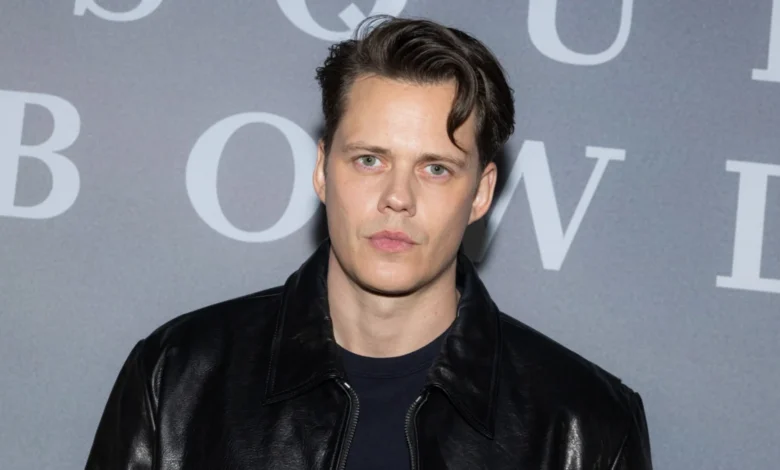
The landscape of modern cinema has been defined by the indelible, often unsettling performances of Bill Skarsgard. From the subterranean terror of Pennywise in the record-breaking It franchise to the aristocratic menace of the Marquis in John Wick: Chapter 4 and the titular role in the recent reimagining of Nosferatu, the 36-year-old Swedish actor has cultivated a reputation as one of Hollywood’s most compelling antagonists. However, in a candid appearance on the Happy Sad Confused podcast with host Josh Horowitz, Skarsgard signaled a shift in his career trajectory, admitting that he feels "spent" regarding the portrayal of cinematic villains.
This revelation provides a rare glimpse into the psyche of an actor who has become synonymous with the darker corners of genre storytelling. While his filmography is studded with high-profile antagonistic turns—including his portrayal of Eric Draven in The Crow—Skarsgard indicated that the appetite for such roles has reached a point of saturation. His comments come at a time when industry observers are closely monitoring the casting process for the next iteration of the James Bond franchise, a role for which Skarsgard has long been a fan-favorite candidate in the court of public opinion.
A Selective Path Forward
During his conversation with Horowitz, Skarsgard was explicit about his evolving criteria for choosing projects. "For a villain, it would have to be something that felt original to me, that was something that I hadn’t done before," he explained. "I feel, kind of, spent with those things. But there’s villains that could be really fun in different ways and if it’s the right kind."
This pivot reflects a broader trend among character actors who gain fame for villainous roles: the inherent danger of typecasting. By consciously distancing himself from the archetype of the antagonist, Skarsgard is signaling a desire to flex his range in more complex, perhaps heroic or morally ambiguous roles. His current work, notably in Peter Berg’s war film The Mosquito Bowl, suggests a move toward grounded, historical, and dramatic performances that offer a stark departure from the supernatural or stylized villains that dominated the first half of his career.
The James Bond Connection
The discussion inevitably turned toward the James Bond franchise, a subject that has dominated Hollywood trade news for the better part of two years. Skarsgard’s name has frequently surfaced in fan discussions and speculative reporting as a potential candidate for a future Bond villain. However, the actor clarified that his exclusion from the current casting cycle is not a choice he made, but rather a reflection of the production’s silence toward him.
"Yeah! Well, because they didn’t call me about James Bond. I don’t know what that was about," Skarsgard noted with a touch of dry humor. "Maybe they were like, ‘We can’t do a Swede for this guy.’ I wasn’t even thrown into the mix."
His comments highlight the opaque nature of high-stakes casting for franchises like 007. The process, often shrouded in secrecy, involves extensive screen testing and high-level negotiations that remain hidden from public view until the final deal is struck. Skarsgard’s admission that he was not "thrown into the mix" underscores the reality that even actors with his pedigree and international acclaim are not always considered for every major project, regardless of the public’s perception of their suitability.
Furthermore, Skarsgard expressed reservations about the long-term commitments inherent in the Bond franchise. He agreed with the assessment that signing on to anchor a series for 10 to 15 years is a daunting prospect that can limit an actor’s ability to pursue diverse projects. Instead, he expressed a preference for the "one-off" villain role—a model that has seen great success in the franchise’s history. Actors such as Mads Mikkelsen, who played Le Chiffre in Casino Royale, and Javier Bardem, who portrayed Raoul Silva in Skyfall, serve as benchmarks for this approach. These performances allow for a singular, high-impact contribution without the restrictive multi-film contracts that define the protagonist’s experience.
Contextualizing the 007 Casting Search
The search for the next James Bond is one of the most significant narratives currently unfolding in the film industry. With the departure of Daniel Craig following the release of No Time to Die, the producers—Barbara Broccoli and Michael G. Wilson of Eon Productions—have faced the challenge of reinventing the character for a new generation.
Recent reporting from The Hollywood Reporter has shed light on the rigorous nature of this search. The list of candidates who have participated in screen tests is substantial and underscores the desire to find a performer who can balance the physicality of the role with the necessary gravitas. Names like Callum Turner, Jack Lowden, and Josh O’Connor have reportedly been evaluated by the studio. More recently, the inclusion of Robert Pattinson in screen testing has generated significant buzz, alongside ongoing discussions surrounding Nicholas Hoult.
The complexity of selecting a new 007 is compounded by the evolving nature of the franchise under the creative vision of filmmakers like Denis Villeneuve, whose name has been linked to the project. The pressure to maintain the franchise’s relevance while respecting its legacy is immense, and the decision will likely hinge on the specific tone the producers intend to set for the post-Craig era.
The Trajectory of an Actor: From Pennywise to The Mosquito Bowl
Bill Skarsgard’s career has been a study in transformation. Born into a prominent Swedish acting family, his rise to global prominence was marked by his portrayal of the demonic entity Pennywise in the 2017 adaptation of Stephen King’s It. The film’s massive commercial success, grossing over $700 million worldwide, thrust him into the spotlight as an actor capable of disappearances into roles that are as physically demanding as they are psychologically taxing.
His subsequent work in John Wick: Chapter 4 and The Crow further cemented his status, but these roles also carried the risk of pigeonholing him into the "villain of the week" category. By choosing to star in The Mosquito Bowl—a project based on Buzz Bissinger’s book about the real-life football players who fought in the Battle of Okinawa—Skarsgard is intentionally reorienting his public and professional image.
The Mosquito Bowl, directed by Peter Berg, is a departure from the high-fantasy and horror tropes he is known for. The film focuses on the human cost of war and the camaraderie among soldiers, providing a platform for a more nuanced and humanistic performance. The decision to prioritize this project suggests a strategic shift in his career management: moving away from the "villainous icon" and toward the "serious character actor."
Broader Implications for the Industry
Skarsgard’s recent comments offer a poignant commentary on the state of the modern "blockbuster" economy. As studios increasingly rely on established IP and franchises, actors are often placed in the position of either becoming a cornerstone of a long-term property or risking anonymity in smaller, less-marketed films.
His skepticism toward long-term franchise commitments is shared by many in his age bracket. The "10-year contract" model, while providing financial stability, is increasingly viewed as a potential hurdle to artistic growth. For an actor like Skarsgard, who has already experienced the intense pressures of global franchise stardom, the focus is clearly shifting toward artistic longevity rather than immediate box-office dominance.
As the industry waits for the final word on the next James Bond, the discourse surrounding casting continues to evolve. While Skarsgard may not be in the running for the role, his perspective serves as a reminder that the world’s most recognizable characters are only as good as the actors who are willing—or sometimes, unwilling—to step into the light. For now, audiences can look forward to seeing a different side of Skarsgard in The Mosquito Bowl, as he continues to navigate a career defined by choices that defy the expectations of the mainstream media.