The current volatility in global energy markets has pushed the average national retail price of gasoline to approximately $4.20 per gallon, a significant increase driven by ongoing geopolitical tensions in the Middle East. Following the escalation of the conflict between the United States and Iran in February, supply chain disruptions—most notably the recent targeting of three oil tankers by mines in the Strait of Hormuz—have created a climate of uncertainty that continues to keep fuel costs elevated. For the average American consumer, these prices represent a substantial burden on household budgets, forcing a strategic shift toward fuel rewards programs and membership-based discounts as a primary method for mitigating rising transportation costs.
The Geopolitical Context of Fuel Price Volatility
The current energy landscape is characterized by its sensitivity to transit chokepoints. The Strait of Hormuz, a critical maritime passage through which approximately 20% of the world’s total petroleum consumption passes, has become the focal point of global energy security concerns. The mining incidents involving oil tankers have exacerbated existing supply fears, leading to price spikes at the wholesale level that are quickly reflected at the retail pump.

Economic analysts suggest that while the energy sector is currently in a high-price environment, consumers have increasingly turned to loyalty ecosystems to buffer their expenses. As traditional retail discounts vanish—most notably the recent dissolution of the Kroger-U.S. Bank gas rewards partnership—shippers and retailers are recalibrating their loyalty offerings to retain customer traffic. This shift highlights a broader trend: as fuel costs remain persistently high, the value proposition of a store-brand loyalty program has evolved from a convenience feature into an essential household budgeting tool.
Save Mart and Shell: A Strategic Partnership
The Save Mart Companies have implemented a robust, albeit time-sensitive, fuel discount program that provides significant relief for West Coast motorists. Through their current rewards structure, customers can earn discounts at participating Shell locations. The mechanism is straightforward: members earn one point for every dollar spent on qualifying in-store purchases. Upon reaching 100 points, a customer earns a $0.10 per gallon discount, which can be stacked up to 1,000 points for a total reduction of $1.00 per gallon.
While the program is currently scheduled to remain active through the end of 2026, experts note that the expiration of points—which occurs roughly three months after they are earned—prevents the long-term hoarding of discounts. With fuel prices in the Save Mart service area often exceeding $5.50 per gallon, this program effectively offers an 18% discount on fuel. However, the requirement to spend $1,000 on groceries to achieve the maximum $1.00 per gallon discount underscores that this program is most effective for high-volume shoppers who can integrate their routine household spending with their fuel needs.

Costco Wholesale: The Efficiency Model
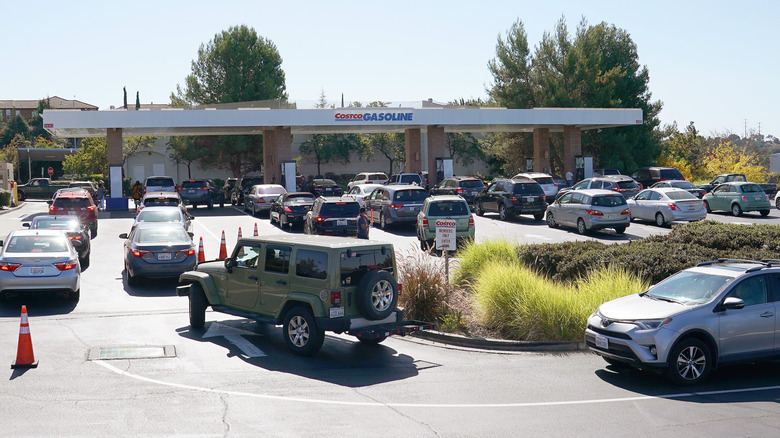
Costco Wholesale continues to operate on a high-volume, low-margin model that relies on membership exclusivity rather than a traditional points-based rewards system. With a $65 annual membership fee, users gain access to fuel prices that are consistently lower than regional averages. Unlike traditional loyalty programs that require active tracking of points, the Costco model relies on the economies of scale afforded by their high-throughput gas stations.
The operational efficiency of Costco’s refueling centers is a key component of their strategy. By utilizing a high number of pumps and clear traffic management, Costco is able to minimize wait times, which serves as a primary deterrent for competitors. Furthermore, for members who hold a Costco Anywhere Visa Card by Citi, the potential for 5% cash back on fuel purchases—up to a designated annual limit—creates a secondary layer of savings. For a household that commutes long distances, the combined effect of lower base prices and credit card rebates often covers the cost of the annual membership within the first few months of use.
Love’s Travel Stops: Tiered Benefits for Professionals
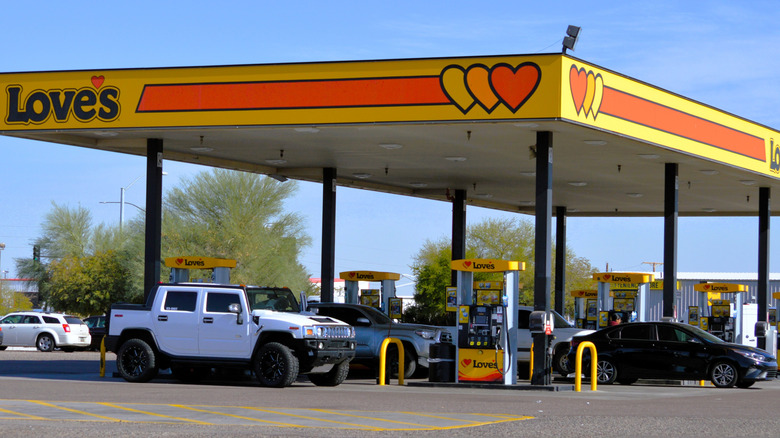
Love’s Travel Stops has distinguished itself by offering a dual-track rewards system that caters to both casual drivers and professional long-haul truckers. For the general consumer, the program offers a standard $0.10 per gallon discount on gasoline, supplemented by one point per gallon fueled and two points per dollar spent in-store. A distinct advantage of the Love’s program is the non-expiration policy on points, provided the account remains active, which offers greater flexibility than the grocery-linked models.

For professional drivers, the program utilizes a tiered structure—Base, Gold, Platinum, and Diamond—based on monthly fuel consumption volume. As drivers scale from 500 to 1,500+ gallons per month, they unlock benefits such as complimentary showers, unlimited drink refills, and enhanced point-earning multipliers for vehicle maintenance services. This structure is designed to foster brand loyalty among commercial operators, providing a tangible economic incentive for professional drivers to prioritize Love’s locations in their route planning.
Albertsons forU: Multi-Retailer Integration
The Albertsons forU loyalty program provides a sophisticated approach to fuel savings by allowing for the aggregation of points across a wide range of grocery expenditures. The program typically rewards shoppers with one point per dollar spent on groceries, with double points often available for gift card purchases. These points can be redeemed at Albertsons-owned fuel stations, as well as at participating Chevron and Texaco locations.
A significant development in this program is the ability for users to stack Albertsons fuel rewards with a dedicated Chevron loyalty card. This integration can lead to a cumulative discount of up to $1.50 per gallon. While the redemption window is shorter than other programs—points generally expire at the end of the month following their acquisition—the depth of the discount remains among the most competitive in the retail sector. Regional variations exist, particularly in Hawaii and California, where the maximum discount is capped at $0.20 per gallon, reflecting local market regulatory environments.
Walmart+ and the Subscription-Based Discount
Walmart+ has transitioned from a simple shipping service into a comprehensive membership program that includes fuel discounts as a pillar of its value proposition. Priced at $98 per year, the service provides a $0.10 per gallon discount at participating Exxon, Mobil, Walmart, Murphy, and CITGO stations. The program is particularly accessible for students and recipients of government assistance, who may qualify for a 50% discount on the membership fee.
The implementation of the Walmart+ discount requires the use of the Walmart mobile app to scan a QR code at the pump, a digital-first approach that streamlines the transaction process. While the savings are consistent, they do not generally fluctuate based on store spending, making this a more predictable, if less "gamified," savings tool than grocery-based programs. The inclusion of additional perks, such as video streaming and grocery delivery, serves to amortize the cost of the membership for families who already utilize Walmart for their primary retail needs.
Implications and Future Outlook
The prevalence of these programs suggests that the retail fuel market is increasingly bifurcated between "unbranded" stations and loyalty-integrated networks. For the consumer, the strategic utilization of these programs is no longer optional but necessary to navigate the current high-price environment.
As the geopolitical situation remains fluid, the sustainability of these discounts will depend on the ability of retailers to absorb fuel subsidies through their broader supply chains. The transition from general-purpose loyalty programs to subscription-based models, as seen with Costco and Walmart, suggests that retailers are betting on long-term customer retention over short-term transaction volume. Consumers who effectively stack these memberships with rewards-based credit cards are best positioned to insulate their finances against the ongoing volatility in global oil markets. As these programs continue to evolve, the ability to manage multiple digital accounts and track expiration dates will become a requisite skill for the modern, budget-conscious driver.
Related posts: