The Death of Objective Reality: How Quantum Physics Dismantled the Universe We Think We Know


Human development relies heavily on foundational milestones, chief among them being object permanence. Long before children learn to read or write, they grasp a fundamental truth of daily existence: things do not cease to exist simply because they are hidden from view. A parent playing peek-a-boo remains behind their hands; a red billiard ball remains red even when tucked away in a pitch-black pocket. To our everyday perception, the universe is inherently objective. Properties belong intrinsically to objects, entirely independent of whether an observer is measuring them or even looking at them.
For centuries, this commonsense framework formed the bedrock of classical physics. It was the absolute reality that Albert Einstein believed in so deeply that he spent the latter half of his life trying to shield it from the bizarre, counterintuitive framework of quantum mechanics. Yet, nearly a century after the birth of quantum theory, experimental physics has repeatedly validated mathematics that point to an unsettling conclusion: the macroscopic reality we experience may be an illusion. Through a sequence of three paradigm-shifting theorems formulated over the decades—anchored by Einstein, John Stewart Bell, and later Matthew Pusey—modern physics has systematically dismantled the classical definition of objective reality, forcing contemporary scientists to decide what fundamental aspects of the universe they are willing to give up.

Einstein, the Copenhagen Interpretation, and the EPR Paradox
To understand how physics arrived at this philosophical crisis, one must return to the foundational era of quantum mechanics in the mid-1920s. Pioneers like Werner Heisenberg and Erwin Schrödinger developed a mathematical framework that successfully predicted atomic-scale phenomena, but it came with a profound conceptual cost. Instead of assigning definitive, objective properties to particles—such as precise positions and momentums—quantum mechanics dealt strictly in probabilities.
In this new mathematical formulation, a physical system is described by a "wave function," or quantum state. Prior to measurement, a particle does not possess a definite attribute; rather, it exists in a superposition of multiple potential outcomes. When an experiment is conducted, the wave function supposedly "collapses," yielding a single, definite result.
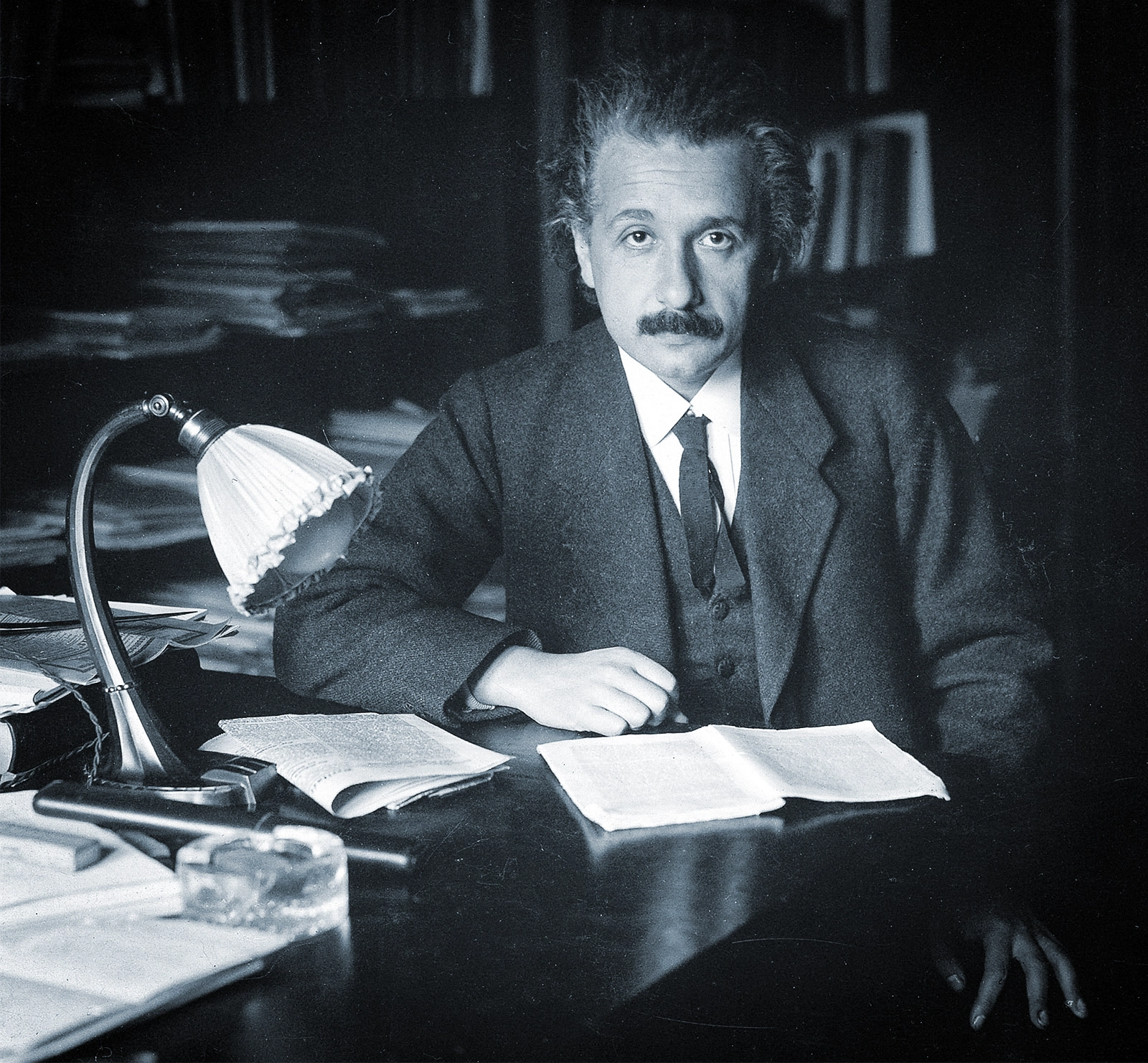
Einstein found this interpretation deeply objectionable. To him, an objective reality was non-negotiable. He famously argued that the quantum wave function was merely an incomplete description of reality—akin to a meteorological weather forecast providing a 77% probability of rain. When a person looks outside and sees raindrops, their personal uncertainty shifts from 77% to 100%, but this update occurs strictly inside the observer’s mind. It does not mean the physical atmosphere itself underwent a magical transformation from probability into concrete reality.

In 1935, Einstein teamed up with colleagues Boris Podolsky and Nathan Rosen to publish what is now known as the EPR paradox. Through a clever thought experiment involving two entangled particles interacting and then separating across vast distances, the trio attempted to prove that particles must possess real, pre-existing properties that the wave function simply fails to capture. They based their argument on two pillars: "reality" (the assumption that objects possess intrinsic properties) and "locality" (the assumption that nothing can travel faster than light, meaning a distant particle cannot be instantly altered by an action performed on its partner).
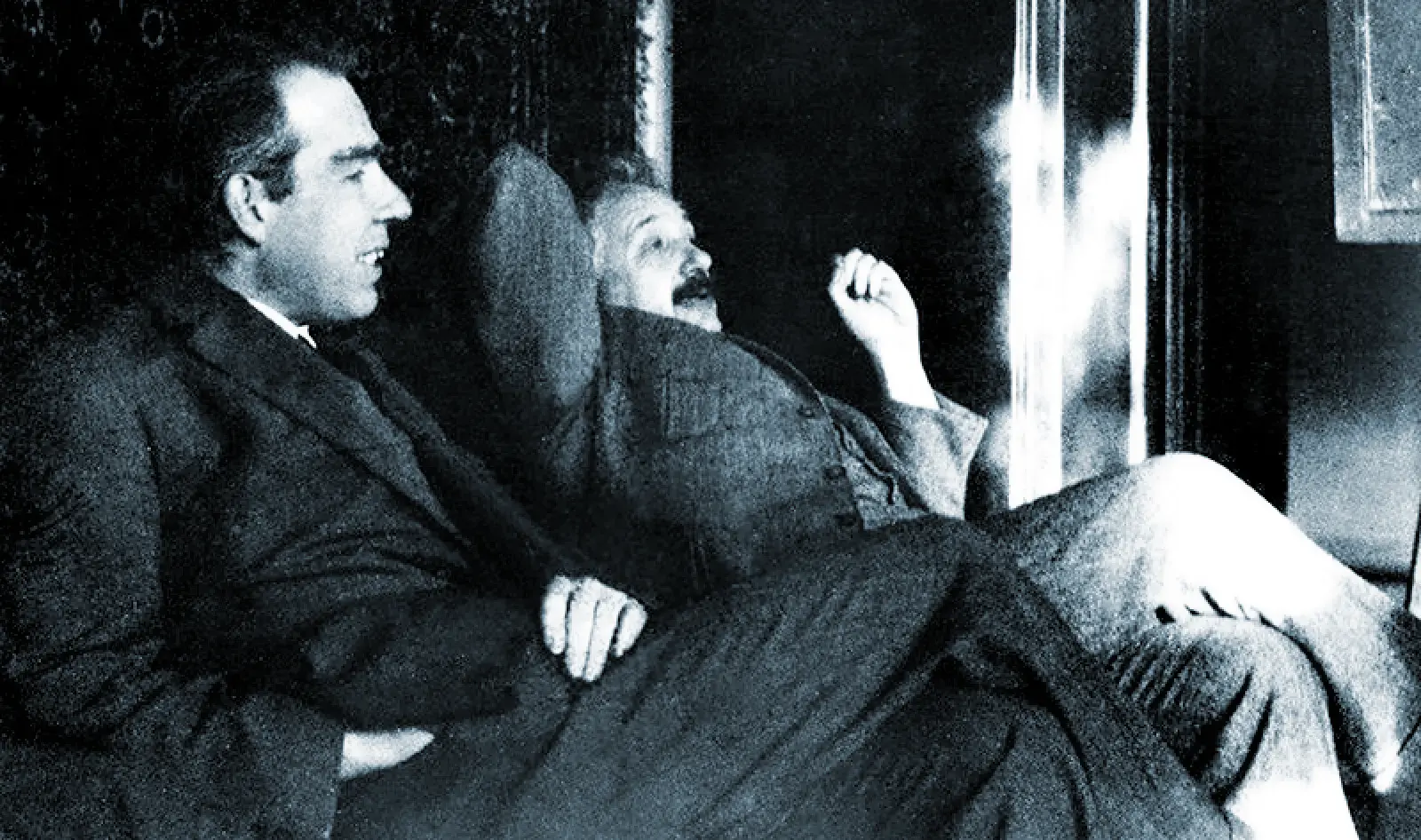
Niels Bohr, one of the primary architects of quantum mechanics, launched a fierce counteroffensive. Propelled by the Copenhagen interpretation, Bohr asserted that asking what a particle is doing when no one is looking is a meaningless question. "There is no quantum world," Bohr maintained. "There is only an abstract quantum physical description." Because quantum theory yielded overwhelmingly accurate predictions in laboratories, the physics community largely embraced Bohr’s pragmatism, shelving deep philosophical debates about the true nature of reality for decades.
John Stewart Bell and the Death of Local Realism
The intellectual stalemate persisted until 1964, when Northern Irish physicist John Stewart Bell resurrected the debate with a mathematical proof that would forever alter the landscape of physics. Bell, who felt a deep intellectual kinship with Einstein’s longing for an objective universe, read the work of physicist David Bohm. Bohm had formulated an alternative interpretation of quantum mechanics—known today as Bohmian mechanics—in which particles always possess real, precise positions, guided through space by a physical "pilot wave."
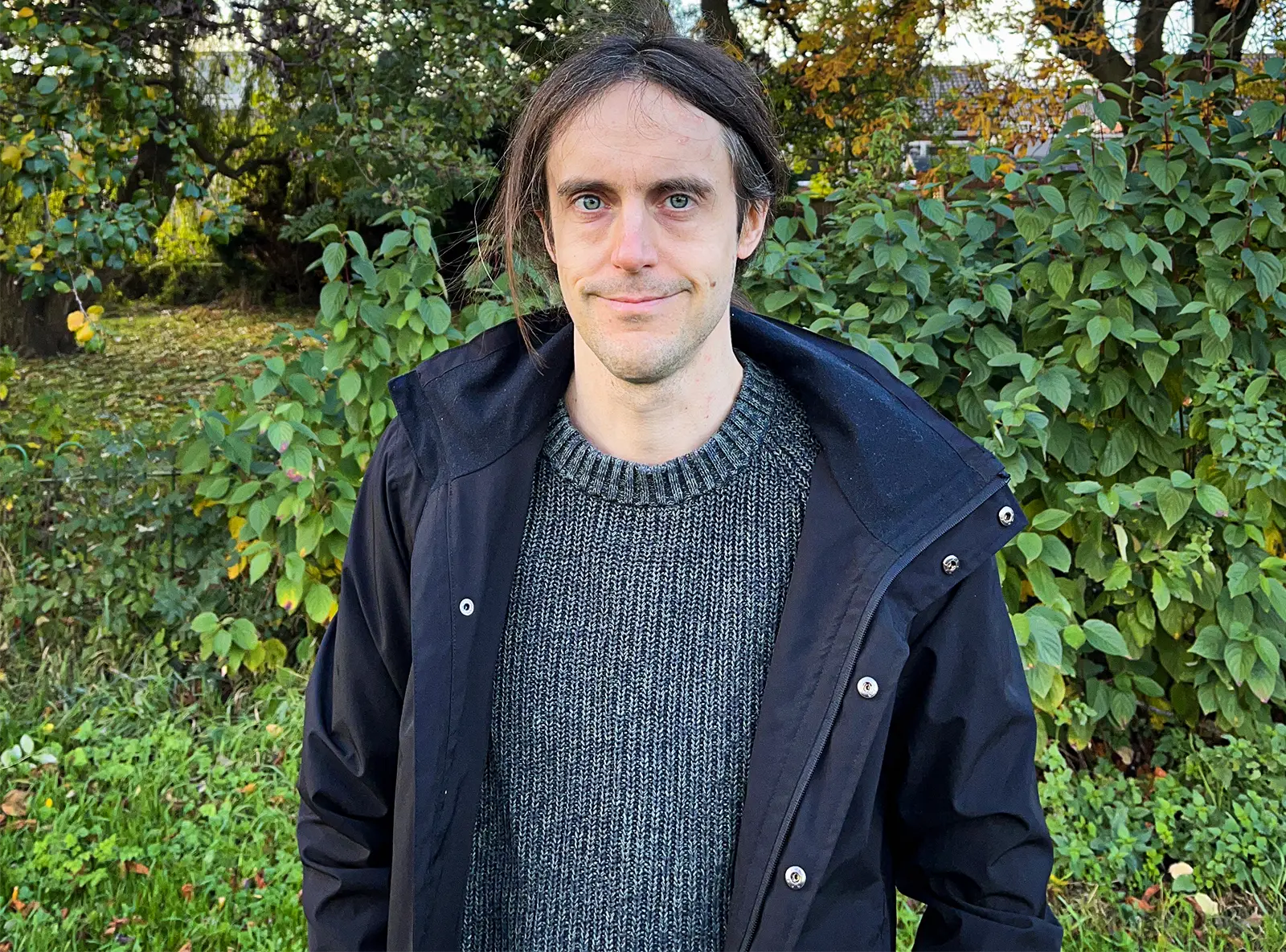
While Bohmian mechanics successfully preserved objective reality, it introduced a bitter pill that mainstream physicists found difficult to swallow: nonlocality. The pilot wave required instantaneous, faster-than-light connections across space, a concept Einstein famously dismissed as "spooky action at a distance."
Inspired by this tension, Bell formulated a revolutionary theorem. He devised a mathematical inequality applicable to any possible physical theory adhering to Einstein’s assumptions of local realism. Bell calculated how often pairs of separated particles should yield matching measurements if they possessed pre-existing properties and operated locally. He then calculated the predictions generated by standard quantum mechanics, discovering a distinct mathematical discrepancy: quantum particles matched far more frequently than local realism allowed.
Beginning in the 1980s, increasingly sophisticated laboratory experiments put Bell’s inequality to the test. Time and again, the experimental data favored quantum mechanics. Bell had definitively proven that Einstein’s worldview was incomplete: nature could not be simultaneously real and local. Physicists were forced to abandon one of those two foundational assumptions.
The PBR Theorem and the Final Blow to Epistemic Views
With local realism disproven, a faction of physicists attempted a compromise. They wondered if Einstein might still be partially correct—specifically, if the wave function could be interpreted not as a physical entity floating out in the universe, but purely as a state of incomplete knowledge residing inside an observer’s head, much like a subjective probability calculation.
This epistemic view of the wave function gained significant traction in the 2000s. In 2004, Perimeter Institute physicist Robert Spekkens constructed a toy model demonstrating that many bizarre quantum phenomena could be successfully reproduced if the quantum state merely reflected an observer’s lack of complete information about underlying, objective physical properties.
However, this middle-ground quest came to an abrupt, definitive end in 2012. Matthew Pusey, then a graduate student at Imperial College London, teamed up with Jonathan Barrett and Terry Rudolph to formulate what is now universally known as the PBR theorem.
Initially attempting to refine Spekkens’ models to minimize quantum weirdness, Pusey instead set out to prove mathematically that such an epistemic approach was impossible. Utilizing an elaborate thought experiment reminiscent of a card game, the PBR theorem demonstrated that quantum states cannot merely represent subjective states of knowledge.
The mathematical and logical architecture of PBR proved that if you assume physical systems have objective states and that independent systems can be prepared independently, quantum states must be real, physical properties stamped directly onto the fabric of reality. Subsequent technological milestones—including a 2024 experiment conducted by researchers at the University of Cambridge using an IBM quantum computer—have robustly re-confirmed the validity of the PBR theorem in automated laboratory settings.
Life After PBR: The Modern Crisis in Quantum Foundations
The publication and subsequent experimental validation of the PBR theorem left the physics community at a profound crossroads. By demonstrating that the wave function cannot merely be a reflection of human ignorance or subjective information, PBR effectively closed off the gentle middle paths that allowed physicists to dodge the deepest philosophical implications of quantum mechanics.
Today, researchers are forced into polarized camps. One option is to fully embrace radical realism—accepting that the quantum wave function is a literal, objective physical reality that spans the universe, despite its bizarre, non-local implications. Alternatively, physicists can embrace anti-realism, moving further into frameworks like QBism (Quantum Bayesianism), which asserts that quantum mechanics does not describe the external universe at all, but rather maps the subjective relationship between an observer and their environment.
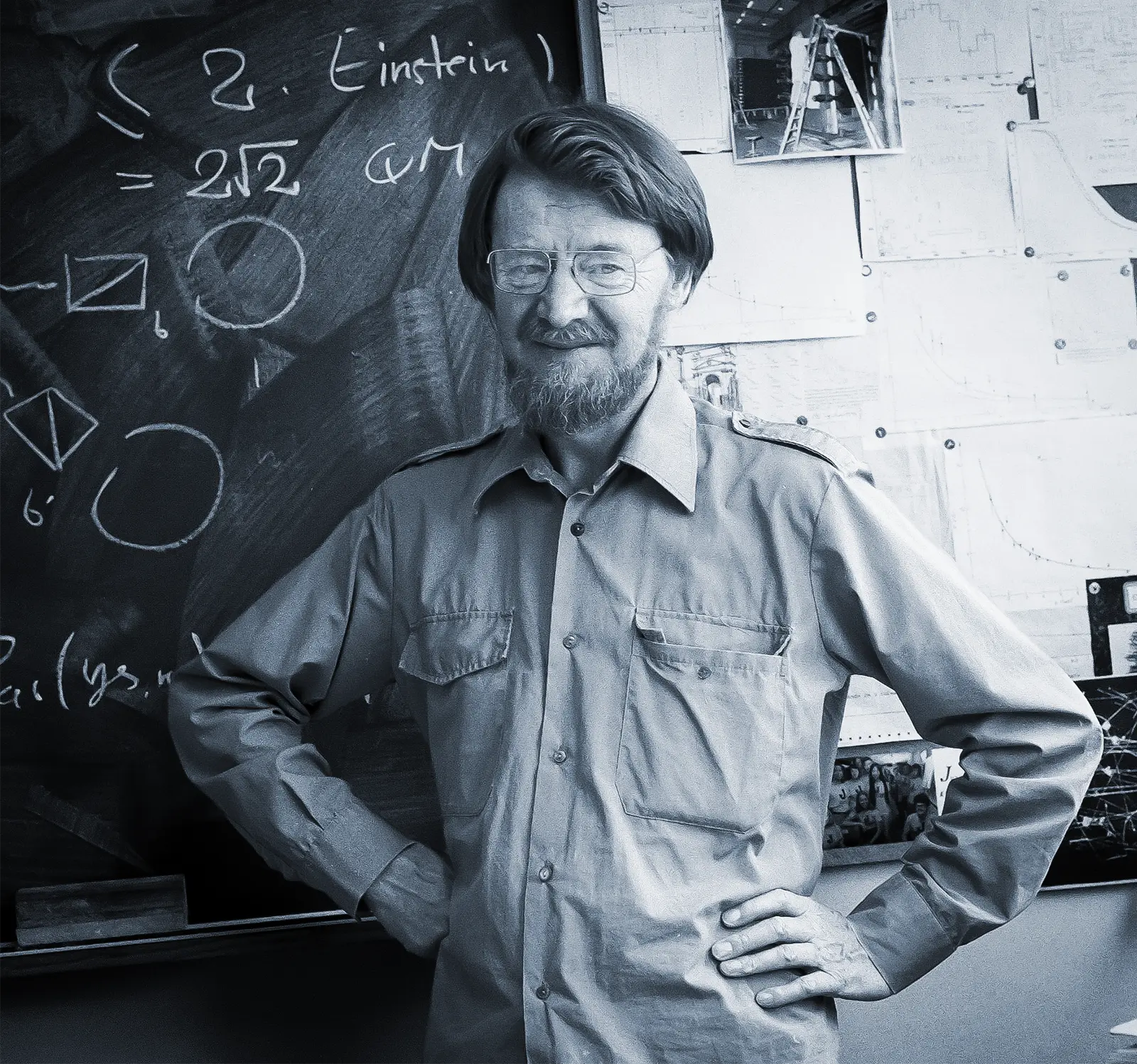
A small contingent of theoretical physicists, such as Perimeter Institute’s Lucien Hardy, continue to search for loopholes in the fine print of how "reality" is formally defined. They hope to construct a deeper, more generalized framework that avoids the stark binary of a completely surreal universe or the total abandonment of objective truth.
Yet, as experimental technology marches forward and computational power scales into the quantum realm, the constraints tighten. The century-long debate sparked by Einstein’s refusal to accept a probabilistic universe has reached its zenith. Whether humanity ultimately decides to bite the bullet and accept a profoundly strange objective reality or abandon the concept of reality altogether, one truth remains absolute: the comfortable, intuitive universe of classical physics is gone for good.