Elon Musk’s massive financial gamble on the 2026 midterms yields diminishing returns as the billionaire faces a shifting political landscape

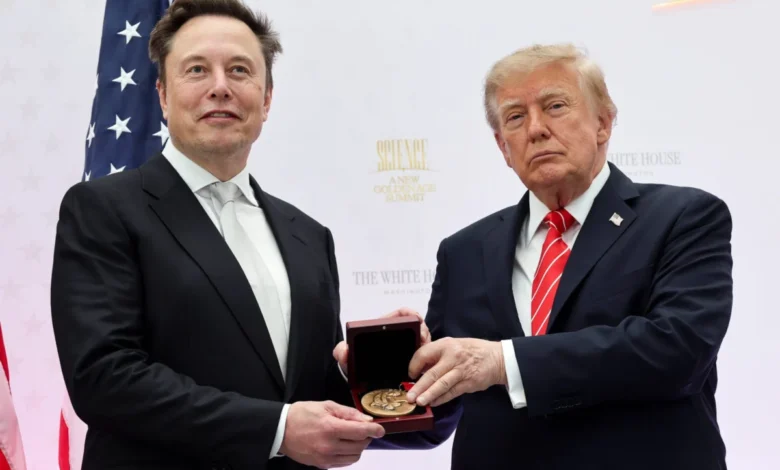
The intersection of extreme wealth and American electoral politics has long been a subject of intense scrutiny, but rarely has the friction between the two been as visible as it was during the 2026 midterm elections. Elon Musk, the world’s wealthiest individual and CEO of both Tesla and SpaceX, poured a staggering $474 million into Republican campaign coffers—a sum that nearly doubled his total financial participation in the 2024 presidential cycle. Yet, as the final ballots were tallied, the return on this record-breaking investment appeared starkly absent. With high-profile candidates like Ken Paxton and Governor Greg Abbott suffering decisive defeats, the results have ignited a fierce debate among political scientists, campaign finance experts, and market analysts regarding the efficacy of billionaire-led political spending in an increasingly polarized electorate.
A Chronology of Escalating Involvement
Musk’s trajectory in political financing has been marked by rapid acceleration. Following his active support in the 2024 cycle, the 2026 midterms saw him pivot toward a strategy of aggressive localized and federal funding. His $474 million war chest was dispersed across several channels, with a notable $200 million dedicated exclusively to Texas-based electoral efforts. This concentration of capital was intended to solidify a conservative stronghold in the state, yet the strategy hit a wall as voters pushed back against the heavy infusion of outside money.
The timeline of this expenditure suggests a strategic miscalculation. Throughout 2025 and early 2026, Musk transitioned from a donor to a central figure in the political apparatus, most notably through his involvement with the Department of Government Efficiency (DOGE). By the summer of 2026, as the primary season concluded, it became clear that his brand had become inextricably linked to the Republican establishment. When the November results came in, the optics were damaging; the defeat of marquee candidates signaled that the “Musk effect” might have reached a point of negative utility, where the association with the tech mogul became as much a liability as an asset.
Analyzing the Data: Where the Money Went
The scale of Musk’s donations places him in a tier of donor influence previously reserved for institutional entities. Beyond his localized Texas spending, he directed $30 million toward the Congressional Leadership Fund—the primary super PAC tasked with supporting House Republicans—and an additional $44 million to various federal-level groups.
He was not alone in this financial surge. The 2026 cycle saw a broader trend of Silicon Valley influence, with individuals such as Marc Andreessen and Ben Horowitz contributing $116.4 million, and OpenAI co-founder Greg Brockman and his wife Anna providing $50 million. Combined, these figures represent a paradigm shift in how campaign budgets are constructed, moving away from fragmented small-dollar fundraising toward centralized, billionaire-driven funding models. However, the data from the 2026 midterms suggests that this model does not guarantee electoral success. For every dollar spent, the electoral outcome remained tethered to broader public sentiment, suggesting that capital injection cannot overcome deep-seated policy disagreements or voter fatigue.
The Skepticism of Market and Policy Observers
Following the election, the market reaction was swift. Shares of Tesla and SpaceX, both headquartered in Texas, experienced a downward trend as investors processed the political fallout. The intersection of corporate performance and political failure is a precarious one for shareholders. When a CEO becomes the primary face of a failed political movement, the risk premium on their associated companies often rises.
Furthermore, the legal and regulatory implications of these losses are profound. With Democrats maintaining oversight power in the House and Senate, the probability of federal investigations into Musk’s business dealings has increased. The House Oversight Committee, led by figures like Representative Robert Garcia, has already signaled intent to probe the operations of DOGE and the extent to which government access was leveraged for private sector gain. This creates a dual-front conflict for Musk: he must now defend his business interests in the halls of Congress while managing the perception that his political capital has been significantly devalued.
The Role of DOGE and the “Fourth Branch” Argument
A critical element in the current backlash is the perception of DOGE as a “fourth branch” of government. Critics, such as Casey Michel, argue that the blurred lines between government oversight and private-sector profit-seeking created a political toxicity that ultimately hindered Republican candidates. The report that two dozen former DOGE staffers migrated to the private sector to raise over $500 million in capital—coupled with the $10 billion in government contracts awarded to Musk’s companies following his departure from the department—has provided a potent narrative for his political opponents.
This narrative suggests that Musk’s influence is no longer viewed as a benefit to the taxpayer, but as a mechanism for elite capture. In the eyes of many voters, the sheer volume of his donations acted as a reminder of this dynamic, potentially alienating moderate voters who might have otherwise supported the Republican ticket.
The Academic Perspective: Money as Messaging
Despite the poor electoral outcomes, some political scientists contend that the money was not entirely wasted. Alex Keena, a professor at Virginia Commonwealth University, argues that campaign finance should be viewed through the lens of agenda-setting rather than simple win-loss records.
“Money is affecting what we are talking about,” Keena noted in an analysis of the cycle. By spending nearly half a billion dollars, Musk successfully forced issues such as economic deregulation, government efficiency, and specific industry protections into the center of the national dialogue. Even in defeat, the topics prioritized by these donors continue to dominate the legislative agenda. For Musk, this suggests a long-term strategy: if you cannot win the election, you can still control the debate, ensuring that the legislative environment remains favorable to your corporate interests, regardless of which party holds the gavel.
The Outlook for 2028: Will the Spending Persist?
The fundamental question remains whether Musk will recalibrate his approach or exit the political arena entirely. History suggests that political participation among the ultra-wealthy is often cyclical. Jennifer Heerwig of SUNY Stony Brook University highlights that income is the strongest predictor of political donation frequency. As long as Musk retains his status as the world’s richest person, the financial capacity to re-enter the fray will remain.
However, Musk himself has shown signs of ambivalence. His May 2025 statement at the Qatar Economic Forum—where he claimed he was “going to do a lot less in the future”—indicates that he is aware of the diminishing returns of his involvement. Yet, the temptation to influence the 2028 presidential race will likely prove difficult to resist, particularly if he believes that his business empire requires a specific regulatory environment that only his direct intervention can secure.
Implications for the Future of Campaign Finance
The 2026 midterms will likely be remembered as a case study in the limitations of "checkbook politics." The defeat of candidates who were heavily subsidized by a single, polarizing figure serves as a cautionary tale for both donors and political consultants. It highlights that while money can dominate airwaves and digital advertising, it cannot force an electorate to vote against its own perceived interests.
As the dust settles, the Republican Party faces a difficult transition. It must decide whether to continue its reliance on high-dollar billionaire donors or to return to a broader, more grassroots-focused funding model that may be less susceptible to the negative PR associated with individual oligarchs. For Musk, the road ahead involves navigating potential congressional investigations, maintaining investor confidence in Tesla and SpaceX, and determining whether his legacy will be defined by his technological innovations or his increasingly contentious role in the American political experiment. The $474 million bet may have failed to deliver the electoral results he sought, but it has undeniably set the stage for a new, more volatile era of American politics where the lines between corporate power and government authority are permanently, and perhaps irrevocably, blurred.