The pursuit of limitless clean energy has long captivated both the public and the scientific community, occasionally blurring the line between rigorous empirical research and speculative ambition. For decades, the phrase "cold fusion" carried a heavy stigma, instantly evoking memories of the infamous 1989 scientific announcement that promised an energy revolution but ultimately delivered a cautionary tale of methodological errors and premature conclusions. However, a modern reassessment by philosophers, venture capitalists, and experimental physicists reveals a surprising twist: while the original claims of tabletop energy abundance proved illusory, the controversy inadvertently unlocked an entirely new frontier of subatomic research. Today, scientists are exploring exotic atoms, advanced material properties, and muon-catalyzed fusion—not as a panacea for global energy woes, but as a profound portal into the fundamental laws of nature.
A Retrospective on the 1989 Cold Fusion Controversy
To understand the enduring shadow cast over the field, one must examine the events of March 1989. Two electrochemists, Martin Fleischmann and Stanley Pons, convened a hurried press conference at the University of Utah to announce that they had successfully induced nuclear fusion in a simple tabletop apparatus at room temperature. Using palladium electrodes and heavy water, they claimed to have observed anomalous heat production that could only be explained by hydrogen nuclei fusing into helium.
The announcement sent shockwaves through the global scientific community. At a time when geopolitical tensions regularly threatened fossil fuel supplies and the environmental costs of traditional energy sources were mounting, the prospect of cheap, inexhaustible power was intoxicating. Politicians heralded the end of an era of resource scarcity, while the public eagerly anticipated a technological transformation.
Yet, the euphoria was short-lived. As laboratories across the globe attempted to replicate the Fleischmann-Pons experiment, inconsistencies and outright failures accumulated rapidly. Independent physicists pointed out fatal flaws in the detection of expected nuclear byproducts, such as neutrons and tritium. Compounding the scientific fallout, the researchers faced allegations of data manipulation, premature declarations bypassing peer review, and aggressive defensiveness against skeptics. By the end of the year, mainstream science had categorically dismissed cold fusion as a textbook case of pathological science—an episode where researchers fooled themselves into seeing what they wished to observe.
Destigmatizing the Field: The 2019 Reevaluation
Despite the consensus that cold fusion was a scientific dead end, a subset of researchers and strategists began questioning whether the total ostracization of the field had thrown the baby out with the bathwater. Among them was Matt Trevithick, then working at Google, who organized a multi-year project aimed at systematically reevaluating the materials science associated with the 1989 debacle.
This concerted effort culminated in a landmark 2019 paper published in the prestigious journal Nature. While the study did not validate the original claims of unexpected nuclear reactions, it achieved a more vital objective: it rehabilitated the study of hydrogenated metals. Specifically, the project highlighted palladium’s extraordinary capacity to absorb hydrogen like a molecular sponge—a genuine material property that had been unfairly tainted by association with the cold fusion fiasco. The initiative ultimately spawned nearly three dozen academic papers, successfully destigmatizing an area of solid-state physics that had languished under a reputational cloud for thirty years.
The Philosophical Argument for Marginalized Research
This rehabilitation effort found a conceptual champion in Huw Price, a philosopher at Trinity College, Cambridge, and co-founder of the Center for the Study of Existential Risk. Price has argued that the scientific establishment often exhibits an unhealthy degree of risk aversion, leading to the premature dismissal not only of fringe ideas, but of the very discourse surrounding them.
Price draws a philosophical parallel between speculative catastrophe scenarios—such as engineered bioweapons or artificial intelligence risks—and anomalous physical claims. Even when individual hypotheses seem highly improbable, the potential implications are of such magnitude that dismissing them entirely can blind researchers to adjacent, highly valuable discoveries. By shutting down inquiry based purely on historical embarrassment, science risks missing unexpected anomalies that could redefine our understanding of the physical world.
From Dismissed Claims to Exotic Physics: Muon-Catalyzed Fusion
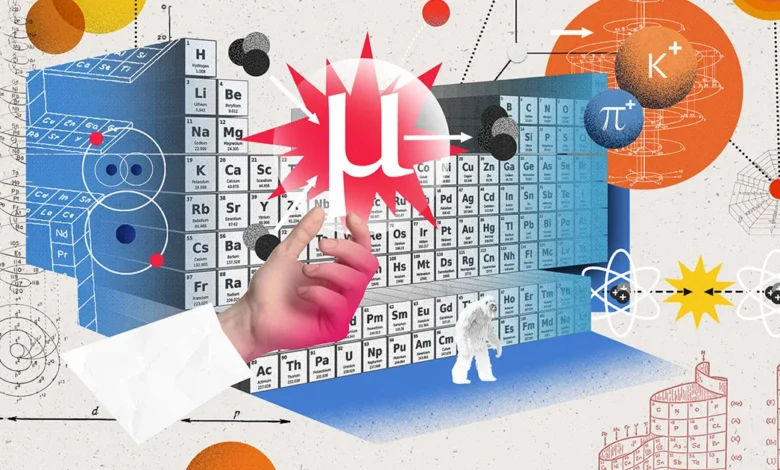
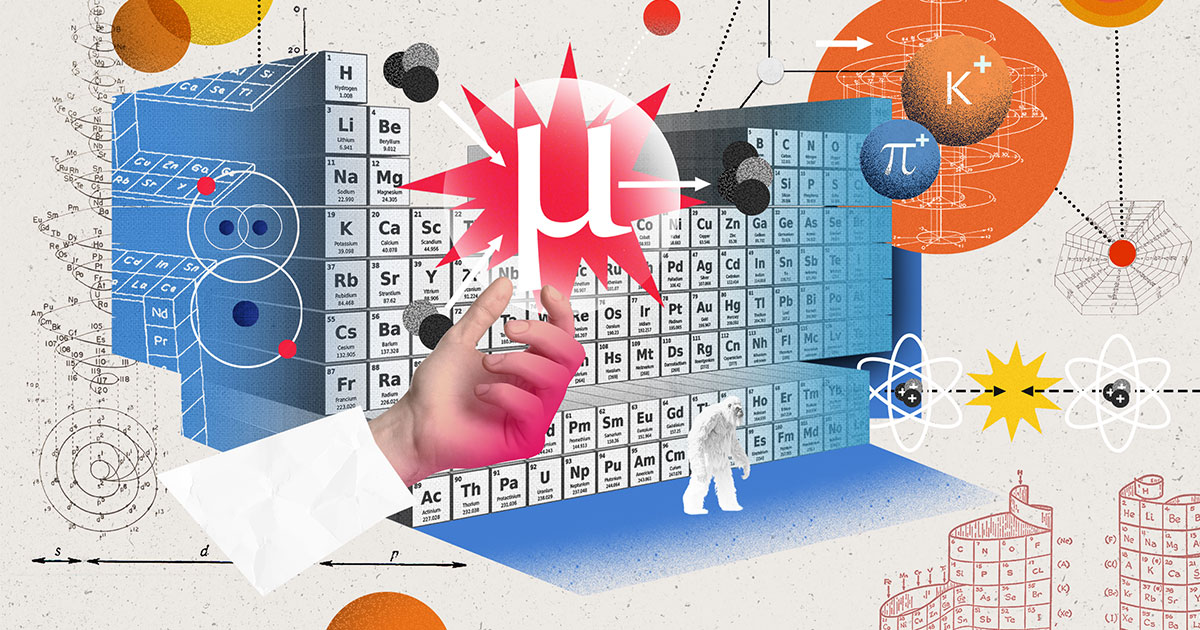
The fallout from these reassessments directed renewed attention toward legitimate avenues of subatomic physics, most notably muon-catalyzed fusion. Long before the 1989 controversy co-opted the term "cold fusion," physicists understood that substituting an electron with a heavier subatomic particle could fundamentally alter atomic structure.

In the Standard Model of particle physics, the electron has several heavier siblings, including the muon, which is roughly 207 times more massive. When researchers substitute an electron with a muon, quantum mechanics dictates that the resulting "muonic atom" shrinks dramatically—by a factor proportional to the particle’s mass. This intense compaction draws the atomic nuclei significantly closer together than in ordinary matter, lowering the Coulomb barrier that naturally repels positively charged nuclei and allowing fusion to occur at ambient temperatures.
While muon-catalyzed fusion is a scientifically verified phenomenon first observed in the 1950s, it has historically faced practical limitations. To achieve a net energy gain, a single muon must successfully catalyze hundreds of fusion cycles before it naturally decays or becomes trapped by an alpha particle. Because muons have a fleeting lifespan of roughly two microseconds, achieving this threshold has remained stubbornly out of reach.
However, contemporary researchers emphasize that the true value of muon-catalyzed fusion and related exotic atom research does not lie in electricity generation. Instead, these systems serve as unprecedented laboratories for probing fundamental physics.
Probing the Limits of Quantum Electrodynamics
Modern experimental facilities—such as the Antiproton Decelerator at CERN, the Japan Proton Accelerator Research Complex (J-PARC), and the Italian National Institute for Nuclear Physics—are now producing exotic atoms involving not just muons, but kaons, pions, and even antiprotons.
These shrunken atomic systems create extreme environments that test the absolute limits of quantum electrodynamics (QED). According to Coulomb’s law, the electric field within an atom intensifies dramatically as its radius shrinks. In atoms orbited by antiprotons or kaons, these fields scale up a millionfold, breaching the theoretical threshold known as the Schwinger limit. At this extreme juncture, the electric field becomes powerful enough to destabilize empty space, causing particles to materialize spontaneously out of the vacuum—a long-theorized phenomenon often described as "boiling the vacuum."
Recent experimental breakthroughs, including measurements involving kaonic fluorine experiencing fields above the Schwinger limit, have allowed physicists to observe these quantum effervescences indirectly. Furthermore, because these heavy particles orbit so tightly around the nucleus, they act as ultra-precise microscopic probes, revealing the detailed internal architecture of atomic nuclei, including the elusive distribution of neutron skins.

Broader Implications for Scientific Inquiry
The journey from a discredited 1989 press conference to cutting-edge research in exotic atoms and muon-catalyzed fusion offers a profound lesson in the philosophy of science. It underscores the danger of evaluating research programs solely on the basis of their most sensational headlines—such as the promise of instant, limitless energy.
When a scientific claim is framed as an all-or-nothing gamble, failure to deliver the primary promise often leads to a total abandonment of the field. Yet, as the rehabilitation of hydrogenated metal research and the flourishing study of exotic atoms demonstrate, rigorous inquiry into anomalous phenomena can uncover vast, unexpected realms of knowledge regardless of whether the initial practical application pans out.
Ultimately, the enduring legacy of the cold fusion saga is not the illusion of cheap power it briefly promised, but the reminder that human curiosity, when guided by rigorous methodology and freed from reputational taboos, will consistently unearth deeper truths about the universe.