Trump Loses At SCOTUS As High Court Rejects California Noncitizens Voting Request On Midterms Eve

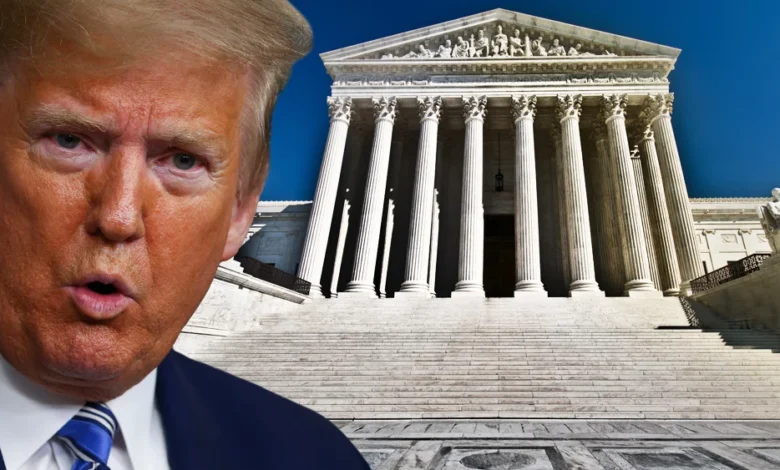
In a definitive legal defeat for the federal executive branch on the eve of a critical national election, the United States Supreme Court has rejected an emergency request by the Department of Justice to intervene in California’s voting procedures. The high court’s decision effectively blocks an attempt to sideline approximately 20,000 mail-in ballots cast in the nation’s most populous state.
The unsigned order, issued by the Supreme Court, leaves lower-court rulings intact and preserves the integrity of the ballots in question. The petition, brought forward by the federal government under the Trump administration, alleged widespread noncitizen voting and administrative vulnerabilities. However, both federal lower courts and ultimately the Supreme Court found the assertions lacking in both legal and factual foundation. With no public dissents recorded from the bench, the ruling underscores the limits of federal intervention in state-administered elections, dealing a major blow to federal election-integrity initiatives just hours before polls opened for the midterm elections.
Background and Context of the Legal Challenge
The roots of this legal showdown trace back to weeks of escalating tensions between federal authorities and California state officials. In the lead-up to the midterm elections, the Department of Justice pursued an aggressive strategy aimed at scrutinizing voter rolls and mail-in ballot distribution in several Democratic-leaning jurisdictions.
In California, federal attorneys targeted a batch of roughly 20,000 mail-in ballots, arguing that the lists contained significant discrepancies. The DOJ asserted that the targeted lists included individuals who were either unregistered to vote or no longer resided in the state, utilizing these claims to bolster a broader narrative alleging that noncitizens were attempting to exploit state election systems.
California officials vehemently denied these allegations, characterizing the federal effort as a politically motivated attempt to disenfranchise eligible voters and sow distrust in the democratic process. State election administrators emphasized that California utilizes robust verification protocols, including signature matching and unique barcode tracking on mail-in ballots, designed to catch irregularities long before votes are tabulated. Lower federal courts previously rejected the DOJ’s requests for emergency injunctions, leading the administration to file a final "Hail Mary" appeal to the nation’s highest tribunal.
The Supreme Court’s Decision and Procedural Details
Emergency applications submitted to the Supreme Court are typically routed through specific circuit justices based on geographic jurisdiction. In this case, the application was presented to Justice Elena Kagan, who oversees the Ninth Circuit, and subsequently referred to the full Court for consideration.
In an unsigned order, the Supreme Court stated simply: “The application for injunction pending appeal presented to Justice Kagan and by her referred to the Court is denied.”
The absence of any noted dissents or separate concurring opinions suggests a broad consensus among the justices regarding the insufficiency of the federal government’s emergency petition. Legal analysts note that the high court is exceedingly reluctant to alter election rules or disrupt ongoing voting procedures at the eleventh hour—a legal doctrine commonly referred to as the Purcell principle. By declining to intervene, the Court allowed the status quo in California to remain undisturbed, ensuring that the 20,000 ballots would be processed alongside all other eligible votes.
Official Reactions and Political Fallout
The Supreme Court’s decision was immediately hailed as a major victory by Democratic leaders and voting rights advocates, while drawing sharp rebukes from the MAGA movement and federal officials.

California Governor Gavin Newsom, who has positioned himself as a leading national voice against federal overreach and a potential contender for higher office, took to social media to celebrate the legal victory while issuing a stern warning to political actors attempting to disrupt state elections.
"Donald Trump is trying to throw out 20,000 California ballots and intimidate election workers," Newsom wrote in a public statement. "Let me be clear: If you interfere with our elections, California will come for you. No presidential pardon will save you."
Newsom’s remarks underscored a broader defense of states’ rights under the U.S. Constitution, which grants individual states primary authority over the administration of federal elections. Democratic allies across the country echoed the governor’s sentiments, praising the judiciary for upholding established electoral protections and rejecting what they termed partisan interference.
Conversely, supporters of the administration expressed deep disappointment with the ruling. Proponents of the federal intervention argued that the judiciary missed an opportunity to implement stringent safeguards against potential voter fraud. From the perspective of the Justice Department and its backers, aggressive oversight was necessary to guarantee that only legally qualified U.S. citizens participated in the electoral process, pointing to outdated voter registration databases as a persistent vulnerability.
Chronology of Events Leading to the Ruling
To fully understand the velocity of this legal battle, it is necessary to examine the compressed timeline that preceded the Supreme Court’s intervention:
- Mid-October 2026: The Department of Justice identifies approximately 20,000 disputed mail-in ballots in California, raising concerns over alleged administrative inaccuracies and potential noncitizen participation.
- Late October 2026: Federal attorneys file emergency motions in lower federal courts seeking an injunction to halt the processing and counting of the disputed ballots until a comprehensive audit can be performed.
- Days Prior to the Midterms: Lower federal courts reject the DOJ’s motions, ruling that the federal government failed to demonstrate irreparable harm or provide sufficient evidence of widespread voter fraud to justify disrupting an ongoing election.
- Eve of the Midterms: The DOJ escalates the matter to the U.S. Supreme Court, submitting an emergency petition via Justice Kagan requesting an immediate stay on the ballots.
- Midterm Eve (Evening): The Supreme Court issues an unsigned order denying the application, effectively ending the federal government’s legal bid to set aside the ballots.
Broader Implications for Federalism and Election Law
The high court’s refusal to intervene carries significant implications for the future of American election law and the delicate balance of power between federal and state governments.
For decades, the constitutional framework established by the Elections Clause has granted states wide latitude in determining the "Times, Places and Manner" of holding elections for Senators and Representatives. While Congress maintains the ultimate authority to override state regulations, the direct involvement of the executive branch through the Department of Justice in local ballot management represents a contentious escalation in federal oversight.
Legal scholars suggest that the Supreme Court’s adherence to the Purcell principle—which counsels against last-minute judicial disruptions of voting rules—remains a formidable barrier for any administration attempting to alter election procedures on the eve of a vote. This precedent provides a measure of stability for election administrators, who rely on predictable legal parameters to execute complex voting operations involving millions of citizens.
Furthermore, the ruling highlights the ongoing polarization surrounding election administration in the United States. As partisan battles increasingly shift to the courtroom, state leaders like Governor Newsom have demonstrated an aggressive willingness to utilize state legal resources and public messaging to counter federal interventions.
Ultimately, the Supreme Court’s decision ensures that the 20,000 disputed ballots in California will be evaluated under the state’s established verification procedures, allowing local election workers to complete their duties without federal interruption. As the midterm election results unfold, the legal precedent set by this case will likely serve as a foundational reference point for future debates over state sovereignty, federal oversight, and the integrity of American democracy.
Related posts: