Unearthing Ancient Complexities: New Discoveries at Morocco’s Oued Beht Rewrite North African History

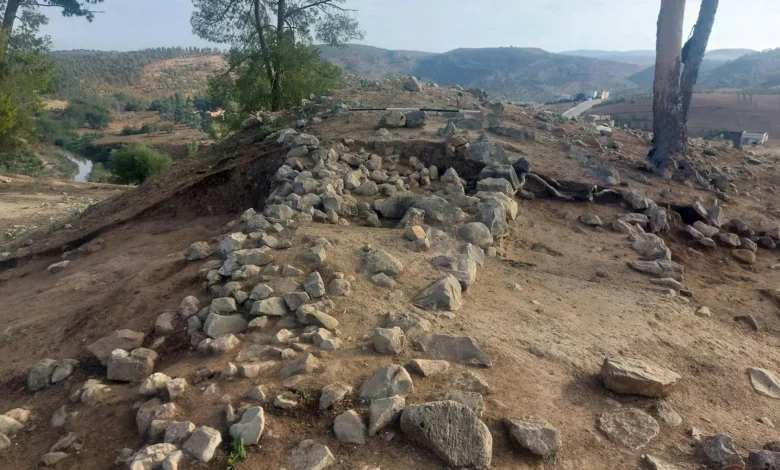
Deep in the rugged hills of north-west Morocco, overlooking the winding river that shares its name, the Oued Beht archaeological site is quietly reshaping our understanding of ancient Mediterranean history. For generations, the historical narrative of north-west Africa during the later prehistory and early bronze age has been heavily overshadowed by the monumental discoveries of the Nile Valley and the southern European coastlines. However, recent excavations spearheaded by the Oued Beht Archaeological Project are turning this paradigm on its head. Researchers have uncovered a sophisticated, heavily fortified structure dating back to the second millennium BC, revealing that prehistoric communities in the Maghreb were far more organized, socially complex, and deeply interconnected with the broader Mediterranean world than previously imagined.
The breakthrough findings, stemming from rigorous field campaigns conducted through 2023 and detailed in subsequent scholarly publications, push back the established timeline for organized defensive architecture in north Africa outside of Egypt. Far from being an isolated outpost, Oued Beht is emerging as a dynamic prehistoric hub that actively engaged in regional resource management, large-scale civil engineering, and wide-ranging Mediterranean trade networks.
Main Facts of the Excavation
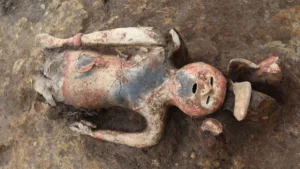
The ongoing archaeological investigations at Oued Beht span a sprawling human activity area covering at least ten hectares in the Gharb region of Morocco. The site’s primary and most famous prehistoric phase dates back to the Final Neolithic period, roughly between 5,400 and 4,900 years ago. During this era, Oued Beht functioned as what is likely the largest and earliest agricultural complex ever discovered in Africa outside the Nile Valley. Excavators have unearthed thousands of polished stone axes, specialized craft production tools, and finely crafted pottery featuring intricate painted patterns.
The most recent phase of research, however, centers on a massive built structure dating to the second millennium BC—approximately 4,000 to 3,500 years ago. This multi-phase system of ditches, earthwork ramparts, and stone walls represents the earliest known large-scale defensive architecture in the Maghreb. Built strategically across a narrow section of the Oued Beht ridge, the structure effectively cut off and protected the southern tip of the promontory, turning a natural topographical feature into a fortified redoubt.
Chronology and Historical Context
To fully grasp the magnitude of the Oued Beht discoveries, historians must look at how the region’s chronology has shifted. For decades, the later prehistory of the Maghreb—encompassing Morocco, Algeria, and Tunisia—suffered from a severe lack of comprehensive archaeological data. While neighboring regions like the Iberian Peninsula in south-western Europe or the Aegean centers of the eastern Mediterranean boasted extensive documentation of Bronze Age societies, north-west Africa remained an archaeological blank spot in many standard global histories.
The timeline of human occupation at Oued Beht unfolds across several distinct epochs:
- Mid-Fourth to Early Third Millennia BC (Final Neolithic): The establishment of a vast, open farming community across the northern sector of the site. Plant and animal remains indicate a thriving agrarian economy centered on the cultivation of wheat and barley, the harvesting of wild flora, and the husbandry of livestock.
- Second Millennium BC (Bronze Age): A significant shift in settlement and survival strategies. Communities moved their focus from the sprawling northern plains to the narrower, highly defensible southern ridge. It was during this window that the monumental ditch and rampart system was constructed, reflecting a heightened need for territorial demarcation and localized security.
- Eleventh to Thirteenth Centuries AD (Medieval Period): Centuries after the prehistoric site fell silent, the Oued Beht ridge experienced a dramatic resurgence. Medieval populations rebuilt parts of the ancient defensive walls, established a working rural hamlet or farm on the neighboring hilltop, and consecrated a cemetery situated directly between the two zones.
Supporting Data and Environmental Evidence

The material culture recovered from Oued Beht provides a granular look at daily life and economic specialization in prehistoric north-west Africa. Environmental sampling from the Neolithic and Bronze Age levels has yielded robust archaeobotanical and zooarchaeological datasets. Carbonized seeds confirm advanced cereal management, while faunal assemblages point to a heavy reliance on domestic sheep, goats, and cattle, supplemented by hunting.
Furthermore, the sheer volume of material culture—ranging from domestic refuse to elite craft items—indicates a stable, permanent, or semi-permanent population capable of surplus production. The construction of the second-millennium BC defensive wall itself serves as quantifiable data regarding social organization. Engineers calculate that building an embankment and ditch system of this scale would have required significant societal planning, centralized leadership, and the mobilization of a coordinated labor force capable of provisioning workers and executing complex civil engineering tasks.
Official Perspectives and Scholarly Implications
While direct modern political statements are absent in archaeological contexts, the consensus emerging from the academic consortium—including researchers from the Oued Beht Archaeological Project and international collaborating institutions—underscores a paradigm shift in Mediterranean studies.
Historians and archaeologists emphasize that the presence of these defensive structures does not point to the arrival of foreign "invaders," but rather to internal socio-political transformations. As populations grew and regional dynamics shifted, communities faced increasing competition over fertile land, water resources, and control over trade routes traversing the landscape. The construction of fortified positions was a physical manifestation of this rising competition, as well as a tool for local elites to assert power over strategic geographical corridors.
Moreover, the timing of these developments aligns intriguingly with trends seen across the narrow straits of Gibraltar. During the same era, southern Iberia was witnessing the rise of complex, stratified societies—such as the Argaric culture (circa 2200–1550 BC)—which were characterized by hilltop settlements, advanced metallurgy, and strict social hierarchies. The material and architectural parallels strongly suggest that the Maghreb was not isolated from these European developments. Instead, north-west Africa was an active participant in an interconnected western Mediterranean network of exchange, ideas, and cultural transmission.
Broader Impact and Future Outlook
The implications of the Oued Beht excavations extend far beyond local Moroccan history; they compel a complete rewriting of north African historiography. By proving that prehistoric and Bronze Age communities in the Maghreb were capable of large-scale coordination, complex environmental management, and structural defense, the site dismantles outdated colonial-era assumptions about the pace and trajectory of societal evolution in the region.
Furthermore, the discovery of medieval reuse highlights the enduring strategic importance of the landscape. Oued Beht was not a fleeting, single-use settlement, but a sustained focal point in the human geography of north-west Africa across multiple millennia.
As the Oued Beht Archaeological Project continues its multidisciplinary fieldwork—integrating radiocarbon dating, advanced spatial mapping, and deep environmental analysis—the site stands poised to become a cornerstone for future research. It promises to illuminate the missing chapters of how ancient societies in the Maghreb transitioned from early agrarian pioneers into the complex, structured networks that defined the ancient and medieval worlds.