California’s Billionaire Wealth Tax Prop 40 Confronts the Long Shadow of the 1978 Property Tax Revolt

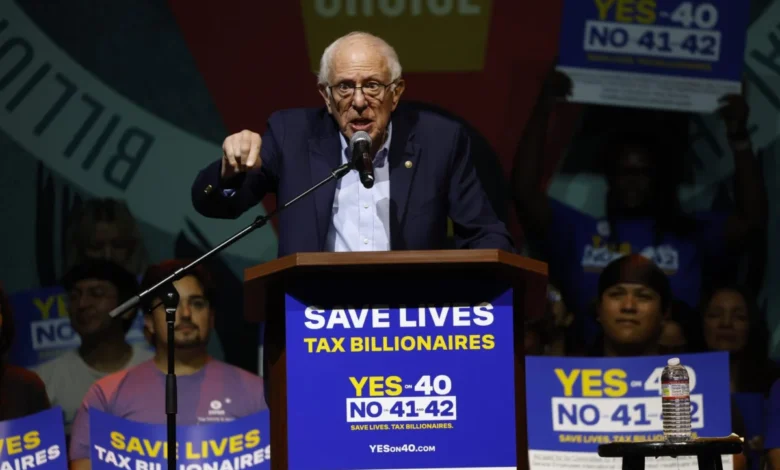
As California voters prepare to head to the polls to decide the fate of Proposition 40, a controversial proposal to levy a one-time 5% tax on the assets of the state’s billionaires, the debate is being framed not merely by current economic pressures, but by a half-century-old legacy of fiscal policy. The looming shadow of Proposition 13, the 1978 ballot measure that fundamentally altered the state’s tax landscape, serves as the primary subtext for this modern struggle over wealth redistribution and state solvency.
The 1978 Foundation: The Tax Revolt That Changed Everything
To understand the current volatility of California’s state budget, one must look back to the late 1970s. In 1978, in an atmosphere of intense taxpayer frustration, Californians passed Proposition 13. This landmark legislation capped property taxes at 1% of a property’s assessed value, limited annual increases to 2%, and restricted reassessments to market value only upon the sale of a property or significant renovation.
This "tax revolt" preceded the election of Ronald Reagan and signaled a broader shift toward fiscal conservatism across the United States. While the measure was a victory for homeowners seeking stability, it stripped local governments and school districts of a predictable, robust revenue stream. Consequently, Sacramento was forced to pivot, shifting the burden of state funding away from property taxes and onto the state’s income tax structure. Over the subsequent decades, this transition has resulted in California adopting the most progressive income-tax regime in the nation, with top marginal rates reaching 13.3%. When federal tax obligations are factored in, the total tax bite for high earners can exceed 50%.
The Volatility of the Current Revenue Model
The current tax structure relies heavily on a narrow base. The top 1% of earners are responsible for nearly half of all state income tax revenue. While this provides a substantial influx of cash during economic booms, it renders the state budget exceptionally fragile. Because high-income earners often derive much of their wealth from capital gains, state coffers are inherently tethered to the fluctuations of the stock market.
Furthermore, the ultra-wealthy often structure their finances to minimize reported income, relying instead on asset-backed lending to finance their lifestyles. This creates a "tax gap" that proponents of Proposition 40 argue must be addressed to ensure the wealthiest Californians pay their fair share. The union-backed coalition behind Prop 40 asserts that a one-time 5% tax on assets held by individuals with a net worth exceeding $1 billion could generate as much as $100 billion in revenue, providing a critical safety net for public services and offsetting potential federal cuts to healthcare spending.
Prop 40: Economic Panacea or Policy Peril?
The debate surrounding Proposition 40 is split between those who see it as a necessary correction and those who view it as a catalyst for economic flight. Supporters, buoyed by the state’s recent AI-driven economic boom, argue that even with a 5% wealth levy, the state’s billionaires would remain among the wealthiest individuals globally. They contend that the state has a moral and fiscal imperative to tap into this immense concentration of wealth to fund public infrastructure and social programs.
Conversely, opponents, including tech founders and business leaders, warn that the tax could trigger a "capital flight" scenario. They argue that the tax would force founders to divest from their companies, potentially suppressing innovation and job creation. Recent studies, including analysis from Stanford researchers, have suggested that such a policy could lead to a net loss of revenue over time as the wealthy relocate their primary residences to states with more favorable tax environments.
The "Everywhere Millionaire" Argument: A Better Target?
While the political discourse centers on billionaires, some economists suggest the state is looking at the wrong demographic. Princeton economist Owen Zidar and University of Chicago professor Eric Zwick, authors of The Everywhere Millionaire, argue that the true culprit for California’s fiscal imbalances is the legacy of Prop 13.
In a recent op-ed for The New York Times, Zidar and Zwick noted that if California is serious about tapping into undertaxed wealth, it should look at residential property. Under the current Prop 13 framework, homeowners pay an average of only 0.8% in property taxes. If California were to align its property tax rates with a state like Texas, where the average is closer to 2%, the state could theoretically generate an additional $100 billion annually. Zidar and Zwick argue that this would not only stabilize the budget but also cool the overheated housing market, estimating a potential 13% reduction in home prices.
However, the political reality of repealing or modifying Prop 13 remains daunting. Voters who benefited from decades of capped tax increases would face significant financial strain, and any move to increase property taxes would likely trigger a counter-revolt.
The Risks of Untested Taxation
Beyond the broader economic arguments, there are significant legal and practical concerns regarding the implementation of Proposition 40. Laura Tyson, a former White House economic adviser, and Lenny Mendonca, a former chief economic adviser to Governor Gavin Newsom, have warned that the tax is a "bridge to nowhere."
In a recent Project Syndicate analysis, they pointed out that six billionaires—representing roughly one-quarter of the anticipated revenue from Prop 40—had already vacated the state in anticipation of the measure. Furthermore, they argue that because the tax relies on an untested method of valuing non-liquid assets, it would almost certainly be tied up in a "tidal wave of litigation." This legal uncertainty could render the revenue stream speculative and unreliable, potentially leaving the state with a budget deficit despite the passage of the bill.
Tyson and Mendonca argue that the focus should instead be on systemic reforms at the federal level, such as increasing corporate tax rates, taxing unrealized capital gains, closing loopholes like the "carried interest" deduction, and strengthening inheritance taxes.
Chronology and Legislative Context
- 1978: California voters pass Proposition 13, limiting property taxes to 1% of assessed value.
- 1980s–2010s: California shifts its fiscal dependence from property taxes to a high-bracket income tax structure.
- 2025 (Fiscal Year): California generates roughly $100 billion in property tax revenue, while struggling with budgetary volatility linked to the stock market.
- Late 2026: As the state faces a proposed $540 billion budget, the debate over Proposition 40 intensifies.
- October 2026: Several billionaires exit California, citing the threat of the proposed wealth tax.
- Present: Voters remain polarized as economic experts warn that the state’s narrow tax base—already top-heavy—will be exacerbated by the proposed measure.
Broader Implications for State Governance
The conflict over Proposition 40 represents a fundamental question about the future of California’s social contract. With a proposed annual expenditure of $540 billion, the state faces the challenge of maintaining its expansive public services while navigating an economy that is increasingly reliant on a tiny fraction of the population.
Economists Zidar and Zwick suggest that the solution requires a "broadening of the aperture." By focusing only on a few hundred billionaires, the state may be ignoring a wider swath of wealth that could be taxed more efficiently through real estate reform. However, as the state’s political leadership knows well, property tax reform is the "third rail" of California politics.
As the election approaches, the state stands at a crossroads. The choice is between continuing to lean into a progressive, high-income tax strategy that risks volatility and flight, or attempting the politically hazardous task of dismantling the remnants of the 1978 tax revolution to create a more stable, albeit painful, fiscal future. Ultimately, whether Prop 40 passes or fails, the underlying tension between the legacy of Prop 13 and the modern demand for social investment ensures that California’s tax policy will remain a central point of national economic concern for years to come.
Related posts: