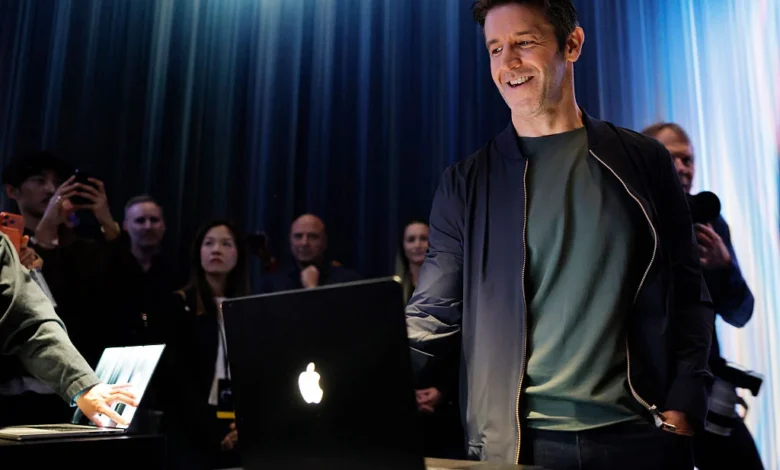
Apple Inc. finds itself at a fascinating crossroads in its illustrious technological history. Following a high-profile leadership transition that saw longtime hardware engineering chief John Ternus ascend to the position of Chief Executive Officer at the beginning of September 2026, the technology giant is navigating a rapidly evolving artificial intelligence landscape. Speaking candidly during an extensive interview with veteran journalist Steven Levy for Wired, Ternus addressed persistent industry narratives suggesting that the Cupertino-based company has lagged behind its primary competitors in the artificial intelligence race.
Despite public perception and past delays—most notably the heavily scrutinized rollout of the next-generation Siri upgrade that ultimately materialized in the summer of 2026—Ternus projected absolute confidence in Apple’s current trajectory. Facing a barrage of questions regarding the company’s measured pace in a sector defined by breakneck innovation and flashy feature releases, the newly minted CEO stood firm. While acknowledging the external noise and widespread industry commentary, Ternus summarized his outlook with a straightforward declaration: “I really like where we’re at.”
The Evolving Landscape of Apple’s AI Integration
For years, Wall Street analysts, tech critics, and consumers have closely monitored Apple’s artificial intelligence initiatives, often contrasting the company’s deliberate, privacy-centric methodology with the aggressive, feature-first deployments seen at rival firms like Google, Microsoft, and OpenAI. The delays surrounding the enhanced capabilities of Siri became a focal point for critics who argued that Apple was losing its competitive edge in generative AI and ambient computing.
However, Ternus’s recent remarks offer a clear window into Apple’s underlying philosophy: integration over novelty. Rather than rushing to deploy standalone generative models that capture headlines but offer questionable long-term utility, Apple is opting for a philosophy of seamless ubiquity.
“We’re absolutely going to leverage AI in our new products,” Ternus told Wired. However, he drew a sharp line in the sand regarding the industry-wide temptation to force artificial intelligence into every facet of software development purely for the sake of marketing. “We don’t want to ship AI for AI’s sake. When we’re doing it right, people won’t have to think about whether it was AI that made this happen or more traditional software. What matters is, did we build something that they really love?”
This pragmatic approach underscores Apple’s historical playbook. Much like the company’s entry into the MP3 player, smartphone, and smartwatch markets—where it rarely pioneered the underlying technology, but instead perfected the user experience—Apple is attempting to redefine artificial intelligence through the lens of human-centric design, hardware-software synergy, and uncompromising data privacy.
A Chronology of Transition and Transformation
To understand Apple’s current posture in the artificial intelligence sector, it is essential to examine the timeline of strategic shifts and leadership developments that have shaped the company over the past twenty-four months:
- Late 2024 to Throughout 2025: Apple introduces its suite of foundational machine learning features under the banner of Apple Intelligence, rolling out initial tools incrementally across iOS, iPadOS, and macOS. Concurrently, rumors and reports mount regarding internal delays concerning a dramatically more powerful, context-aware iteration of Siri capable of deep cross-app control.
- Summer 2026: Apple officially launches its long-awaited, overhauled version of Siri. While initial reviews note that the release feels somewhat anticlimactic given the immense anticipation, it successfully establishes a stable, privacy-compliant foundation for advanced machine learning tasks executed locally on-device and via secure private cloud servers.
- September 1, 2026: In a major executive reshuffle, John Ternus is officially named Chief Executive Officer of Apple, succeeding his predecessor and stepping out of his previous role as head of hardware engineering. In his inaugural internal memo to employees, Ternus hypes a massive upcoming product launch cycle designed to showcase the company’s next-generation hardware and software ecosystem.
- October 31, 2026: During a Los Angeles product showcase event, Apple debuts a fresh wave of hardware and software iterations. On the same day, Ternus’s comprehensive interview with Wired is published, offering the tech industry its first deep-dive perspective into the CEO’s long-term vision for artificial intelligence and product architecture.
The App Ecosystem and the Rise of Autonomous Agents
One of the most provocative subjects touched upon during the Wired interview was the long-term existential threat that autonomous AI agents pose to traditional software ecosystems. As artificial intelligence grows increasingly sophisticated, industry futurists have theorized about a future where users no longer need to interact with individual applications. Instead, overarching AI agents could dynamically execute complex tasks—such as booking travel, managing finances, or drafting documents—behind the scenes, effectively rendering the traditional app grid obsolete.

When Steven Levy pressed Ternus on whether this paradigm shift could fundamentally disrupt Apple’s lucrative App Store economy and its broader ecosystem, the CEO offered a grounded, human-centric counterperspective.
“That could make life really easy, I suppose,” Ternus acknowledged, before pivoting to the core ethos that has defined Apple’s hardware and software philosophy for decades. “But the creation of products is a deeply human and personal thing, something that we love to do.”
This perspective highlights a fundamental philosophical divergence in the tech sector. While companies driven by pure software and cloud services envision a disintermediated future where software interfaces dissolve into conversational AI prompts, Apple remains fundamentally anchored to the tangible interplay between human design, premium hardware, and bespoke software experiences. For Apple, the device—and the dedicated application ecosystem built for it—is not merely a conduit for an AI assistant, but a crafted canvas meant to enrich human creativity and daily life.
Industry Implications and Market Analysis
Ternus’s public defense of Apple’s strategy arrives at a critical juncture for the world’s most valuable technology companies. Market analysts point out that while Apple’s cautious deployment of AI has insulated it from some of the high-profile hallucinations and privacy missteps that have plagued competitors, the company can no longer afford to be viewed as a follower in consumer tech’s most consequential paradigm shift.
Financial data from recent quarters indicates that consumer demand is increasingly shifting toward devices heavily integrated with on-device AI capabilities. By embedding advanced machine learning models directly into its custom-designed Apple Silicon chips, the company is betting that consumers will ultimately value a secure, private, and deeply integrated AI experience over flashy, cloud-reliant features that harvest user data.
Furthermore, Ternus’s ascension to the CEO role signals a doubling-down on hardware-software integration. Having spent years spearheading Apple’s engineering efforts for iPads, iPhones, and Macs, Ternus approaches artificial intelligence not merely as a cloud-based software service, but as an intrinsic capability that must be harmonized with silicon architecture, thermal constraints, and battery efficiency.
Looking Ahead
As Apple pushes forward into the final stretch of 2026 and prepares for the upcoming holiday shopping season, the tech world will be watching closely to see how consumers respond to the company’s refined ecosystem.
Whether Ternus’s measured, anti-hype philosophy proves to be a masterclass in strategic patience or a miscalculation in a fast-moving market remains to be seen. However, his message is unambiguous: Apple is charting its own course in the age of artificial intelligence. By refusing to chase fleeting industry trends and prioritizing tangible, beloved user experiences over rushed feature rollouts, Apple is signaling that its future will be built on its own terms—one carefully engineered product at a time.