BYD Prepares to Launch the Highly Anticipated Ocean MPV as Production Prototypes Surface Across China

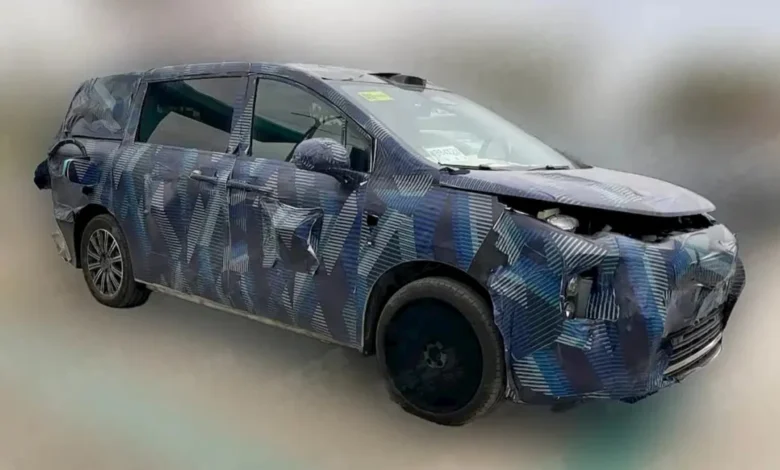
The global automotive landscape continues to experience a profound transformation led by New Energy Vehicles (NEVs), with Chinese manufacturing giant BYD at the forefront of this industrial shift. As the company expands its diverse portfolio into new vehicle segments, recent developments indicate that BYD is moving closer to the official market debut of its first multi-purpose vehicle (MPV) under the popular Ocean series. Recent intelligence, captured via spy photographs and video footage from Chinese automotive platforms such as Autohome and social media channels like ThinkerCar, reveals that heavily camouflaged production prototypes of the upcoming Ocean MPV have been spotted undergoing rigorous real-world testing. These sightings, occurring both on transport carriers and at proprietary BYD Flash Charging stations across China, offer the automotive community its clearest look yet at the brand’s next major volume product ahead of its anticipated launch by the end of 2026.
The Journey from Concept to Production: The Genesis of the Ocean MPV
The developmental trajectory of BYD’s upcoming MPV began earlier this year when the automaker first pulled the covers off the futuristic Ocean-V concept at the prestigious Beijing Auto Show. The concept vehicle immediately captured the attention of industry analysts and consumers alike, serving as a bold design study that previewed the aesthetic and technological direction of the company’s first-ever MPV within the Ocean product hierarchy.
The Ocean-V concept was defined by its forward-looking design language, featuring seamless body lines, aerodynamic efficiency markers, and an ultra-modern interior cabin equipped with advanced technological interfaces. Among the standout features showcased in Beijing was a sliding center display screen designed to enhance cabin ergonomics, alongside two specialized operational configurations: Camping Mode and Movie Mode. In Camping Mode, the interior layout demonstrated exceptional flexibility, allowing seats to either fold completely flat to form a comfortable sleeping surface or swivel inward to face one another, catering to the growing lifestyle and outdoor recreation market. Meanwhile, Movie Mode converted the vehicle’s interior into a private, mobile entertainment lounge by deploying a large display screen that flipped outward seamlessly from the dashboard.
These high-tech flourishes generated considerable excitement, setting high expectations for the eventual production-ready vehicle. However, recent spy shots of the camouflaged test mules have revealed a more pragmatic approach to manufacturing, highlighting the inevitable compromises required to transition an avant-garde concept car into a commercially viable, mass-produced family vehicle.
Design Evolution: Contrasting the Concept with the Prototype

While the Ocean-V concept introduced a radical vision for future mobility, the prototype vehicles currently undergoing public road tests display a significantly more conventional design vocabulary. Recent images published by Autohome showcase a distinctly boxy silhouette, diverging sharply from the sleek, sweeping contours of the concept car.
The test mule features a prominent, wide front grille, a styling cue that strongly suggests the presence of an internal combustion engine component, pointing toward a plug-in hybrid architecture rather than a pure battery-electric vehicle (BEV). Additionally, the vehicle retains traditional pull-style door handles rather than the flush, pop-out electronic handles common on contemporary luxury EVs. This departure from ultra-modern styling trends toward a more utilitarian approach reflects the practical demands of the MPV segment, where interior space, structural rigidity, and manufacturing cost efficiencies take precedence over radical exterior styling.
Despite the more traditional body shape, the prototype models spotted at BYD Flash Charging stations were outfitted with sophisticated hardware, most notably a massive roof-mounted LiDAR sensor. This inclusion confirms that the Ocean MPV will integrate advanced driver-assistance systems (ADAS), aligning with BYD’s broader strategy to incorporate higher levels of autonomous driving capabilities into its upcoming vehicle generations. Video footage shared by industry trackers on platforms like X further corroborate these observations, demonstrating the vehicle’s substantial road presence while in transit on commercial car carriers.
Dimensions, Seating Layout, and Engineering Specifications
Although BYD has maintained a strict official silence regarding the detailed technical specifications of the Ocean MPV, regional media reports and regulatory filings have provided a comprehensive look at the vehicle’s physical dimensions and internal configuration.
According to local industry data, the forthcoming MPV is projected to measure approximately 5,145 millimeters in length, 1,970 millimeters in width, and 1,805 millimeters in height, supported by a generous wheelbase spanning 3,045 millimeters. These dimensions place the vehicle squarely in the large-size MPV category, ensuring a spacious cabin environment capable of rivaling established competitors in the domestic and international markets.
Inside the cabin, the vehicle is widely expected to utilize a traditional 2+2+3 seating arrangement, providing comfortable accommodations for up to seven passengers. This configuration prioritizes second-row passenger comfort, featuring individual captain’s chairs that are standard in modern family-oriented and executive-class MPVs.

Underneath the sheet metal, industry consensus points toward the integration of BYD’s proprietary technological ecosystem. Given the large front grille observed on the test vehicles, analysts anticipate that the Ocean MPV will employ BYD’s advanced DM-i (Dual Mode intelligent) plug-in hybrid electric vehicle system. This powertrain architecture is renowned for its exceptional fuel efficiency, extended driving range, and smooth power delivery, making it an ideal choice for large family vehicles designed for both urban commuting and long-distance travel. Furthermore, the vehicle is expected to incorporate BYD’s signature Blade Battery technology, recognized globally for its high thermal stability, safety profile, and space-efficient structural integration.
Strategic Market Positioning Within BYD’s Portfolio
The introduction of the Ocean MPV is a strategic move designed to bridge a distinct gap within BYD’s extensive multi-brand and multi-series product ecosystem. Currently, BYD commands a dominant position in the Chinese MPV market through its specialized offerings. At the higher end of the spectrum sits the Denza D9, a luxury flagship MPV operating under the upscale Denza brand, with price points generally starting above 300,000 yuan (approximately $45,000). Positioned slightly below or adjacent to the luxury tier is the BYD Xia, which occupies the 200,000 to 300,000 yuan price bracket ($30,000 to $45,000).
The upcoming Ocean MPV is strategically engineered to occupy the spaces within or adjacent to these existing offerings, targeting families and commercial fleet buyers looking for advanced NEV technology, generous interior volume, and competitive pricing. By expanding the Ocean product series—which traditionally houses youthful, dynamic, and tech-forward models—into the MPV segment, BYD aims to capture demographic cohorts that require high passenger and cargo capacity without sacrificing modern connectivity and electrification benefits.
Timeline and Leadership Perspective
The development and rollout of the Ocean MPV are proceeding according to a tightly managed corporate timeline. Zhang Zhou, general manager of BYD’s Ocean series, formally outlined the company’s strategic roadmap, indicating that the organization remains on track to officially launch its first MPV model by the end of 2026.
As the launch window approaches, testing phases are expected to intensify. Automotive analysts anticipate that additional details concerning powertrain variants, battery capacities, official nomenclature, and interior technology packages will be revealed through regulatory filings with China’s Ministry of Industry and Information Technology (MIIT) in the coming months, preceding public pre-sales events.

Broader Industry Implications and Competitive Landscape
The entry of BYD into the mainstream MPV segment with an electrified Ocean-series offering carries significant implications for the broader automotive market, both within China and globally. The multi-purpose vehicle segment has historically been dominated by internal combustion engine vehicles, particularly in Asian markets where large family transport and executive shuttle services rely heavily on spacious cabin layouts.
By applying advanced plug-in hybrid powertrains, high-density blade batteries, and cutting-edge LiDAR-based driver assistance systems to a high-volume MPV platform, BYD is accelerating the electrification of a notoriously stubborn vehicle segment. Traditional foreign and domestic competitors operating in the same price corridors will likely face increased pressure to accelerate their own NEV MPV development programs to counter BYD’s aggressive scaling and cost efficiencies.
Furthermore, as Chinese automakers increasingly look toward international expansion, versatile multi-passenger vehicles equipped with long-range hybrid technology represent highly attractive export products for emerging markets and regions where charging infrastructure remains under development. While BYD has not yet confirmed formal export plans specifically for the Ocean MPV, the vehicle’s globally appealing dimensions and flexible powertrain options position it as a strong candidate for international deployment as the company continues its rapid global footprint expansion throughout the late 2020s.
Related posts: