Rivian Electric Delivery Vans Spotted in Walmart Livery Spark Speculation Over Major Fleet Partnership

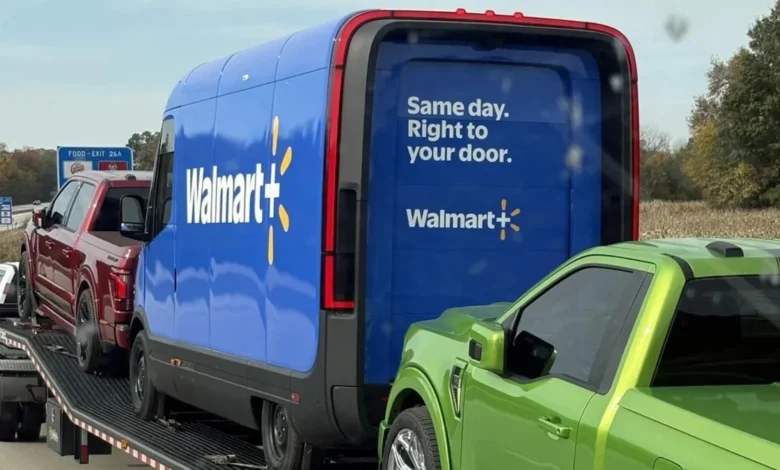
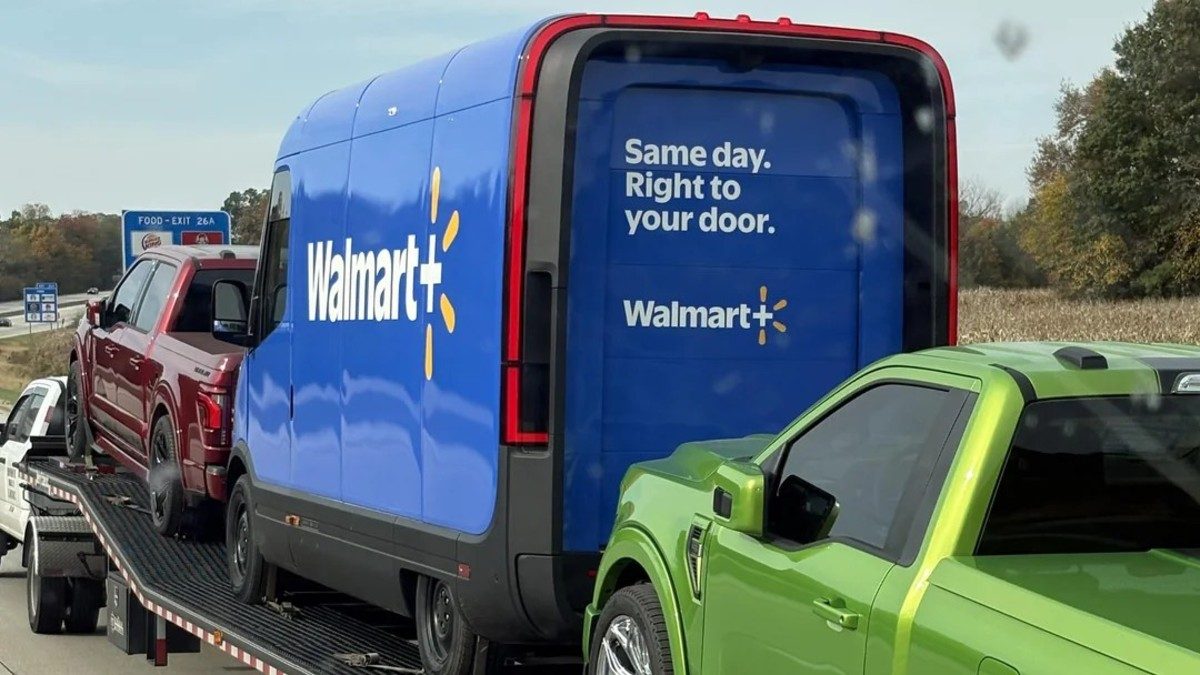
The landscape of American commercial fleet electrification shifted visibly on a Tuesday afternoon when sharp-eyed motorists captured photographs of a Rivian commercial electric delivery van adorned in distinct Walmart+ branding. Transported on a multi-vehicle car hauler along Interstate 94 in northwest Indiana, the vehicle immediately caught the attention of automotive industry observers and retail supply chain analysts alike. This public sighting represents the first concrete visual evidence suggesting that retail giant Walmart may be positioning itself to become Rivian’s next major commercial van customer, potentially stepping into a tier of deployment previously occupied exclusively by e-commerce behemoth Amazon.
Neither Rivian nor Walmart has formally announced a commercial supply agreement or fleet partnership. However, the appearance of the branded commercial vehicle in the heart of the American Midwest arrives at a critical junction for both companies. Walmart has spent the better part of the decade aggressively pursuing a comprehensive transition to zero-emission last-mile delivery vehicles, only to face a series of unforeseen disruptions from its prior manufacturing partners. Simultaneously, Rivian Automotive Inc. has been actively seeking a high-volume, enterprise-level customer to diversify its commercial vehicle revenue stream following the expiration of its initial exclusivity agreement with Amazon, which absorbed the vast majority of the automaker’s early commercial van production.
Chronology of the Sighting and Community Discovery
The initial disclosure of the Walmart-branded Rivian van occurred on social media platform Reddit, where a user operating under the handle biggie_ballzzz shared a photograph captured on the I-94 corridor. The image depicted the distinctive electric commercial vehicle secured tightly to a heavy-duty trailer sandwiched between two pickup trucks. The van’s exterior featured prominent Walmart+ visual elements, while the rear access doors prominently displayed the corporate slogan, "Same day. Right to your door."
Automotive enthusiasts quickly identified the vehicle’s unique design attributes, including the signature tall body architecture and the sweeping red LED light bar wrapping across the rear fascia—hallmarks of Rivian’s custom-engineered commercial platform. Initial skepticism regarding the authenticity of the photograph was swiftly addressed when a secondary user shared photographic evidence of a similarly liveried Rivian van parked directly in front of a Walmart Supercenter located in Hammond, Indiana, roughly thirty miles west of the initial highway sighting.
As the images circulated across investor forums and automotive news outlets, financial markets reacted visibly. Rivian’s publicly traded stock (NASDAQ: RIVN) experienced an upward valuation swing of more than three percent during afternoon trading hours. This market movement coincided with heightened anticipation surrounding Rivian’s upcoming third-quarter 2026 financial results, scheduled for release on Thursday, October 29.
Walmart’s Fleet Electrification Strategy and Supply Chain Volatility
To understand the strategic significance of a potential Rivian partnership, one must examine Walmart’s turbulent history regarding last-mile fleet procurement. Over the past five years, the retailer has established ambitious corporate sustainability targets aimed at achieving zero emissions across its global operations by 2040. Last-mile delivery vehicles represent a cornerstone of this initiative, but Walmart’s prior supplier selections have encountered severe operational roadblocks.
In 2022, Walmart entered into a high-profile commercial agreement with electric vehicle startup Canoo, placing a preliminary order for 4,500 lifestyle delivery vehicles intended to support the retailer’s InHome delivery service. However, Canoo struggled extensively with capital preservation, production scaling, and liquidity maintenance. By January 2025, the company succumbed to mounting financial pressures, filing for Chapter 7 bankruptcy and permanently ceasing all business operations, leaving Walmart with an unsupported vehicle fleet.
Concurrently, Walmart sought to diversify its electric delivery inventory by securing a reservation for 5,000 BrightDrop electric vans manufactured by General Motors. These vehicles were officially integrated into the retailer’s active delivery fleet in late 2024. Yet, General Motors abruptly altered its commercial strategy a year later, announcing the termination of BrightDrop electric van production at its CAMI assembly facility in Ontario, Canada, without establishing an alternative manufacturing pipeline. Production metrics underscored the challenge: BrightDrop was tracking toward approximately 4,000 United States sales for the 2025 calendar year, a marginal figure compared to the more than 60,000 internal-combustion-engine Express and Savana vans produced annually by GM.
Consequently, Walmart currently operates an inventory of orphaned electric vehicle platforms—vehicles manufactured by companies that have either exited the market entirely or discontinued production lines. For a supply chain operation of Walmart’s scale, maintaining orphaned commercial fleets presents profound logistical challenges regarding parts availability, software maintenance, and warranty servicing. To continue scaling its zero-emission delivery network, the corporation requires a stable, high-volume domestic manufacturer capable of producing purpose-built commercial electric vehicles.
Rivian’s Commercial Division and the Search for Enterprise Scale
For Rivian, securing a secondary anchor customer for its commercial van platform is of paramount strategic importance. The company’s foundational commercial relationship with Amazon involved an initial order of 100,000 custom electric delivery vans. By late 2026, Rivian’s production output had successfully placed more than 40,000 of these units onto public roadways.
However, the framework of the original Amazon agreement included an exclusivity period that officially expired in November 2023. While Rivian subsequently secured smaller pilot deployments and supply agreements—such as a late 2023 pilot with AT&T and a 2025 integration with meal-kit provider HelloFresh—none of these arrangements approached the scale required to fully utilize the commercial production capacity of Rivian’s manufacturing facility in Normal, Illinois.

To address this volume gap, Rivian formally opened commercial van sales to the broader enterprise market in February 2025. The company established a structured pricing and configuration tier, introducing the smaller RCV 500 starting at $79,900 and the high-capacity RCV 700 starting at $83,900. Despite making these vehicles accessible to any commercial fleet operator, large-scale enterprise adoption has remained measured, leaving Rivian heavily reliant on its primary consumer vehicle lines and the Amazon contract.
An alignment with Walmart would fundamentally alter Rivian’s commercial business model. By supplying a retail competitor of Amazon’s magnitude, Rivian would validate the commercial viability and durability of its van architecture across diverse corporate operating environments. Furthermore, potential infrastructure synergies exist between the two enterprises. Walmart has actively expanded its proprietary 400 kW fast-charging network, establishing high-capacity charging stations across 100 retail locations in 20 states. Notably, Walmart’s management of retail charging infrastructure includes executive personnel with professional histories directly tied to Rivian’s corporate development, potentially facilitating infrastructure integration for commercial fleet charging depots.
Industry Implications and Market Outlook
Automotive industry analysts emphasize that a single commercial vehicle observed on a transport trailer does not inherently constitute a definitive enterprise-wide fleet acquisition. The spotted vans may represent test units allocated for an advanced evaluation phase or a localized pilot program designed to assess vehicle performance, battery degradation under heavy retail delivery cycles, and driver ergonomics.
Nevertheless, the timing and strategic logic of the sighting suggest a high probability of institutional engagement. Walmart faces an urgent operational imperative to replace its defunct Canoo and BrightDrop assets with reliable, purpose-built electric delivery platforms. Given that Rivian’s Normal, Illinois assembly plant remains one of the few domestic facilities actively producing scalable commercial electric vans at a high volume, the pairing represents a logical convergence of corporate necessity and manufacturing capability.
The broader market implications touch upon the competitive dynamics of American retail and logistics. For Walmart to deploy the exact same commercial vehicle architecture utilized by its chief retail rival, Amazon, highlights the current consolidation within the domestic electric commercial vehicle sector. As specialized EV startups struggle to achieve manufacturing scale and legacy automakers pivot their electrification timelines, the marketplace for purpose-built last-mile delivery vans has narrowed significantly.
As Rivian prepares to deliver its third-quarter financial report to stakeholders, market analysts will scrutinize executive commentary for any official disclosures regarding expanded commercial partnerships. While a massive fleet order announcement may not materialize immediately, the appearance of Walmart-liveried Rivian vans on public highways signals a transformative shift in commercial fleet procurement, pointing toward a future where the backbone of American retail delivery relies on unified, highly efficient electric vehicle infrastructure.
Related posts: