James Gunn defends the narrative philosophy of the DCU amid audience questions regarding long-term crossover connectivity

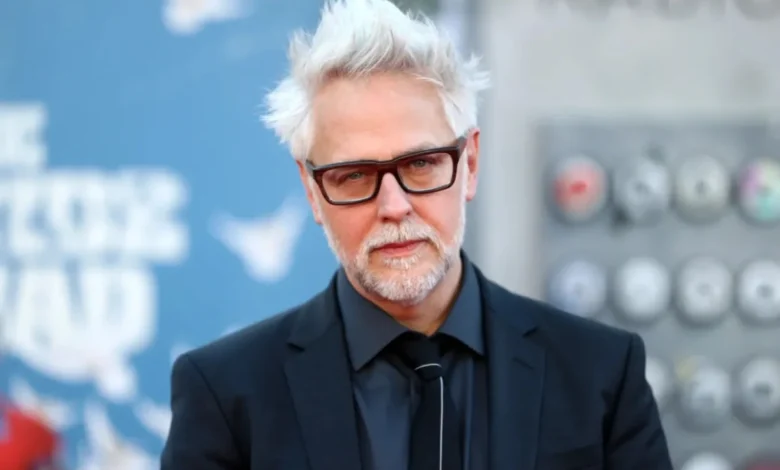
The landscape of modern superhero cinema has undergone a seismic shift over the last decade, largely dictated by the interconnected storytelling model popularized by the Marvel Cinematic Universe (MCU). As DC Studios co-heads James Gunn and Peter Safran continue to roll out their revamped DC Universe (DCU), the creative approach has faced increasing scrutiny from fans accustomed to the "build-up" methodology. Addressing these concerns directly on the social media platform Threads this past Saturday, James Gunn clarified that the new DCU is not intended to function as a singular, linear bridge toward a predetermined crossover event, but rather as a diverse collection of standalone narratives existing within a shared, flexible reality.
The discourse originated from a fan’s critique of the current DCU slate, which includes projects like Superman, Peacemaker, Supergirl, Creature Commandos, and the recently released Clayface. The user questioned the lack of a clear, singular trajectory, prompting a candid response from Gunn.
Redefining the Shared Universe Model
Gunn’s defense of his creative strategy hinges on the distinction between "connectivity" and "dependency." In his response, Gunn emphasized that the DCU acts as an alternate universe where filmmakers can drop in at any point in time or location to tell a compelling story.
"I couldn’t agree more," Gunn stated in response to a supporter who argued that total interconnection is not a requirement for a successful franchise. "DCU is just an alternate universe; we can enter at any location or time and tell THAT story. I dislike the idea that individual stories aren’t meaningful unless they lead to something else."
Gunn drew a direct parallel to the Star Wars franchise, noting that the Lucasfilm property has maintained a consistent universe for half a century across disparate media formats—including films, television series, literature, and gaming—without needing every entry to function solely as a prologue to a future crossover. While he acknowledged that Star Wars may lack the tonal variety of the proposed DCU, the structural precedent remains a cornerstone of his philosophy.
Chronology and the Current State of the DCU
The current phase of the DCU is characterized by a mix of high-profile legacy characters and niche, genre-specific explorations. The recent release of Clayface, directed by James Watkins, serves as a test case for this strategy. The film, which debuted at the top of the North American box office with $24 million, focuses on the Batman villain Matt Hagen. Unlike previous iterations of superhero films that prioritize world-building, Clayface is designed as a self-contained horror-thriller.
The release schedule for the DCU’s immediate future includes:
- 2025: Superman (The foundational film of the new era)
- 2026: Supergirl
- 2026: Clayface (Released in mid-2026)
- 2027: Superman: Man of Tomorrow (Scheduled for July 9, 2027)
This timeline illustrates a deliberate pacing that prioritizes character-driven narratives over the rapid-fire release of "event" films. By introducing characters like Clayface—a figure traditionally reserved for supporting roles—the studio is testing the appetite for standalone features that do not rely on the broader DC canon to justify their existence.
Analytical Perspective: The Shift in Superhero Consumption
Market analysts have observed a growing trend of "superhero fatigue" in the general audience, a phenomenon often attributed to the complexity and homework required to follow highly serialized, interconnected franchises. By decoupling individual stories from the "crossover requirement," Gunn is effectively attempting to lower the barrier to entry for casual moviegoers.
The financial performance of Clayface provides empirical weight to this strategy. Opening at $24 million from 3,458 locations is a significant success for a character who has never headlined a feature film. Reviews, such as the critique by Variety’s Guy Lodge, suggest that the film succeeds precisely because it avoids the "franchise treatment," allowing it to function as a "genre-melding romp."
This approach serves a dual purpose: it mitigates the risk of a single narrative failure impacting the entire brand, and it allows for tonal flexibility. A horror film like Clayface does not need to align perfectly with the tone of a space-faring adventure or a grounded political drama, provided they share the same base reality.
Official Stance and Internal Logic
Gunn has been careful to clarify that "standalone" does not mean "isolated." He noted that while stories are intended to stand on their own merits, they will inherently share a degree of connective tissue. He pointed to the upcoming Superman: Man of Tomorrow as a project that naturally expands upon the world established in the initial 2025 Superman film.
"The Superman saga begins with Superman and extends into Man of Tomorrow, and contains many characters we’ve introduced in other stories," Gunn explained. "But that doesn’t mean those other stories only exist to set up what’s happening there. I would love people to be seeing Clayface because it’s a great, fun horror movie unto itself, not because of where else Clayface will show up three movies from now."
This statement signals a departure from the "post-credits scene" culture that has dominated the industry for years, where the audience’s primary takeaway is often the anticipation of the next installment rather than the resolution of the current one.
Broader Industry Implications
The pivot toward decentralized storytelling in the DCU reflects a broader industry recognition that the "Infinity Saga" model of the 2010s may no longer be the most sustainable path forward. As streaming platforms and cinema chains grapple with shifting audience habits, the demand for "eventized" television and film is being challenged by a desire for quality, contained experiences.
If the DCU continues to succeed with this model, it could influence the wider industry to prioritize director-driven visions over brand-driven continuity. Major studios are closely monitoring the reception of these projects to determine if the audience is willing to support a "multiverse" of disparate tones and styles under a single corporate banner.
Furthermore, the integration of niche characters like Clayface suggests that the DCU is leveraging its massive intellectual property library not just for brand recognition, but to diversify the types of films being produced under the superhero umbrella. By allowing characters to exist in their own genre spaces, DC Studios is theoretically expanding its potential demographic reach beyond the traditional comic book fan base.
Future Outlook and Final Considerations
As James Gunn looks toward the 2027 release of Superman: Man of Tomorrow, the challenge will be to maintain this delicate balance. If the studio manages to foster a sense of a "shared world" without falling into the trap of over-serialization, they may succeed in revitalizing the brand.
The current strategy remains a bold experiment. For the audience, the shift may take time to fully materialize. Fans who are accustomed to looking for breadcrumbs and clues leading to a major crossover may continue to ask, "What is this building towards?" However, if the output remains as distinct and well-received as the early indicators for the new slate suggest, the question may eventually change from "What is this building towards?" to "What interesting story are we getting next?"
The success of the DCU will ultimately be measured not by the complexity of its interconnected web, but by the quality and resonance of the individual threads that compose it. As Gunn noted, the history of successful storytelling—from the golden age of literature to the longevity of the Star Wars franchise—proves that a universe can be both vast and episodic. Whether the modern theater-going public is ready to embrace this episodic reality, however, remains the central question of the coming years in Hollywood.