
Mapping the Epigenetic Landscape: How Modern Science is Validating and Expanding C.H. Waddington’s Century-Old Vision

By the middle of the twentieth century, the biological sciences appeared to be nearing a grand, unifying resolution. Charles Darwin’s theory of evolution by natural selection had established the foundational framework for how organisms adapt over generations, while the emergence of classical genetics illuminated how traits are transmitted on a molecular level. The intellectual architecture was further cemented in 1942 when biologist Julian Huxley coined the term “the modern synthesis” to describe the marriage of natural selection and Mendelian genetics. When the discovery of the double-helix structure of DNA in 1953 unveiled the precise code of heredity, many scientists assumed that the remaining chapters of biology would merely involve filling in minute operational details.
Yet, a dissenting faction within the scientific community remained unconvinced that a purely gene-centric worldview could account for the full spectrum of biological form and function. Among the most prominent skeptics was the British embryologist and geneticist Conrad Hal Waddington. Known affectionately to his peers as “Wad,” Waddington recognized that while genetics could explain the transmission of traits, it failed to provide a comprehensive mechanism for how genes systematically orchestrate the construction of an entire organism. Specifically, the prevailing models could not adequately explain how a single, undifferentiated embryonic cell reliably gives rise to hundreds of specialized tissues—such as neurons, myocytes, and hepatocytes—in precisely the correct spatial configurations during embryogenesis.
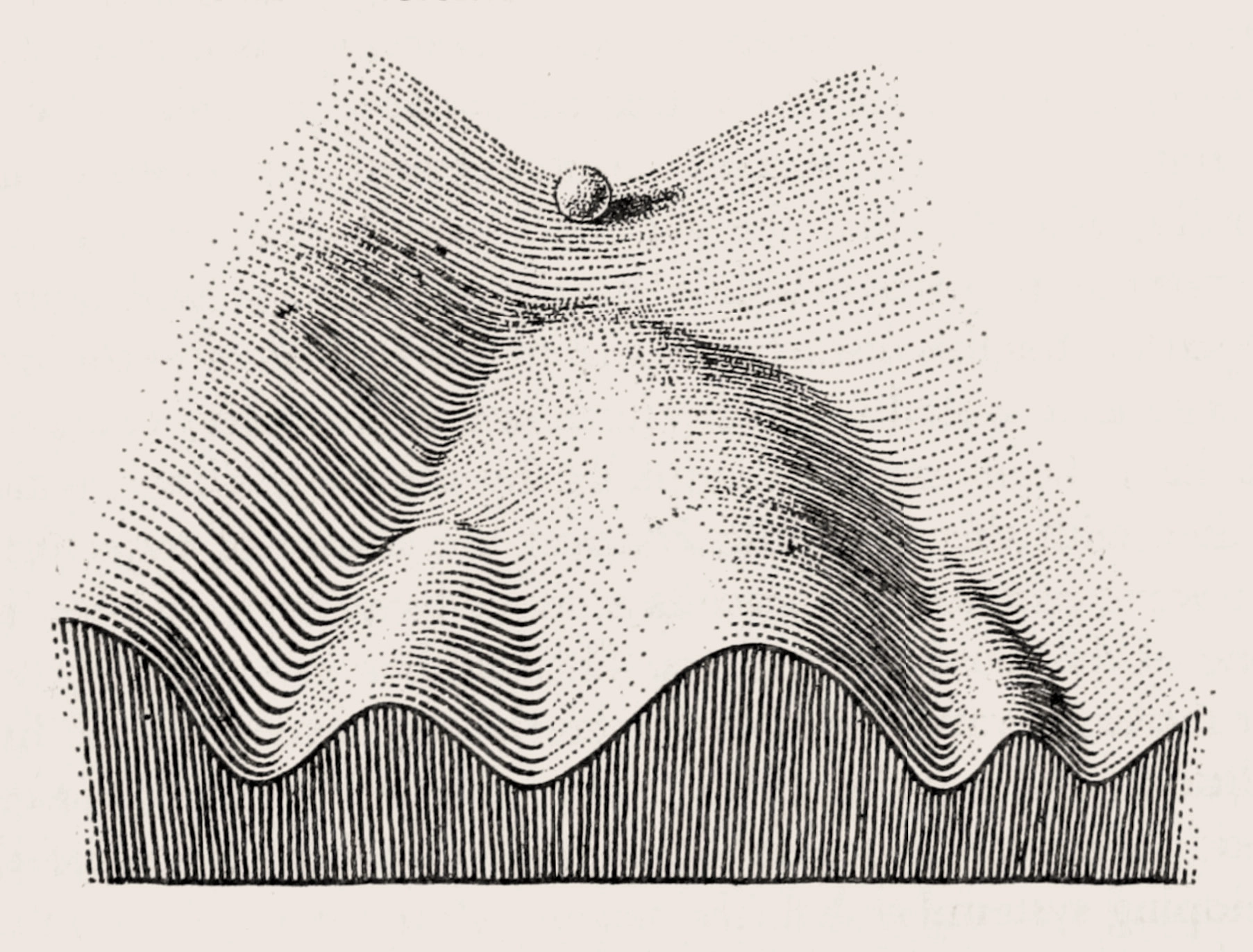
To conceptualize this complex process, Waddington introduced a revolutionary visual paradigm in the 1940s: the epigenetic landscape. This framework posited that embryonic development could be modeled as a sloping topography filled with hills, ridges, and branching valleys resembling a sprawling river network. At the apex of this symbolic terrain sat a sphere, representing a pluripotent stem cell with the unfettered potential to develop into any cell lineage. As the cell advanced through maturation, it was depicted as rolling downhill, encountering successive bifurcation points where it was forced to choose distinct pathways. Once a path was selected, the cell would become "canalized"—channeled by the steep walls of a valley—rendering its developmental trajectory robust against minor biochemical perturbations and ultimately guiding it toward a stable, mature cellular fate.
For decades, Waddington’s landscape served primarily as an invaluable pedagogical tool and conceptual scaffold rather than a quantitative scientific instrument. Today, however, cutting-edge experimental techniques and advanced computational modeling are breathing empirical life into Waddington’s metaphor, revealing that the developmental terrain is far more dynamic, interactive, and mathematically rigorous than he could have possibly imagined.

From Metaphor to Mathematics: Charting Cellular Topography
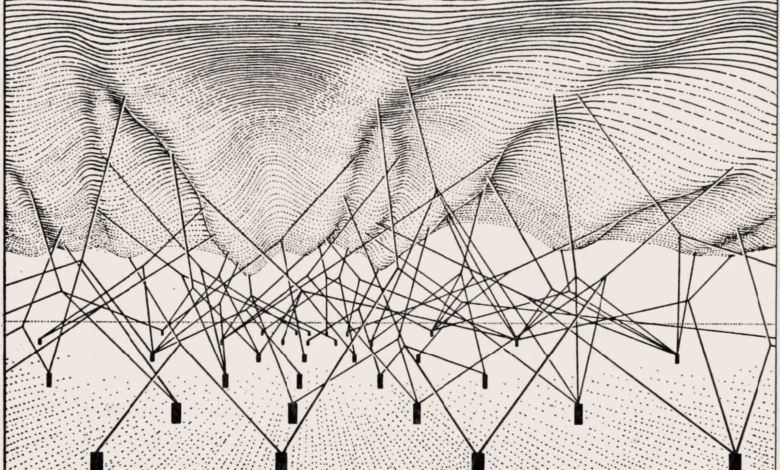
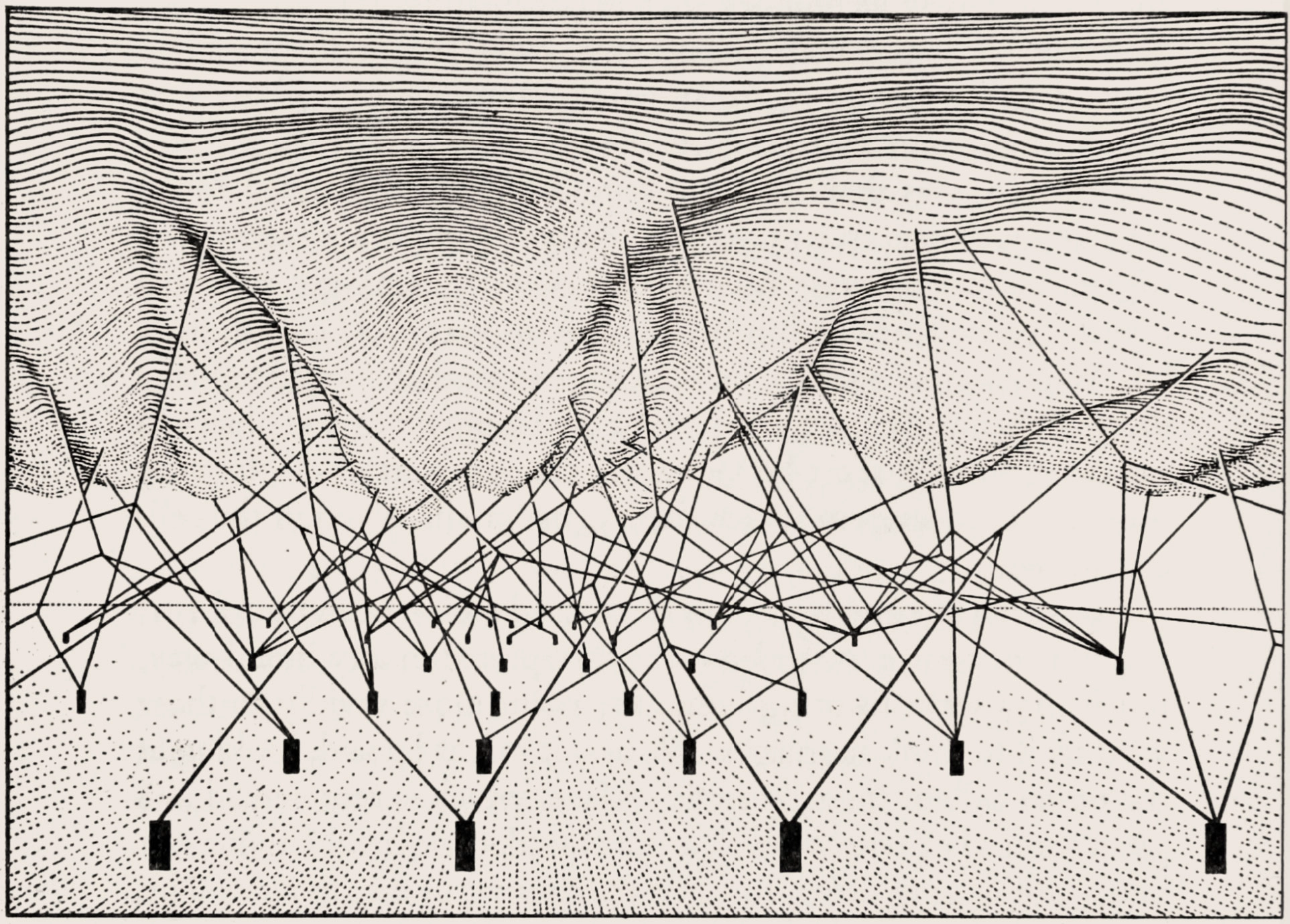
During the 1940s and 1950s, embryology and genetics operated as largely disparate fields, with many developmental biologists skeptical of the notion that genes exercised primary control over pattern formation. Waddington’s own meticulous work, however, convinced him that chromosomal activity must dictate tissue differentiation. To explain how genes controlled this process, Waddington expanded his landscape metaphor in his 1957 seminal book, The Strategy of the Genes, by illustrating what lay beneath the rolling hills: a complex subterranean network of pegs and tensioned ropes.
In Waddington’s conceptual machinery, the pegs represented individual genes, while the interconnected ropes symbolized the regulatory interactions between them. Pulling on a rope—equivalent to expressing a specific gene and producing its corresponding protein—altered the tension of the sheet, thereby reshaping the topographical hills and valleys above. This abstract mechanical web presaged the modern understanding of gene regulatory networks (GRNs), wherein the expression of one gene actively regulates the transcription of others.
Despite its intuitive brilliance, the model languished for decades without a quantitative foundation. Because it lacked explicit mathematical parameters, the landscape could not be used to test alternative hypotheses, make verifiable quantitative predictions, or be systematically falsified. Consequently, the framework occasionally devolved into a biological cliché rather than a rigorous analytical tool.
The turning point arrived over the past two decades, driven by the advent of high-throughput experimental technologies. Chief among these is single-cell RNA sequencing (scRNA-seq), a revolutionary technique that allows researchers to capture a simultaneous snapshot of every active RNA transcript within individual cells. Because RNA molecules serve as operational copies of active genes, measuring their abundance provides a high-resolution readout of a cell’s functional state at any given moment.
By plotting single-cell sequencing data into high-dimensional mathematical spaces—where each axis corresponds to the transcript count of a specific gene—bioinformaticians can reduce thousands of dimensions into accessible two-dimensional maps using algorithms like UMAP (Uniform Manifold Approximation and Projection). On these maps, distinct cell types emerge as dense clusters of points, while developmental lineages trace distinct trajectories across the space. When analyzed through time-resolved network flow models, these empirical data points closely mirror Waddington’s hypothesized landscape, complete with valleys leading to basins that correspond to distinct, mature cell fates.
Attractors, Bifurcations, and the Dynamics of Differentiation
The validation of Waddington’s topography has allowed systems biologists to map real cellular decision-making processes with unprecedented precision. A landmark contribution to this effort came in 2007, when biologist Sui Huang of the Institute for Systems Biology in Seattle mapped out a quantitative bifurcation in myeloid progenitor cells—precursor cells that give rise to the blood and immune systems. Huang demonstrated that the differentiation of these progenitors into either red blood cells or white blood cells is governed primarily by the antagonistic interaction of two key proteins: GATA1 and PU.1.
By tracking the concentrations of these regulatory proteins, Huang and his colleagues successfully modeled the differentiation landscape as a mathematical system governed by attractors—stable states toward which cells are inexorably drawn, akin to water flowing under the influence of gravity. Initially, the system features a single deep basin representing the uncommitted progenitor pool. As differentiation proceeds, this basin flattens and splits into two adjacent valleys: one defined by high GATA1 activity (leading to erythroid fates) and the other by high PU.1 activity (leading to myeloid fates).
Subsequent research has confirmed that numerous cell-fate decisions operate through similar dynamical systems principles. According to David Rand, a mathematician at the University of Warwick who frequently collaborates with developmental biologist James Briscoe of the Francis Crick Institute, these mathematical descriptions reveal fundamental truths about biological architecture. Rather than relying on thousands of active variables for every minor step, developmental systems consistently delegate core fate-determining decisions to small, tightly coordinated networks of master regulatory genes.
This hierarchical organization provides evolutionary robustness. Biological systems operate in inherently noisy molecular environments where random thermal fluctuations cause minor variations in gene expression between identical cells. If developmental trajectories were hyper-sensitive to every microscopic fluctuation, embryogenesis would frequently fail. By creating deep, well-separated attractor wells—what Waddington termed canalization—evolution ensures that cells sharing the same general basin reliably arrive at the correct functional destination despite molecular noise.
Reshaping the Terrain: A Dynamic View of Development
Despite the remarkable alignment between modern data and Waddington’s classical model, contemporary analyses have revealed critical nuances that render the original metaphor incomplete. Waddington envisioned his epigenetic landscape as a static physical territory awaiting traversal by a rolling sphere. Modern biophysical research demonstrates that the terrain is, in reality, fluid and self-constructing.
As biophysicist Julie Theriot of the University of Washington notes, single-cell RNA sequencing, while revolutionary, captures only transcriptional snapshots and does not always reflect the full complexity of functional protein networks. Furthermore, the developmental pathways traversed by cells are not dictated by a rigid genetic clock or an immutable topographic map. Instead, time during development functions as a relative "pseudo-time," reflecting the cumulative shifts in gene expression across a population of cells rather than standard clock-time.
Crucially, the forces driving cells along their developmental pathways are not governed by a passive, universal equivalent of gravity. Rather, cell lineages navigate a landscape that continuously reshapes itself in response to intercellular communication, biochemical signaling gradients, and mechanical forces. As tissues proliferate, cells physically push, pull, and squeeze one another, generating mechanical feedback loops that directly alter gene expression and modify the underlying topography of the landscape in real time.
"In our framework, the landscape is a feature of each cell and is not fixed," Rand explained. "Attractors appear and disappear through bifurcations, and the routes connecting them change." Rather than a stationary ball rolling down a fixed mountain, the entire system acts as a dynamic, self-organizing community where cells mutually negotiate their identities and actively construct the very landscape they navigate.
Broader Implications: From Regenerative Medicine to Oncology
The empirical substantiation of Waddington’s framework holds profound translational implications for biomedicine, offering a rational basis for controlling cell fate in therapeutic contexts. By mapping the exact topology of cellular landscapes and identifying critical bifurcation points, researchers can theoretically bypass trial-and-error methodologies and steer cell populations toward desired states with high precision.
James Briscoe emphasizes that this quantitative understanding is foundational for regenerative medicine and stem-cell engineering. By applying dynamical systems theory to developmental biology, scientists are moving closer to a "generative biology" paradigm, where functional tissues, complex organoids, and potentially entire anatomical structures can be sculpted to order for transplantation and repair.

Moreover, the landscape framework is providing revolutionary insights into pathological states, most notably cancer. Traditional oncology has long viewed oncogenesis primarily as the result of genetic mutations that damage regulatory mechanisms, locking cells into aberrant, unchecked proliferation. However, researchers like Sui Huang have proposed reframing cancer not merely as a broken biological machine, but as an alternative, highly robust attractor state within the cellular landscape—one that can be accessed via multiple distinct genetic or epigenetic routes.
Viewing malignancy through the lens of attractor states suggests novel therapeutic strategies. Instead of relying exclusively on cytotoxic treatments designed to eradicate cancerous cells wholesale, future oncology may focus on driving malignant cells out of their pathological attractor basins and compelling them to differentiate into benign, quiescent, or apoptotic states.
What began in the 1940s as a speculative, hand-drawn sketch in Conrad Waddington’s notebook has thus evolved into a cornerstone of modern quantitative biology. By marrying high-throughput single-cell genomics with advanced dynamical systems theory, scientists are not only validating Waddington’s visionary intuition but are also transforming an elegant metaphor into an actionable atlas for the future of medicine.