Rewriting the Rules of Oral Health: How Disrupting Bacterial Chatter Could Prevent Gum Disease

The paradigm of modern medicine has long been dominated by a scorched-earth philosophy: when harmful bacteria threaten the human body, the standard protocol is to eradicate them. From broad-spectrum antibiotics to aggressive antiseptic mouthwashes, healthcare practices have historically treated microbial populations as hostile invaders that must be neutralized entirely. However, a groundbreaking study published in the 2025 edition of npj Biofilms and Microbiomes challenges this foundational assumption. Conducted by an interdisciplinary team of researchers from the College of Biological Sciences and the School of Dentistry, the study reveals that instead of waging war on oral bacteria, scientists might be able to subtly influence their behavior, steering complex microbial communities toward a state of natural health.
This novel research focuses on dental plaque, a dynamic and complex ecosystem housing roughly 700 distinct species of bacteria. Rather than growing as isolated cells, these microorganisms interact constantly through a sophisticated biochemical signaling system known as quorum sensing. By manipulating these signals using specialized enzymes, researchers successfully altered the developmental trajectory of dental plaque, opening the door to an entirely new class of preventive therapeutics for periodontal disease and potentially transforming how clinicians manage microbiome dysbiosis across the entire human body.
Decoding the Complex Ecosystem of the Human Mouth
To understand the magnitude of the 2025 discovery, one must first examine the microscopic landscape of the oral cavity. The human mouth is not a blank slate; it is a thriving, densely populated metropolis where hundreds of microbial species coexist, compete, and cooperate. These communities do not assemble at random. Instead, dental plaque develops through a highly ordered, chronological sequence that closely mirrors ecological succession in a natural forest.
The process begins with pioneer species, predominantly harmless microorganisms belonging to the Streptococcus and Actinomyces genera. These early colonizers establish simple, stable communities that are widely associated with good oral health. Over time, however, these initial layers mature, creating structural and chemical changes that pave the way for increasingly diverse late colonizers. Among the most concerning late arrivals are the pathogens comprising the epidemiological "red complex"—including Porphyromonas gingivalis—which are heavily implicated in the pathogenesis of severe periodontal disease.
When this intricate microbial balance collapses, a state known as dysbiosis occurs. Pathogenic bacteria outcompete health-associated species, leading to chronic inflammation, degradation of the supporting structures of the teeth, and eventual tooth loss. Historically, dental hygiene has relied on mechanical removal through brushing and flossing, alongside chemical rinses designed to kill as many bacteria as possible indiscriminately. Unfortunately, these aggressive methods often fail to prevent the recurrence of dysbiosis because they do not address the underlying ecological drivers that allow pathogenic species to thrive in the first place.
The Mechanics of Microbial Communication: Quorum Sensing
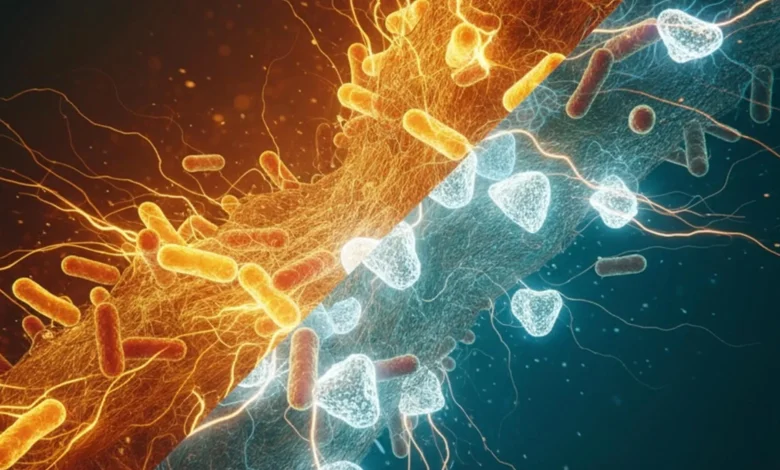
At the heart of the new study is the concept of quorum sensing, the biochemical language bacteria use to monitor their own population density and coordinate group behaviors. By releasing specific signaling molecules into their environment, bacteria can collectively trigger responses that would be ineffective if executed by a single cell alone. In the context of oral biofilms, certain bacterial populations rely on molecules known as N-acyl homoserine lactones (AHLs) to mediate these conversations.
Recognizing the pivotal role these chemical messages play in orchestrating biofilm maturation, the research team set out to determine whether intercepting this bacterial dialogue could prevent the transition from a healthy oral microbiome to a diseased one. To test this hypothesis, the scientists introduced specialized enzymes called lactonases into the experimental environment. Lactonases possess a unique biochemical property: they specifically target and break down AHL molecules, effectively acting as biological silencers that disrupt bacterial conversations.
When the researchers applied these enzymes to dental plaque models, the results were striking. Deprived of their ability to communicate via AHL signaling, the microbial communities shifted away from the complex, disease-associated profiles and reverted toward simpler, health-associated species. This transformation demonstrated that bacterial organization is not entirely rigid; by subtly interfering with the chemical cues that govern community structure, scientists can actively manage the composition of dental plaque without killing a single microbial cell.
Chronology and Environmental Variables: The Oxygen Factor
A critical breakthrough of the 2025 study lies in its discovery that bacterial communication is heavily mediated by spatial and environmental factors, most notably oxygen availability. The oral cavity presents a stark environmental dichotomy divided by the gumline. Above the gumline, tissues are exposed to an aerobic environment rich in oxygen. Beneath the gumline, within periodontal pockets, conditions are strictly anaerobic, featuring severely depleted oxygen levels.
The research team meticulously mapped how AHL signaling operates across these distinct zones:
- Aerobic Zone (Above the Gumline): In oxygen-rich environments, dental plaque bacteria produced baseline AHL signals. When researchers blocked these signals using lactonases, the microbial community visibly shifted toward species strongly associated with superior oral health and early colonization stages.
- Anaerobic Zone (Beneath the Gumline): Conversely, when researchers deliberately introduced AHL molecules into anaerobic conditions, the signaling dynamic had the opposite effect. Rather than promoting health, the presence of these signals actively encouraged the proliferation of late-colonizing pathogens linked to periodontal disease.
This dual functionality underscores a profound biological reality: the exact same chemical signal can elicit entirely divergent outcomes depending on the microenvironment in which it is released. Lead author Rakesh Sikdar emphasized this nuance, noting that quorum sensing plays fundamentally different roles above and below the gumline. This spatial dichotomy completely reframes how researchers must approach the development of targeted treatments for periodontal infections, ensuring that future interventions account for the physiological realities of subgingival pockets.
Implications and Future Directions for Preventive Medicine
Funded by grants from the National Institutes of Health (NIH), the published findings provide a robust empirical foundation for shifting dental care away from broad-spectrum antimicrobial eradication and toward precise ecological management. Mikael Elias, associate professor in the College of Biological Sciences and senior author of the study, summarized the overarching vision of the research team. By understanding the intricate grammar of bacterial communities, modern science can transition from waging an unwinnable war on oral microbes to strategically preserving a healthy microbial equilibrium.
The potential ramifications of this research extend far beyond the dental clinic. Microbiome dysbiosis—the disruption of normal, healthy microbial communities—is increasingly recognized as a key contributor to a wide array of chronic human illnesses. From inflammatory bowel diseases and metabolic disorders to certain malignancies, imbalances in local microbiomes frequently precede systemic pathology.
If scientists can successfully harness enzyme-based quorum-quenching strategies to manage dental plaque, similar methodologies could eventually be adapted to regulate microbial populations in the gut, on the skin, and within other mucosal environments. Rather than deploying heavy-handed pharmaceutical agents that inevitably trigger resistance or disrupt beneficial flora, future medical therapies may rely on molecular diplomacy—using targeted biological agents to guide our resident microbial partners toward cooperation, balance, and long-term health.