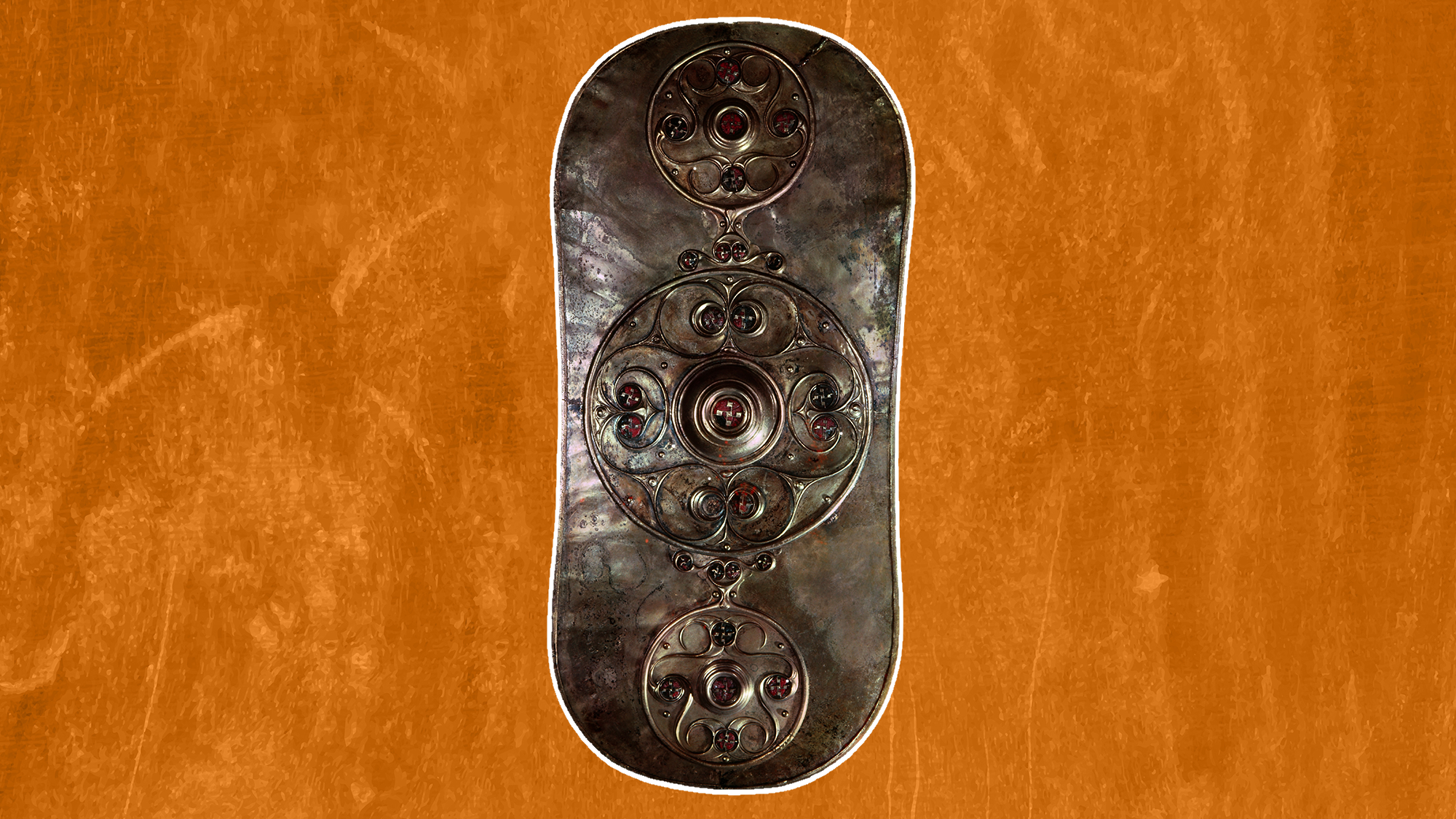
The Battersea Shield stands as one of the most significant archaeological discoveries in British history, representing the pinnacle of La Tène artistic style during the European Iron Age. Recovered from the murky depths of the River Thames in 1857 during the construction of the original Battersea Bridge, the artifact serves as a vital window into the craftsmanship, religious beliefs, and social hierarchies of ancient Britain. Crafted from bronze and adorned with intricate repoussé designs and red glass enamel, the shield remains a testament to a society that possessed sophisticated metallurgical capabilities and a complex symbolic language.
Discovery and Excavation Context
The recovery of the shield was not the result of a planned archaeological excavation, but rather an incidental finding during the rapid industrial expansion of Victorian London. As workers dredged the River Thames to clear the path for the new bridge’s foundations, they unearthed a collection of weaponry and artifacts that had remained submerged for nearly two millennia.
The timing of this discovery was fortuitous for the nascent field of archaeology. By the mid-19th century, the British Museum had begun to consolidate its holdings of national antiquities, and the Battersea Shield was quickly recognized as a find of unparalleled importance. It was acquired by the museum in 1857, where it has since undergone extensive scientific analysis to determine its construction methods and provenance.
Chronology and Typology
Based on stylistic analysis and the evolution of Celtic art motifs, archaeologists have dated the shield to a period between 350 B.C. and 50 B.C. This timeframe places the shield squarely within the late Iron Age, a period characterized by increased inter-tribal warfare, the expansion of trade networks across Europe, and the eventual Roman incursions into the British Isles.
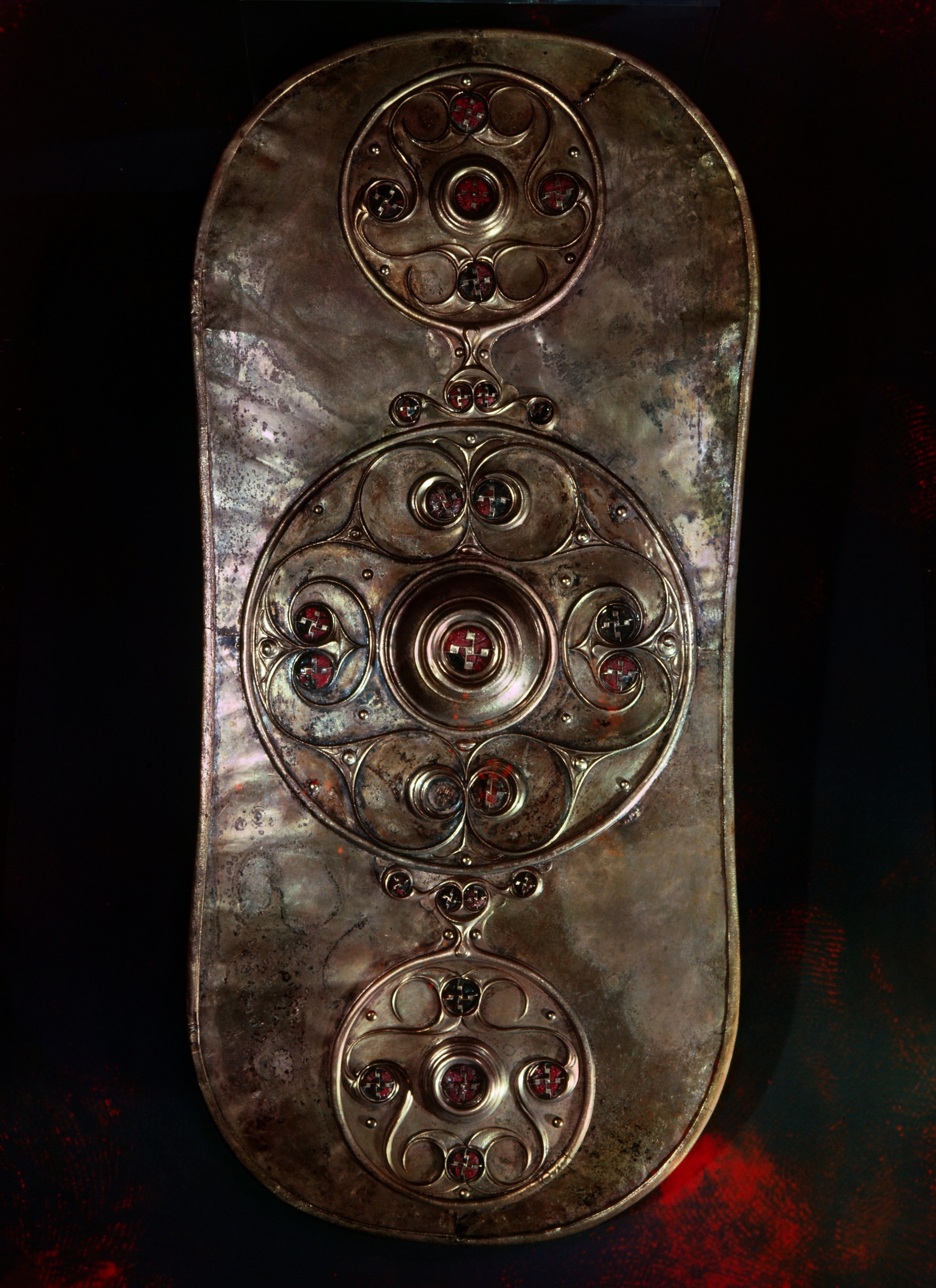
The shield is not a complete functional piece of defensive equipment, but rather a "facing"—a decorative bronze covering that would have been attached to a wooden backing. Its design features three circular bosses, with the central boss serving as the focal point of the composition. The entire surface is covered in flowing, curvilinear motifs typical of the La Tène style, which originated in Central Europe and spread across the continent. The use of red glass "enamel" inlays—specifically in the roundels—demonstrates a high degree of technical mastery in glass-working and metallurgy.
Scientific Analysis and Craftsmanship
Modern spectroscopic analysis and microscopic examination of the Battersea Shield have revealed the sheer complexity of its production. The bronze sheets were meticulously hammered into shape using repoussé techniques, where the metal is pushed out from the back to create a raised design on the front. This required an intimate understanding of the malleability of bronze and the ability to prevent stress fractures during the shaping process.
The red glass inlays are particularly significant. The chemical composition of the glass indicates that it was likely imported or created using specialized kilns that could reach high temperatures with controlled atmospheres. The placement of these decorative elements suggests that the shield was designed for visual impact, likely intended for ceremonial or votive purposes rather than practical combat. Its size and weight, combined with the delicacy of the decorative facing, lead most researchers to conclude that it was an object of prestige, possibly belonging to a chieftain or a high-ranking priest.
The Significance of River Votive Offerings
The location of the discovery—the River Thames—is central to understanding the shield’s historical context. Throughout the Bronze and Iron Ages, rivers and wetlands were frequently treated as liminal spaces, or gateways to the spirit world. Archaeological records across Northern Europe show a long-standing tradition of depositing high-value metalwork, including swords, shields, and jewelry, into bodies of water as offerings to deities.
The presence of the Battersea Shield in the Thames is widely interpreted as a deliberate act of "votive deposition." Rather than being lost in battle, it is highly probable that the shield was intentionally placed into the river as a sacrifice to appease the spirits of the water or to commemorate a major communal event. This practice highlights the spiritual life of Iron Age Britons, who viewed the natural landscape as a sacred domain, deeply integrated with their political and social structures.
Broader Impact and Historical Implications
The Battersea Shield serves as a critical link in the narrative of pre-Roman Britain. Before the arrival of Julius Caesar in 55 B.C., Britain was often perceived by Mediterranean observers as a peripheral, "barbaric" land. The existence of such a masterfully crafted object challenges this historical bias. The shield demonstrates that Iron Age British societies were not only organized but also participated in a broader European cultural exchange that prioritized artistic beauty and ritualized warfare.
Furthermore, the shield provides evidence of the immense social stratification present in the period. The labor required to mine the copper and tin, refine the metal, and employ a master craftsman to execute such a complex design suggests a society with a clear hierarchy and the economic surplus necessary to support non-agricultural artisans. It serves as a physical rebuttal to the notion that the inhabitants of Britain were disconnected from the sophisticated artistic currents of the contemporary La Tène world.
Institutional Preservation and Research
Today, the Battersea Shield is housed in the British Museum in London, where it continues to be the subject of rigorous scholarly inquiry. Curators and researchers periodically re-examine the artifact using non-invasive technologies, such as X-ray fluorescence (XRF) and 3D scanning, to map the manufacturing process in greater detail.
These technological advancements have allowed for a better understanding of the tool marks left by ancient smiths, providing insights into the physical labor and specialized tools required for its completion. Additionally, the shield has become a centerpiece for exhibitions exploring the history of London, serving as a reminder that the Thames has been a focal point of human activity and ritual for millennia.
Public Perception and Legacy
The enduring fascination with the Battersea Shield lies in its blend of mystery and tangible beauty. Unlike written records, which were absent in Britain during the period of the shield’s creation, the object "speaks" through its material composition and design. It bridges the gap between the archaeological record and the human experience, inviting observers to contemplate the values and fears of those who created it.
As research continues, the Battersea Shield remains a touchstone for discussions regarding cultural identity in ancient Europe. It stands alongside other iconic Iron Age finds—such as the Witham Shield and the Wandsworth Shield—as a testament to the artistic genius of the pre-Roman inhabitants of the British Isles. The fact that it survived the centuries in a riverbed, only to be reclaimed by the modern world, underscores the resilience of human craftsmanship and the importance of preserving the artifacts that define our collective past.
Conclusion
The Battersea Shield is far more than a decorative relic; it is a foundational artifact that illuminates the complexities of Iron Age society. From its intricate technical construction to its role in the ritualistic landscape of the ancient Thames, the shield offers a profound glimpse into a civilization that was highly skilled, deeply spiritual, and fundamentally connected to the wider world. As it continues to be displayed and studied, it ensures that the legacy of those who lived and worshipped in pre-Roman Britain remains a visible and vital part of the historical record, challenging contemporary audiences to recognize the sophistication of the past.