Supreme Court Confronts High-Stakes Immigration Battle Over Bond Hearings for Detained Noncitizens with Criminal Records


The United States Supreme Court is facing a high-stakes legal battle that could fundamentally reshape federal immigration enforcement and public safety protocols. At the center of the dispute is a petition filed by the administration asking the justices to take up the case Genalo v. D.C., which questions whether noncitizens with serious criminal records are legally entitled to mandatory bond hearings when their deportation proceedings become prolonged. Legal experts and policy analysts have warned that a ruling against the federal government could severely limit Immigration and Customs Enforcement (ICE) in keeping dangerous individuals behind bars while they fight removal from the country.
The controversy highlights a deep tension between statutory immigration mandates and judicial interventions. For years, federal immigration law has dictated that certain noncitizens convicted of aggravated felonies or serious crimes must remain detained without bond throughout the duration of their removal proceedings. However, lower court precedents—most notably within the U.S. Court of Appeals for the Second Circuit—have introduced a judicial safeguard requiring a formal bond hearing once mandatory detention crosses a threshold of being "unreasonably prolonged." During these hearings, the government bears the heavy burden of proving by clear and convincing evidence that the detainee represents an active flight risk or a direct threat to the community.
The administration’s decision to petition the Supreme Court underscores the urgency surrounding the enforcement of immigration laws. By utilizing an unusual legal mechanism known as certiorari before judgment, federal attorneys are urging the Supreme Court to bypass the traditional appellate process and issue a definitive ruling on the constitutional and statutory questions at play before the Second Circuit formally rules on the merits of the current case.
Chronology of the Case and the Search for a Viable Legal Vehicle
The path to the Supreme Court for this specific legal question has been fraught with procedural hurdles and unexpected mootness issues. Initially, the administration pinned its hopes on two other high-profile noncitizen detainees caught in the same Second Circuit legal crossfire.
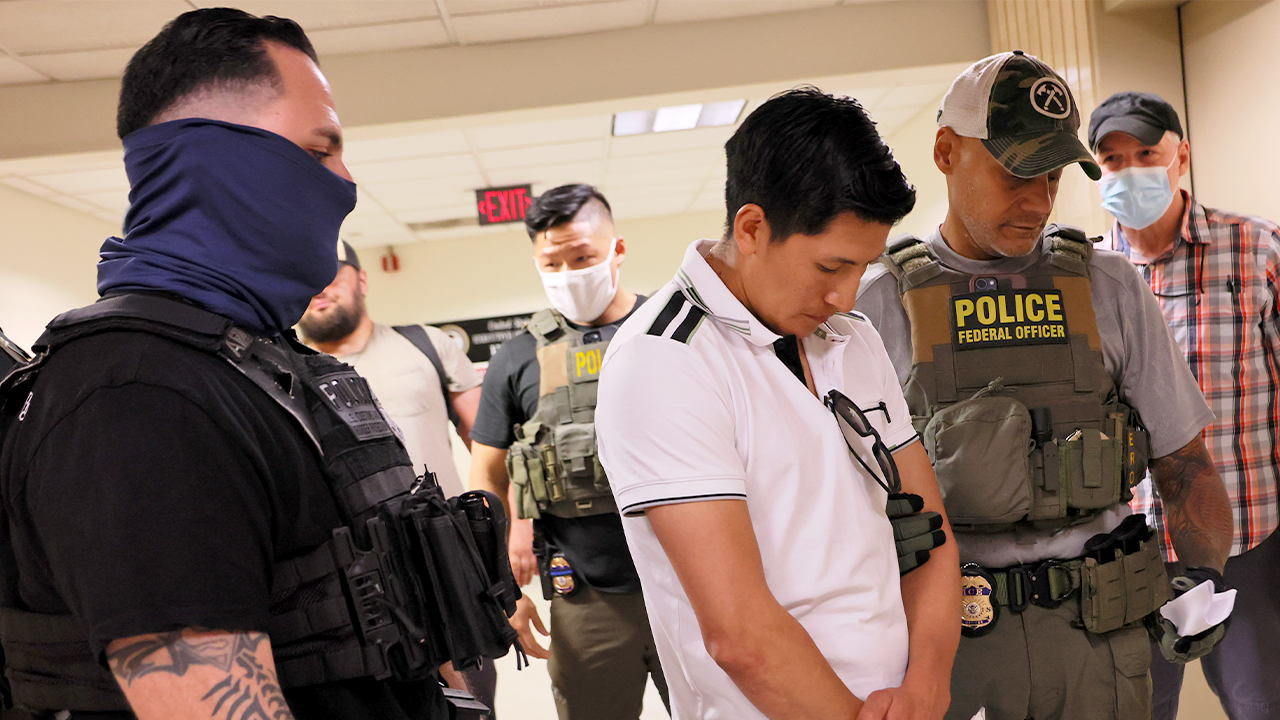
The first case involved a detainee named Carol Williams Black, who had been held for approximately seven months following a 2000 conviction for sexually abusing a child. Black’s legal challenge dissolved after he received a final order of removal and permanently departed the United States, rendering his bond dispute legally moot.
The administration then shifted its focus to a second detainee, identified in court records as G.M., a lawful permanent resident from the Dominican Republic. G.M. had pleaded guilty in May 2015 to second-degree assault stemming from a violent 2012 robbery in New York City, for which he served time in state prison. ICE subsequently detained him in October 2020, keeping him in custody for 21 consecutive months without a bond hearing while his removal proceedings crawled forward. The Supreme Court had originally scheduled oral arguments for G.M.’s case in October. However, the legal landscape shifted dramatically in late August when New York Democratic Governor Kathy Hochul granted G.M. a full and unconditional pardon for the underlying assault conviction. With the primary conviction erased, Solicitor General John Sauer conceded that the case was legally moot, leading the Supreme Court to dismiss it without a ruling on September 11.
Refusing to let the core constitutional question lapse, the administration quickly identified a replacement vehicle: Genalo v. D.C. The central figure in this petition is D.C., a 62-year-old Dominican citizen who entered the United States unlawfully and amassed four separate criminal convictions over several decades.
A Detailed Criminal History and Background Context
Court records outline a protracted history of criminal charges, failures to appear in court, and evasions of state sentencing for D.C., which federal authorities argue exemplify the exact type of profile Congress intended to keep in mandatory custody.
In 1997, D.C. was arrested and subsequently charged with multiple drug offenses, including the sale and possession of controlled substances. Although he was convicted by a jury after failing to appear for his trial, he was sentenced in absentia to a prison term ranging from three to nine years—a sentence he managed to avoid serving until decades later. In 2007, he was once again charged with presenting false identification to law enforcement, specifically possessing a forged instrument, and once more failed to appear for his scheduled court date.
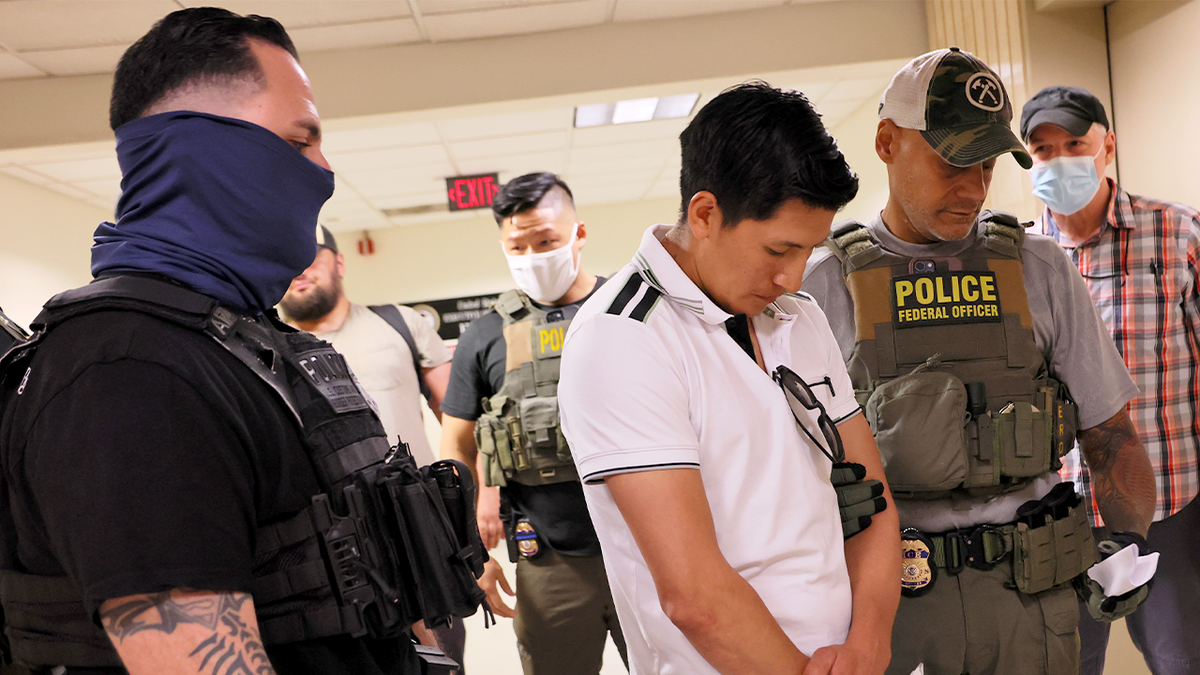
Nearly a decade later, in 2016, D.C. faced a barrage of new criminal charges stemming from a severe domestic dispute. The allegations included second-degree strangulation, third-degree assault, and acts likely to injure a child under the age of 17. He eventually pleaded guilty to criminal obstruction of breathing or blood circulation, successfully resolved his older forged-instrument case through a guilty plea, and later pleaded guilty to criminal contempt for violating court orders.
D.C.’s evasion of his 1998 drug sentence finally concluded in April 2024 when law enforcement apprehended him on the outstanding warrant. Upon completing his state prison sentence in September 2025, ICE took immediate custody of him, placing him in federal immigration detention as his removal proceedings advanced. A district court subsequently ordered that D.C. be granted a bond hearing in accordance with binding Second Circuit precedent, though it rejected his separate petition for immediate release. The federal government is now asking the Supreme Court to intervene before the appeals court can finalize its review.
Legal Analysis and Broader Implications for Public Safety
Legal scholars and advocates have offered starkly contrasting views on the potential ramifications of the Supreme Court accepting the case. Proponents of strict immigration enforcement argue that granting bond hearings under a clear-and-convincing evidence standard undermines the clear intent of federal immigration statutes.
Chad Mizelle, chair of litigation at the America First Policy Institute and a former acting associate attorney general and Justice Department chief of staff, emphasized the severity of the criminal records associated with this detained population.
"We are talking about criminal aliens here," Mizelle stated in an interview. "Those are individuals who have been accused of or convicted of an aggravated felony. Accused or convicted of murder. Accused or convicted of child rape. Accused or convicted of grievous harm upon another human being. So these are the worst of the worst individuals. Do we want those individuals walking the streets, re-committing, harming other individuals?"
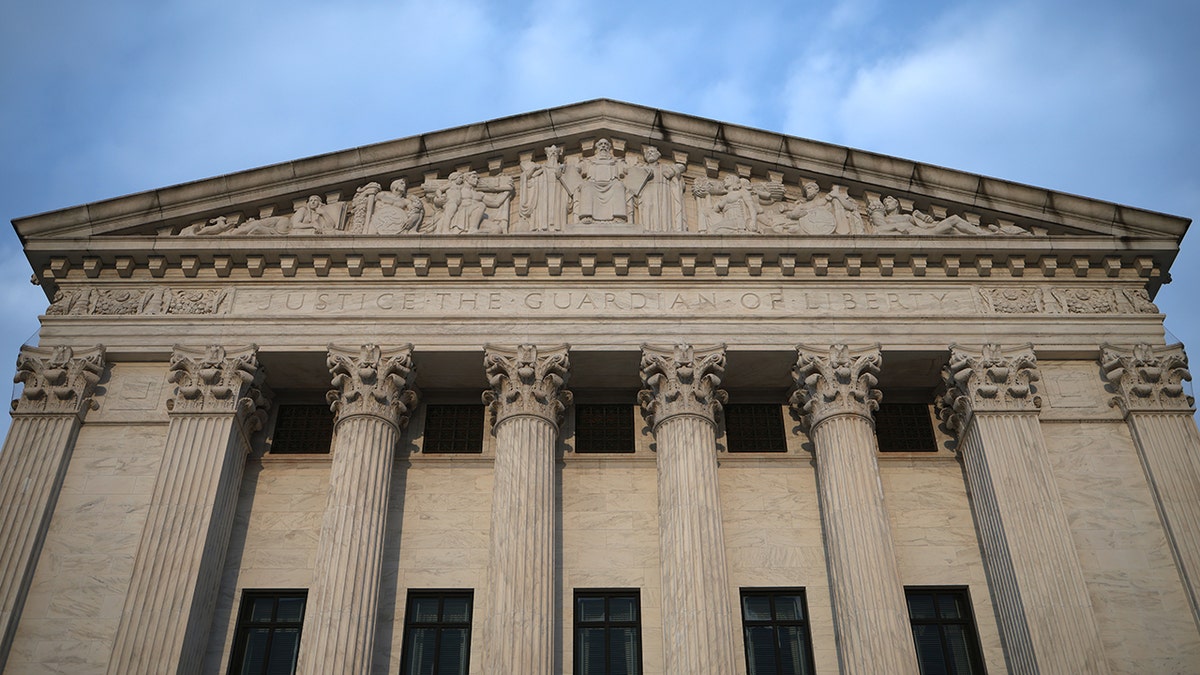
Mizelle further argued that the Second Circuit’s prolonged-detention doctrine creates perverse incentives within the legal system, encouraging detainees to deliberately prolong their removal proceedings through endless motions and appeals so they can eventually cross the temporal threshold required to request a bond hearing.
Carrie Severino, president of the Judicial Crisis Network, echoed these concerns, pointing out that the implications of the case stretch far beyond the individual circumstances of D.C. or the Second Circuit jurisdiction.
"This is not a question that’s only going to affect D.C., the criminal Dominican national at issue in this case," Severino said. "This is an issue that’s going to affect criminal aliens across the country."
Severino noted that noncitizens facing deportation frequently abscond or fail to appear for subsequent court dates once released into the community. Imposing a heightened evidentiary burden on the government to justify continued detention, she argued, drains federal resources and compromises community safety.
On the other side of the legal debate, civil rights organizations and immigration advocates contend that indefinite or prolonged detention without a neutral review violates fundamental principles of due process under the U.S. Constitution. They argue that the Fifth Amendment guarantees that even noncitizens with criminal records are entitled to a hearing before a neutral decision-maker to evaluate whether their continued incarceration is genuinely necessary to prevent flight or danger, particularly when administrative delays stall removal proceedings for months or years.
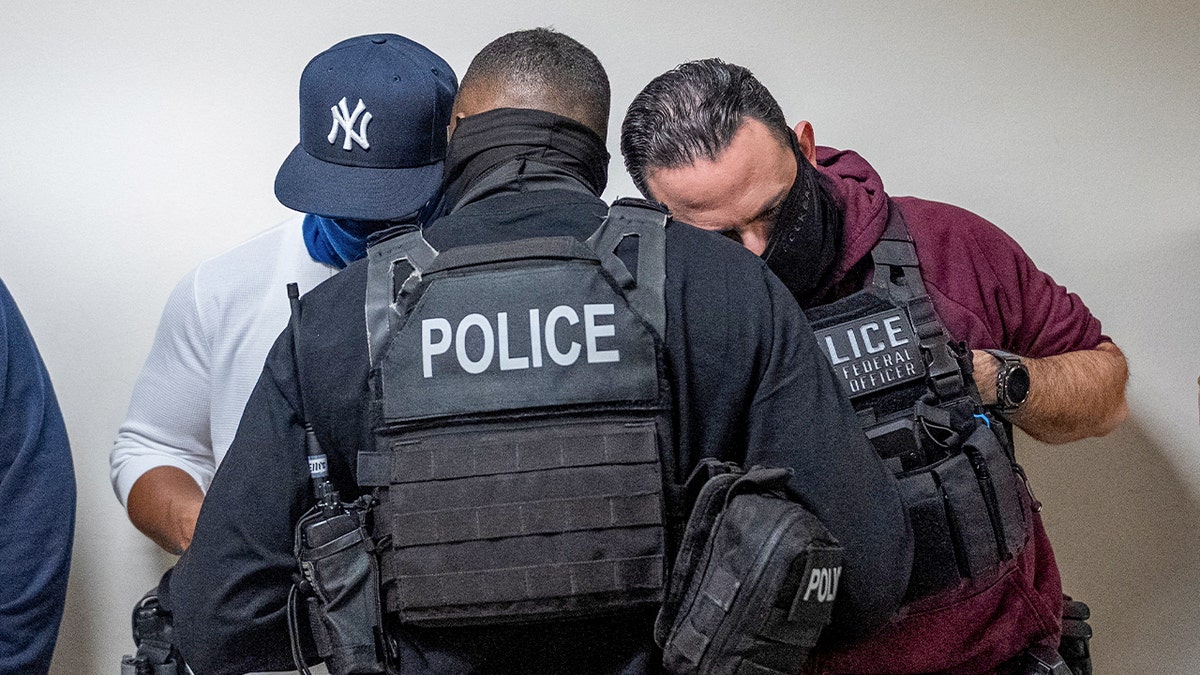
Michael Morley, a law professor at Florida State University, analyzed the procedural hurdle the government faces under the current appellate framework. He explained that if the Supreme Court ultimately affirms the Second Circuit’s ruling, federal authorities will face an exceptionally steep uphill battle when attempting to maintain custody over noncitizens with criminal or terrorism-related ties.
"There are going to be situations where the government is not able to show that a particular person is either likely to flee or poses a risk of danger and this dangerousness by a heightened or clear and convincing standard," Morley noted. "It means that these criminal aliens who are already subject to removal proceedings are more likely to be released into the community while those underlying removal proceedings continue to make their way slowly through the adjudicative process."
Official Responses and Next Steps
As the legal community awaits a formal decision from the Supreme Court on whether it will grant certiorari in Genalo v. D.C., federal agencies, immigration attorneys, and state officials are closely monitoring the docket. The outcome of this litigation will not only determine the immediate fate of the petitioner but will also establish a definitive national standard regarding the constitutional boundaries of mandatory immigration detention.
Federal authorities maintain that robust enforcement and secure detention facilities remain indispensable tools for ensuring that individuals ordered removed from the United States do not disappear into the domestic population. Conversely, defense counsel and civil liberties advocates continue to press for judicial oversight to prevent what they characterize as prolonged, arbitrary confinement without adequate procedural safeguards.
The Supreme Court has not yet indicated when it will announce whether it will hear the administration’s appeal, leaving the ultimate direction of federal immigration detention policy hanging in the balance.