NASA Advances Development of PRIMA Telescope to Unlock the Secrets of the Far-Infrared Universe

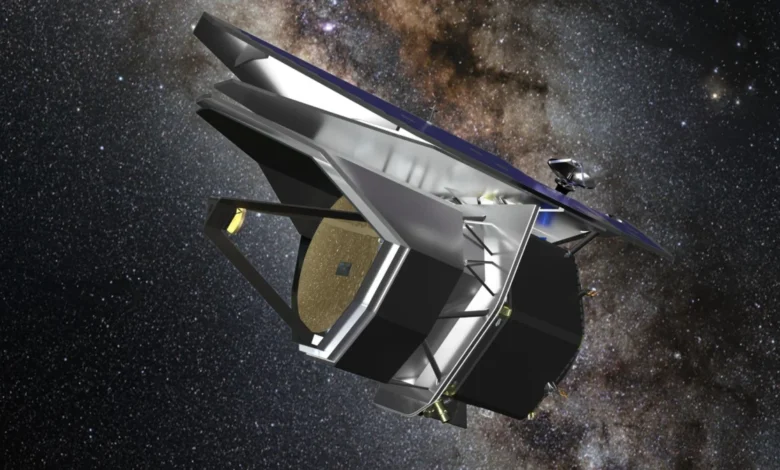
NASA has officially moved forward with the design and development of the Probe far-Infrared Mission for Astrophysics (PRIMA), a next-generation space telescope engineered to peer into the cosmos with unprecedented sensitivity in the far-infrared spectrum. This initiative marks a significant evolution in space-based observational capabilities, aiming to build upon the transformative scientific legacy established by the James Webb Space Telescope (JWST). By transitioning into Phase B—the critical preliminary design and technology maturation stage—NASA is formalizing the engineering roadmap required to place this observatory in orbit by the early 2030s.
The decision to advance PRIMA underscores a strategic commitment to filling a "spectral gap" in our current understanding of the universe. While the JWST has revolutionized infrared astronomy by observing the near- and mid-infrared wavelengths, there remains a vast, largely unexplored frontier in the far-infrared, which is essential for studying the birth of stars, the evolution of galaxies, and the formation of planetary systems.
A New Class of Astronomical Observation
PRIMA is classified as a "Probe" mission, a new category introduced by NASA to bridge the gap between smaller-scale missions and massive flagship observatories like the JWST or the upcoming Nancy Grace Roman Space Telescope. This class of mission is designed to address high-priority scientific goals identified by the National Academies of Sciences, Engineering, and Medicine in their decadal surveys, specifically focusing on objectives that are too large for a standard Explorer mission but do not require the multi-billion-dollar investment of a flagship project.
The telescope will be equipped with a 1.8-meter-diameter mirror and state-of-the-art cryogenic instruments, specifically designed to detect light in the far-infrared range. Because the Earth’s atmosphere is opaque to most far-infrared radiation, a space-based platform is the only viable method for conducting this research. By operating in the extreme cold of space—likely at the second Lagrange point (L2), similar to the JWST—PRIMA will be able to mitigate thermal noise, allowing it to detect the faint, cool glow of interstellar dust that hides the processes of star formation.
Chronology of the Mission and Future Milestones
The path to the current development phase began several years ago as part of the broader effort to identify the next generation of space observatories. Following the recommendations of the 2020 Decadal Survey on Astronomy and Astrophysics, NASA began evaluating concepts that could provide high-resolution far-infrared data.
The timeline for PRIMA is structured to ensure rigorous oversight at every stage:
- 2020-2022: Identification of far-infrared observations as a priority within the Decadal Survey.
- 2023: Initial mission concept development and feasibility studies.
- 2024: Formal selection of PRIMA as the first "Probe" class mission.
- 2024-2026 (Phase B): Preliminary design, technology maturation, and project management planning.
- 2026-2028: Final design, critical design reviews, and hardware procurement.
- 2029-2032: Integration, testing, and final launch preparations.
- 2033: Target launch date for the start of a five-year mission.
These milestones are subject to periodic "gate reviews" by NASA’s Science Mission Directorate. If at any point the technology fails to meet the stringent requirements for sensitivity or thermal management, the program managers have the authority to reassess the mission’s trajectory.
Supporting Data and Scientific Objectives
The primary scientific value of PRIMA lies in its ability to penetrate the dense, opaque clouds of gas and dust that characterize the "cradle" of star formation. In the visible spectrum, these regions appear as dark voids because light cannot pass through the dust. While JWST can penetrate some of this material, its primary strength lies in shorter infrared wavelengths. PRIMA’s instruments will target wavelengths between 25 and 260 microns, providing a window into the cool, dark matter that constitutes the bulk of the material in a galaxy.
Key research objectives include:
- Tracing the Cosmic Cycle of Dust: Understanding how dust is created in stars and how it facilitates the formation of new solar systems.
- Galaxy Evolution: Observing how galaxies grew and changed throughout the history of the universe, particularly during periods of intense star formation.
- Chemical Composition: Analyzing the molecular makeup of protoplanetary disks, which will provide clues about how the building blocks of life are distributed in developing star systems.
NASA’s analysis suggests that PRIMA will be approximately 1,000 times more sensitive than previous far-infrared missions, such as the Herschel Space Observatory. This exponential increase in sensitivity is made possible by advancements in detector technology, specifically the use of superconducting transition-edge sensor arrays, which can detect individual photons with remarkable precision.
Perspectives from the Scientific Community
The selection of PRIMA has been met with enthusiasm from the global astrophysical community. Researchers have long argued that the far-infrared spectrum is the "missing piece" of the puzzle when it comes to understanding the lifecycle of matter in the universe.
"The far-infrared is where the action is for understanding the cool universe," says Dr. Elena Rossi, an astrophysicist specializing in star formation. "By looking at the wavelengths where gas and dust are most active, we can effectively see the ‘metabolism’ of a galaxy. We are moving from seeing the static structure of the universe to watching the processes that drive its constant change."
While the mission is still in its early stages, NASA officials emphasize that PRIMA is a collaborative effort involving academic institutions, international space agencies, and private contractors. This collaborative model is intended to distribute both the financial burden and the technical expertise, ensuring that the mission remains within its defined budget—an essential requirement for the Probe-class mission designation.
Technical Challenges and Engineering Hurdles
The transition into Phase B is focused primarily on overcoming the significant technical hurdles associated with far-infrared observation. The most pressing challenge is cryogenics. To operate effectively, the telescope’s detectors must be kept at temperatures just a fraction of a degree above absolute zero.
Engineers are currently developing advanced active cooling systems, such as sub-Kelvin coolers, which can maintain these temperatures for the duration of the five-year mission. Unlike previous missions that relied on finite supplies of liquid helium—which eventually evaporated and ended the mission—PRIMA will utilize mechanical cryocoolers. This approach significantly extends the potential lifespan of the mission, potentially allowing for an extension beyond the initial five-year window.
Furthermore, the mission requires precise pointing capabilities. Because PRIMA will be observing extremely distant and faint objects, even minor vibrations from the spacecraft’s bus could distort the data. The development of vibration-isolation technology and high-precision star trackers is a central component of the Phase B design cycle.
Broader Impact and Astronomical Implications
The implications of the PRIMA mission extend well beyond the immediate findings it will generate. By establishing a standard for Probe-class missions, NASA is setting a precedent for a more sustainable and flexible approach to space exploration. If PRIMA proves successful, it could pave the way for a series of specialized telescopes, each targeting a specific, under-explored region of the electromagnetic spectrum.
From a cosmological perspective, PRIMA will help answer fundamental questions about the "cosmic dawn"—the era when the first stars and galaxies emerged from the darkness of the early universe. By measuring the far-infrared background radiation, scientists hope to gain a better understanding of the total energy output of all galaxies over cosmic time.
Moreover, the mission’s focus on the chemical evolution of planetary systems has direct implications for the search for life. By observing the water, carbon, and organic molecules in the disks surrounding young stars, PRIMA will provide essential data on whether the conditions necessary for life are common or rare in the Milky Way.
Conclusion: A Future of Discovery
As NASA enters the design phase for PRIMA, the mission represents a pivot toward highly focused, high-impact scientific inquiry. While the JWST continues to captivate the public with its breathtaking images of the near-infrared universe, PRIMA will be working in the background, peering into the cold, dark corners of space that have historically remained hidden.
The journey to 2033 is long, and the technological challenges remain significant. However, the advancement of PRIMA signifies a clear vision for the next generation of space exploration—a future where we not only see the bright, energetic phenomena of the universe but also the cold, quiet processes that make the existence of galaxies, stars, and planets possible. As the preliminary designs take shape, the global scientific community watches with anticipation, knowing that the data PRIMA eventually provides will fundamentally alter our understanding of the cosmic landscape.