The Mystery of the Global Foraminifera Shell Flips Reveals Unseen Evolutionary Waves

For millions of years, microscopic marine organisms drifting across the world’s oceans have constructed their spiral shells favoring one specific geometrical direction. Yet, periodically throughout Earth’s history, these microscopic architects abruptly abandoned their traditional architecture, uniformly reversing their spiral orientation across every major ocean basin in near-unison before potentially switching back epochs later. This phenomenon, long considered an isolated oceanic curiosity, has finally begun to yield its secrets to micropaleontologists. Rather than serving as direct adaptations to shifting climate patterns, these synchronized reversals of shell chirality—the geometric handedness of a coiled structure—are now hypothesized to act as accidental chronological markers for massive, planet-wide evolutionary sweeps driven by cryptic speciation and survival of the fittest on a micro-scale.
Understanding the magnitude of this geological mystery requires examining the organisms responsible. Foraminifera, colloquially known as forams, are among the most abundant single-celled eukaryotic organisms on the planet. Distributed across every marine environment from freezing polar latitudes to warm tropical reefs, these protists secrete complex, durable shells—primarily made of calcium carbonate—that feature numerous microscopic perforations. While certain species inhabit the benthic zones along the ocean floor, planktonic variants drift freely with global ocean currents.
When these organisms perish, their microscopic shells cascade down to the ocean floor in a continuous geological snowfall. Over hundreds of thousands of years, these accumulations form thick sedimentary beds, creating an extraordinarily rich natural archive of Earth history spanning approximately 560 million years. Modern scientists routinely extract these sediment cores, analyzing the species composition, trace elemental structures, and isotopic ratios of fossilized forams to accurately reconstruct ancient climates, historical ocean temperatures, and marine chemistry.
However, embedded within this microscopic treasure trove lies an enduring puzzle. Among the numerous planktonic foram species featuring snail-like, coiled shells, individual species display an overwhelming preference for either a left-handed (sinistral) or right-handed (dextral) spiral. In many cases, up to 97 percent of a single species’ population will uniformly exhibit the exact same coiling direction. Most bafflingly, the fossil record demonstrates that entire species have completely flipped their dominant coiling direction simultaneously across vast, interconnected ocean basins. Since micropaleontologists first identified this structural anomaly in the 1950s, researchers have struggled to explain how quadrillions of microscopic organisms scattered across thousands of miles of open ocean could alter their morphology in synchronized coordination.
A Century of Discovery: From Climate Theory to Genetic Realities
The investigation into flipping foraminifera began in earnest shortly after World War II, coinciding with major technological advancements in deep-sea coring techniques that allowed scientists to extract undisturbed sediment layers from the ocean floor. In the early 1950s, Swiss micropaleontologist Hans Bolli formally documented that certain coiled forams exhibited strict directional preferences that shifted across different geological strata.
A foundational hypothesis emerged in 1959 courtesy of David Ericson, a marine geologist at Columbia University’s Lamont Geological Observatory (now known as the Lamont-Doherty Earth Observatory). Examining hundreds of coiled shells belonging to the species Neogloboquadrina pachyderma harvested from North Atlantic sediment cores, Ericson observed a stark climatic correlation: during glacial maximums and ice ages, the shells predominantly coiled to the left, whereas during warmer interglacial periods, they favored right-handed coiling.
Ericson posited that ambient water temperature was the absolute environmental determinant directing the microscopic organisms’ shell geometry. For decades, this temperature hypothesis served as the standard explanation within paleoceanography. However, as deep-sea drilling programs expanded globally and genetic sequencing technologies advanced toward the turn of the century, Ericson’s neat environmental model began to fracture.
The first major blow to the temperature hypothesis arrived in 2006, when geneticist Kate Darling—now an honorary professor at the University of Stirling—published landmark molecular research demonstrating that morphologically identical variants of Neogloboquadrina pachyderma were actually distinct, genetically isolated species, each maintaining its own dedicated coiling preference. Subsequent research published in 2013 by evolutionary paleobiologist Yurika Ujiie of Kochi University analyzed multiple foram species harvested across diverse oceanic environments, definitively proving that shell chirality did not consistently correlate with ambient temperature.
With the temperature mechanism thoroughly debunked, the scientific community faced a conceptual void. Single-celled protists lack complex bilateral symmetry or an obvious physiological "handedness," making it exceedingly difficult for evolutionary biologists to theorize what selective advantage a left- or right-coiling shell might confer upon a microscopic organism adrift in the open ocean. Half a century after Ericson’s initial observations, the driving force behind the global coiling flips returned to total obscurity.
Synthesizing Decades of Data: Uncovering the Global Pattern
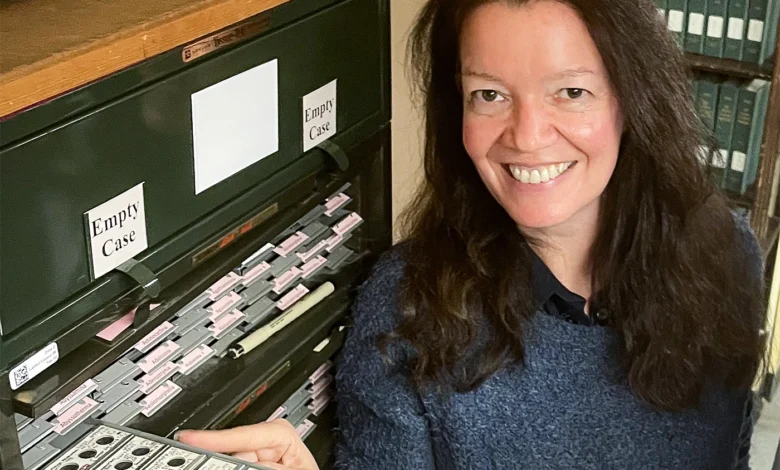
The mystery was revitalized when Bridget Wade, a micropaleontologist at University College London, began noticing unusual patterns while analyzing multi-decadal sediment core records. Wade and her research team observed that several distinct planktonic foram species appeared to flip their preferred shell-coiling direction concurrently across widely separated latitudes in the Atlantic, Indian, and Pacific oceans. In specific species, these directional shifts occurred with surprising rapidity across both tropical zones and higher latitudes, indicating a global phenomenon operating on a scale far too large to be explained by isolated environmental shifts within a single ocean basin.
To rigorously test this hypothesis, Wade’s research team synthesized comprehensive datasets spanning five decades of micropaleontological literature. They mapped and analyzed the evolutionary trajectories of several planktonic foraminifera species over the past 56 million years. The results confirmed widespread, multi-basin directional flipping. For example, the species Paragloborotalia siakensis shifted from a mixed coiling pattern to predominantly left-handed coiling approximately 15 million years ago. Another species, Globorotalia scitula, underwent two distinct global flips: shifting from mixed to left-handed 15 million years ago, and subsequently flipping to right-handed orientation 10 million years ago.

Particularly illuminating was the analysis of Pulleniatina obliquiloculata, a species with an exceptionally detailed fossil record that survives in modern tropical oceans today. For the past 860,000 years, its shells have coiled almost exclusively to the right. Yet, prior to this modern stability, the species underwent a rapid series of global shell-coiling flips occurring roughly every few thousand years.
The abruptness and scale of these global transitions rendered gradual evolutionary adaptation models obsolete. Because the shifts occurred simultaneously across vastly different marine environments, local ecological variables could not account for the phenomenon. The evidence demanded a unified global process capable of sweeping across trillions of organisms with extraordinary speed.
Cryptic Speciation and the Viral Spread of Advantageous Traits
Confronted with the puzzle of worldwide chiral synchronization, researchers turned to modern marine biology and genetics for answers. Oceans are not homogenous liquid masses; they are layered with complex thermal gradients, distinct current systems, fluctuating chemical compositions, varying salinity levels, and disparate exposure to ultraviolet radiation. Furthermore, seemingly uniform global populations of planktonic forams frequently conceal "cryptic species"—morphologically indistinguishable populations that are genetically isolated from one another.
Wade’s team formulated a compelling new hypothesis: rather than an entire global population altering its structural anatomy in response to a localized cue, these flips represent the accidental physical markers of a major evolutionary takeover. Under this model, a localized subpopulation within a cryptic species develops a minor genetic or physiological adaptation that grants it a distinct survival advantage over its peers.
Buoyed by this fitness edge, combined with dispersal via global ocean currents, this successful genetic variant undergoes a massive population sweep, rapidly expanding across entire ocean basins and outcompeting ancestral strains. Along the way, the genetic markers governing shell chirality—linked directly or indirectly to the successful strain—are brought to global dominance, permanently stamping the geological record with a sudden directional flip.
Kate Darling, reflecting on the implications of the synthesized data, noted that such structural flipping strongly indicates successful speciation events. Comparing the microscopic takeover to modern epidemiological events, Bridget Wade likened the process to the emergence of novel viral variants, such as specific strains of SARS-CoV-2 that acquired subtle fitness advantages over preceding lineages and subsequently spread to become dominant on a global scale almost overnight.
However, researchers emphasize caution against oversimplifying the link between genetic identity and shell geometry. Yurika Ujiie points out that while coiling direction clearly possesses a genetic basis, dextral (right-coiling) and sinistral (left-coiling) individuals do not automatically represent entirely separate genetic populations within every species. The physiological mechanisms governing shell coiling remain stubbornly complex.
Julie Meilland, a researcher at Cerege in France who studies reproduction in live cultures of forams, highlights the discrepancy between laboratory observations and wild fossil records. In controlled culture environments, coiling ratios frequently fail to match theoretical wild distributions. Meilland suggests that coiling direction is governed by a multifaceted matrix of genetic recombination, environmental pressures, evolutionary experimentation, and stochastic biological factors.
Geological Implications and Future Horizons
While the near-synchronous worldwide flips documented in the fossil record appear instantaneous to modern geologists, researchers stress that these transitions likely unfolded over periods ranging from a few centuries to a millennium or more in real time. Over a timeframe of one thousand years, global ocean conveyor belts continuously circulate water masses across the entire planet, providing ample opportunity for a successful genetic variant to disperse thoroughly across international marine boundaries.
The discovery that foraminifera shell chirality serves as a macro-evolutionary marker opens vital new avenues for paleobiological research. It remains entirely plausible that similar rapid evolutionary sweeps occur across various other marine microorganisms; however, without a physical preservation marker as durable and ubiquitous as the calcified, coiled shells of forams, such monumental ecological shifts remain invisible in the deep-time record.
By bridging the methodological worlds of deep-time biostratigraphy and modern molecular genetics, contemporary micropaleontologists have transformed an enigmatic five-decade-old geological curiosity into a rare, high-resolution window observing evolution as it plays out on a global scale. As researchers continue to refine sediment core chronologies and decode the complex genetics of living marine protists, the flipping foraminifera promise to unlock deeper understandings of how life adapts, speciates, and conquers the oceans in waves of unseen transformation.