Cryptic Diversity in the Western Amazon: Researchers Discover New Floodplain Frog Species Adenomera varcena

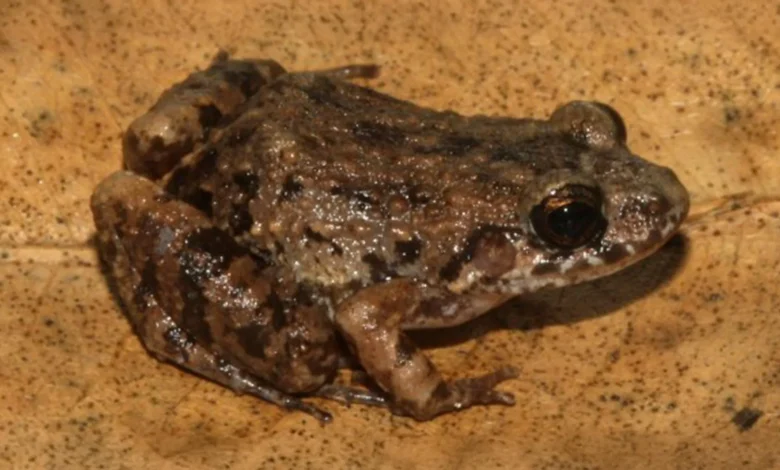
Deep within the seasonally flooded forests of the western Amazon, a scientific expedition has uncovered a previously unknown resident, adding a compelling new chapter to the catalog of Neotropical herpetology. Formally named Adenomera varcena, this newly identified frog species was detailed in a recent publication in the journal Ichthyology & Herpetology. The discovery underscores the staggering breadth of Earth’s hidden biodiversity while simultaneously drawing urgent attention to the race against time that modern taxonomists face as environmental pressures mount across South America.
The research team behind the identification comprises prominent scientists, including Célio F. B. Haddad, a professor at São Paulo State University (UNESP), and Thiago R. Carvalho, a professor at the Federal University of Minas Gerais (UFMG). Both academics are integral members of the Center for Research on Biodiversity Dynamics and Climate Change (CBioClima), a Research, Innovation, and Dissemination Center (RIDC) financially supported by FAPESP. Their collaborative efforts, drawing on a multi-institutional framework that includes the University of São Paulo (USP), the Federal University of Uberlândia (UFU), and the Pontifical Catholic University of Ecuador (PUCE-Quito), highlight the complex, multidisciplinary nature of contemporary biodiversity research.
Field Expeditions and the Upper Juruá River Discovery
The chronicle of Adenomera varcena began during targeted field expeditions to the remote Upper Juruá River region of western Acre, Brazil. Herpetologists surveyed isolated forest fragments situated near the Moa and Crôa rivers, in close geographic proximity to the municipality of Cruzeiro do Sul. This region of the western Amazon is well known among biogeographers as a mosaic of complex habitats, where terra firme (dryland) forests intersect with vast expanses of várzea—seasonally flooded forests that submerge during periods of high water.
Spotting a small amphibian in the dense leaf litter of the Amazonian understory is a challenging endeavor, but proving that the specimen represents an entirely new species requires a rigorous, multi-pronged scientific approach. The research team did not rely solely on morphological observations. Instead, they executed a comprehensive comparative analysis that integrated genetic sequencing (DNA data), acoustic recordings of the animal’s advertisement calls, detailed body measurements, habitat ecology data, and examinations of voucher specimens housed in established scientific collections.
The specific epithet chosen for the new frog, varcena, is a direct linguistic nod to its ecology. It refers explicitly to Amazonian floodplain forests (várzea), which undergo dramatic hydrological cycles of flooding and recession. This ecological preference makes the discovery particularly striking. The vast majority of known species within the genus Adenomera are traditionally associated with terra firme, or dryland forests, where they deposit their eggs in foam nests on land. The discovery of Adenomera varcena thriving in a seasonally flooded environment reveals an unexpected habitat adaptation and evolutionary shift within the genus, compelling scientists to reevaluate the ecological boundaries and behavioral flexibility of these small Neotropical frogs.
Decoding Cryptic Diversity: Genetics Meets Bioacoustics
The identification of Adenomera varcena serves as a textbook example of "cryptic diversity"—a phenomenon in evolutionary biology where two or more distinct species are morphologically nearly identical, masking their true genetic and evolutionary separation behind a facade of shared physical traits. To the untrained eye, or even to a field biologist relying solely on visual inspection, Adenomera varcena could easily be mistaken for several other closely related and already documented frog species inhabiting the broader Amazon basin.
To pierce this morphological veil, the research team leaned heavily on molecular phylogenetics and bioacoustics. Genetic data extracted from tissue samples demonstrated clear, fixed nucleotide differences between Adenomera varcena and its closest phylogenetic relatives. Concurrently, acoustic analyses of the males’ mating calls—vital reproductive isolating mechanisms in anurans—revealed distinct acoustic signatures. The newly described frog produces a characteristically short call delivered at a remarkably slow rhythm, alongside other fine-scale frequency and temporal variations that differentiate it from sympatric or related congeners.
Morphological examinations, when guided by genetic and acoustic clues, eventually brought subtle physical differences to light. Most notably, researchers observed the absence of a distinct dark spot on the ventral side of the animal’s forearm—a minute anatomical detail that, while invisible in the chaos of a rainforest floor, provides a reliable diagnostic marker in the laboratory. This combination of molecular, acoustic, and fine-scale morphological data solidified the species’ taxonomic standing.
Furthermore, the discovery of Adenomera varcena implies that many more lineages within the genus Adenomera remain undocumented. This suggests that the evolutionary radiation of these frogs across the Amazon basin is far more complex than previously understood, pointing to a rich reservoir of hidden diversity waiting to be uncovered through modern integrative taxonomic frameworks.
Climate Change and Hydrological Vulnerability in Floodplains
While the formal naming of Adenomera varcena represents a triumph for taxonomy, it simultaneously opens urgent questions regarding the species’ conservation status and ecological resilience. Because the species is newly recognized, scientists currently possess limited data concerning its broader life history, population density, and specific ecological requirements.
Professor Thiago R. Carvalho emphasizes the challenges this knowledge gap presents in the face of ongoing anthropogenic climate change. "Since we don’t yet know in detail the species’ ecological requirements and its natural history [reproductive period and mode], it’s difficult to predict the impacts of climate change, which may alter the seasonal flooding patterns of the floodplain forest ecosystem in this region of the Amazon," Carvalho explains. He notes that because the frog exhibits a distinct preference for this specific hydrological ecosystem, shifts in flood dynamics—driven by altered regional precipitation patterns and climate variability—could directly influence its reproductive behavior and population viability.
Floodplain forests rely on predictable hydrological cycles to maintain their ecological equilibrium. If climate change alters the timing, depth, or duration of these floods, ground-dwelling amphibians adapted to specific microhabitats may find their breeding grounds disrupted. In an accelerated scenario of natural habitat loss and climatic shifts, the newly described frog faces potential environmental pressures before scientists can even fully map its ecological niche.
The Race to Catalog Biodiversity Before Extinction
The formal description of Adenomera varcena also casts light on a broader, systemic crisis facing tropical biology: the race against time to document regional fauna before habitat destruction erases them permanently. Professor Célio F. B. Haddad points out that while new amphibian species continue to be discovered at a steady pace, the geopolitical and economic pressures driving ecosystem degradation in Brazil and across the Amazon basin are accelerating at an unsustainable rate.
"Currently, the pace of ecosystem destruction outpaces the capacity of taxonomic studies to keep up," Haddad observes. "Consequently, species that haven’t yet been described are omitted from lists of threatened fauna and remain legally and environmentally vulnerable. Thus, describing new species serves as a tool that aids in their protection. Furthermore, deepening our knowledge of actual biodiversity expands our understanding of the evolution of organisms, consolidating an essential pillar for both pure science and conservation strategies."
This dynamic creates a perilous legal and conservation vacuum. In modern environmental governance, protective legislation, conservation area designations, and extinction risk assessments—such as those maintained by the International Union for Conservation of Nature (IUCN) Red List—rely fundamentally on formal taxonomic descriptions. An animal that lacks a scientific binomial name effectively does not exist in the eyes of environmental policymakers. Unnamed species are excluded from environmental impact assessments, left unprotected from deforestation, and rendered invisible to conservation funding priorities.
By identifying and naming Adenomera varcena, the research team has moved the species from biological obscurity into the legal and scientific frameworks required for its long-term survival. The discovery acts as a vital reminder that rare species, particularly those restricted to specialized or fragile environments like Amazonian floodplains, are disproportionately vulnerable to anthropogenic extinction.
Broader Implications for Neotropical Conservation and Science
The unveiling of Adenomera varcena carries profound implications that extend well beyond herpetology. It validates the ongoing investment in long-term research infrastructure in Brazil, such as the FAPESP-funded RIDC initiatives, which provide the stable, multidisciplinary backing required to execute complex, multi-year taxonomic revisions.
As global biodiversity faces unprecedented threats from deforestation, agricultural expansion, and climate disruption, the work conducted by institutions like UNESP, UFMG, USP, and UFU demonstrates that foundational science remains an indispensable tool for environmental stewardship. Cataloging cryptic diversity is not merely an academic exercise in classification; it is a prerequisite for mapping the true architecture of life on Earth and constructing resilient, science-based conservation strategies for the future. As researchers continue to scour the remote corners of the Amazon basin, Adenomera varcena will stand as both a testament to the continent’s inexhaustible biological wealth and a stark warning of what remains to be lost if taxonomy cannot outpace the chainsaw.