Decoding the Ancient Secrets of Comb Jellies: How Ctenophores Are Rewriting the Evolutionary History of Animal Life

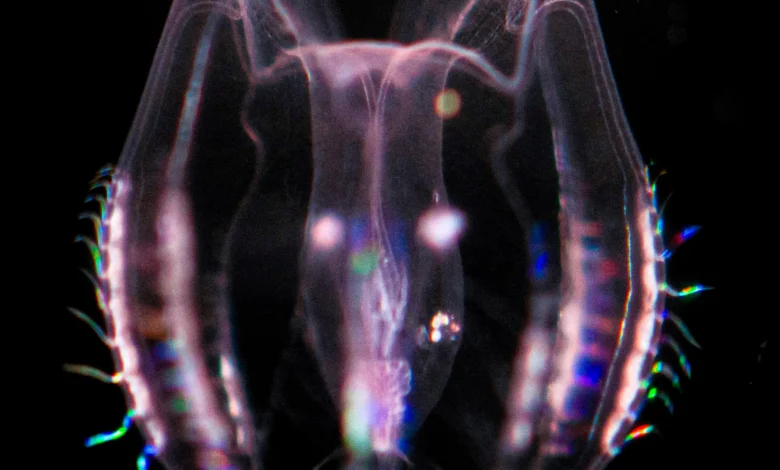
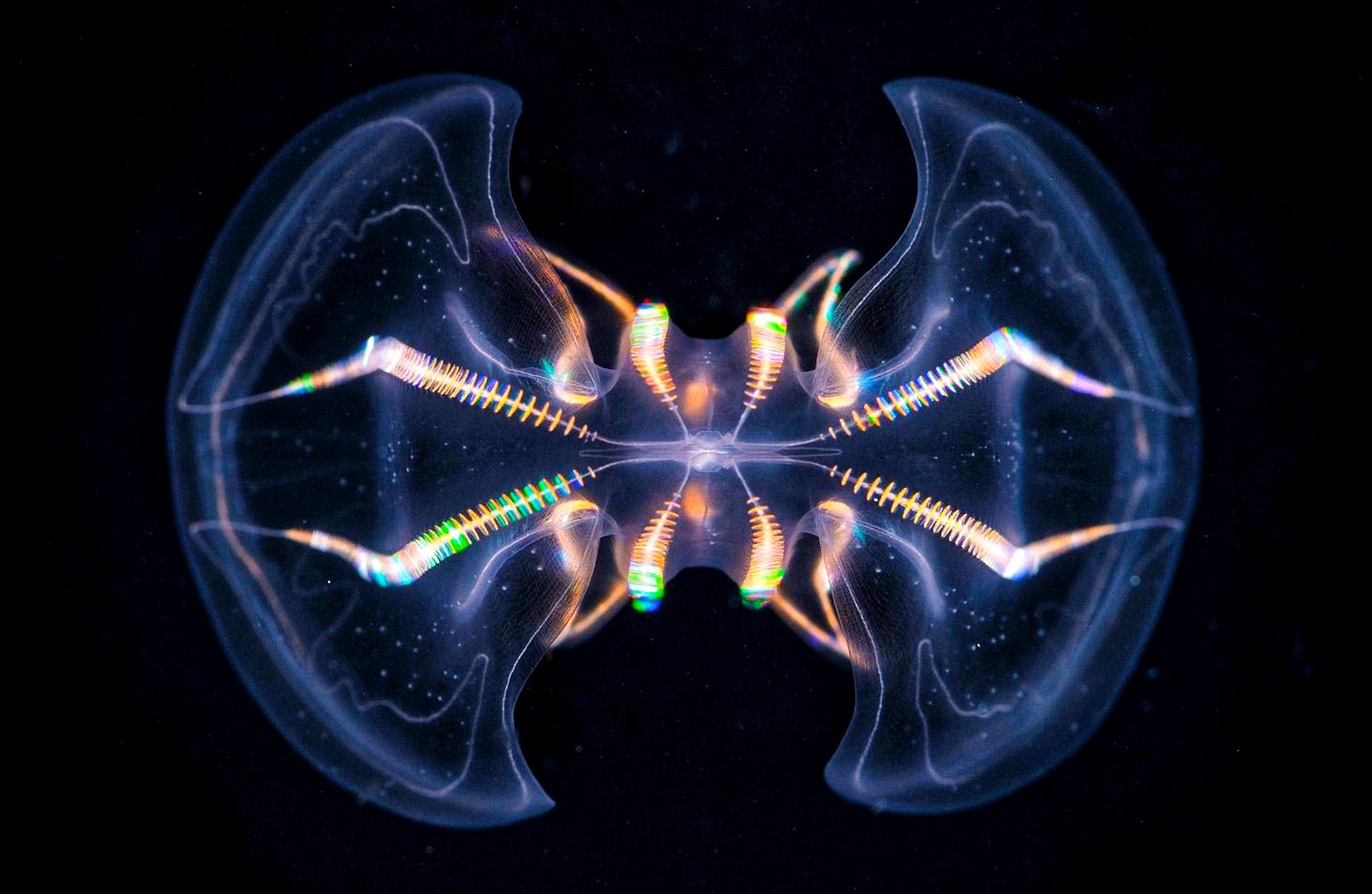
Long before the first vertebrate swam in the primordial oceans or the earliest land plants took root, a group of glowing, gelatinous organisms split from the rest of the animal tree. Emerging approximately 700 million years ago, these creatures—known scientifically as ctenophores and colloquially as comb jellies—form what is quite possibly the earliest branching animal lineage in Earth’s history. Despite sharing no close biological relationship to true jellyfish, these mesmerizing marine invertebrates inhabit ecosystems ranging from warm coastal waters to the crushing, pitch-black depths of the deep sea. Today, armed with advanced genomic sequencing and high-resolution microscopy, modern evolutionary biologists are finding that the true magic of comb jellies lies not merely in their iridescent beauty, but encoded directly within their DNA.
Over the past decade, ctenophores have transformed from obscure marine curiosities into central figures in evolutionary biology. Researchers are increasingly turning to these organisms to address some of the most fundamental questions in science: how the earliest nervous systems emerged, the biochemical mechanics of bioluminescence, the physical folding of ancient genomes, and the cellular adaptations required to survive extreme hydrostatic pressure. As scientists dig deeper into the biology of ctenophores, the prevailing assumptions about the dawn of multicellular animal life are being fundamentally challenged.
The Great Evolutionary Debate: Sponges Versus Ctenophores
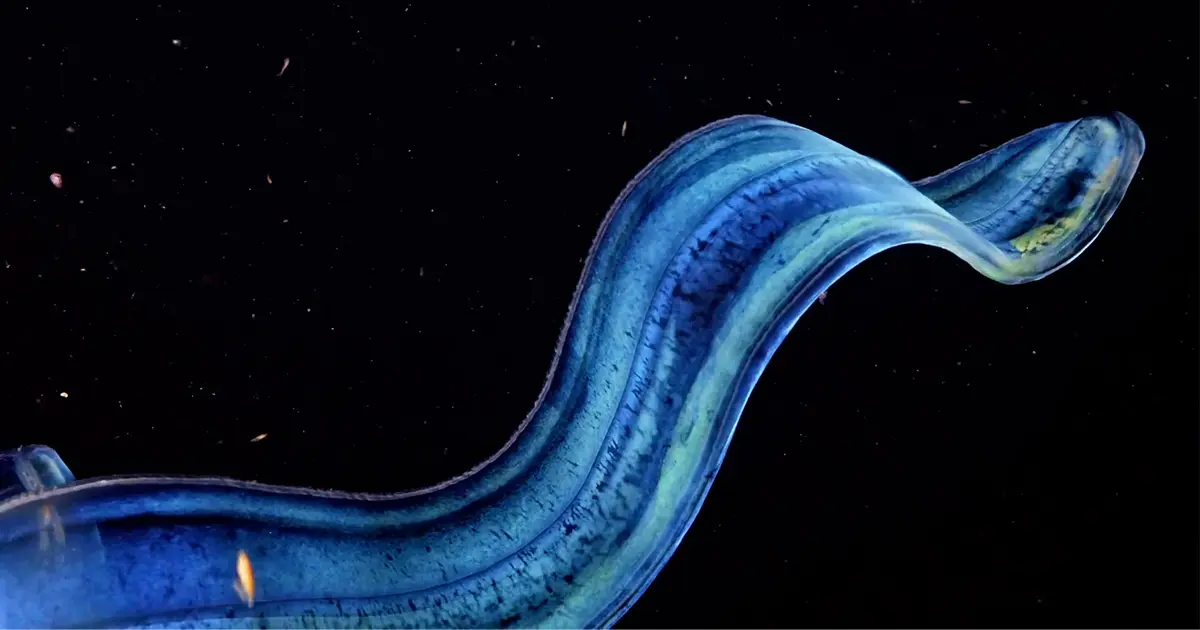
For more than a century, standard evolutionary textbooks taught that sea sponges—members of the phylum Porifera—represented the earliest branching lineage of animals. Sponges, lacking true tissues, muscles, and nervous systems, fit neatly into the scientific intuition that the earliest ancestors of multicellular life must have been simple and structurally rudimentary. However, this neat narrative began to fracture over the last twenty years as molecular phylogenetics advanced.
A scientific debate that evolutionary biologist Pawel Burkhardt of the University of Bergen describes as a "ping-pong game" between competing laboratories unfolded as researchers sequenced more genomes. The central question of this debate was simple yet profound: Did sponges or ctenophores branch off first?
The controversy reached a major milestone in 2023 with the publication of a landmark study analyzing chromosome-level genome organization. The research provided compelling evidence that ctenophores, rather than sponges, represent the true sister group to all other animals. While the phylogenetic tree remains a subject of intense academic scrutiny and refinement, this hypothesis introduces a profound paradox. Ctenophores possess muscles and a functional, albeit unique, nervous system.
"If you think about the earliest branching animal lineage, you would expect less complexity," Burkhardt noted. "That changes a lot of the assumptions about how the very first animal may have looked."
A Unique Nervous System and the Origins of Brains
To understand how revolutionary comb jellies are to neuroscience, one must look closely at how their nervous systems are structured. Typically, animal nervous systems are defined as complex networks of individual neurons that communicate rapidly across microscopic gaps known as synapses. However, research led by Burkhardt’s laboratory and published in Science Advances revealed a startling anomaly in the comb jelly species Mnemiopsis leidyi.
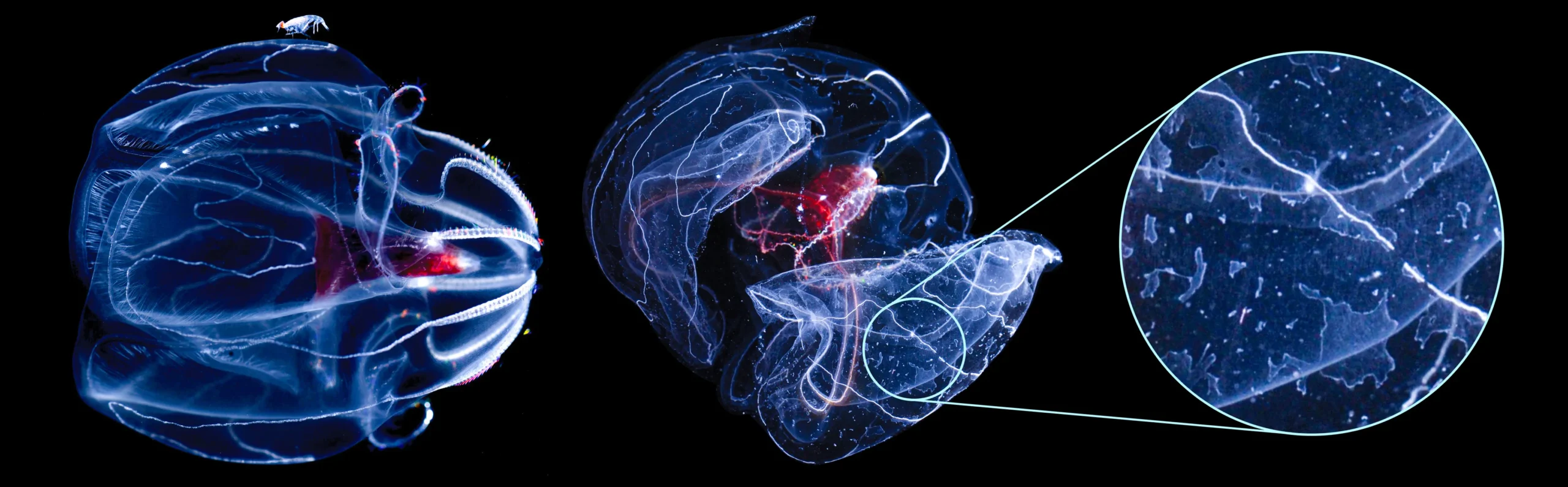
Using high-resolution volume electron microscopy, scientists mapped the internal structures of M. leidyi and identified 17 distinct cell types within its aboral organ—an essential sensory structure that helps the animal detect light, gravity, and pressure. Of these 17 cell types, 11 were entirely previously unknown to science. Most remarkably, beneath the outer surface of the comb jelly lies a continuous nerve net where neurons are connected directly via continuous cytoplasm, completely lacking traditional synapses.
"I don’t think any other animal has a nervous system like that," Burkhardt said. Because ctenophores occupy one of the most ancient branches of the animal family tree, this finding implies that evolution may have invented nervous systems independently at least twice: once in the lineage leading to ctenophores, and separately in the lineage leading to jellyfish, insects, vertebrates, and all other bilaterian animals.
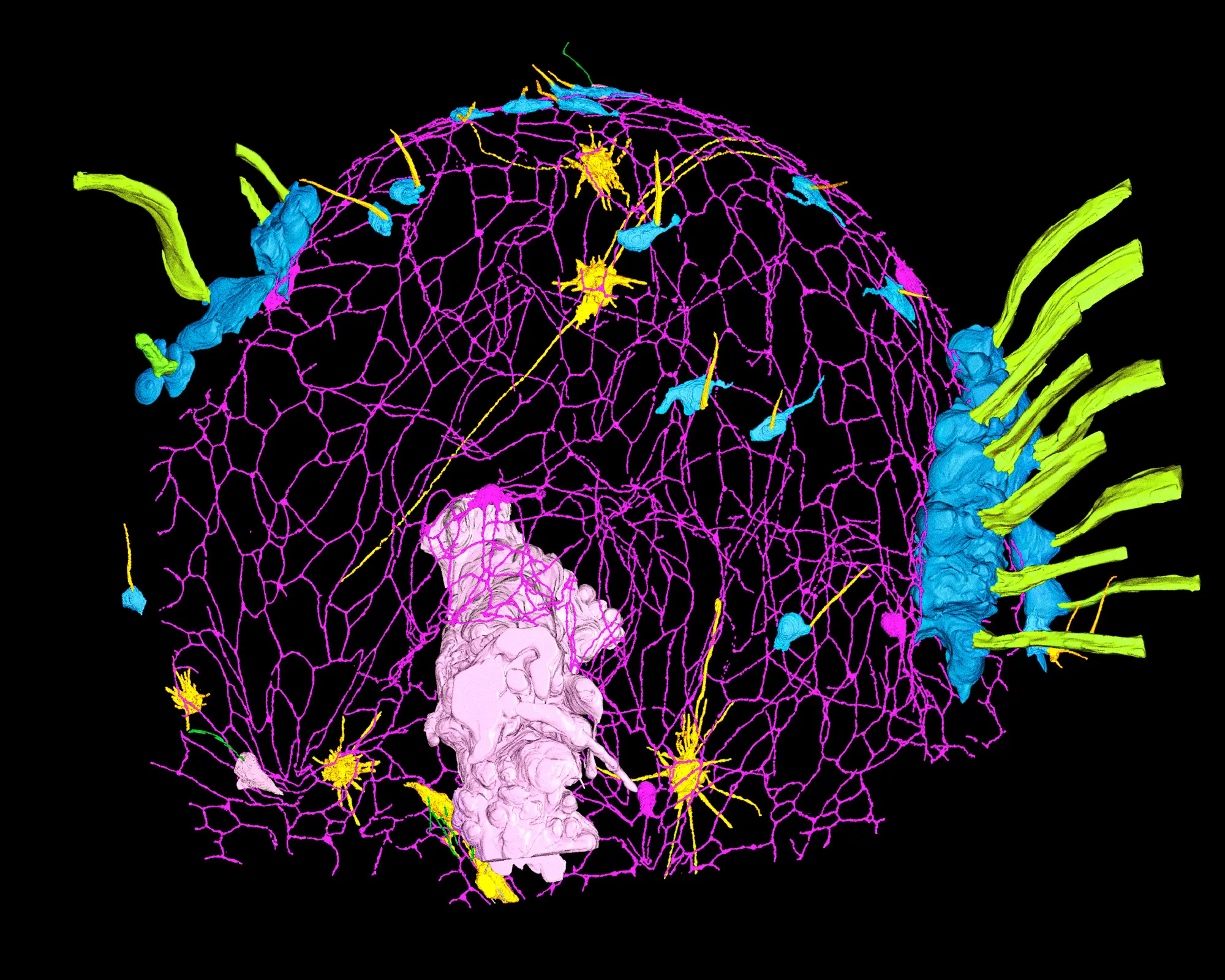
Furthermore, the concentration of neurons within the aboral organ offers a compelling model for how early brains might have originated. "Having more neurons condensed at a certain place—that’s one theory for how the very first brains evolved," Burkhardt explained.
Unlocking the Deep Sea: Cellular Adaptations and Human Health
Beyond neurobiology, comb jellies are serving as natural laboratories for biophysicists studying how life adapts to extreme environments. Certain deep-sea ctenophore species possess specialized cellular machinery that allows them to withstand hydrostatic pressures that would instantly crush most surface-dwelling organisms.
The secret lies within their cell membranes, which are constructed from unique lipid molecules called plasmalogens. Unlike typical lipids that contain two oxygen molecules, plasmalogens feature a single oxygen molecule, granting them exceptional structural flexibility. This chemical trait allows deep-sea ctenophores, such as Bathocyroe aff. fosteri—aptly named "master of the deep"—to maintain fluid cell membranes under thousands of meters of water pressure.
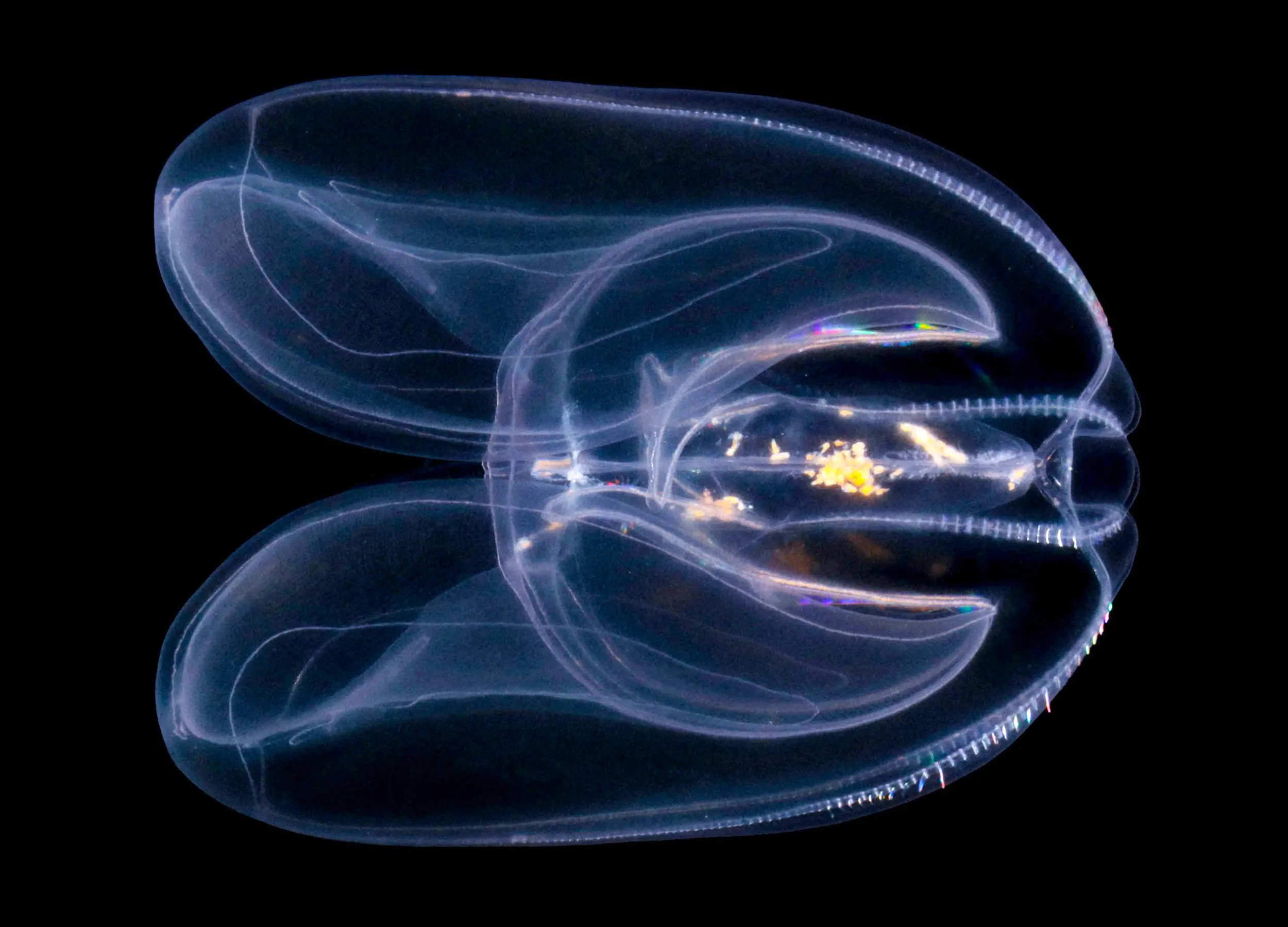
However, this adaptation creates a dramatic vulnerability. When researchers bring deep-sea ctenophores to the surface, the sudden release from pressure causes the flexible plasmalogens to rapidly expand. The cell membranes split apart, and the animals literally disintegrate.
Itay Budin, a biophysicist at the University of California, San Diego, emphasizes that studying these extreme marine adaptations has direct implications for human medicine. Plasmalogens are not exclusive to deep-sea comb jellies; they are also abundantly present in human brains. Depleted levels of plasmalogens are frequently correlated with severe neurodegenerative conditions, including Alzheimer’s disease and various forms of dementia.
"We went into this asking a very fundamental question about life in the deep sea," Budin said, "but it involved a biomolecule that’s also very important in our bodies and in human health." These lipids likely facilitate the rapid fusion and fission of cell membranes required for human neurons to fire electrical signals efficiently.
Folding Genomes and Ancient Developmental Pathways
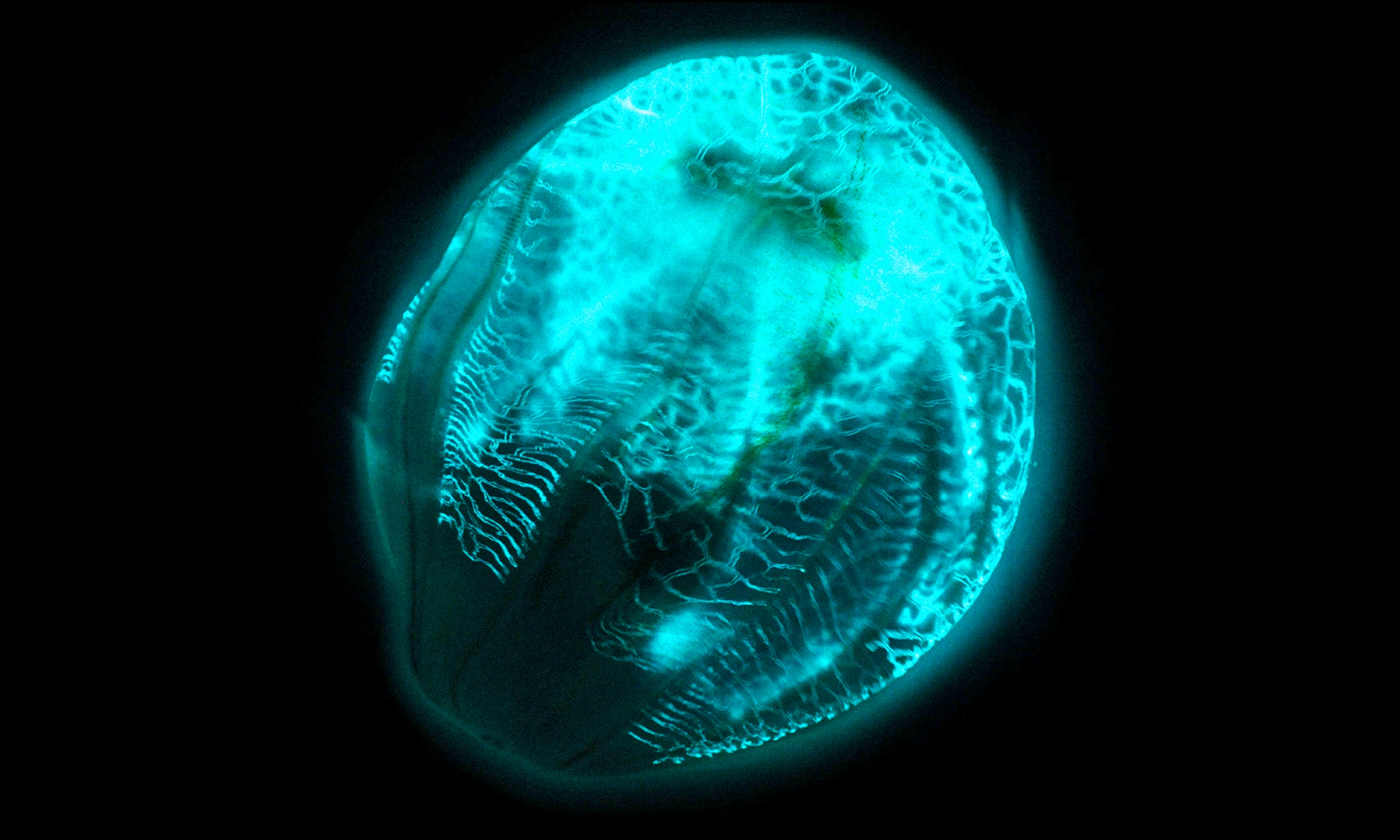
Genomic architecture in ctenophores has offered further surprises regarding how complex organisms evolved. Gene regulation—the process that dictates when and where specific genes are activated—often requires long stretches of DNA and associated proteins to physically fold into three-dimensional loops. Scientists previously believed that this sophisticated looping architecture was a relatively late evolutionary invention tied to the rise of advanced multicellularity.
However, researchers analyzing the genome of M. leidyi discovered more than 4,000 distinct DNA loops packed into a genome of just 100 million base pairs (compared to the human genome’s 3 billion base pairs). According to Arnau Sebé-Pedrós, an evolutionary biologist at the Center for Genomic Regulation in Barcelona, this suggests that looped DNA and complex gene regulation may have emerged approximately 150 million years earlier than previously estimated, providing ancient life with the structural toolkit necessary to build specialized tissues without needing to invent entirely new genes from scratch.
This ancient toolkit extends deep into embryonic development. Andreas Hejnol, an evolutionary biologist at Friedrich Schiller University Jena, has studied the blastopore—the embryonic indentation that ultimately forms either the mouth or the anus. Ctenophores utilize the exact same developmental signaling pathways to organize their embryos as bilaterians, the massive animal group that includes humans and shares our bilateral body symmetry. This conservation indicates that the foundational genetic organizers turning a simple ball of cells into a complex multicellular organism are extraordinarily robust and ancient.
"Understanding where the organizer came from tells us which parts of our development are ancient and robust, and which are recent inventions," Hejnol stated.
Illuminating the Chemistry of Bioluminescence
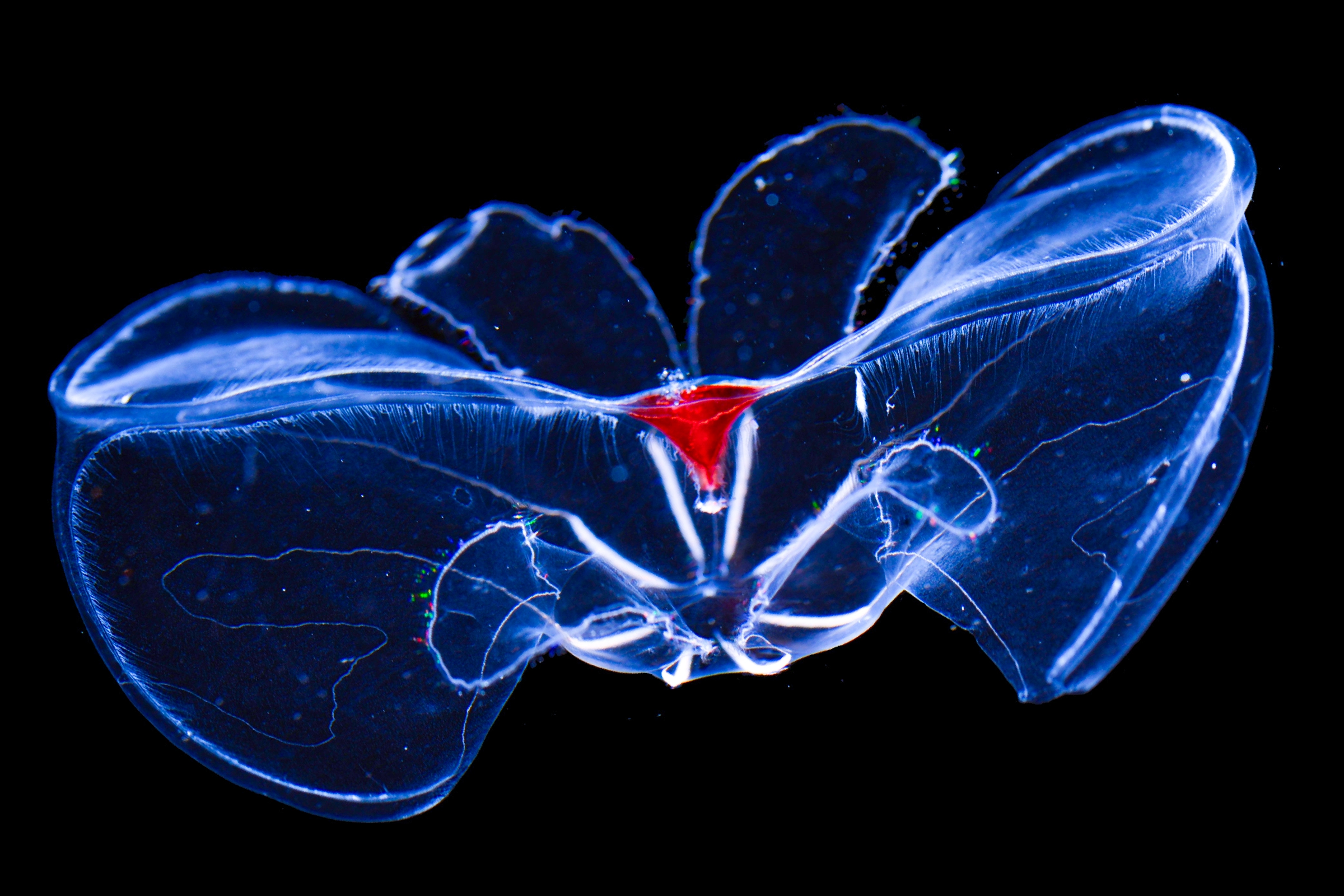
Another enduring biological mystery illuminated by comb jellies is the evolution of bioluminescence—the ability of living organisms to produce their own light. Marine biologist Steven Haddock of the Monterey Bay Aquarium Research Institute has spent years investigating how and why bioluminescence evolved across disparate branches of the tree of life.
Many marine organisms, ranging from tiny copepods and deep-sea shrimp to squids and fish, utilize a light-emitting chemical compound known as coelenterazine. Haddock’s research team discovered that while glowing ctenophores possess the genes required to synthesize or utilize this compound, a few non-glowing ctenophore species notably lack them. This correlation allowed researchers to pinpoint the genetic pathways responsible for marine luminescence.
Yet, a broader biochemical puzzle remains: how did coelenterazine become the most widespread light-emitting molecule in the world’s oceans, appearing across entirely unrelated species? Haddock hypothesizes that ancient marine organisms may have co-opted a shared precursor gene, modifying it independently across various lineages to serve different evolutionary functions, such as predator avoidance, communication, or camouflage.
The Broader Implications for Biological Science
The ongoing scientific fascination with ctenophores underscores a vital philosophy in modern research: studying organisms that appear unconventional or extreme can yield insights that reshape our understanding of universal biological, chemical, and physical principles.
As biophysicist Itay Budin notes, humans are as distantly related to a comb jelly as a comb jelly is to a jellyfish. Yet, by decoding the genomes, neural architectures, cellular membranes, and developmental pathways of these fragile, translucent creatures, science continues to bridge the gap between the dawn of animal life 700 million years ago and the complexities of modern human health. Far from being evolutionary dead ends, comb jellies stand as living archives of biological innovation, holding the keys to understanding how life on Earth successfully transformed from simple chemical soup into a dazzling array of complex, conscious existence.
Related posts: