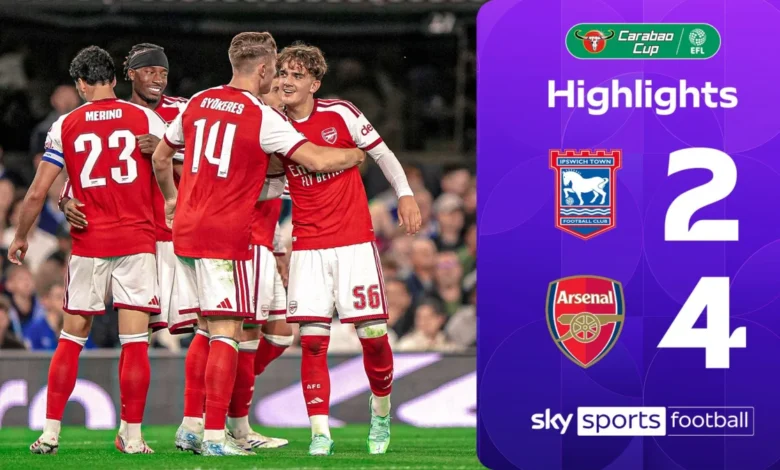
The encounter, played under the floodlights in Suffolk, served as a stern test for the North London outfit, who were forced to adapt to a high-intensity atmosphere generated by a near-capacity crowd. While Arsenal entered the fixture as the clear favorites, the nature of the Carabao Cup—a competition historically prone to early-round upsets—meant that complacency was the primary enemy for the visiting side.
A Chronology of the Clash
The match began with Ipswich Town demonstrating significant tactical ambition. Under the direction of their management, the home side looked to disrupt Arsenal’s rhythm from the opening whistle. Pressing high and challenging for every loose ball, Ipswich sought to unsettle the visitors’ defensive structure. For the first twenty minutes, the momentum was relatively balanced, with both sides trading possession in the midfield third.
The turning point occurred midway through the first half as Arsenal began to find gaps in the Ipswich defensive line. A series of incisive passes led to the opening goal, which silenced the home supporters and shifted the psychological weight of the match firmly onto the shoulders of the hosts. Throughout the remainder of the first half, Arsenal controlled the tempo, utilizing their technical superiority to dictate the pace of play.
Following the interval, Ipswich attempted to mount a comeback, throwing players forward and inviting more risk into their transition play. However, the Arsenal backline remained disciplined, thwarting several dangerous incursions into the final third. As the clock ticked past the hour mark, the tactical adjustments made by the visitors began to pay dividends, effectively neutralizing Ipswich’s attacking outlets and ensuring the lead remained intact. The final twenty minutes saw Arsenal manage the game with professional composure, eventually closing out the match to secure their place in the next round of the draw.
Statistical Breakdown and Match Context
The data surrounding the fixture reflects a dominant performance by the visitors, though one tempered by the defensive resolve of the home side. Arsenal maintained approximately 62% of ball possession throughout the 90 minutes, a testament to their ability to recycle play under pressure. Their pass completion rate hovered near 88%, highlighting the precision with which they moved the ball through the midfield.
In contrast, Ipswich Town focused on a counter-attacking strategy, registering five attempts on goal, two of which forced the Arsenal goalkeeper into notable saves. Despite their lower possession figures, Ipswich demonstrated efficient transition play, frequently utilizing the wings to bypass the Arsenal press. The set-piece count was relatively balanced, indicating that both teams were successful in limiting the opposition’s ability to capitalize on dead-ball situations.
This victory is significant in the broader context of Arsenal’s season. The Carabao Cup provides an essential platform for rotation, allowing the coaching staff to assess fringe players and emerging talents alongside established first-team members. In this instance, the inclusion of several younger prospects offered a glimpse into the club’s long-term strategy, proving that the squad possesses the necessary depth to compete on multiple fronts without compromising defensive integrity.
Managerial Perspectives and Reactions
Post-match analysis from the touchline reflected a mixture of satisfaction and professional respect. Arsenal’s management noted the difficulty of traveling to a stadium like Portman Road, acknowledging that such fixtures demand total concentration. The emphasis was placed on the team’s ability to remain calm during periods of intense pressure, particularly in the latter stages of the second half when the home side committed more men forward in search of an equalizer.
Conversely, the Ipswich camp, while disappointed with the result, expressed pride in the effort put forth by their players. Facing a top-tier Premier League club requires a nearly flawless performance, and the home side’s ability to remain competitive until the final whistle was noted as a positive indicator of their development. The match served as a barometer for Ipswich’s progress, highlighting the gaps that still exist between Championship contenders and established top-four Premier League sides.
Broader Implications for the Carabao Cup
For Arsenal, this victory keeps their hopes alive for a domestic trophy that has often served as a launchpad for successful campaigns. Progressing through the third round is essential for maintaining momentum; early exits in domestic cups can often lead to a loss of squad morale and a reduction in competitive minutes for non-starting players.
The broader implications for the competition are also noteworthy. As the Carabao Cup progresses toward the fourth round, the remaining field becomes increasingly congested with elite clubs. The tactical lessons learned during this encounter—specifically regarding the management of high-pressure away fixtures—will be invaluable as Arsenal prepares for the stiffer challenges ahead.
Furthermore, the performance of individual players in this match will likely influence the team sheet for upcoming league fixtures. With the fixture schedule intensifying, the ability to rely on a larger pool of players is a distinct advantage. The composure shown by the Arsenal squad in Suffolk suggests a collective maturity that will be tested further in the coming months as they look to challenge for honors across all competitions.
Tactical Analysis: The Evolution of the Game
From a tactical standpoint, the match was a fascinating study in contrast. Ipswich utilized a traditional, direct approach, looking to exploit the space behind the Arsenal defensive line. Arsenal, however, favored a more controlled, possession-based build-up, utilizing inverted full-backs to overload the midfield and create numerical superiority in the center of the pitch.
This structural choice by Arsenal was effective in controlling the tempo but required significant concentration to avoid being caught on the break. The success of the strategy relied heavily on the defensive transitions of the midfield trio, who consistently tracked back to cover the spaces left by the advancing full-backs. The defensive organization displayed by Arsenal in the closing minutes, when the game became more stretched, was particularly commendable. It signaled a shift from purely attacking football to a more balanced, pragmatic approach that is necessary for winning knockout competitions.
Looking Ahead
As the dust settles on the third round, the focus now shifts to the fourth-round draw. For Arsenal, the task will be to maintain this level of performance as the competition moves into its more decisive phases. The victory at Portman Road serves as a foundation, confirming that the squad is prepared for the unique challenges posed by lower-league opposition and the physical demands of mid-week cup football.
The Carabao Cup remains a vital component of the English football calendar, providing a unique narrative arc that brings together clubs from across the professional pyramid. For teams like Arsenal, these matches are not merely fixtures to be negotiated; they are opportunities to define the identity of the squad, test tactical variations, and build the resilience required to compete at the highest level of the game.
Ultimately, Tuesday’s result was a professional display of football, marked by tactical discipline and a clinical execution of the game plan. As the season unfolds, the lessons learned during this ninety-minute clash will likely resonate throughout the Arsenal dressing room, serving as a reminder of the standards required to compete and succeed in one of the most demanding environments in world football. Whether this path eventually leads to silverware remains to be seen, but for now, the North London side has taken the necessary step forward, keeping their ambitions firmly intact as they advance to the next stage of the journey.
Related posts: