The State of Modern Physics: Largest Global Survey Reveals Deep Divisions on Universe’s Deepest Mysteries

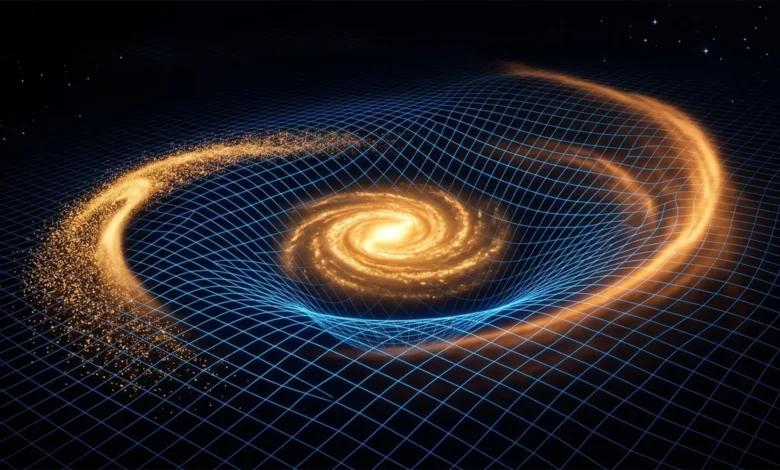
For decades, the popular image of theoretical physics has been one of steady, linear progress—a triumphal march from the formulation of general relativity to the Standard Model of particle physics, culminating in the detection of the Higgs boson and gravitational waves. However, the largest global survey of physicists ever conducted has shattered this illusion of widespread certainty, revealing that the field is characterized by profound division, deep uncertainty, and intense debate over its most fundamental tenets.
Led by researchers Niayesh Afshordi of the Perimeter Institute and the University of Waterloo, alongside coauthor Phil Harper in collaboration with the American Physical Society’s Physics Magazine, the unprecedented poll captured the perspectives of working physicists worldwide. The resulting data demonstrates that on nearly every major frontier of modern science—from the nature of black holes and the mechanisms of dark matter to the elusive quest for quantum gravity—standard textbook answers fail to command majority support. Far from signaling a crisis or a lack of direction within the scientific community, this widespread divergence highlights a vibrant intellectual frontier where foundational questions remain genuinely open.
Main Facts: A Field Without Consensus
The survey’s most striking takeaway is the rarity of broad agreement among practitioners of fundamental physics. Across dozens of complex questions regarding cosmology, high-energy physics, and gravitation, only two topics managed to clear the threshold of majority support among respondents.
The first majority consensus concerned the true nature of the Big Bang. Contrary to popular cultural depictions of the Big Bang as an absolute "beginning of time," 68 percent of surveyed physicists agreed that the framework does not necessarily mark the temporal origin of the universe. Instead, contemporary astrophysical models describe the Big Bang as a rapid transition from an extremely hot, dense state, leaving the question of whether time had an absolute beginning entirely unresolved.
The second and final point to secure a simple majority was cosmic inflation. Just 51 percent of respondents agreed that the primordial universe underwent an exponential, hyper-rapid expansion phase in its earliest moments.
Beyond these two concepts, consensus practically evaporates. The standard model of cosmology—formally known as $Lambda$CDM (Lambda Cold Dark Matter)—failed to win the backing of a majority of respondents. This lack of faith in the standard model is hardly accidental; it arrives on the heels of mounting observational pressure, most notably from the Dark Energy Spectroscopic Instrument (DESI). Recent data releases from DESI have hinted that dark energy—the mysterious repulsive force driving the accelerated expansion of the universe—may not be constant over time, as the $Lambda$CDM model strictly assumes, but could instead be dynamic and evolving.
Chronology and Background Context
To understand the weight of these survey findings, it is necessary to examine the historical trajectory of theoretical physics over the past century.
- 1915–1916: Albert Einstein publishes his theory of general relativity, fundamentally reshaping humanity’s understanding of space, time, and gravity by framing gravity not as a force, but as the curvature of spacetime caused by mass and energy.
- Mid-20th Century: The development of quantum mechanics successfully describes the subatomic realm, establishing the Standard Model of particle physics. However, attempts to unify quantum mechanics with general relativity immediately stall due to mathematical incompatibilities at microscopic scales.
- 1980s–1990s: String theory and loop quantum gravity emerge as leading contenders to solve the quantum gravity dilemma, sparking decades of theoretical research without definitive empirical validation.
- 1998: Observations of distant supernovae reveal that the expansion of the universe is accelerating, leading to the widespread acceptance of dark energy and the formulation of the $Lambda$CDM model as the standard paradigm of cosmology.
- 2010s–2020s: Precision cosmology experiments—including the Planck satellite, the Baryon Oscillation Spectroscopic Survey (BOSS), and subsequently DESI—begin probing the cosmos with unprecedented accuracy, occasionally yielding anomalies that challenge the foundational assumptions of the $Lambda$CDM model.
- Present Day: The publication of the Physics Magazine global survey quantifies the subterranean shift in physicist sentiment, proving that theoretical uncertainty has reached an all-time high as experimental anomalies accumulate.
Supporting Data: Deep Divisions on Dark Matter and Quantum Gravity
The quantitative breakdown of the survey responses paints a vivid picture of a scientific community navigating uncharted waters without a definitive roadmap. Nowhere is this clearer than in the ongoing hunt for dark matter, which constitutes roughly 27 percent of the universe’s total mass-energy budget yet has never been directly detected in a laboratory setting.
When asked to identify the most likely explanation for dark matter, respondents fractured into distinct camps:
- 21 percent favored a hybrid approach, combining multiple proposed explanations.
- 17 percent endorsed the hypothesis that dark matter is composed of a yet-undiscovered low-mass particle or particles (such as axions or sterile neutrinos).
- 12 percent pointed toward modifications to general relativity on galactic scales, such as Modified Newtonian Dynamics (MOND), rather than invoking unseen matter.
- The remaining percentage was scattered across exotic alternatives, primordial black holes, and entirely unmapped theoretical terrain.
A similarly fragmented landscape emerged regarding quantum gravity—the theoretical Holy Grail required to reconcile Einstein’s smooth continuum of spacetime with the discrete, probabilistic rules of the quantum world. Decades of intensive mathematical labor have failed to crown a definitive victor.
In the survey, string theory captured the largest single share of support for a specific framework at 19 percent. Loop quantum gravity followed at 12 percent. Meanwhile, 18 percent of respondents endorsed the radical alternative that gravity cannot be quantized at all—implying that gravity may remain a purely classical phenomenon, forcing a profound conceptual revision of both quantum mechanics and general relativity.
Official Responses and Academic Perspectives
The publication of these findings has stimulated considerable discussion among leading researchers, who view the lack of consensus not as a institutional failure, but as a healthy indicator of scientific vitality.
"The most striking result is how few of the ‘standard answers’ in fundamental physics command overwhelming support, with most falling short of a majority," noted Niayesh Afshordi, lead author of the study and professor at the University of Waterloo, alongside his coauthor Phil Harper. "The interesting point is not that physicists are confused. It is that the frontier is genuinely alive."
Afshordi emphasized that scientific progress relies heavily on recognizing where collective ignorance lies. While public perception often demands unified answers from the scientific establishment, active researchers understand that theoretical impelled breakthroughs usually arise from persistent anomalies and unresolved debates.
"Scientific truth is not decided by a vote," Afshordi added, invoking a philosophical perspective on the role of consensus in empirical inquiry. "But consensus, or its absence, tells us where the evidence feels settled and where researchers still see room for radically different ideas. In this sense, lack of consensus can be a clue. It marks places where better data, sharper theory, or new connections between subfields may be needed."
Other working physicists have echoed these sentiments, pointing out that theoretical physics has historically undergone profound paradigm shifts only when existing models were pushed to their breaking points. The coexistence of multiple competing hypotheses ensures that when next-generation observatories and particle colliders come online, the community will be intellectually prepared to interpret unexpected signals.
Broader Impact and Future Implications
The implications of the global survey extend far beyond academic philosophy; they directly impact how funding agencies, research institutions, and university departments allocate resources for the coming decades.
For years, major funding initiatives have occasionally prioritized heavily institutionalized paradigms—such as high-energy particle colliders optimized for specific supersymmetry models or large-scale dark matter detectors searching exclusively for Weakly Interacting Massive Particles (WIMPs). As null results continue to mount for these traditional candidates, the survey data validates a diversification of scientific inquiry. By demonstrating that a significant fraction of physicists view alternative hypotheses—like modified gravity, emergent spacetime, or dynamic dark energy—as viable, the survey provides empirical backing for broader funding allocations toward unconventional experiments.
Furthermore, the integration of new technological capabilities promises to disrupt the current theoretical deadlock. Upcoming facilities such as the Vera C. Rubin Observatory, the Nancy Grace Roman Space Telescope, next-generation gravitational wave interferometers, and advanced quantum sensors are poised to deliver unprecedented precision data. These instruments will test the limits of general relativity and quantum mechanics in regimes previously inaccessible to observation.
Ultimately, the global survey serves as a timely reminder of the provisional nature of human knowledge. As theoretical physics stands at the crossroads of cosmological anomaly and quantum mystery, the absence of consensus is not a weakness, but the very engine of discovery. In the words quoted by the study’s authors from songwriter Leonard Cohen, "There is a crack in everything, that’s how the light gets in"—and within the cracks of the standard models, modern physicists continue their search for illumination.
Related posts: