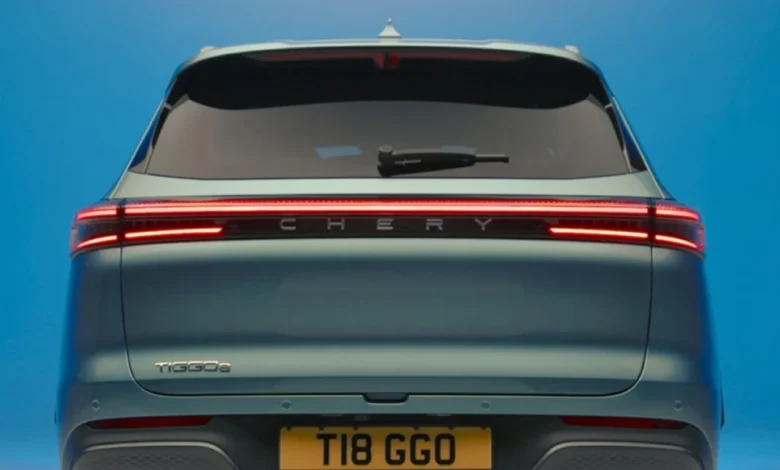
Chinese automotive giant Chery is aggressively expanding its footprint in the United Kingdom, viewing the market as its most lucrative overseas growth opportunity. Following a period of unprecedented commercial success that has outpaced internal projections, the company has confirmed plans to launch four new or updated models over the coming year. This product blitz will include a cutting-edge electric SUV and the rollout of a new flagship family-oriented brand, the Tiggo X.
Farrell Hsu, Manager of Chery UK, revealed that the brand has already eclipsed its sales targets set for 2026. Buoyed by this momentum, Chery is no longer content with merely establishing a foothold; the company is setting its sights on a direct challenge to mainstream European titans like Volkswagen. By delivering high-value vehicles tailored to the British mass market, Chery aims to redefine what consumers expect from everyday transportation.
The UK market has proven to be extraordinarily fertile ground for Chinese automotive manufacturers. Industry data indicates that Chinese brands collectively account for more than a fifth of the total UK car market—a dramatic shift in the nation’s automotive landscape that has unfolded over a remarkably short timeframe.
A Rapid Ascent: The UK Market Chronology
Chery’s journey into the United Kingdom began with a carefully structured multi-brand strategy. The company officially launched its eponymous Chery brand in the UK in mid-2025. Since then, the core brand has captured approximately 2.5% of the total market share.
However, Chery’s sister brands have achieved even faster traction. Jaecoo, which launched a year prior to the namesake brand, now commands roughly 4.3% of the market. Combined with the offerings from Omoda and Lepas, Chery’s stable of brands accounts for an impressive 8% market share. This performance vastly exceeds Chery’s conservative internal goal of capturing 3% of the market just one year ago.
A driving force behind this rapid ascent is the Jaecoo 7. The flagship SUV has achieved viral popularity and commercial dominance, earning the tongue-in-cheek moniker of the "Temu Range Rover" across British media and social platforms. The nickname references its premium, boxy aesthetic—reminiscent of vehicles produced by Jaguar Land Rover (JLR)—while offering a substantially lower price point.
Since its late 2024 launch, the Jaecoo 7 has sold nearly 53,000 units. Its commercial trajectory peaked in March, when it briefly claimed the title of the best-selling car outright in the UK.
Addressing the brand’s early positioning challenges, Farrell Hsu noted a fundamental shift in consumer perception. "Before, people would think about Chinese products and think we are cheap," Hsu said in an interview with Bloomberg. "But now we are different because we provide better products with a little cheaper price."
Why the UK Proved Uniquely Open to Chinese Automakers
The rapid adoption of Chinese brands in the UK is not an accident of geography, but rather the result of distinct structural characteristics within the British automotive sector. Unlike continental European countries such as Germany or France, which possess dominant homegrown mass-market automakers like Volkswagen and Renault acting as de facto national options, the UK lacks a native volume manufacturer.
The closest historical equivalent, MG, is now owned by the Chinese state-owned conglomerate SAIC. Meanwhile, Britain’s remaining iconic domestic brands—including Jaguar, Land Rover, Aston Martin, Rolls-Royce, and Bentley—are firmly entrenched in the luxury and ultra-luxury segments.
This structural vacuum means British car buyers carry virtually no historical brand loyalty to a domestic mass-market badge. Consequently, consumers have proven remarkably receptive to new entrants offering high technological specifications at competitive price points.
Furthermore, trade policy has played a pivotal role. Unlike neighbouring markets in the European Union, which have implemented steep provisional and definitive tariffs on battery-electric and electrified vehicles imported from China, the UK has maintained an open tariff environment. This regulatory stance has allowed Chinese manufacturers to price their vehicles aggressively, undercutting legacy European competitors while preserving healthy margins.
The Product Pipeline: Focusing on Plug-In Hybrids (PHEVs)
While pure battery-electric vehicles (BEVs) dominate headlines across Europe, Chery is deliberately staking its immediate UK growth strategy on plug-in hybrid electric vehicles. According to Hsu, Chery’s proprietary "Super Hybrid" powertrain technology accounts for approximately three-quarters of the company’s total UK sales to date.
Consumer demand for these electrified models has been so robust that it is currently outpacing Chery’s shipping logistics from its manufacturing hubs in China. To alleviate supply chain bottlenecks and localize operations, the automaker has explored strategic partnerships. Notably, discussions have taken place regarding the possibility of utilizing spare manufacturing capacity at Nissan’s Sunderland plant. However, Hsu noted that these talks are "still under discussion," complicated by lingering questions over whether UK-produced vehicles will ultimately qualify for inclusion in the EU’s strict "Made in Europe" content rules.
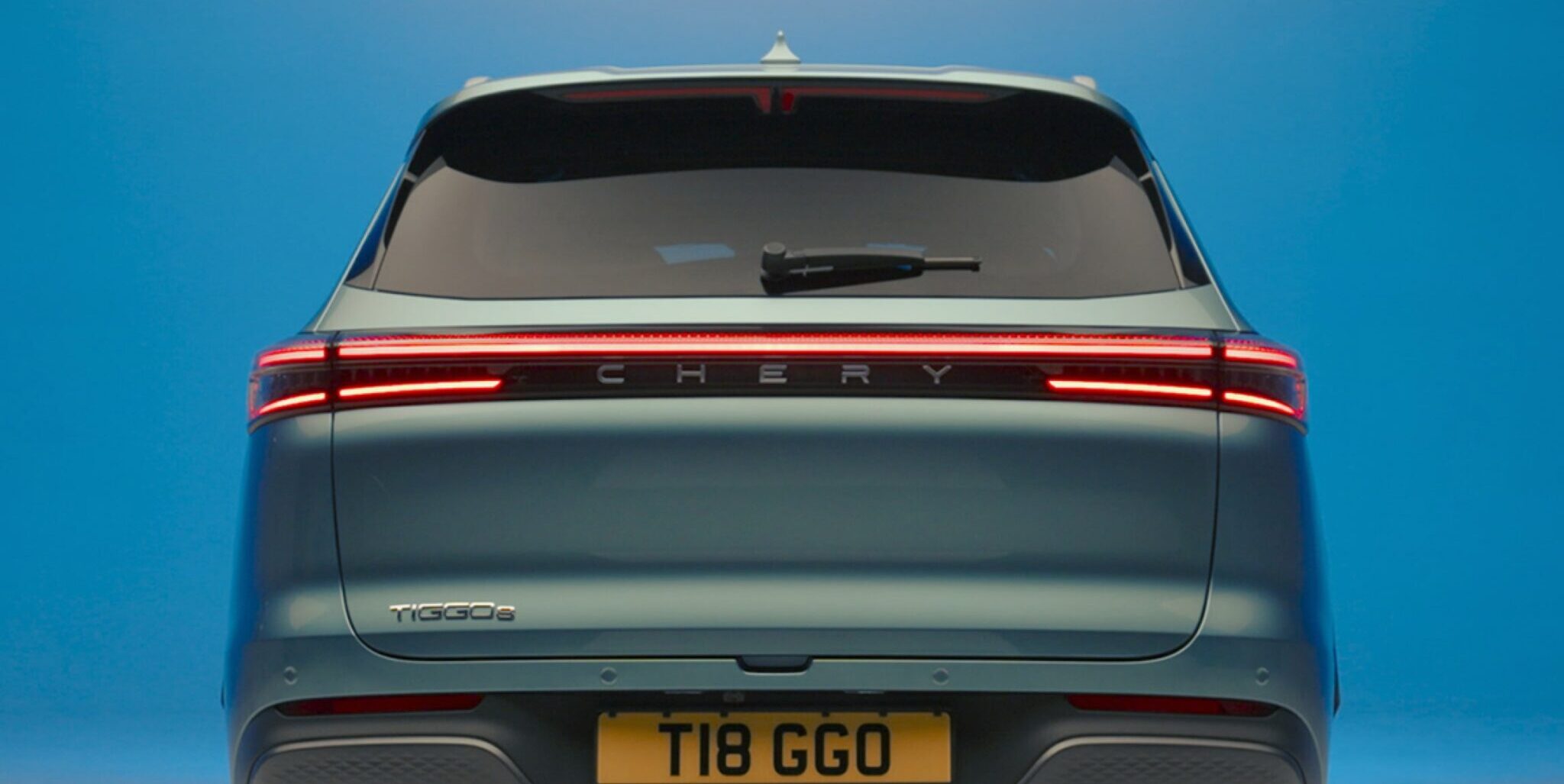
The upcoming product roadmap highlights the brand’s emphasis on versatile, family-oriented utility vehicles. Chief among these is the new Tiggo X, which made its global debut at the Beijing Motor Show. Positioned as Chery’s new global flagship, the Tiggo X is a substantial five-metre, seven-seat SUV featuring a rugged, boxy "lifestyle" design language and an advanced PHEV drivetrain. While the vehicle boasts an impressive 124-mile electric-only range under China’s generous CLTC testing cycle, industry analysts expect this figure to be adjusted downward under Europe’s more rigorous WLTP standards.
Looking to the future, Chery envisions a highly customizable ownership experience. Hsu outlined a long-term product philosophy that would allow consumers to select their preferred battery size and electric range independently, drawing a parallel to how consumers choose storage capacity when purchasing a new smartphone. Chery’s existing lineup already reflects this tiered approach, ranging from the compact Tiggo 4—which utilizes a smaller 1.8 kWh hybrid battery—to larger models like the Tiggo 7, 8, and 9, which offer robust plug-in options scaling up to 34.4 kWh.
Strategic Shifts and the Pursuit of Engineering Excellence
Chery’s aggressive pivot toward the British market also coincides with a broader geopolitical realignment for the firm. Following its official withdrawal from the Russian market, the company has redirected its strategic focus toward Western Europe and the UK, treating the region as a cornerstone of its globalization strategy.
To ensure its vehicles resonate deeply with Western driving preferences, Chery is investing heavily in localized infrastructure. The company is scheduled to open a dedicated research and development center at the UTAC Millbrook proving ground in Bedfordshire later this autumn.
Rather than serving purely as an engineering hub from day one, Hsu described the facility as a vital "translation centre." The site will process feedback collected from British consumers and automotive journalists, converting subjective impressions into actionable technical data for engineering teams back at Chery’s headquarters in China. "We will test everything and then tell HQ what they need to do," Hsu explained.
Despite its rapid commercial triumphs, Chery remains remarkably candid about the remaining gaps in its product execution—particularly when benchmarked against legacy European marques. Hsu openly acknowledged that German automotive engineering remains the gold standard the company aspires to match.
"So many people like the German feeling; cars that drive like a German car," Hsu said. "This is something we need to learn. Maybe in the future we can educate other markets, but currently, we need to learn from them."
Broader Market Implications
Chery’s rapid ascent in the UK serves as a bellwether for the wider transformation of the global automotive industry. By successfully cracking a developed Western market without the safety net of domestic protectionism or heavy subsidies, Chinese automakers are proving that aggressive pricing paired with rapidly improving build quality, design, and localized service networks can dismantle decades of legacy brand loyalty.
For traditional European volume manufacturers such as Volkswagen, Stellantis, and Renault, Chery’s ambition to capture the mass market represents a profound competitive threat. As Chinese brands establish R&D beachheads in Europe and explore local manufacturing options to bypass potential future trade barriers, the pressure on legacy automakers to accelerate their own electrification timelines and cost-reduction strategies will only intensify.
If Chery successfully translates its "German-car" aspirations into tangible driving dynamics while maintaining its aggressive value proposition, the landscape of the British automotive market may be permanently redrawn before the decade is out.
Related posts: