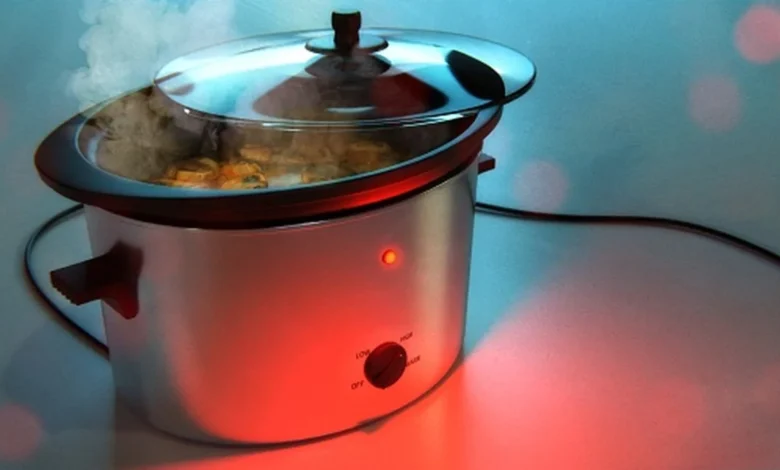
The slow cooker has remained a kitchen staple for generations, prized for its ability to transform tough cuts of meat and raw vegetables into tender, flavorful meals with minimal oversight. Yet, despite its decades-long presence in households worldwide, millions of users continue to puzzle over the minimalist iconography adorning its control panels. Among the most frequent sources of confusion are the horizontal wavy lines stamped onto the device’s temperature dial. While symbols have long served as a universal method for bridging language barriers in product design, this particular marker has often left consumers scratching their heads.
Decoding the Minimalist Interface of Modern Kitchen Appliances
To understand the purpose of the wavy lines, one must look at the evolution of appliance design. For decades, manufacturers have sought to create universally recognizable interfaces that transcend linguistic differences. Much like the floppy disk icon used globally to represent the "save" function or the telephone handset symbol utilized for voice calls, slow cooker manufacturers adopted a visual shorthand to communicate operating modes across international markets.
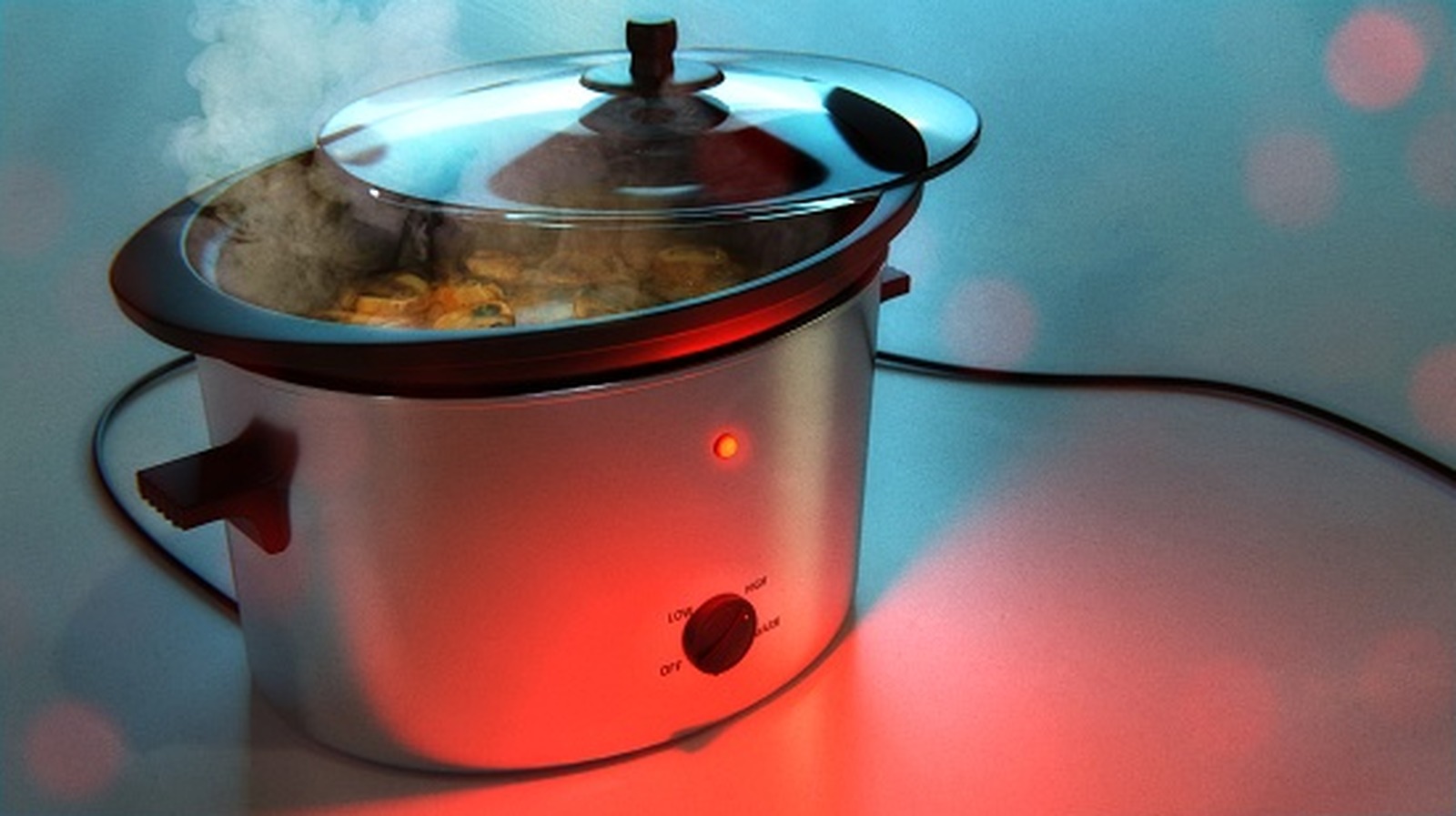
On standard manual Crock-Pot models, the control panel typically features a combination of Roman numerals and abstract graphics. The position marked with "O" designates the off state, while the single vertical line ("I") corresponds to the Low setting, and the double vertical line ("II") represents the High setting. Situated alongside these numerical indicators are the wavy lines, which are intentionally designed to mimic rising heat waves—reminiscent of thermal currents or steam rising from a hot spring. This graphic represents the "Warm" function, a distinct operating mode separate from the active cooking cycle.
Consumer feedback gathered by appliance manufacturers over the years indicates that while these symbols are intended to be intuitive, they frequently require a learning curve. Many users have reported resorting to analog modifications—such as applying masking tape or permanent marker to spell out "Low," "High," and "Warm"—to avoid having to consult instruction manuals during meal preparation. In response, consumer advocacy groups and home-cooking forums frequently publish guides to help new appliance owners navigate these cryptic interfaces, highlighting a broader disconnect between industrial designers and everyday kitchen operators.
The Functional Mechanics: Warm Versus Low and High
Beyond the visual mystery of the symbols lies a critical culinary distinction regarding how slow cooker settings function. Understanding the precise role of the Warm setting is essential not only for optimizing food quality but also for maintaining food safety standards during social gatherings and potlucks.
Unlike the Low and High settings, which are engineered to actively cook raw ingredients, the Warm setting is calibrated strictly to hold food that has already reached its fully cooked, serving-safe temperature. According to culinary safety guidelines, slow cookers operating on the Warm setting maintain an internal temperature generally kept above 140 degrees Fahrenheit (60 degrees Celsius). This threshold is vital for preventing the rapid multiplication of bacteria that typically occurs in the "danger zone" between 40 and 140 degrees Fahrenheit. However, the Warm setting is not designed to heat up cold or refrigerated food safely from scratch; attempting to use it for initial cooking can leave perishable items in the danger zone for dangerously prolonged periods, significantly increasing the risk of foodborne illness.
In contrast, the Low and High settings govern the rate at which thermal energy is transferred to the ceramic insert. A common misconception among home cooks is that the High setting produces a higher overall cooking temperature than the Low setting. In reality, on most traditional slow cooker models, both Low and High settings eventually reach the same maximum simmering temperature—typically hovering around 209 degrees Fahrenheit (98 degrees Celsius), just shy of a rolling boil.
The primary difference between the two cooking modes is the velocity of the heating process. The High setting applies electrical energy more rapidly to reach that peak temperature, cutting standard cooking times roughly in half compared to the Low setting. For instance, a recipe that requires eight hours on Low will typically take four hours on High. This distinction allows cooks to adjust their meal preparation timelines based on their daily schedules without sacrificing the final texture or temperature of the dish.
The Evolution of Slow Cooker Technology and Usability
The slow cooker as it is recognized today has undergone significant technological advancements since its commercial introduction in the early 1970s. Originally popularized under the brand name Crock-Pot by the Rival Company, the appliance evolved from a simple bean cooker into a multi-purpose kitchen powerhouse. As the technology advanced from purely mechanical dials to sophisticated digital displays and programmable microcontrollers, the user interface adapted accordingly.
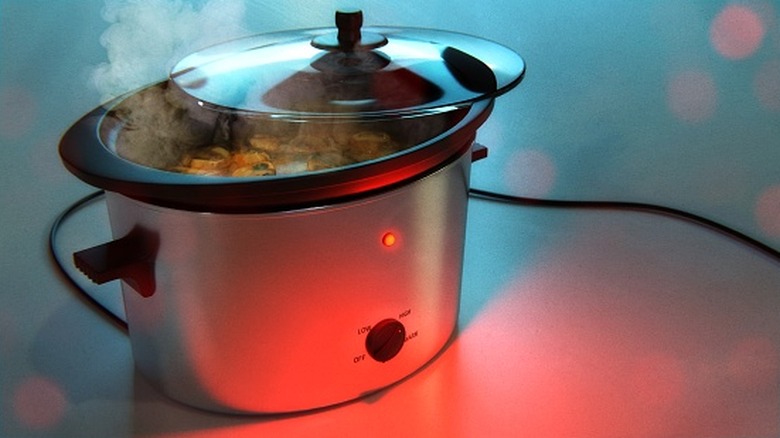
Chronologically, the progression of slow cooker interfaces reflects broader shifts in consumer electronics:
- Early 1970s to 1980s: Introduction of simple mechanical rotary dials featuring basic off/on functionality, accompanied by rudimentary markings and Roman numerals.
- 1990s to 2000s: The advent of digital timers and push-button controls on mid-to-high-tier models, though budget-friendly manual dials utilizing abstract symbols remained widely popular.
- 2010s to Present: Widespread integration of smart cooking appliances, featuring automated transition phases where programmable models automatically shift from a timed cooking cycle to the Warm setting once the countdown expires.
Despite these digital advancements, millions of manual, dial-operated slow cookers remain active in kitchens worldwide, ensuring that questions regarding the interpretation of wavy lines and Roman numerals remain relevant. Manufacturers continue to balance aesthetic minimalism with functional clarity, recognizing that an overly abstract interface can lead to user error in a high-stakes environment like food preparation.
Broader Implications for Product Design and Consumer Education
The ongoing confusion surrounding slow cooker symbols sheds light on a larger challenge within industrial and consumer product design: the friction between universal iconography and practical usability. While symbols allow companies to manufacture a single product line for global distribution—thereby reducing production costs and eliminating the need for localized text translations—they occasionally sacrifice immediate comprehension.
Behavioral economists and human-factor engineers study these exact points of friction to improve future appliance designs. When a consumer must pause, guess, or search online to determine how to operate a basic household tool, it represents a failure in ergonomic communication. Consequently, modern appliance design is increasingly shifting toward hybrid interfaces that combine subtle iconography with explicit, legible text labels or digital LED readouts that eliminate ambiguity entirely.
For now, homeowners navigating older or manual-dial models can take solace in the fact that the wavy lines are simply a graphic metaphor for rising heat. Whether one chooses to embrace the minimalist design or follow the lead of pragmatic cooks by labeling the dials with a permanent marker, understanding the distinct functions of Warm, Low, and High remains a fundamental skill for successful slow-cooker mastery. As kitchen technology continues to evolve, these small design lessons serve as a reminder that clarity and utility should always remain at the forefront of culinary innovation.