Saving Burdett: How a Grassroots Bipartisan Coalition Defeated Corporate Healthcare Consolidation in Troy, New York

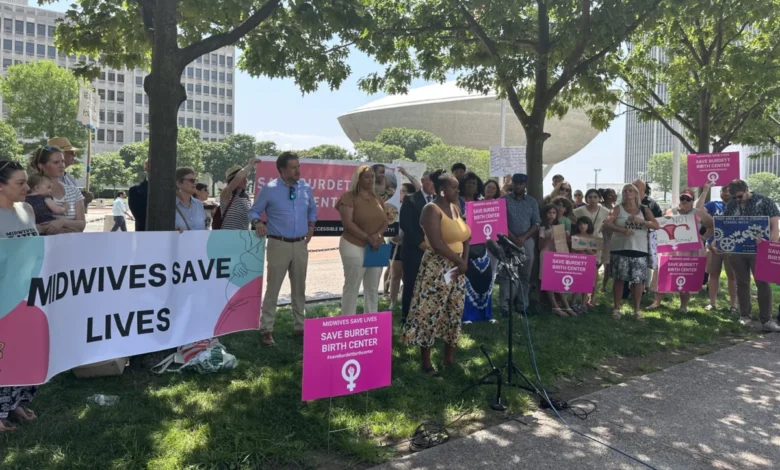
TROY, N.Y. — When the leadership of Trinity Health announced its intention to shutter the birthing center at Samaritan Hospital, the decision landed like a physical blow on the residents of this historic industrial municipality along the Hudson River. For Starletta Washington, who directs the local YWCA, the news was not merely shocking; it felt like a direct assault on the dignity and future of her community. Washington, a lifelong resident who was born at the facility and delivered her own children within its walls, immediately understood the catastrophic implications of stripping a city of its only maternity ward. Pregnant mothers would suddenly face the terrifying prospect of traveling half an hour to neighboring cities or enduring emergency roadside deliveries.
The proposal to close the Burdett Birth Center in Troy was far from an isolated incident. Across the United States, a relentless wave of hospital closures, corporate consolidation, and rural maternity ward shutdowns has devastated healthcare access. Since 2010, hundreds of maternity units have vanished as larger hospital networks absorb smaller community institutions, frequently prioritizing profit margins and operational efficiencies over local health needs. Yet, unlike countless other towns and cities that have quietly surrendered their vital healthcare infrastructure to corporate mandates, Troy engineered a rare and decisive victory. Through an extraordinary display of cross-partisan political mobilization, grassroots activism, and strategic legal pressure, the community forced a multibillion-dollar health system to reverse course, offering a potential blueprint for communities battling healthcare erosion nationwide.
Anatomy of a Community Lifeline
Perched on a hill overlooking a city that once manufactured the majority of America’s shirt collars, Samaritan Hospital and its Burdett Birth Center have long anchored the region’s health and social fabric. In recent years, Burdett achieved national renown not merely for its longevity, but for its pioneering approach to patient-centric, low-intervention obstetric care. Operating as a collaborative model where certified nurse-midwives and doulas work in tandem with traditional obstetrician-gynecologists, the center championed a philosophy designed to minimize unnecessary surgical procedures.
The clinical outcomes at Burdett consistently outperformed broader regional and state averages. According to hospital data from 2025, only about 25 percent of newborns at the facility were delivered via Cesarean section, a stark contrast to the statewide average hovering near 33 percent. Furthermore, the center boasted superior metrics regarding lower rates of preterm births and reduced incidences of low-birth-weight infants. For local families, such as Lidia Zambrano-Madera, who gave birth to both of her children at Burdett with the assistance of a midwife, the center represented an irreplaceable standard of compassionate, localized care. For Zambrano-Madera, whose home and local business sat mere minutes from the hospital, the proximity was as vital as the clinical quality.
However, the operational excellence of Burdett could not insulate it from the financial calculus of its parent organization. Trinity Health, a massive, Michigan-based Catholic health system operating 91 hospitals across multiple states, generated over $25 billion in revenue with healthy operating margins exceeding 5 percent. Despite this robust financial health, Trinity officials argued that the birthing center was operating at a sustained deficit and could no longer be sustained amid broader regional healthcare restructuring. The system intended to consolidate maternity services at its sister facility in Albany, requiring vulnerable expectant mothers in Rensselaer County to commute up to 30 minutes for delivery services.
The Spark and the Chronology of Resistance
The confrontation began without warning. When news of the planned closure broke through local media coverage three years ago, it caught hospital staff, municipal leaders, and patients completely off guard. The lack of transparency and community consultation ignited an immediate public firestorm.
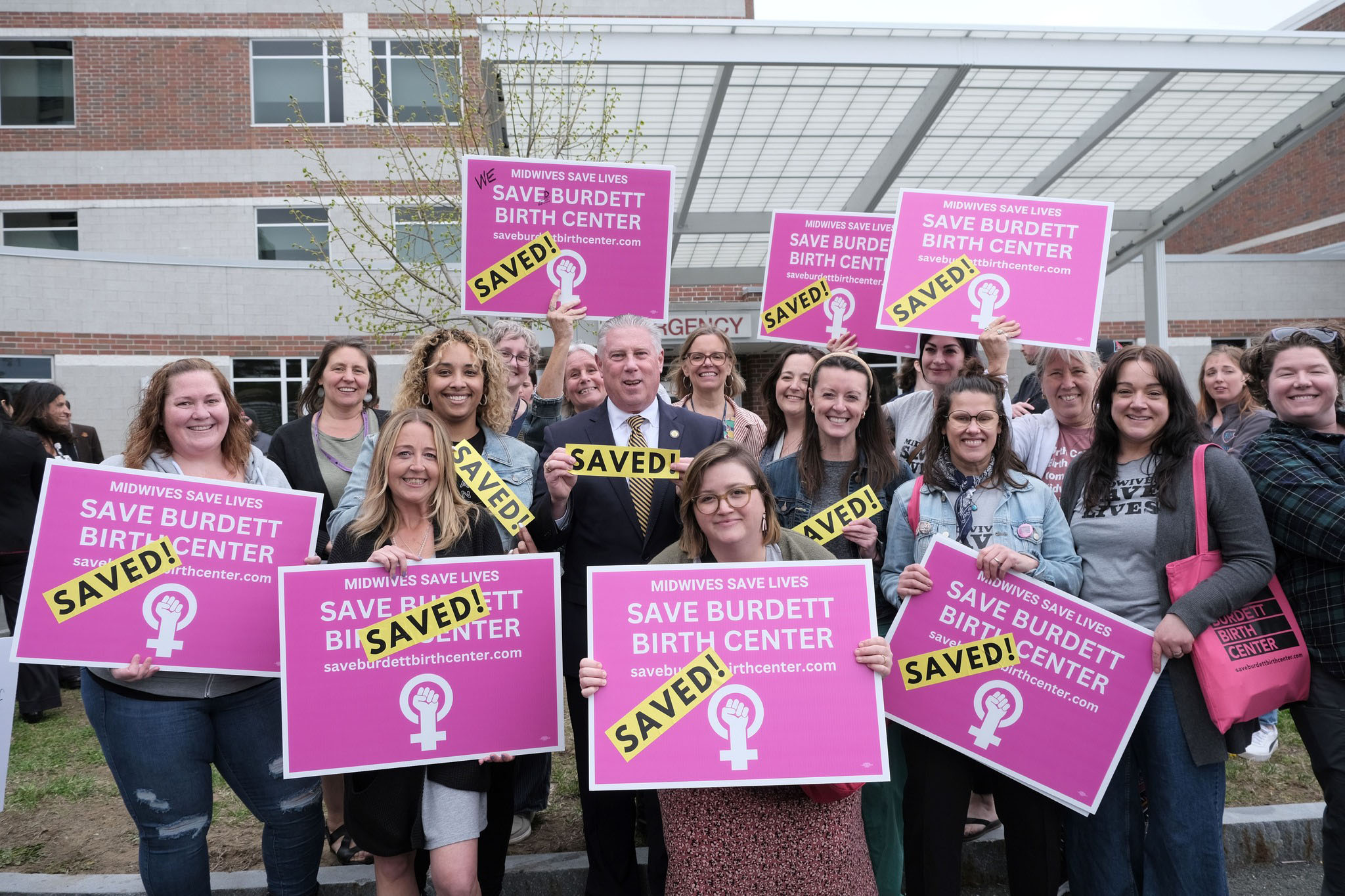
Within days of the announcement, a diverse coalition of midwives, mothers, labor and delivery nurses, and community organizers converged on the downtown YWCA to map out a defense strategy. Volunteers mobilized swiftly, distributing pink "Save Burdett" yard signs at local farmers markets, printing advocacy T-shirts, and establishing digital information networks. Recognizing that corporate executives needed hard data rather than emotional appeals to reconsider their stance, activists conducted an independent community impact survey. The findings were stark: one in four residents of Troy lacked access to a personal vehicle, proving that shifting obstetric services to Albany would create an insurmountable transit barrier, particularly for low-income families and women of color.
The campaign’s success hinged on its ability to transcend traditional political and ideological boundaries. In an era defined by intense national polarization, the fight to save Burdett united figures from across the political spectrum. Carmella Mantello, then-City Council president and subsequently elected mayor as a Republican, joined forces with progressive Democrats, labor unions, and reproductive rights advocates. The coalition achieved the improbable feat of securing explicit support from both Planned Parenthood and the Roman Catholic Diocese of Albany. Bishop Edward Scharfenberger publicly denounced the closure plan, arguing that abandoning maternity care directly conflicted with the core moral tenets of Catholic healthcare.
"Whether you were Republican or Democrat, or if you didn’t vote, it literally brought everyone together," Mayor Mantello reflected. "Everyone just said, ‘We can’t let this happen.’"
The Escalation: Legal Challenges and Legislative Intervention
As months passed, Trinity Health executives dug in their heels, insisting that regional financial pressures left them no viable alternative. The healthcare giant even initiated legal action against the state to clear administrative hurdles for the closure.
Recognizing the gravity of the threat, top state officials stepped into the fray. New York Attorney General Letitia James launched a formal inquiry into the proposed closure, conducting an extensive, daylong public hearing in Troy that underscored the community’s profound reliance on the facility. Simultaneously, state lawmakers orchestrated a powerful legislative counteroffensive. Assembly member John T. McDonald III, a Democrat representing Troy, partnered with local Republican officials, including the county executive and the area’s state senator, to engineer a legislative funding rescue package. The state ultimately secured $5 million in targeted funding specifically designated to support the operational overhead of keeping the Burdett Birth Center open.

Faced with mounting regulatory scrutiny, a hostile public relations environment, an ongoing attorney general investigation, and a unified bipartisan legislative front, Trinity Health capitulated. Nearly a year after the initial closure announcement, corporate leadership executed an abrupt reversal, officially confirming that the Burdett Birth Center would remain open and operational.
Broader Implications for American Healthcare
The triumph in Troy is increasingly being viewed by healthcare policy analysts as a watershed moment in the ongoing national debate over hospital consolidation and corporate stewardship of medical infrastructure. Lois Uttley, a prominent New York-based health researcher and patient advocate who has spent decades monitoring hospital mergers, notes that the Troy victory exposes deep-seated public skepticism regarding promises made by mega-health systems.
"The executives of these health systems will tell the community that joining a big health system will be good, that the quality of care will improve, that efficiencies will mean they can keep the costs low," Uttley observed. "But what I have seen over the last 30 years of work is that those promises often are broken. As hospitals close or downsize, communities are catching on. They’re becoming more skeptical."
The broader economic implications of such consolidation are profound. When rural and urban community hospitals eliminate labor and delivery services, the resulting maternity care deserts contribute directly to rising maternal mortality rates and negative neonatal outcomes, disproportionately impacting marginalized populations. The strategy employed in Troy demonstrates that communities possess potent leverage when they successfully transition from isolated complaints to organized, multi-institutional coalitions that leverage regulatory oversight and state-level funding.
As American healthcare systems continue to grapple with post-pandemic financial pressures, workforce shortages, and the relentless march toward corporate centralization, the lesson from the banks of the Hudson River remains clear. By bridging ideological divides and demanding accountability from distant corporate boardrooms, local populations can successfully protect vital public health assets. In the words of Assembly member McDonald, summarizing the ethos that saved Troy’s maternity ward: "If we take down our swords, and put out our arms, maybe we can get something done."
Related posts: