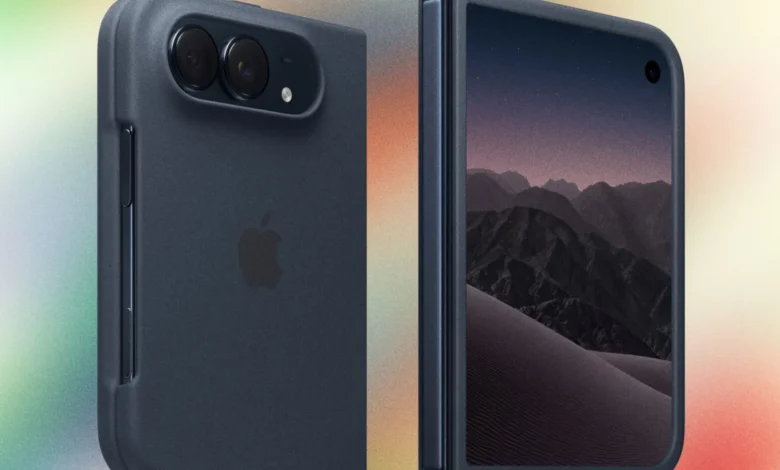
Apple has officially entered the foldable device market with the introduction of the iPhone Duo, marking the company’s first venture into folding screen technology. Unveiled by Chief Executive Officer John Ternus at Apple Park in Cupertino, California, the device represents a significant departure from Apple’s traditional form factors. Priced at a starting point of $1,999, the iPhone Duo is designed to bridge the gap between smartphones and tablets, allowing users to unfold a compact mobile device into a larger display comparable to an iPad mini.

The launch occurs as foldable smartphones transition from a novelty category into a more established segment of the global mobile industry. While folding devices accounted for approximately three percent of global smartphone sales in recent years, manufacturers have steadily resolved early hardware challenges such as hinge durability and screen creases. The introduction of the iPhone Duo signals a strategic pivot for Apple as the $4.6 trillion company seeks to capture a new demographic of consumers looking for high-end, versatile hardware configurations.
Evolution of Form Factors and the Long Road to the Foldable Market
For years, Apple pursued incremental updates to its flagship smartphone lineup, introducing variations such as the mini, the Plus, and the ultra-thin iPhone Air. While these devices addressed specific consumer preferences for sizing and portability, none fundamentally altered how users interacted with mobile software on a structural level. Meanwhile, competitors like Samsung steadily refined their foldable offerings, culminating in devices such as the Galaxy Z Fold 7, which established baseline expectations for durability, crease reduction, and software multitasking.

Apple’s deliberate delay in entering the foldable market was driven by engineering hurdles that plagued early iterations of folding technology across the industry. First-generation foldable devices were frequently criticized for excessive bulk, fragile hinges susceptible to dust and particulate accumulation, and prominent display creases that interfered with media consumption and touch navigation. By waiting several years, Apple’s research and development teams focused on engineering a titanium frame and a refined hinge mechanism capable of withstanding long-term daily use. The resulting device maintains a slim profile when closed, closely resembling two iPhone Air units joined together, while eliminating the visible screen deformities that affected early market entrants.
Hardware Specifications, Display Technology, and Performance
The iPhone Duo features a dual-display configuration consisting of a 5.4-inch outer screen optimized for one-handed daily tasks and an expansive 7.6-inch inner display when unfolded. The internal screen utilizes a custom nano-texture layer designed to minimize glare and maximize contrast, supporting a peak brightness of 3,000 nits across both panels. The device’s aspect ratio avoids the excessively narrow, elongated dimensions seen in some competing foldables, opting instead for a notepad-like geometry that accommodates standard navigation and supports Apple Pencil stylus input.

Under the hood, the iPhone Duo is powered by Apple’s latest A20 Pro chip, matching the processing and graphics capabilities found in the company’s top-tier Pro smartphone models. This silicon integration ensures that the device can handle intensive computational tasks, high-end mobile gaming, and advanced on-device artificial intelligence features, including the newly upgraded Siri AI system. Battery optimization varies depending on display usage, with Apple estimating up to 44 hours of total battery life under mixed operating conditions.
Strategic Compromises: Camera Systems and Biometric Authentication
Despite its position at the apex of Apple’s pricing structure, the iPhone Duo incorporates specific hardware compromises to maintain its slim chassis and structural integrity. Unlike the triple-lens camera arrays found on standard Pro models, the Duo relies on a dual-lens configuration comprising a 48-megapixel wide-angle lens and a 2x telephoto lens. While sufficient for general photography, users accustomed to the extended optical zoom capabilities of the iPhone Pro series will note the omission of longer-range telephoto hardware.

Furthermore, the device replaces Face ID—Apple’s standard facial recognition biometric security since 2017—with Touch ID. The fingerprint scanner is integrated into the side power button, positioned where a user’s thumb naturally rests whether the device is folded or open. This design choice represents a return to capacitive biometric authentication for a flagship device, a decision driven by the physical constraints of housing complex TrueDepth camera sensors within a dual-screen folding chassis.
Pricing, Configurations, and Market Availability
The iPhone Duo is positioned as the most expensive consumer smartphone ever released by Apple. Pre-orders are scheduled to begin on Friday, October 16, with official in-store availability following a week later on Friday, October 23. The entry-level model starts at $1,999 for the 256GB storage configuration, available in finishes designated as "star white" and "night sky." Pricing scales upward based on storage capacity, culminating at $3,199 for the fully equipped 256GB-to-2TB tier variants.

Apple’s decision to delay the release of the Duo from its traditional September launch window mirrors historical precedent set by past milestone devices, such as the all-screen iPhone X in 2017. Staggering the release schedule allows the company’s standard iPhone lineup to occupy the initial spotlight during the autumn sales cycle while providing additional time for final manufacturing and software calibration of the folding hardware.
Industry Implications and Financial Impact
The launch of the iPhone Duo carries significant implications for the high-end consumer electronics market. As smartphone replacement cycles lengthen globally, manufacturers face mounting pressure to stimulate upgrades through radical hardware innovation rather than iterative updates. By introducing a folding device at a $1,999 starting price, Apple is testing the upper limits of consumer price elasticity for luxury technology.

Financial analysts note that while foldable phones currently occupy a niche percentage of overall unit shipments, they command disproportionate profit margins and serve as crucial halo products that elevate a brand’s technological prestige. The success of the iPhone Duo will likely influence industry-wide design trajectories for the remainder of the decade, potentially accelerating the mainstream adoption of folding displays across enterprise and consumer sectors alike.