NASA’s Deep Space Network Faces Critical Strain as Madrid Complex Halts Operations Amidst Spanish Wildfires, Exacerbating Existing Goldstone Outage

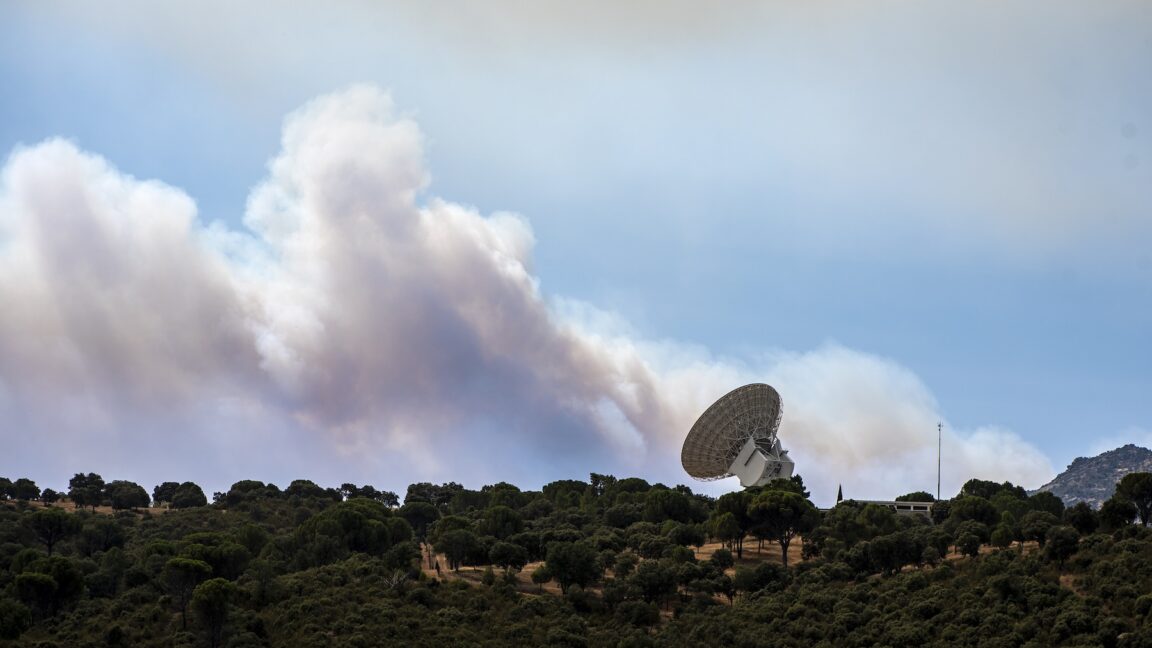
The National Aeronautics and Space Administration’s (NASA) Deep Space Network (DSN), the critical communication lifeline for its robotic and human missions across the solar system and beyond, is currently operating under significant duress. The Madrid Deep Space Communications Complex (MDSCC) in Robledo de Chavela, Spain, ceased activity on Friday afternoon following evacuations prompted by escalating wildfires in the region. This operational halt comes at a particularly challenging time, as the DSN’s 70-meter radio antenna at the Goldstone Deep Space Communications Complex in California has been offline since an incident last year, leaving the Canberra Deep Space Communication Complex (CDSCC) in Australia as the sole fully operational site with a 70-meter dish capable of communicating with the most distant spacecraft.
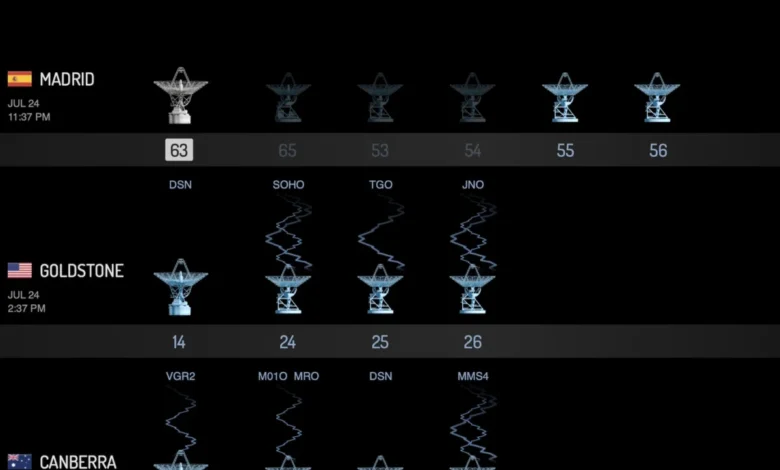
A public-facing NASA website, designed to provide real-time status updates on each DSN complex, confirmed the inactivity at the Madrid site. In stark contrast, antennas at the California (Goldstone, though its 70-meter dish remains offline) and Australia locations continued to facilitate vital communication links with a multitude of NASA spacecraft. These included the venerable Voyager 2, journeying through interstellar space, and Juno, diligently orbiting Jupiter, alongside numerous other critical missions exploring various celestial bodies. The temporary shutdown of the Madrid complex, a crucial node in this global network, introduces an unprecedented level of vulnerability to NASA’s deep space communication capabilities.
The Wildfire Crisis in Central Spain
The wildfires necessitating the evacuation of the Madrid Deep Space Communications Complex are part of a broader, devastating conflagration sweeping across central Spain. Fuelled by an intense summer heatwave, chronic drought conditions, and strong winds, these blazes have ravaged vast swathes of land, leading to widespread evacuations and significant ecological and infrastructural damage.
On Friday, Spanish authorities ordered the evacuation of over 19,000 residents from towns situated in the mountainous regions west of Madrid, underscoring the severity and rapid progression of the fires. These communities, nestled in areas susceptible to such environmental disasters, faced immediate threats to life and property. Emergency services deployed an extensive force, with more than 2,000 personnel and 10 aircraft actively engaged in combating the infernos. The scale of the response highlights the national emergency declared by Spain, as it grapples with one of the most severe wildfire seasons in recent memory.
The Madrid Deep Space Communications Complex, located near Robledo de Chavela, found itself directly in the path of these escalating fires, necessitating the immediate prioritization of personnel safety. NASA officially confirmed the evacuation, stating, "The safety and well-being of our personnel is our highest priority and our thoughts are with the families and neighbors who are also experiencing the impact of the wildfires in the surrounding communities. We will provide updates as conditions evolve." This statement reflects the gravity of the situation, emphasizing the human element amidst the technical challenges.
Adding to the regional impact, a separate deep space tracking station, the Cebreros tracking station, also fell victim to the wildfires. Owned and operated by the Spanish government and the European Space Agency (ESA) as part of ESA’s Estrack network, this facility is located mere miles from NASA’s DSN complex. Its evacuation, as reported by Spanish news outlets, signifies a coordinated response to a shared environmental threat and highlights the localized intensity of the blazes, affecting multiple critical space infrastructure assets in close proximity. The Cebreros station, known for its deep space tracking capabilities for ESA missions like Mars Express and BepiColombo, shares the same vulnerability to environmental hazards as its NASA counterpart.
Understanding the Deep Space Network: A Global Lifeline
The Deep Space Network is an international array of giant radio antennas that supports interplanetary spacecraft missions, as well as some Earth-orbiting missions. It is the largest and most sensitive scientific telecommunications system in the world. Established in 1958, the DSN is managed by NASA’s Jet Propulsion Laboratory (JPL) and consists of three primary complexes strategically placed approximately 120 degrees apart around the globe:
- Goldstone Deep Space Communications Complex (GDSCC) in California, USA.
- Madrid Deep Space Communications Complex (MDSCC) in Robledo de Chavela, Spain.
- Canberra Deep Space Communication Complex (CDSCC) in Tidbinbilla, Australia.
This unique geographical distribution allows for continuous communication with spacecraft as the Earth rotates, a concept often referred to as "follow the sun." As one complex rotates out of view of a distant spacecraft, another rotates into view, ensuring uninterrupted data reception and command transmission. Each complex houses multiple antennas of varying sizes, but the most powerful and critical are the 70-meter (230-foot) diameter dishes. These colossal antennas are essential for communicating with the most distant missions, such as the Voyager probes, which require immense sensitivity to detect faint signals from billions of miles away, and powerful transmission capabilities to send commands over vast distances. The loss of even one of these 70-meter antennas significantly degrades the network’s capacity and redundancy.
The Goldstone 70-Meter Antenna: A Pre-existing Challenge
The operational status of the Madrid DSN complex takes on added significance when considering the pre-existing challenges faced by the Goldstone complex. Its 70-meter antenna, officially designated Deep Space Station 14 (DSS-14) and often referred to as the "Mars antenna" due to its historical role in Mars missions, has been offline since an accident last year. The incident involved an "over-rotation" of the massive structure, which caused significant damage to critical cables and water lines. This led to an unfortunate flooding of the antenna’s base with an estimated 200,000 gallons of water containing glycol, a substance classified as an environmental hazard, complicating the repair efforts.
The repairs to DSS-14 are projected to be extensive and costly, with estimates ranging between $4.1 million and $4.6 million. NASA officials have opted to combine these necessary repairs with already-planned infrastructure upgrades to the antenna, aiming to enhance its capabilities and longevity. However, this integrated approach means the antenna is not expected to return to service until at least 2028. This long-term outage at Goldstone has already placed a heightened reliance on the Madrid (DSS-63) and Canberra (DSS-43) 70-meter antennas, making the current situation at Madrid particularly precarious. With two of the three primary 70-meter dishes out of commission, the DSN’s global communication capabilities for the most distant missions are severely constrained, relying almost entirely on the single 70-meter antenna in Canberra.
Implications for Current and Future Missions
The temporary loss of the Madrid complex, combined with the ongoing Goldstone outage, presents a critical bottleneck for NASA’s deep space operations. While the DSN has multiple smaller antennas (34-meter dishes) at each complex that can handle communications for many missions, the unique capabilities of the 70-meter dishes are irreplaceable for certain tasks and spacecraft.
- Voyager 2 and Juno: The article specifically mentions Voyager 2 and Juno. Voyager 2, launched in 1977, is now billions of miles away in interstellar space. Its signals are incredibly faint, and the 70-meter antennas are vital for detecting them and sending commands to the aging spacecraft. Juno, orbiting Jupiter, also generates a vast amount of scientific data that requires robust downlink capabilities, often utilizing the larger antennas. While smaller antennas can communicate with these spacecraft, the data rates and signal strength are significantly reduced, potentially impacting scientific return or operational efficiency. The DSN has robust scheduling protocols, but concurrent needs can quickly exceed available resources, especially with reduced capacity.
- Other Deep Space Missions: The DSN supports a vast array of other missions, including Mars rovers (Perseverance, Curiosity) and orbiters (Mars Reconnaissance Orbiter, MAVEN), the New Horizons spacecraft exploring the Kuiper Belt, the Parker Solar Probe studying the Sun, and even the James Webb Space Telescope (JWST) operating at L2. While many of these missions can use 34-meter dishes, the 70-meter antennas offer superior signal strength and data throughput, which can be critical during high-demand periods or for troubleshooting. The reduced redundancy means any unexpected issue at the Canberra complex would have catastrophic implications.
- Artemis Program and Human Spaceflight: The article highlights the significant demands Artemis missions place on the DSN. Human spaceflight requires an exceptionally high level of communication fidelity, including continuous telemetry for crew health and spacecraft status, high-resolution imagery and video downlinks, and real-time command capabilities. These requirements are far more stringent than those for robotic missions.
- Artemis III: This mission, originally planned for a lunar landing, has been re-scoped to fly in low-Earth orbit to test the Orion capsule with commercial Moon landers from SpaceX and Blue Origin. This revision somewhat mitigates the immediate pressure on DSN’s deep space capabilities, as low-Earth orbit missions typically rely on other tracking networks or smaller DSN antennas.
- Artemis IV: This mission, targeted for no earlier than 2028, is planned as the program’s first lunar landing with astronauts. The timing of this mission coincides with the projected return-to-service date for Goldstone’s DSS-14. However, if the Madrid complex (DSS-63) remains vulnerable to environmental disruptions, or if the Goldstone repairs face further delays, the DSN could still be severely constrained when Artemis IV and subsequent lunar missions require full operational capacity. The criticality of reliable, redundant communication for astronaut safety cannot be overstated. Any gap in coverage or reduction in data throughput could compromise mission objectives and crew safety.
Official Responses and Safety Protocols
NASA’s primary concern, as articulated in its statement, remains the safety of its personnel and the local communities affected by the wildfires. This human-centric approach is standard protocol during natural disasters. The agency is closely monitoring the situation, prepared to provide updates as conditions evolve. Such situations necessitate close coordination with local authorities and emergency services, a process undoubtedly underway with Spanish counterparts.
The evacuation of the Cebreros tracking station, an ESA facility, further demonstrates the shared regional threat and the importance of adhering to safety protocols. These complexes are not just scientific outposts but also workplaces for hundreds of engineers, technicians, and support staff. Their well-being is paramount, and the decision to evacuate is a testament to the severity of the unfolding crisis.
Broader Context: Climate Change and Infrastructure Vulnerability
The wildfires in Spain are not isolated incidents but part of a disturbing global trend. Europe, in particular, has experienced a series of record-breaking heatwaves and prolonged droughts in recent years, conditions widely attributed to climate change. These environmental shifts create an increasingly fertile ground for wildfires, transforming once-rare events into more frequent and intense occurrences.
The impact on critical infrastructure like the DSN and ESA’s Estrack network highlights a growing vulnerability. These facilities, often located in remote areas to minimize radio interference, can find themselves exposed to natural hazards. The Madrid complex, situated in a semi-arid region of Spain, is inherently susceptible to drought and fire conditions. The incident underscores the need for robust climate resilience strategies for vital scientific and technological assets. This could involve enhanced fire prevention measures around facilities, improved early warning systems, and potentially even considering the long-term implications for siting future critical infrastructure.
Mitigation, Resilience, and the Future of Deep Space Communications
In the immediate term, NASA’s DSN team will be working tirelessly to reconfigure communication schedules, prioritize critical mission contacts, and leverage the remaining operational antennas, particularly the 70-meter dish at Canberra (DSS-43), and the numerous 34-meter dishes across all three complexes. The global distribution of the DSN, while intended for continuous coverage, also offers some resilience, allowing the other complexes to pick up some of the slack. However, this comes at the cost of reduced redundancy and potential delays for less critical operations.
Long-term, the incidents at both Goldstone and Madrid prompt a deeper examination of DSN’s resilience and future investment strategies. The projected return of DSS-14 in Goldstone by 2028 is a crucial milestone, especially for the anticipated demands of Artemis IV. However, the recurring threat of wildfires, exacerbated by climate change, suggests that environmental risks must be more rigorously integrated into operational planning and infrastructure development for the Madrid complex and potentially other sites. This could involve:
- Enhanced Fire Mitigation: Implementing more extensive firebreaks, advanced sprinkler systems, and fire-resistant construction around the antennas and control buildings.
- Operational Flexibility: Exploring further advancements in network automation and dynamic scheduling to optimize antenna usage and re-route communications more seamlessly during outages.
- Technological Upgrades: Continuing to invest in technologies that improve antenna efficiency and sensitivity, potentially reducing reliance on the largest dishes for all missions.
- Distributed Aperture Arrays: Investigating the feasibility of combining signals from multiple smaller antennas to mimic the capabilities of a single large dish, offering inherent redundancy.
- Satellite Relays: Greater reliance on orbital relay satellites, such as those planned for lunar and Martian communication, could offload some DSN demand, though DSN remains essential for these relays themselves.
The current situation with the Madrid Deep Space Communications Complex being offline due to wildfires, compounded by the ongoing outage of the 70-meter antenna at Goldstone, presents an unprecedented challenge for NASA’s Deep Space Network. It highlights the intricate dependencies of global scientific endeavors on critical infrastructure and the increasing vulnerability of such assets to environmental factors. While the immediate focus remains on ensuring personnel safety and restoring full operational capacity, this dual crisis serves as a stark reminder of the need for robust planning, resilience, and adaptability in the face of an evolving global landscape. The world watches as NASA navigates this complex communication challenge, with the success of numerous interplanetary missions hanging in the balance.