The Hubble Tension: A Cosmic Discrepancy That Could Reshape Our Understanding of the Universe

For decades, astronomers have been engaged in a monumental effort to decipher the universe’s grand narrative. Since the groundbreaking discovery in the 1930s that the cosmos is expanding, the field has experienced seismic shifts. The most significant of these, occurring in the 1990s, was the revelation that this expansion is not slowing down, as gravity would dictate, but is instead accelerating. This astonishing finding, attributed to the mysterious force dubbed "dark energy," earned its discoverers the Nobel Prize in Physics in 2011. However, this cosmic saga has taken another dramatic turn, presenting a new enigma that is generating considerable debate and, for some, significant angst within the scientific community.
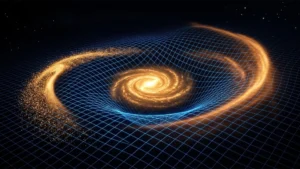
The core of the current cosmological quandary lies in a stark disagreement between the universe’s locally measured expansion rate and the rate predicted from observations of the early universe. Two primary methods for determining the universe’s present-day expansion rate, quantified by the Hubble constant (H₀), are yielding significantly different results. This discrepancy, now widely known as the "Hubble tension," has placed a spotlight on the very foundations of our cosmological model.
Leading the charge in raising concerns about this tension is none other than Adam Riess, the very astrophysicist whose Nobel Prize-winning work helped usher in the era of accelerated expansion. Riess, a professor of astronomy and physics at Johns Hopkins University and a senior member of the science staff at the Space Telescope Science Institute, recently discussed this perplexing issue on the podcast "The Joy of Why," hosted by Steven Strogatz.
A Shocking Discovery and its Nobel Legacy
The journey to understanding cosmic expansion began with Edwin Hubble’s observations in the late 1920s, which demonstrated that galaxies are generally moving away from us, and the farther away they are, the faster they recede. This provided the first empirical evidence for an expanding universe, a concept initially theorized by Georges Lemaître. For decades, cosmologists operated under the assumption that the universe’s expansion should be decelerating due to the gravitational pull of all the matter within it.
However, in the late 1990s, two independent teams of astronomers, including Riess’s High-Z Supernova Team and the Supernova Cosmology Project led by Saul Perlmutter, set out to precisely measure this deceleration. They achieved this by observing Type Ia supernovae – exceptionally bright and consistent stellar explosions that serve as "standard candles" across vast cosmic distances. By measuring the redshift (indicating recession velocity) and the apparent brightness (indicating distance) of these distant supernovae, they aimed to map the expansion history of the universe.
The results were profoundly unexpected. Instead of finding evidence of deceleration, both teams discovered that the universe’s expansion is, in fact, accelerating. This discovery implied the existence of a mysterious force counteracting gravity, a phenomenon they termed "dark energy." This "seismic shock" in cosmology fundamentally altered our understanding of the universe’s composition and its ultimate fate. The significance of this finding was recognized with the 2011 Nobel Prize in Physics, awarded to Saul Perlmutter, Brian Schmidt, and Adam Riess.
The Hubble Tension: A Growing Discrepancy
While the discovery of accelerating expansion was revolutionary, it paved the way for the current puzzle. The Hubble tension arises from the discrepancy between two distinct measurements of the Hubble constant:
-
Local Measurements: These involve observing objects in the relatively nearby universe, such as Cepheid variable stars and Type Ia supernovae. By measuring their distances and recession velocities, astronomers derive a value for the current expansion rate. The teams led by Adam Riess and Nobel laureate Alan Freedman have been instrumental in refining these local measurements. Their latest analyses, utilizing sophisticated techniques and instruments like the Hubble Space Telescope and now the James Webb Space Telescope, consistently place the Hubble constant around 73 kilometers per second per megaparsec (km/s/Mpc), with an uncertainty of about ±1 km/s/Mpc.
-
Early Universe Predictions: These predictions are derived from observations of the cosmic microwave background (CMB) radiation, the faint afterglow of the Big Bang. Cosmological models, particularly the standard Lambda-CDM model (ΛCDM), use the CMB data – meticulously gathered by missions like the Wilkinson Microwave Anisotropy Probe (WMAP) and Planck – to extrapolate the universe’s expansion rate today. The Planck satellite’s data, considered highly precise, predicts a Hubble constant of approximately 67 km/s/Mpc, with a much smaller uncertainty of about ±0.5 km/s/Mpc.
The difference between these two values is about 8-9%, which, in the realm of high-precision cosmology, is substantial. This discrepancy has persisted despite years of meticulous cross-checking and independent verification by numerous research groups.
The Genesis of the Discrepancy: A Closer Look at the Methods
To understand the Hubble tension, it’s crucial to delve into the methods employed.
Type Ia Supernovae as Standard Candles:
Riess explained the fundamental principle behind using Type Ia supernovae as distance indicators. These supernovae occur when a white dwarf star in a binary system accretes matter from its companion, exceeding a critical mass known as the Chandrasekhar limit (approximately 1.4 solar masses). This triggers a runaway thermonuclear explosion, converting carbon and oxygen into heavier elements. The remarkable uniformity in the mass of the exploding white dwarf leads to a relatively consistent peak luminosity, making them excellent "standard candles."
However, "standard" doesn’t mean perfectly identical. Subtle variations in the explosion’s energy output can occur. Riess’s doctoral thesis at Harvard focused on accounting for these variations. He discovered that the rate at which a supernova brightens and fades (its "light curve") is correlated with its peak luminosity. Brighter supernovae rise and fade more slowly than dimmer ones. Furthermore, dust within galaxies can absorb and redden the supernova’s light, making it appear fainter and thus further away than it actually is. By simultaneously analyzing the light curve shape and the color of the supernova’s light, astronomers can correct for these effects and derive a more accurate distance estimate.
The Cosmic Microwave Background and the Lambda-CDM Model:
The CMB provides a snapshot of the universe when it was about 380,000 years old, a time when it cooled enough for protons and electrons to combine into neutral atoms, allowing photons to travel freely. This ancient light carries imprints of the early universe’s conditions, including its composition, temperature fluctuations, and the seeds of cosmic structures.
The Lambda-CDM model, the current standard model of cosmology, describes a universe composed of:
- Ordinary Matter (Baryonic Matter): About 4-5% of the universe’s total mass-energy. This is the stuff we can see and interact with – stars, planets, galaxies.
- Dark Matter: About 25-27% of the universe. This invisible matter interacts gravitationally but not electromagnetically, explaining the rotation speeds of galaxies and the structure of galaxy clusters.
- Dark Energy: About 68-70% of the universe. This enigmatic force is responsible for the accelerated expansion, acting as a cosmic repellent. Its nature remains one of the biggest mysteries in physics.
The ΛCDM model, with its specific parameters (including the amount of dark matter, dark energy, and the initial conditions of the universe), predicts the pattern of fluctuations in the CMB. From these patterns, cosmologists can infer the universe’s expansion rate at the time of the Big Bang and, using the laws of physics, extrapolate what the expansion rate should be today.
The "Fudge Factor" and Einstein’s Legacy
The concept of dark energy is often linked to Einstein’s cosmological constant, denoted by the Greek letter lambda (Λ). Einstein initially introduced this term into his equations of general relativity to counteract gravity and achieve a static universe, a view prevalent in his time. When observations by Hubble revealed the universe’s expansion, Einstein famously called the cosmological constant his "greatest blunder."
However, the discovery of accelerated expansion in the late 1990s resurrected the idea. The cosmological constant, or something very much like it, appears to be the simplest explanation for the repulsive force driving this acceleration. Riess highlighted that in Einstein’s theory, the gravity of empty space can be repulsive. While the precise microphysics of dark energy remain unknown, the cosmological constant, representing the energy of the vacuum, fits the observed data well.
A Nobel Laureate’s Continued Pursuit
Despite achieving the pinnacle of scientific recognition with a Nobel Prize at a relatively young age (41), Adam Riess has remained relentlessly dedicated to pushing the boundaries of cosmological research. He views the Nobel as a springboard, not a resting place. He continues to lead efforts to refine measurements of the Hubble constant, employing cutting-edge telescopes and methodologies.
"Science is fun," Riess stated, emphasizing his ongoing drive. "I was in the middle of using the Hubble Space Telescope… to look at for distant, exploding stars and pulsating stars and mapping the expansion history of the universe. I decided that the only way forward after that trip to Stockholm was to try to push out as much as I could all those speaking things and try to really focus on the science because, you know, once you stop it’s hard to go back."
The Tension Deepens: Implications and Future Prospects
The Hubble tension is not merely a statistical anomaly; it represents a potential crack in the foundation of the ΛCDM model. If the discrepancy cannot be resolved by identifying errors in either the local or early universe measurements, it suggests that our fundamental understanding of the universe’s composition or evolution may be incomplete.
Several possibilities are being explored:
- Systematic Errors: While extensive efforts have been made to rule out systematic errors in both measurement methods, the possibility remains that subtle, unaddressed biases are at play. This could involve issues with the calibration of standard candles, unforeseen properties of dust obscuration, or an incomplete understanding of the CMB’s interpretation.
- New Physics: The most exciting, albeit challenging, prospect is that the tension points to new physics beyond the ΛCDM model. This could involve:
- A Varying Dark Energy: Perhaps dark energy is not a constant (like the cosmological constant) but evolves over time, a scenario sometimes referred to as "quintessence."
- Early Dark Energy: A hypothetical phase of dark energy that existed shortly after the Big Bang could have influenced the early universe’s expansion rate, affecting the CMB predictions without significantly altering local measurements.
- Modified Gravity: Our understanding of gravity on cosmic scales might need revision.
- New Particles or Interactions: The nature of dark matter could be more complex than currently assumed, or there could be new fundamental particles or forces at play.
The implications of resolving the Hubble tension are profound. It could lead to a paradigm shift in cosmology, akin to the transition from Newtonian physics to Einstein’s relativity. Understanding the nature of dark energy and dark matter, which constitute 95% of the universe, is crucial for answering fundamental questions about the universe’s age, its ultimate fate (whether it will expand forever or collapse), and its overall structure.
The Cavalry is Coming: New Observatories and the Quest for Answers
The scientific community is eagerly anticipating data from a new generation of powerful observatories that promise to shed more light on this cosmic mystery. These include:
- The Vera C. Rubin Observatory: This ground-based telescope, currently beginning operations, will survey the sky with unprecedented depth and breadth.
- The Euclid mission: A European Space Agency telescope designed to map the large-scale structure of the universe and probe the nature of dark energy and dark matter.
- The Nancy Grace Roman Space Telescope: Set to launch in September 2027, this NASA mission, described by Riess as "Hubble Space Telescope on steroids," will have a significantly larger field of view and collecting power, enabling more precise measurements of cosmic expansion.
These instruments, along with continued observations from the James Webb Space Telescope and other facilities, will provide the crucial data needed to either confirm the Hubble tension and explore new physics or identify the source of the discrepancy within our current models.
The Joy of the Unknown
For Adam Riess, the allure of cosmology lies in its profound mysteries and the potential to unravel them. "To me it’s the mystery, and then it’s the potential to answer mystery," he explained. "The fact that with science and with these capabilities that we could address really profound, big questions and do it in a kind of methodical way and get real answers."
The Hubble tension, while a source of considerable scientific debate, is also a testament to the progress of cosmology. It highlights how far we have come in measuring the universe with extraordinary precision, revealing subtle discrepancies that push the boundaries of our knowledge. The quest to resolve this cosmic puzzle is an ongoing adventure, a thrilling scientific pursuit that could redefine our place in the universe.