New Horizons Awakens: NASA Spacecraft Emerges from Deep Hibernation at Solar System’s Edge, Ready to Probe Interstellar Frontier

There’s nothing more disorienting than falling asleep in transit only to wake up and find you’ve somehow drifted billions of miles beyond the orbit of Pluto.
The vast expanse of space presents unique challenges for spacecraft operating on the fringes of our solar system, requiring ingenious solutions to conserve power and maintain operational readiness over extended periods. NASA’s New Horizons spacecraft, a pioneering probe designed to explore the Kuiper Belt, has recently demonstrated the efficacy of such a strategy. After nearly a year in a deep hibernation state, the spacecraft has been successfully awakened, and initial telemetry indicates that all systems are functioning optimally, marking a significant milestone in its ongoing mission to unravel the mysteries of the solar system’s outer reaches and the boundary with interstellar space.
This awakening, announced by NASA, signifies the transition of New Horizons from a dormant state to active data collection. The probe’s extended hibernation period, lasting 321 days, was a critical phase designed to conserve the spacecraft’s power and minimize wear and tear on its sophisticated instruments as it traversed the immense distances beyond the known planets. Now, with its systems re-energized and communication re-established, New Horizons is poised to resume its scientific observations, continuing its groundbreaking exploration of the heliosphere’s outer limits.
A Journey to the Solar System’s Frontier
Launched on January 19, 2006, New Horizons embarked on an ambitious journey with a primary objective: to conduct the first-ever close-up reconnaissance of Pluto and its moons. This monumental undertaking was a testament to humanity’s enduring curiosity about the cosmos and our drive to explore the unknown. After a nine-and-a-half-year voyage, the spacecraft achieved its historic flyby of Pluto on July 14, 2015, providing an unprecedented wealth of data and breathtaking images that revolutionized our understanding of the dwarf planet and its complex system of satellites.
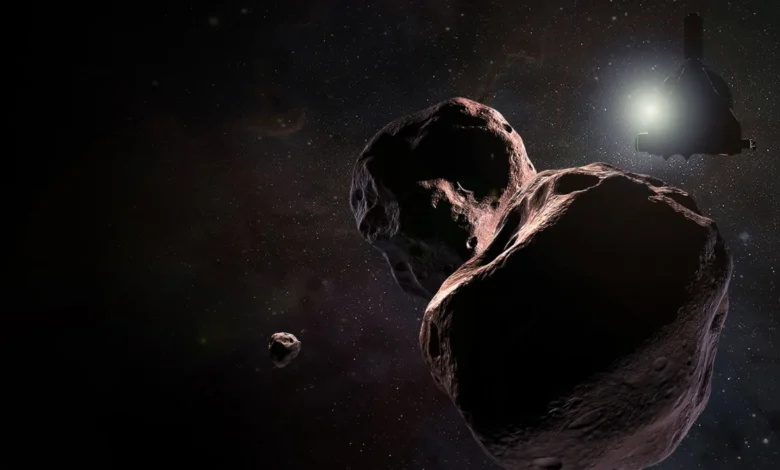
Following its Pluto encounter, New Horizons was immediately tasked with a secondary objective: to explore another Kuiper Belt Object (KBO). In January 2019, the spacecraft successfully rendezvoused with and studied Arrokoth (formerly Ultima Thule), a remarkably primordial object offering invaluable insights into the early formation of the solar system. This extended mission further cemented New Horizons’ status as a pivotal explorer of the outer solar system.
The Strategic Silence: Hibernation in Deep Space
Operating in the frigid and distant reaches of the solar system presents distinct challenges compared to missions closer to Earth. The immense distances translate into significant communication delays, and the diminished sunlight means solar power generation is considerably less efficient. To navigate these conditions and prolong the spacecraft’s operational lifespan, mission planners implemented a strategic hibernation mode for New Horizons.
This hibernation is not a complete shutdown but rather a carefully managed state of reduced activity. During hibernation, non-essential systems are powered down, and the spacecraft relies on minimal power to maintain core functions, such as its internal clock and critical systems monitoring. This conserves the limited energy supply, much like a hibernating animal conserves its body’s resources during winter. The primary purpose is to protect the spacecraft from the harsh environment and the cumulative effects of long-duration spaceflight while awaiting specific operational periods.
The Wake-Up Call: A Seamless Transition
The process of awakening New Horizons is a meticulously planned sequence of commands transmitted from Earth. These commands initiate a gradual power-up of various systems, allowing mission control to assess the spacecraft’s health and readiness. The successful reactivation from its latest hibernation cycle, which began in late 2022, was confirmed by the reception of telemetry data.
"Waking up a spacecraft from hibernation is always a significant moment," stated a NASA spokesperson involved with the New Horizons mission. "It’s a testament to the robust engineering and careful planning that goes into these deep-space endeavors. The fact that all systems are reporting in good health after such a prolonged period of dormancy is incredibly reassuring."
The 321-day hibernation period allowed the spacecraft to conserve its onboard resources. This period is strategically chosen based on the spacecraft’s trajectory and the planned scientific observation windows. By entering hibernation during transit phases or when specific observational targets are not within range, mission operators ensure that the spacecraft’s instruments and systems are optimally positioned and powered for peak performance when needed.
Returning to the Frontier: Scientific Objectives Ahead
With New Horizons fully operational again, the mission team is eager to resume its scientific exploration. The spacecraft’s primary focus remains on studying the heliosphere – the vast bubble of charged particles and magnetic fields emitted by the Sun that envelops our solar system. This region acts as a protective shield against the radiation and energetic particles of interstellar space.
New Horizons is uniquely positioned to gather crucial data about the heliosphere’s boundary, often referred to as the heliopause. This enigmatic frontier is where the outward pressure of the solar wind finally meets the inward pressure of the interstellar medium. Understanding this boundary is vital for comprehending our solar system’s interaction with the wider galaxy and its long-term evolution.
The spacecraft’s instruments, including the Solar Wind Around Pluto (SWAP) instrument and the Pluto Energetic Particle Spectrometer Science Investigation (PEPSSI), are designed to measure the properties of charged particles in the heliosphere. Data from these instruments can help scientists map the extent of the heliosphere, understand the composition of the interstellar medium, and investigate how the solar wind is influenced by external cosmic forces.
Supporting Data and Chronology of Events
- Launch Date: January 19, 2006
- Pluto Flyby: July 14, 2015
- Arrokoth Flyby: January 1, 2019
- Recent Hibernation Period: Commenced late 2022, lasted 321 days.
- Awakening Confirmation: Announced recently by NASA.
- Current Status: All systems reported in good health; science data transmission resuming.
The mission has already provided invaluable data, such as the discovery of complex geological features on Pluto, including nitrogen glaciers, mountains, and vast plains, challenging earlier assumptions about the dwarf planet’s nature. The flyby of Arrokoth revealed a bilobed object with a remarkably smooth surface, offering a glimpse into the primordial building blocks of planets.
Broader Impact and Implications for Space Exploration
The successful revival of New Horizons after its extended hibernation underscores the advancements in deep-space mission design and operational longevity. The ability of such probes to endure prolonged periods of dormancy and then reawaken to continue their scientific endeavors is crucial for future exploration of the outer solar system and beyond.
This mission serves as a vital precursor for upcoming endeavors that aim to explore the Oort Cloud, a theoretical spherical shell of icy objects believed to surround the solar system at immense distances. The challenges faced by New Horizons and the solutions developed will inform the design and operation of future interstellar probes.
Furthermore, the ongoing research conducted by New Horizons contributes to our fundamental understanding of planetary formation, the dynamics of stellar winds, and the intricate relationship between our solar system and the galactic environment. The data gathered at the solar system’s edge provides a unique perspective on the conditions that prevail in interstellar space, a realm that humanity is increasingly seeking to explore.
NASA’s commitment to extending the mission life of its spacecraft, even beyond their primary objectives, highlights a strategic approach to maximizing scientific return on investment. The continuous stream of data from New Horizons, even after years of operation, promises to yield further groundbreaking discoveries, pushing the boundaries of our cosmic knowledge and inspiring future generations of scientists and explorers. The awakened New Horizons is not just a spacecraft returning from sleep; it is a tireless explorer continuing its vital work at the very edge of our solar neighborhood, peering into the profound darkness of interstellar space.