The Evolution of Aerial Cinematography A Technical and Market Analysis of the Antigravity A1 360-Degree Drone

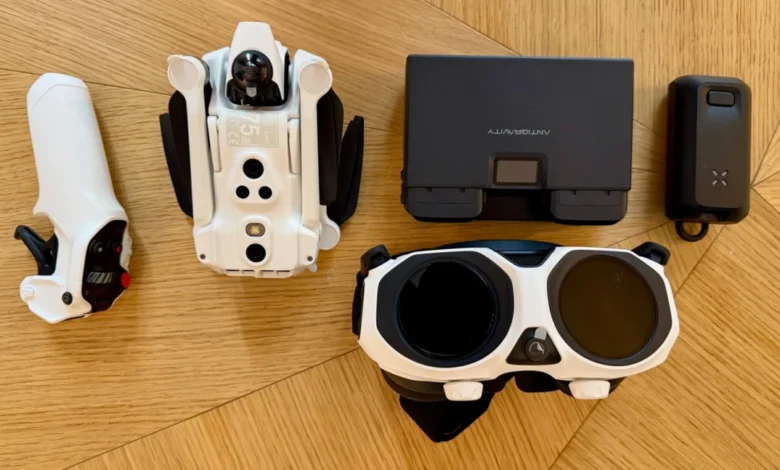
The global drone industry reached a significant technological milestone in late 2025 with the commercial release of the Antigravity A1, a device that effectively challenges the necessity of the traditional mechanical gimbal for a wide demographic of digital creators. By integrating a dual-lens 360-degree capture system, the A1 allows for the simultaneous recording of an entire spherical environment, introducing a "fly now, frame later" workflow that shifts the pilot’s role from a camera operator to a post-production director. This hardware evolution signifies a departure from traditional fixed-lens aerial platforms, offering a seamless integration of immersive virtual reality (VR) capabilities and standard cinematic output within a consumer-grade, sub-250-gram chassis.
Hardware Architecture and Optical Engineering
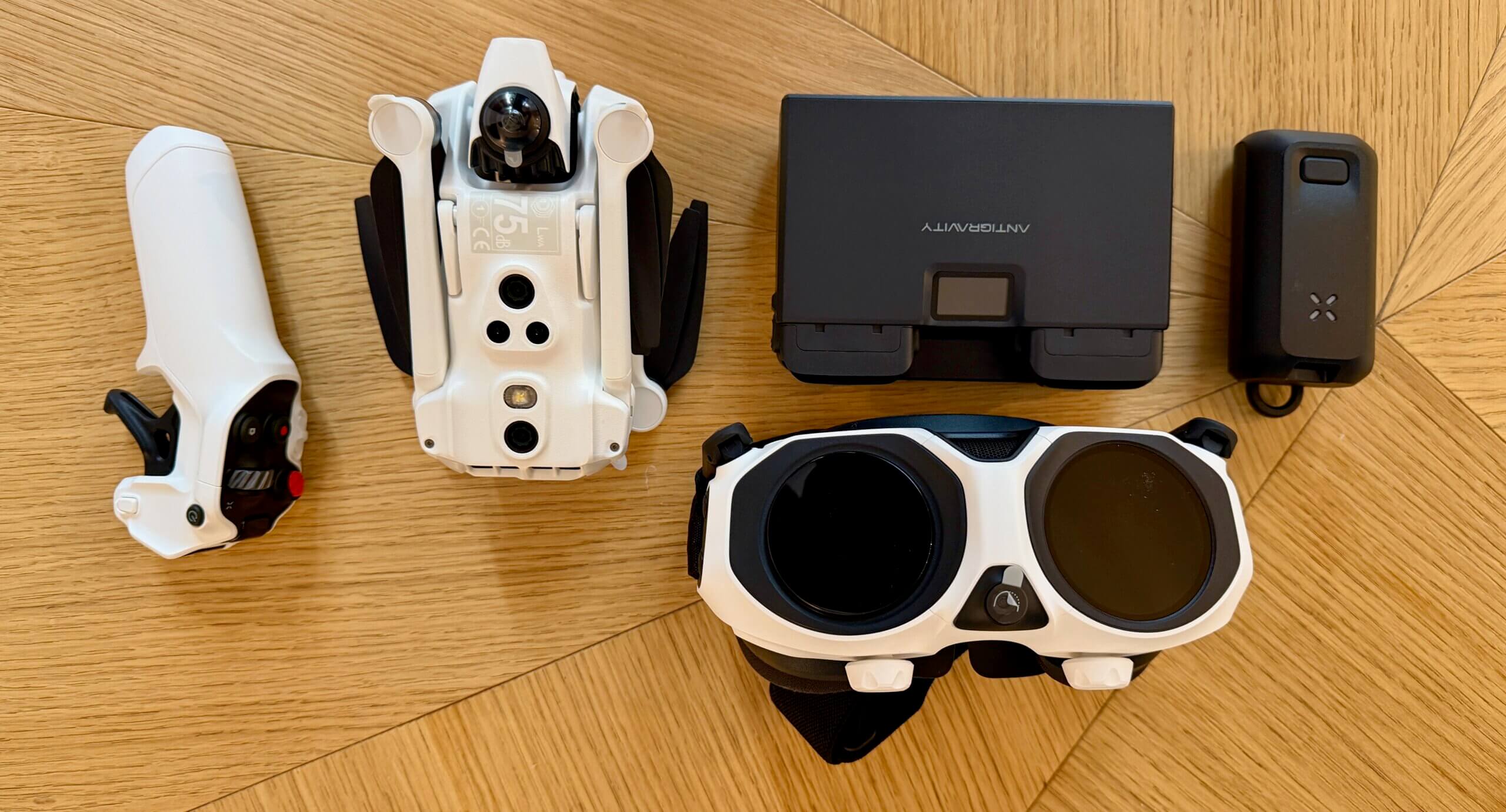
The core of the Antigravity A1’s innovation lies in its optical configuration. Unlike standard drones that utilize a single forward-facing sensor mounted on a three-axis gimbal, the A1 utilizes two ultra-wide-angle lenses positioned on the top and bottom of the central fuselage. Each lens captures a 200-degree field of view, ensuring a significant overlap that the onboard processor uses to stitch together a seamless 360-degree sphere.
The imaging system is powered by dual 1/1.28-inch CMOS sensors. While these sensors are marginally smaller than the 1-inch units found in high-end professional photography drones, they represent a substantial upgrade over the sensors typically found in 360-degree action cameras. The larger surface area of these 1/1.28-inch units provides enhanced low-light performance and a higher dynamic range. This is particularly evident in high-contrast environments, such as landscapes under direct midday sun, where the sensors maintain detail in both deep shadows and bright highlights.
A defining characteristic of the A1’s output is the digital removal of the drone itself. Through precise optical positioning and software masking, the fuselage is rendered "invisible" in the final exported footage. This creates the illusion of a floating camera, providing a perspective that was previously only achievable through complex multi-drone setups or expensive specialized rigs.
Structural Design and Regulatory Compliance
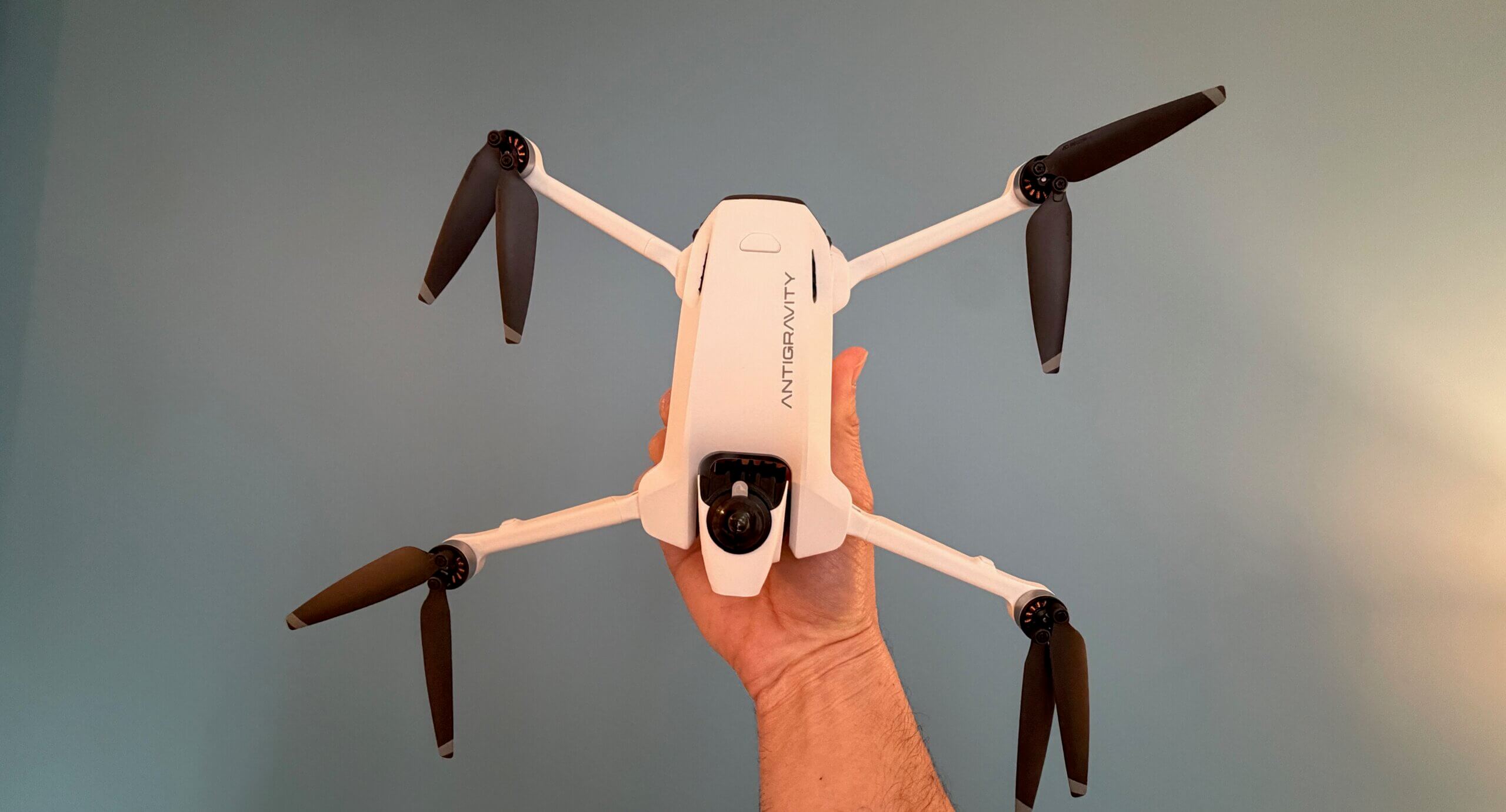
Antigravity Tech engineered the A1 with a focus on the 249-gram weight threshold, a critical figure in international aviation law. In jurisdictions governed by the Federal Aviation Administration (FAA) in the United States and the European Union Aviation Safety Agency (EASA), drones weighing less than 250 grams are often exempt from the strictest registration requirements and "Category 1" flight restrictions. By achieving a weight of exactly 249 grams with the standard battery, the A1 bypasses many of the bureaucratic hurdles faced by commercial-grade aircraft.
Despite its lightweight profile, the drone’s build quality reflects a shift toward advanced materials. The A1 utilizes a high-grade carbon-fiber-reinforced polymer, which provides a superior strength-to-weight ratio compared to the ABS plastic commonly used in the consumer drone market. The aircraft features a folding mechanism designed for portability, reducing the device to the footprint of a large smartphone when not in flight. This portability, combined with its "cinewhoop" style—characterized by a stable and predictable flight profile—makes it an optimal tool for travelers and mobile journalists.
Chronology of Development and Market Entry
The path to the A1’s release involved several years of iterative research into both stabilization algorithms and miniaturized optics.
- Q1 2023: Antigravity Tech announced the commencement of "Project Sphere," an R&D initiative aimed at eliminating mechanical points of failure in small-form-factor drones.
- Q4 2024: Initial prototypes were showcased at international tech expos, demonstrating the first iteration of the "invisible drone" stitching algorithm.
- Q3 2025: The company began a limited beta-testing phase with selected aerial cinematographers to refine the "FlowState" stabilization software.
- Late 2025: The Antigravity A1 was officially launched globally, supported by a software ecosystem designed for mobile-first editing.
The market response has been characterized by a rapid adoption rate among "prosumer" creators who prioritize versatility over the raw resolution of larger, gimbal-mounted cameras. Industry analysts suggest that the A1 has carved a niche between the action camera market and the traditional aerial photography market.
Flight Dynamics and First-Person View (FPV) Integration
The A1 experience is heavily integrated with its proprietary Vision Goggles. These goggles feature dual 4K micro-OLED displays with a 120Hz refresh rate, providing a low-latency feed that is essential for precise navigation. The integration of head-tracking technology allows the pilot to look around the 360-degree sphere in real-time. This spatial awareness is a significant departure from traditional FPV drones, where the pilot’s view is locked to the direction of the aircraft’s nose.
For flight control, the A1 utilizes a single-handed motion controller. This device translates wrist movements and trigger pulls into flight commands, allowing for an intuitive learning curve. While the drone supports a traditional "Mode 2" stick controller for professional pilots who require manual acrobatic control, the motion controller is designed to democratize flight, making complex maneuvers accessible to non-specialists.
Safety features such as "Turtle Mode" have also been integrated. In the event of a crash that leaves the drone inverted, the software can pulse the propellers to flip the aircraft upright, allowing for a remote takeoff and reducing the need for physical recovery in difficult terrain.
Camera Performance and Software Ecosystem
The A1 is marketed with 8K resolution capabilities. However, in the context of 360-degree video, this resolution refers to the total spherical image. When a creator "reframes" this footage into a standard 16:9 flat video, the resulting output is a crop of that 8K sphere. To maintain professional standards, Antigravity has included a 10-bit "Log" color profile. This allows professional editors to retain maximum color information for grading in post-production, ensuring the A1 footage can be matched with high-end cinema cameras.
The stabilization is managed by the "FlowState" algorithm, which uses internal gyroscopes to keep the horizon level regardless of the drone’s physical orientation. This software-based stabilization is effective even in wind speeds up to 20 mph, providing a level of steadiness that rivals mechanical gimbals.
The "Antigravity Studio" app serves as the primary editing interface. It allows for high-speed wireless data transfer (up to 80MB/s) and utilizes the smartphone’s gyroscope for reframing. An AI-driven "Auto-Frame" tool can also be employed to identify and track subjects automatically, effectively acting as an autonomous camera crew.
Technical Specifications and Comparative Data
The following data compares the Antigravity A1’s two primary power configurations:
| Feature | Standard Intelligent Battery | Pro Battery |
|---|---|---|
| Total Weight | 249g | 315g |
| Max Flight Time | 24 minutes | 39 minutes |
| Real-world Flight Time | ~19-20 minutes | ~32-34 minutes |
| Regulatory Status | No registration (most regions) | Registration required |
| Agility | High | Moderate |
The A1’s maximum speed is approximately 36 mph. While this is sufficient for tracking cyclists, runners, and slow-moving vehicles, it does not compete with the 90+ mph speeds of dedicated racing drones. The focus of the A1 is clearly on cinematic utility rather than competitive performance.
Professional and Industry Implications
The introduction of the Antigravity A1 has prompted a re-evaluation of drone regulations and creative workflows. Industry experts note that the "fly now, frame later" capability reduces the pressure on solo creators, who previously had to manage both flight safety and camera framing simultaneously.
"The A1 represents a shift from reactive piloting to proactive directing," stated Marcus Thorne, a senior analyst at the Aerial Technology Institute. "By capturing everything, the drone removes the possibility of missing a shot due to a poorly timed pan or tilt. This is a significant safety benefit, as the pilot can focus entirely on the flight path while the camera captures the environment autonomously."
However, the technology is not without its challenges. The dual-lens design leaves the optics more exposed than a recessed gimbal camera, making the lenses susceptible to damage during crashes. Additionally, the processing power required to stitch 8K 360-degree footage necessitates modern hardware, potentially limiting the drone’s accessibility for users with older computing equipment.
Broader Impact and Future Outlook
The Antigravity A1 is positioned as a bridge between traditional cinematography and the burgeoning field of VR and augmented reality (AR). As VR headsets become more prevalent, the demand for high-quality, 360-degree aerial content is expected to rise. The A1 provides a cost-effective method for capturing this content without the need for heavy-lift aircraft.
Furthermore, the drone’s sub-250g weight has influenced the market strategy of competitors, forcing a trend toward miniaturization without sacrificing sensor quality. As battery technology continues to evolve, the "bottleneck" of 20-minute flight times is expected to widen, eventually allowing for longer-duration autonomous missions.
In conclusion, the Antigravity A1 (360) is more than a consumer gadget; it is a specialized tool that has redefined the boundaries of aerial storytelling. By merging advanced spherical optics with a lightweight, regulatory-friendly design, it offers a level of creative freedom that was previously unattainable for the average creator. While it may not replace high-end cinema drones for major motion pictures, its impact on travel, journalism, and social media content creation is already proving to be transformative.