Tesla Expands Florida Robotaxi Footprint to Orlando and Tampa Amid Strategic Timing Before Quarterly Earnings Report

Tesla has officially announced the expansion of its autonomous ride-hailing service to Orlando and Tampa, a move that significantly broadens the company’s operational footprint in the state of Florida. The announcement, delivered via a social media post on July 21, comes just twenty-four hours before Tesla’s scheduled second-quarter earnings call. This expansion follows the service’s initial Florida debut in Miami by only 18 days, marking a rapid, albeit geographically restricted, rollout across the Sunshine State. With the addition of these two major metropolitan areas, Tesla now operates its robotaxi pilot program in seven distinct regions across the United States, including a trio of cities in Texas and a supervised pilot program in the San Francisco Bay Area.
The timing of the Orlando and Tampa launches appears to follow a calculated corporate strategy. This is the third consecutive earnings cycle in which Tesla has announced a significant robotaxi "update" or expansion in the days immediately preceding its financial results. Industry analysts note that these announcements often serve to bolster investor confidence and shift the narrative toward Tesla’s future as an artificial intelligence and robotics powerhouse, rather than focusing solely on traditional automotive delivery metrics and profit margins.
Operational Parameters and Vehicle Deployment
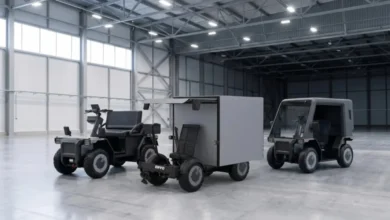
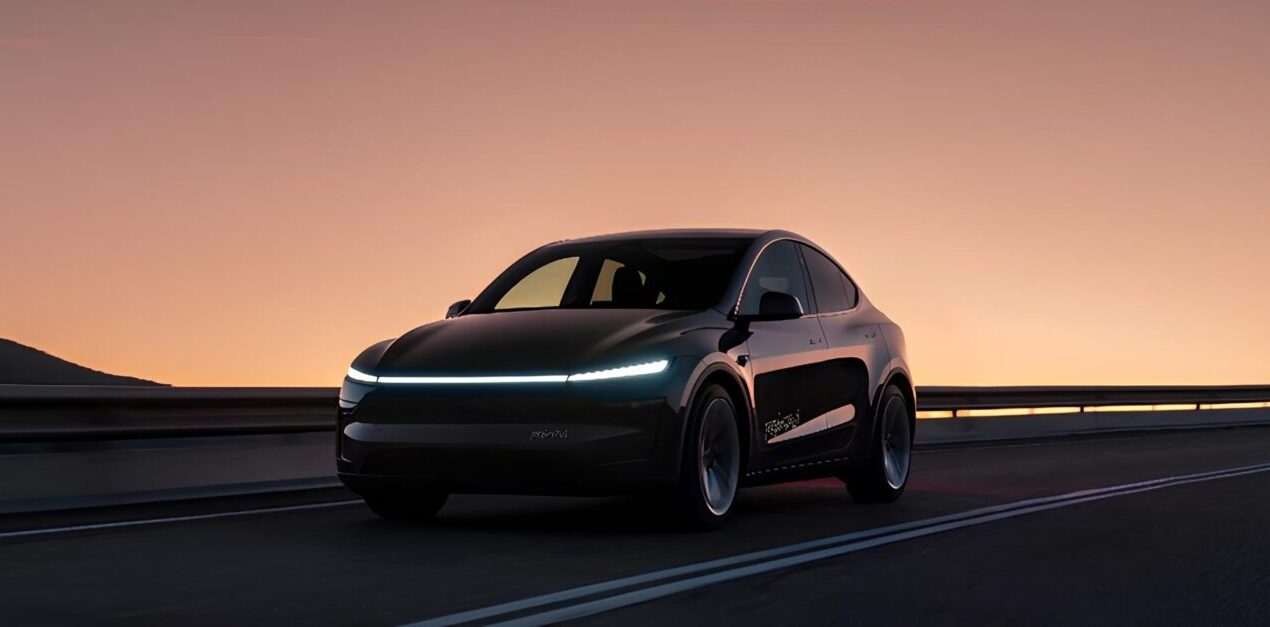
Unlike the highly anticipated "Cybercab"—a purpose-built autonomous vehicle without steering wheels or pedals that Chief Executive Elon Musk has frequently touted—the current service in Orlando and Tampa utilizes unmodified Model Y Long Range and Performance variants. These vehicles are equipped with the latest iteration of Tesla’s Full Self-Driving (FSD) software.
In a notable departure from the early testing phases of many autonomous vehicle companies, Tesla’s Florida services are designed to operate without an in-car safety monitor from the first day of public availability. Rides are booked exclusively through the integrated Tesla robotaxi application, which allows users to summon a vehicle, adjust climate settings, and track their route in real-time.
During Tesla’s fourth-quarter earnings call in January, Musk specifically identified Tampa, Miami, and Orlando as primary targets for the first half of 2024. While the company has technically met this deadline, the rollout is approximately three weeks behind the internal schedule initially communicated to shareholders. Furthermore, the reliance on the Model Y platform suggests that the high-volume production of the dedicated Cybercab remains a medium-term goal rather than an immediate reality.
Geographic Limitations and Strategic Zoning
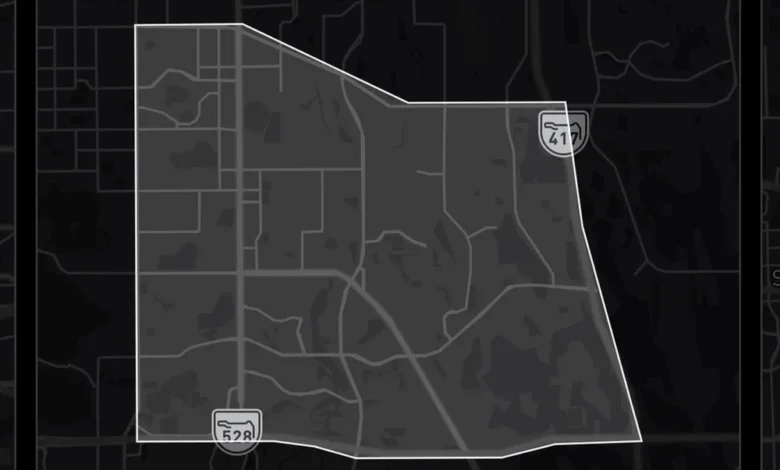
Despite the high-profile nature of the launch, the actual service areas in both Orlando and Tampa remain remarkably narrow. In Orlando, the operational zone is concentrated primarily in the residential and commercial corridors north of the Orlando International Airport. Critically, the service currently excludes the region’s primary economic engines: Walt Disney World Resort, Universal Orlando Resort, and SeaWorld. By omitting these high-traffic tourist destinations, Tesla is effectively bypassing the areas that would generate the highest ride volumes and revenue.
A similar pattern is visible in Tampa. The current service area does not extend to Busch Gardens or the high-density tourist districts along the waterfront. This conservative approach to geography suggests that Tesla is prioritizing low-complexity environments as it gathers data on Florida’s unique road infrastructure and weather patterns.
Market analysts infer that fleet sizes in these new cities are likely in the low single digits. Previous expansions in Austin, Dallas, and Houston followed a similar trajectory, where "launching" a city involved deploying only a handful of vehicles to validate software performance before attempting to scale. This "asset-light" entry allows Tesla to claim a presence in major markets without the capital expenditure required for a massive fleet deployment.
The Competitive Landscape: Facing Waymo in Florida
The limited scope of Tesla’s Orlando launch is particularly significant given the presence of Waymo, the autonomous driving subsidiary of Alphabet Inc. Waymo has already established a commercial presence in Orlando, specifically targeting the International Drive tourist corridor—the very area Tesla has currently opted to avoid.
This sets up a stark contrast in operational philosophies. Waymo utilizes a suite of sensors, including Lidar, radar, and cameras, to navigate complex urban environments with a high degree of precision. Tesla, conversely, relies on a "vision-only" approach, using cameras and neural networks to interpret the environment. By entering a market where Waymo already owns the most lucrative routes, Tesla is placing itself in direct competition with a rival that has logged millions of miles of autonomous travel and possesses a more mature regulatory and operational framework.
The competition in Florida is bolstered by the state’s permissive regulatory environment. Florida’s House Bill 311, signed into law in 2019, allows for the operation of fully autonomous vehicles without a human driver present, provided the vehicles meet federal safety standards. This has made the state a primary battleground for autonomous vehicle developers.
Analyzing the Earnings Call Pattern
The July 21 announcement fits into a clear chronological pattern established throughout 2024. This trend highlights how Tesla uses geographic expansion as a tool for financial communication:
- January 2024 (Q4 2023 Earnings): Just days before the call, Tesla declared its Austin service was "100% unsupervised." However, following the earnings report, observers noted that the actual number of available vehicles remained extremely limited, and the service area did not expand as rapidly as the announcement suggested.
- April 2024 (Q1 2024 Earnings): Tesla expanded its robotaxi pilot to Dallas and Houston four days prior to the earnings call. Reports indicated that these fleets consisted of fewer than five vehicles per city.
- July 2024 (Q2 2024 Earnings): The Miami launch occurred in early July, followed by the Orlando and Tampa announcement one day before the earnings call.
By announcing new cities, Tesla can provide "technically accurate" updates regarding its geographic reach. However, these updates often lack transparency regarding fleet density, wait times for consumers, or the actual percentage of the population that can access the service. For investors, the "geographic footprint" metric serves as a proxy for progress, even if the service is not yet a viable competitor to traditional ride-sharing platforms like Uber or Lyft.
Safety Records and Regulatory Scrutiny
The Florida expansion occurs against a backdrop of increasing scrutiny from the National Highway Traffic Safety Administration (NHTSA). Recent data released by the agency indicates that Tesla’s autonomous testing fleet in Texas has been involved in 22 collisions over the past 12 months. Investigations determined that the Tesla software was at fault in the majority of these instances.
Perhaps more concerning is the acceleration of these incidents; half of the recorded collisions occurred within the last six months. Given the modest size of the fleet, the crash rate is disproportionately high when compared to competitors like Waymo or the now-restructuring Cruise. While Tesla’s rapid deployment schedule frequently captures headlines, the underlying safety data suggests that the software still struggles with edge cases and complex urban interactions.
In Florida, where sudden heavy rainfall and unique "sun glare" conditions are common, the vision-only system will face new environmental challenges. Critics argue that without the redundancy provided by Lidar or high-definition mapping, Tesla’s system may face higher intervention rates in the unpredictable Florida climate.
Implications for Scalability and Business Model
The strategy evidenced by the Orlando and Tampa rollout demonstrates that Tesla has mastered the art of "narrative management." Expanding a geographic footprint is relatively inexpensive—requiring only a few vehicles and a software update—whereas achieving fleet density, improving safety data, and reaching volume production of the Cybercab are capital-intensive and slow processes.
For a genuinely profitable robotaxi business to emerge, Tesla must move beyond "pilot" status. A scalable business model requires:
- High Vehicle Utilization: Vehicles must be active and carrying passengers for the majority of the day to offset the costs of the hardware.
- Minimal Human Intervention: The cost-per-mile only drops significantly when remote assistance or physical maintenance is minimized.
- Broad Geographic Coverage: To compete with personal car ownership or Uber, the service must take people where they actually want to go (e.g., theme parks and airports).
Currently, Tesla’s robotaxi service remains a "supervised-unsupervised" hybrid in the eyes of many industry experts—a technological demonstration rather than a commercial utility.
Future Outlook: The Road to October and Beyond
As Tesla prepares for its Q2 earnings call on July 22, the Orlando and Tampa launches will undoubtedly be highlighted as proof of the company’s "unrivaled pace of innovation." However, the broader automotive industry is looking toward October, when Tesla is expected to hold a dedicated "Robotaxi Day" to unveil the Cybercab and provide a more detailed roadmap for FSD v15.
The success of the Florida expansion will be measured not by the announcement itself, but by the data gathered over the coming months. If Tesla can successfully navigate the tourist-heavy streets of Orlando and Tampa without significant safety incidents, it will provide a powerful argument for the viability of its vision-based autonomous stack. Conversely, if the fleet remains small and the service areas restricted, the expansion may be viewed as another tactical move to satisfy the immediate demands of the stock market.
For now, the residents of Orlando and Tampa represent the latest participants in a massive, real-world experiment. As Tesla continues to prioritize geographic breadth over operational depth, the reality of a ubiquitous, profitable robotaxi network remains a distant, though slowly approaching, horizon.
Related posts: