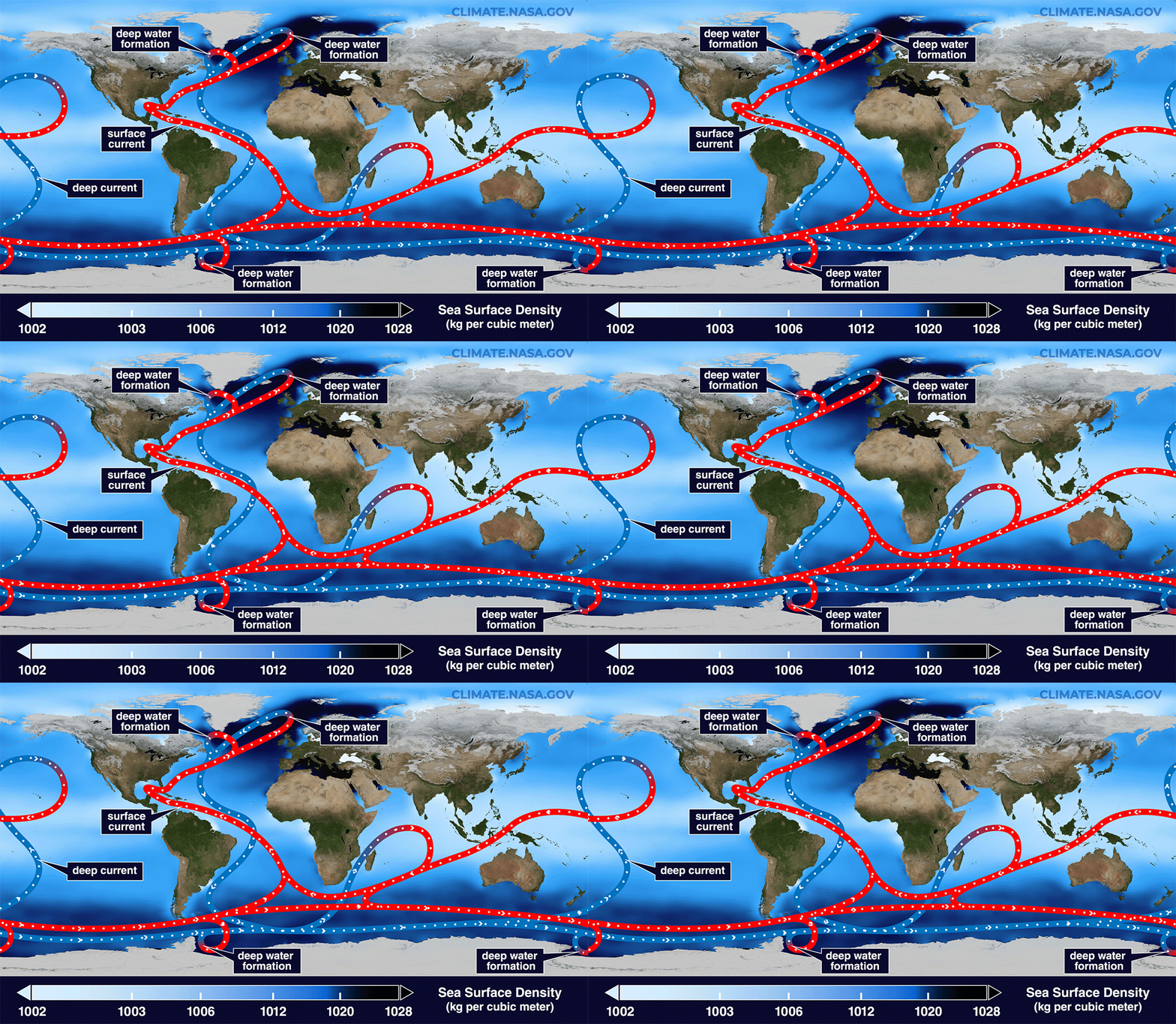
The accelerating melt of the Greenland ice sheet is a stark visual representation of our planet’s changing climate, and its consequences extend far beyond rising sea levels. A substantial and continuous discharge of fresh water into the North Atlantic Ocean is raising concerns among scientists about the potential weakening of a critical system of ocean currents known as the Atlantic Meridional Overturning Circulation (AMOC). This vast conveyor belt of ocean water plays a pivotal role in regulating global weather patterns, and its disruption could trigger significant climatic shifts across continents.
The Science Behind the Concern: AMOC and its Vulnerability
The AMOC is a complex system of ocean currents that transports warm surface water from the tropics northward and cold, deep water southward. This circulation is driven by differences in water density, primarily influenced by temperature and salinity. In the North Atlantic, surface water cools and becomes saltier as it loses moisture to evaporation, causing it to sink. This sinking process pulls more warm water from the south, creating a continuous flow.
However, the massive influx of fresh meltwater from the Greenland ice sheet is fundamentally altering this delicate balance. Fresh water is less dense than saltwater, and its addition to the surface layers of the North Atlantic can inhibit the sinking process that drives the AMOC. Imagine pouring a large volume of pure water into a basin of saltwater; the freshwater layer will sit on top, disrupting the natural mixing.
A Growing Phenomenon: Evidence of Accelerated Melting
The Greenland ice sheet, the second-largest ice body in the world after Antarctica, has been losing mass at an alarming rate in recent decades. Satellite data from NASA and other space agencies have provided consistent evidence of this trend. For instance, studies using gravity measurements from the GRACE and GRACE-FO satellites have shown that Greenland has lost an average of 279 billion tons of ice per year between 1993 and 2019, with the rate of loss accelerating significantly in recent years. This vast quantity of ice translates into an enormous volume of fresh water entering the ocean.
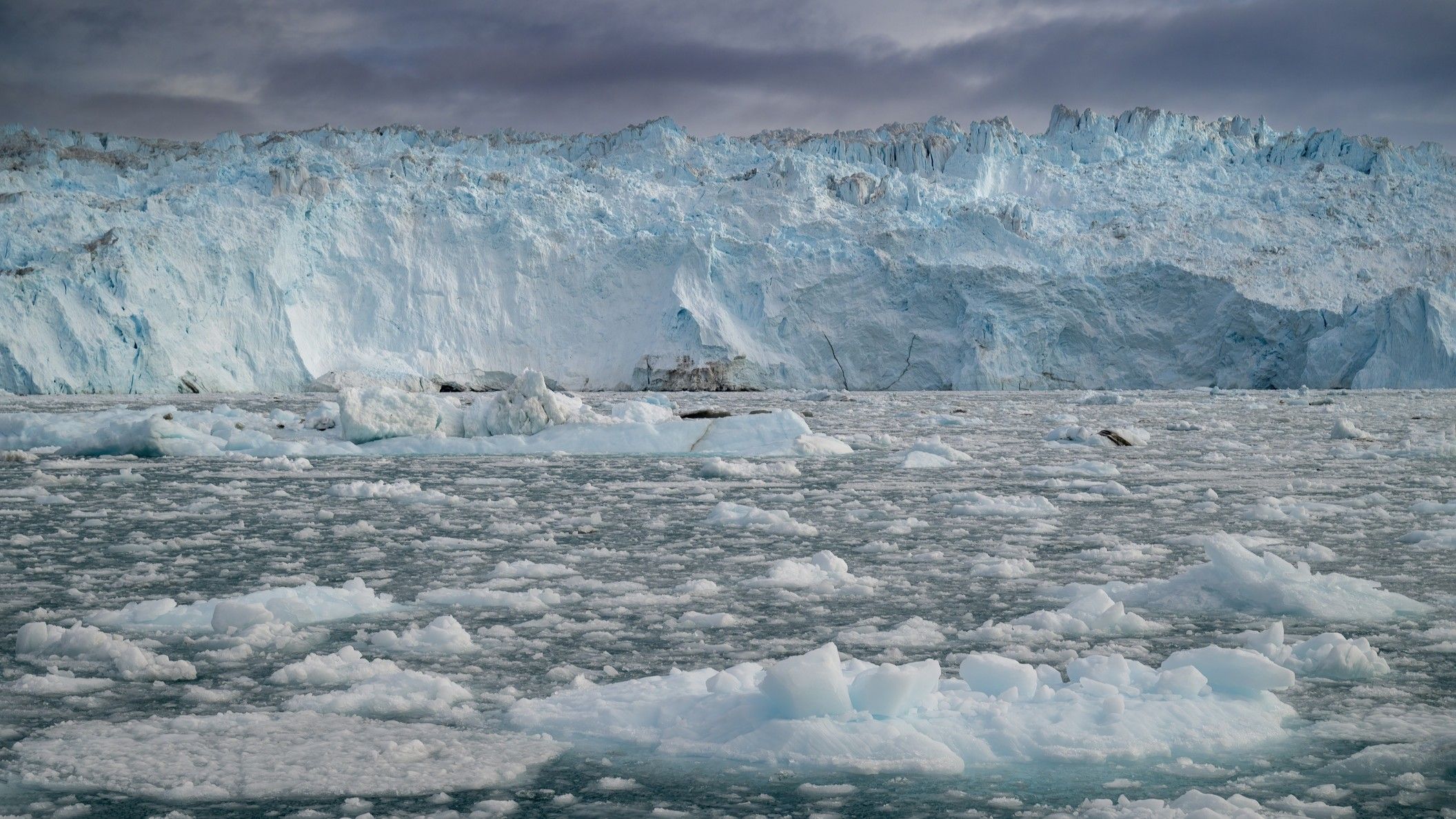
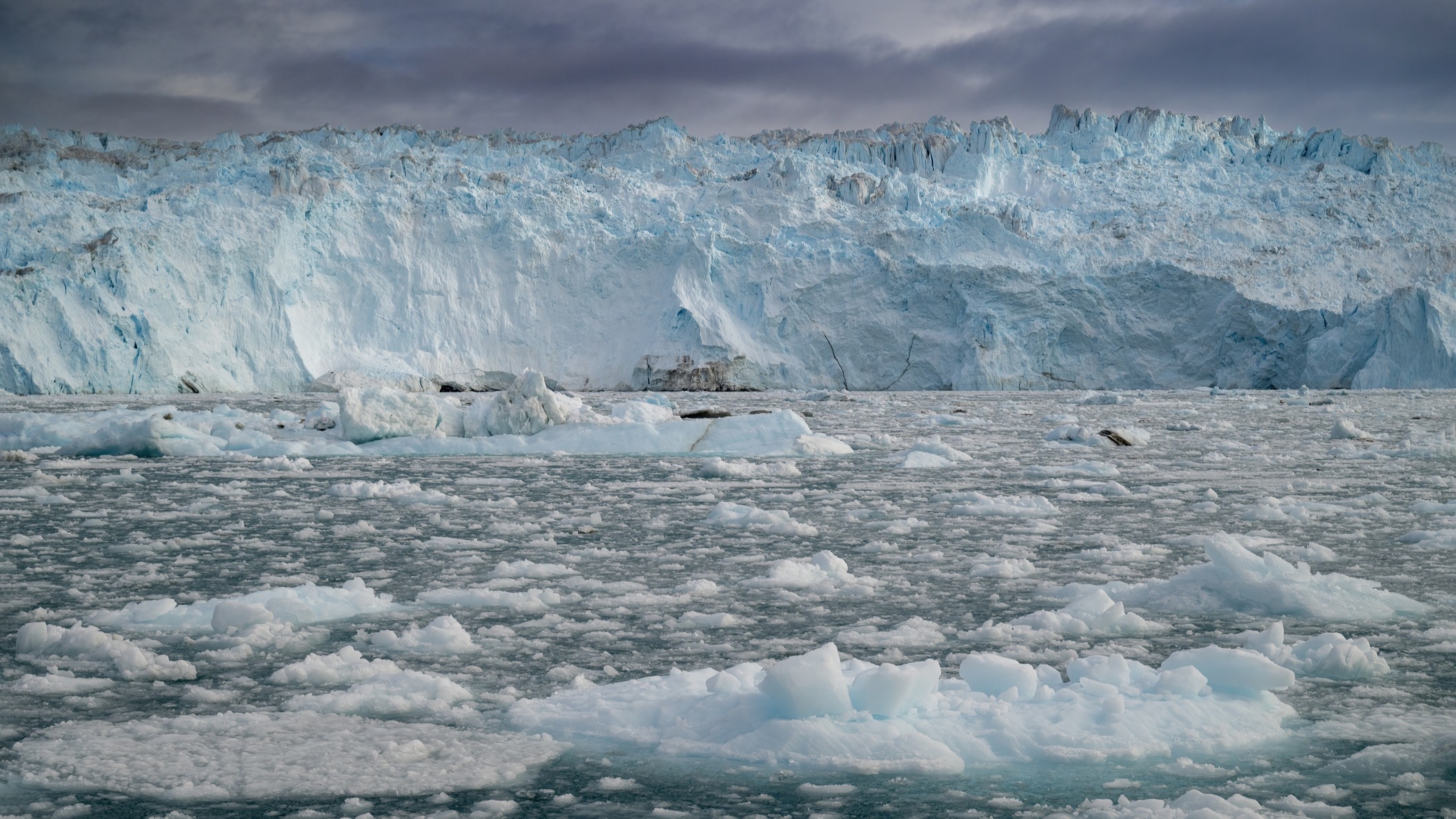
The visual impact of this melting is also becoming increasingly apparent. Glaciers that once extended far into the sea are now receding, calving massive icebergs that drift into shipping lanes and contribute to the freshwater influx. The image accompanying this report, showing a glacier in Greenland with fresh water discharging into the ocean, is a representative example of this ongoing environmental transformation.
A Historical Perspective: Past Changes in Ocean Circulation
The AMOC is not a static system; it has experienced natural variations throughout Earth’s history. Paleoclimate records, such as those derived from ice cores and ocean sediment, reveal periods when the AMOC has significantly weakened or even shut down. The most dramatic of these events occurred around 12,900 years ago, during the Younger Dryas period, a sudden and severe cooling event in the Northern Hemisphere that is widely believed to have been triggered by a shutdown of the AMOC. This historical precedent underscores the profound impact that changes in freshwater input can have on global climate.
The Modern Threat: Current Research and Projections
Contemporary scientific research is focused on understanding the current rate of melting and its immediate and long-term implications for the AMOC. Several studies have indicated that the AMOC has already weakened in recent decades. For example, a study published in Nature Climate Change in 2021 suggested that the AMOC has been at its weakest in over a millennium. While direct attribution to Greenland melt alone is complex, the correlation between increased melt rates and observed weakening is a significant cause for concern.
Climate models, which are sophisticated computer simulations of the Earth’s climate system, are also being used to project future scenarios. These models suggest that continued warming and ice melt could lead to a further significant weakening of the AMOC, potentially by as much as 30-50% by the end of the 21st century under high-emission scenarios. Some studies even suggest the possibility of a complete collapse of the AMOC, though this remains a more extreme and less certain outcome.
Potential Implications: A Cascade of Climatic Changes
The weakening or collapse of the AMOC would have far-reaching and potentially severe consequences for global climate:
- Cooling in Europe: One of the most significant impacts would be a substantial cooling in Western Europe. The AMOC currently transports heat northward, moderating temperatures in the region. A weakened circulation would mean less warm water reaching these latitudes, leading to colder winters and potentially altered precipitation patterns.
- Sea Level Rise on the U.S. East Coast: While global sea levels would continue to rise due to thermal expansion and melting ice elsewhere, a weakened AMOC could lead to more pronounced sea level rise along the U.S. East Coast. This is because the ocean circulation plays a role in the distribution of ocean mass, and its disruption could cause sea levels to rise faster in certain regions.
- Shifts in Rainfall Patterns: The AMOC influences atmospheric circulation patterns, and its alteration could lead to significant shifts in rainfall. This could result in drier conditions in some regions, impacting agriculture and water resources, while other areas might experience increased precipitation and flooding. For instance, the Sahel region of Africa, which relies on monsoon rains, could see significant changes.
- Impacts on Marine Ecosystems: Changes in ocean currents affect the distribution of nutrients, temperature, and oxygen levels, all of which are crucial for marine ecosystems. Fisheries, in particular, could be significantly impacted by shifts in fish populations and their habitats.
- Extreme Weather Events: A destabilized climate system is often associated with an increase in the frequency and intensity of extreme weather events, including heatwaves, droughts, and severe storms.
Scientific and Official Responses
The scientific community is actively engaged in monitoring the Greenland ice sheet and the AMOC. Research institutions worldwide are deploying oceanographic sensors, analyzing satellite data, and refining climate models to better understand these complex processes. International collaborations are crucial for sharing data and expertise.
While there is no single "official" response from a global body in the same way as a political summit, the Intergovernmental Panel on Climate Change (IPCC) regularly synthesizes the latest scientific findings on climate change, including the potential impacts on ocean circulation. Their reports serve as a key reference for policymakers and inform international climate negotiations. Individual nations and scientific organizations also issue statements and advisories based on their research.
Broader Impact and Analysis
The melting of the Greenland ice sheet and its potential impact on the AMOC serve as a potent reminder of the interconnectedness of Earth’s climate systems. The freshwater discharge from Greenland is not an isolated event; it is a symptom of global warming driven by human activities, primarily the burning of fossil fuels.
The implications are profound, extending beyond environmental concerns to encompass socioeconomic stability. The potential for altered agricultural yields, increased coastal vulnerability, and disruption to marine resources highlights the need for robust adaptation and mitigation strategies.
Timeline of Key Observations and Concerns:
- Late 20th Century: Growing evidence of polar ice sheets losing mass.
- Early 21st Century: Increased focus on the specific rate of Greenland ice loss and its contribution to sea level rise.
- 2010s: Studies begin to more strongly link increased meltwater to potential weakening of AMOC. Satellite missions like GRACE provide precise data on ice mass loss.
- 2020s: Research indicates AMOC may be at its weakest in over a thousand years, with continued acceleration of Greenland melt. Climate models project significant future weakening under various emission scenarios.
The analysis of this unfolding situation points to a critical juncture. The observed trends and projections suggest that the potential for significant disruption to global climate patterns is not a distant theoretical possibility but a growing concern grounded in robust scientific evidence. The continuous discharge of fresh water from Greenland is a tangible manifestation of climate change, underscoring the urgency of global efforts to reduce greenhouse gas emissions and build resilience against the inevitable changes that are already underway. The future stability of crucial ocean currents, and by extension, the climate of entire continents, hinges on the actions taken today.