Conservative Super PAC Defending Our Values Makes First Strategic Investments in Critical House Races to Shape AI Policy and Secure GOP Majority

In a significant move signalling the growing influence of artificial intelligence on American politics, Defending Our Values PAC, a conservative super political action committee singularly focused on shaping policy surrounding AI, has announced its inaugural campaign investments. The PAC is throwing its considerable financial weight behind two Republican candidates vying for seats in the U.S. House of Representatives, identifying these contests as pivotal to the Republican Party’s ambition of maintaining control of the chamber through the next legislative cycle. This early financial intervention underscores a strategic effort by conservative forces to not only influence the balance of power in Congress but also to assert a specific ideological framework over the rapidly evolving landscape of AI governance.
The beneficiaries of Defending Our Values PAC’s initial push are Rhett Marques, campaigning in Alabama’s 2nd Congressional District, and Scott Singer, a candidate in Florida’s 25th Congressional District. The announcement, exclusively learned by Fox News Digital from a source familiar with the PAC’s operations, marks the concrete deployment of a previously declared $15 million election effort. These investments are strategically placed in races deemed highly competitive, where a narrow margin could ultimately dictate the partisan control of the House after the upcoming general elections, with implications extending well into the 2026 midterm cycle and beyond.
The Strategic Imperative: AI and House Control
The Republican Party currently holds a precarious majority in the House of Representatives, a margin so slim that the outcome of just a handful of competitive races could swing control to the Democratic Party. This makes every targeted investment by a super PAC like Defending Our Values a critical component of the broader struggle for legislative dominance. According to the internal planning of the super PAC, supporting Marques and Singer is seen as a dual opportunity: to bolster the Republican majority and to ensure that the burgeoning debate around artificial intelligence policy is guided by conservative principles.
Artificial intelligence has rapidly ascended to the forefront of Capitol Hill’s legislative agenda, presenting lawmakers with a complex challenge: how to craft effective regulations for a technology that is evolving at an unprecedented pace, all while fostering American innovation and preserving the nation’s technological competitive edge, particularly against rivals like China. Defending Our Values PAC articulates a clear stance: it is conservatives, not the tech industry executives or liberal policymakers, who should be at the vanguard of defining these crucial policies. This perspective highlights a growing ideological battle over the future direction of technological governance in the United States.
Candidates at the Forefront of AI Policy
Rhett Marques and Scott Singer have been identified by Defending Our Values as the inaugural recipients of its strategic campaign funding. The organization’s rationale for selecting this pair is rooted in their perceived potential to become leading voices in Congress on issues central to the PAC’s mission. These include advocating for robust oversight of "Big Tech" companies, strengthening online protections for children and families against the potential harms of digital platforms, and spearheading policies designed to ensure the United States not only maintains but significantly expands its lead over China in artificial intelligence innovation.
Rhett Marques, an Alabama State Representative, is navigating a crowded Republican primary in Alabama’s newly redrawn 2nd Congressional District. His campaign has already garnered significant endorsements, including from former President Donald Trump and current U.S. Senator Katie Britt (R-Ala.), signaling his strong standing within the Republican establishment. The special Republican primary election in Alabama is scheduled for August 11, following a recent redistricting effort that has reshaped the state’s electoral map. Marques’s background as a state legislator provides him with direct experience in policymaking, which the PAC likely views as valuable for the complex task of AI regulation.
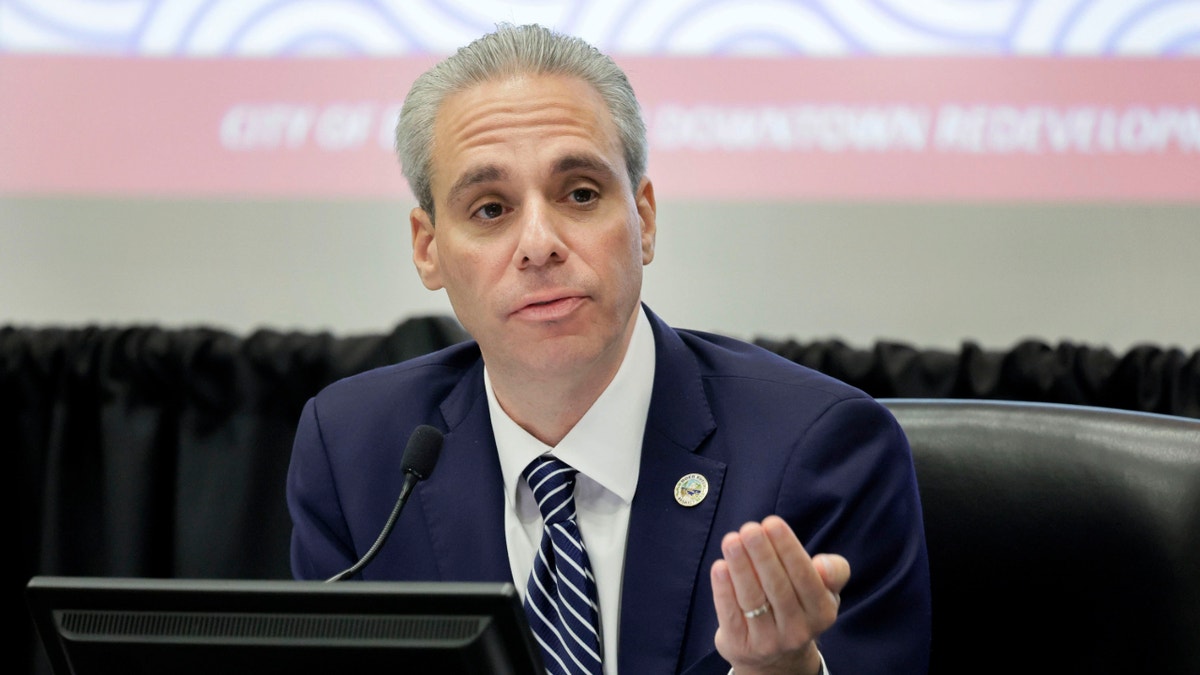
Scott Singer, the current Mayor of Boca Raton, Florida, is likewise engaged in a competitive Republican primary for Florida’s 25th Congressional District. Singer’s bid has received endorsements from notable Republican figures, including Florida Attorney General James Uthmeier, underscoring his appeal within the state’s conservative political landscape. The primary election in Florida is set for August 18. As a municipal leader, Singer has experience dealing with local governance and the practical implications of technology on communities, a perspective that could inform his approach to national AI policy.
Both candidates face formidable challenges in their respective primary contests before advancing to what are anticipated to be highly competitive general elections in November. The PAC’s investments are designed to provide them with the necessary resources to not only emerge victorious from these crowded primaries but also to significantly boost their name recognition and campaign infrastructure ahead of the general election showdowns.
The Broader Context: The AI Policy Frontier
The emergence of AI as a central political issue reflects a profound shift in technological capabilities and public awareness. From generative AI tools like ChatGPT to advanced algorithms impacting everything from finance to national defense, artificial intelligence is reshaping society at an unprecedented pace. This rapid evolution has prompted a bipartisan consensus in Washington that some form of regulation is necessary, though the specifics remain hotly debated.
In Congress, numerous efforts are underway to understand and address AI’s implications. Senate Majority Leader Chuck Schumer (D-NY) has championed an "AI Insight Forum" series, bringing together tech leaders, academics, and policymakers to inform legislative efforts. Discussions have revolved around establishing an AI safety institute, setting standards for transparency and accountability, addressing bias in algorithms, and considering the economic impacts on the workforce. Data privacy and the protection of intellectual property are also central themes.
For conservatives, the debate often intertwines with principles of limited government, free-market innovation, and national security. Defending Our Values PAC’s emphasis on conservatives leading the policy charge suggests a belief that traditional conservative values — such as individual liberty, parental rights, and a strong national defense — are essential lenses through which to view AI development and regulation. This contrasts with a perceived progressive or purely industry-driven approach, which conservatives might argue could stifle innovation or overregulate in ways that infringe on personal freedoms.
The "Big Tech" component of the PAC’s mission also highlights a growing bipartisan concern about the power and influence of major technology companies. While conservatives often champion free enterprise, there is an increasing scrutiny within the Republican Party regarding the market dominance, content moderation policies, and perceived ideological biases of tech giants. Advocating for "strengthening online protections for children and families" resonates deeply with a conservative base concerned about the impact of social media and online content on youth.
The Geopolitical Stakes: The US-China AI Race
Perhaps one of the most compelling aspects of Defending Our Values PAC’s mission is its explicit focus on the United States outpacing China in artificial intelligence innovation. This is not merely an economic competition but a fundamental geopolitical struggle that many policymakers believe will define the 21st century. China has declared its ambition to be the world leader in AI by 2030, backed by substantial state investment and a national strategy that integrates AI into its military, surveillance, and economic goals.
The implications of this race are vast, touching upon national security, economic competitiveness, and global influence. Superior AI capabilities could provide a decisive advantage in military applications, intelligence gathering, and cyber warfare. Economically, leadership in AI translates into leadership in future industries, driving innovation and creating jobs. For the PAC, ensuring American dominance means prioritizing research and development, fostering a robust domestic AI ecosystem, and potentially restricting the flow of critical technology to adversaries. This perspective aligns with a broader conservative foreign policy stance that views China as a primary strategic competitor and emphasizes American strength and technological sovereignty.
The Mechanics of Super PAC Influence
Super PACs, formally known as "independent-expenditure-only committees," play a significant role in modern American elections. Unlike traditional PACs that face limits on contributions and expenditures, Super PACs can raise and spend unlimited amounts of money to overtly advocate for or against political candidates. The key restriction is that they cannot coordinate directly with candidates’ campaigns. Their influence primarily stems from independent expenditures, which include advertising, mailers, and online campaigns aimed at boosting their favored candidates or attacking opponents.
Defending Our Values PAC’s announcement of a $15 million election effort underscores the scale of financial resources that can be brought to bear in critical races. These early investments are particularly strategic, as they can help candidates build momentum, establish name recognition, and fund essential campaign operations long before the general election. By targeting specific districts like AL-02 and FL-25, the PAC aims to concentrate its resources where they can have the most impact on the House majority.
While the PAC has not disclosed its specific donors, Super PACs typically raise funds from wealthy individuals, corporations, unions, and other organizations. The ability to accept unlimited contributions has made them powerful players, though they also attract criticism from campaign finance reform advocates who argue they allow "dark money" to exert undue influence on elections. For Defending Our Values, these investments represent a calculated bet that strategic financial backing can help elect candidates who will champion their specific policy agenda on AI.
The Road Ahead: Primaries and General Elections

The immediate challenge for both Rhett Marques and Scott Singer lies in securing their respective party nominations.
In Alabama’s 2nd Congressional District, Marques will face multiple contenders in the special Republican primary on August 11. If he emerges victorious, he would likely face incumbent Democratic Representative Shomari Figures in the general election. The redrawing of Alabama’s congressional districts, mandated by federal courts to create a second majority-Black district, has made AL-02 a highly competitive and closely watched race. Figures, a former federal prosecutor, represents a significant challenge for any Republican nominee.
Similarly, Scott Singer’s path to Congress in Florida’s 25th Congressional District requires him to first win a crowded Republican primary on August 18. Should he succeed, Singer is expected to face Democratic Representative Jared Moskowitz. Moskowitz, a freshman congressman, has gained national attention as one of former President Trump’s most vocal Democratic critics in Congress, setting the stage for a high-profile and potentially contentious general election battle.
The PAC’s spending is explicitly intended to assist Marques and Singer not only in navigating these complex primary fields but also in elevating their profiles for the November general election. Boosting name recognition early is crucial in competitive races, allowing candidates to define themselves and their platforms before opponents can.
Implications for the AI Debate and American Politics
The entry of Defending Our Values PAC into congressional races signals a maturing of the AI policy debate within the political arena. No longer a niche technical topic, AI is now a battleground issue with significant ideological and partisan implications. The PAC’s targeted investments suggest a concerted effort to proactively shape the legislative conversation rather than react to developments.
If Marques and Singer are successful, their presence in Congress could significantly amplify conservative voices on AI policy. This could lead to legislative proposals that prioritize national security concerns, emphasize free-market innovation while addressing "Big Tech" power, and focus on ethical guidelines rooted in conservative values. Such a shift could profoundly impact how the United States approaches everything from data governance and algorithmic transparency to the global competition for technological supremacy.
More broadly, these investments highlight the increasing sophistication of issue-specific Super PACs. As new technologies and societal challenges emerge, dedicated political action committees will likely continue to form, aiming to influence elections and policy outcomes on their specific areas of focus. This trend further underscores the evolving dynamics of campaign finance and the intricate interplay between money, policy, and political power in American democracy. The 2024 election cycle, and its implications for the composition of Congress leading into 2026, is set to be a crucial period for the future of AI governance in the United States.