The Unseen Architects: New Research Reveals Significant Roles for Women in Ancient Roman Agriculture

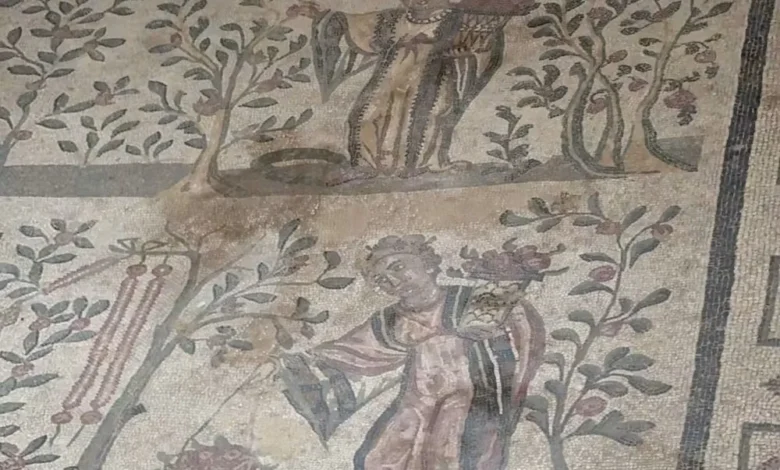
Ancient Roman texts, long a cornerstone for understanding the empire’s agrarian practices, have consistently overlooked or minimized the contributions of women in farm management. While laws, literature, and tomb inscriptions from across five centuries mention female figures in agricultural contexts, these references have largely been interpreted through a modern lens, relegating women to domestic roles such as housekeeping and meal preparation, and thus segregating them from the core, productive business of farming. However, groundbreaking new research published in the Journal of Roman Archaeology is poised to fundamentally reshape this historical narrative, arguing that women were not merely passive participants but active and influential farm managers, whose economic contributions were integral to the success of Roman agriculture.
This seminal study, authored by Tamara Lewit, an Honorary Fellow at the School of Historical and Philosophical Studies at the University of Melbourne, challenges the prevailing scholarly consensus that has relegated women to the private sphere of the household, away from the public and economic activities of the farm. By meticulously re-examining a broad spectrum of ancient sources, Lewit’s work suggests that women held positions of considerable responsibility and autonomy in managing agricultural estates, influencing crop production, livestock, and resource allocation.
Reinterpreting Ancient Evidence: Beyond the Domestic Sphere
For centuries, the interpretation of Roman agricultural practices has been heavily influenced by patriarchal societal structures, both in antiquity and in the modern scholarship that studies it. The prevailing assumption has been that men, as the recognized heads of households and public figures, were solely responsible for the economic activities of the farm, while women’s roles were confined to the domestic sphere. This view has led to a systematic underestimation of women’s economic agency.
Lewit’s research employs a nuanced approach, looking beyond explicit mentions of farm management to infer the active participation of women. The study analyzes various forms of evidence:
- Legal Texts: Roman law often addressed property ownership and inheritance. While many laws focused on male heirs, there are instances where female property holders or their proxies are mentioned in relation to land management. The precise nature of their involvement, often assumed to be through male guardians, is now being re-evaluated to consider direct agency.
- Literary Works: While often fictionalized, Roman literature, including poetry, letters, and philosophical treatises, occasionally offers glimpses into the daily lives of Roman families and their estates. These texts can provide subtle cues about who was making decisions regarding farm operations, the distribution of produce, and the management of labor.
- Inscriptions: Epitaphs and dedicatory inscriptions found on tombs or public monuments can offer direct information about individuals and their professions or roles within society. The discovery of inscriptions that mention women in connection with agricultural activities, even if not explicitly stating "farm manager," is crucial for understanding their broader economic roles.
The key insight from Lewit’s work is the recognition that the distinction between "domestic" and "productive" activities was far more fluid in ancient Roman society than previously understood, especially in the context of a farm, which was both a place of residence and a unit of economic production. The management of household resources, including food stores, labor within the household (which often included farm laborers), and the planning of meals, directly intersected with the farm’s output and efficiency.
A Chronological Perspective on Female Agency in Roman Agriculture
The evidence for women’s involvement in farm management spans a significant period of Roman history, from the late Republic through the Imperial era. Understanding this evolution provides a richer context for their roles:
- Late Republic (c. 2nd Century BCE – 1st Century BCE): During this period, large agricultural estates (latifundia) were becoming increasingly prevalent. While the image of the wealthy male landowner is dominant, evidence suggests that women, particularly wives and widows of landowners, played crucial roles in overseeing these vast agricultural enterprises. Their involvement might have been necessitated by the absence of male family members engaged in military or political affairs, or simply due to their inherent management skills.
- Early Empire (1st Century CE – 2nd Century CE): This era saw further consolidation of agricultural production. Legal and literary sources from this period can be re-examined for mentions of women overseeing vineyards, olive groves, or grain production. The management of slave labor and tenant farmers would have been a significant undertaking, requiring considerable organizational and economic acumen.
- Late Empire (3rd Century CE – 5th Century CE): As the empire faced economic and political challenges, local and regional agricultural self-sufficiency became even more critical. Women, particularly in provincial areas, may have taken on even more direct management roles to ensure the survival and prosperity of their families and estates. Inscriptions from this period are particularly valuable for identifying women involved in economic activities beyond the purely domestic.
By tracing these contributions across centuries, Lewit’s research highlights a consistent, albeit often unacknowledged, thread of female leadership in Roman agriculture. This challenges the notion that women’s roles were static and confined to a narrow set of domestic duties throughout the entire Roman period.
Supporting Data: Quantifying the Unquantifiable?
Direct quantitative data on the number of female farm managers is, by its nature, scarce and challenging to extract from ancient sources. However, the implications of Lewit’s findings suggest a significant economic impact.
Consider the scale of Roman agriculture. The empire relied heavily on its agricultural output to feed its vast population, supply its armies, and fuel its economy. The efficiency and productivity of individual farms were paramount. If women were indeed managing these farms, their decisions regarding planting cycles, crop diversification, irrigation, pest control, and labor management would have had a tangible effect on yields.
- Economic Output: Even a modest increase in efficiency across numerous farms managed by women could translate into significant overall gains in agricultural production for the empire. This could have influenced food security, market prices, and the wealth of landowners.
- Labor Management: Farms, especially larger estates, employed a range of laborers, including slaves, freedmen, and tenant farmers. The effective management of this workforce, ensuring productivity and maintaining order, was a complex task. If women were undertaking this, it underscores their significant managerial capabilities.
- Resource Allocation: Decisions about which crops to plant, how to allocate water resources, and how to manage land fertility would have directly impacted the farm’s profitability and sustainability. Women’s involvement in these strategic decisions suggests a deep understanding of agricultural economics.
While specific figures are elusive, the qualitative evidence, when interpreted through Lewit’s framework, points to a widespread and impactful presence of women in agricultural management.
Reactions and Broader Implications for Roman History
The implications of this research extend far beyond the field of agricultural history. It necessitates a re-evaluation of fundamental assumptions about gender roles, economic power, and social structures in ancient Rome.
- Revisiting Social Hierarchies: If women were significant economic actors in agriculture, their social standing and influence may have been greater than previously understood. This could lead to a re-examination of women’s agency within family structures and their participation in broader community affairs.
- Understanding Economic Systems: The Roman economy was heavily agrarian. A more accurate understanding of who managed agricultural production directly impacts our comprehension of the Roman economic system as a whole, including trade, taxation, and wealth distribution.
- Methodological Shifts in Historical Research: Lewit’s work serves as a powerful example of how re-interpreting existing evidence, using new analytical frameworks, can uncover hidden histories. This encourages scholars to look critically at traditional interpretations and to seek out alternative readings of ancient texts.
While specific reactions from other scholars are yet to be widely documented, this research is likely to spark considerable debate and further investigation. Historians specializing in Roman social history, economic history, and gender studies will undoubtedly engage with these findings, potentially leading to a cascade of new research that corroborates or challenges Lewit’s conclusions.
The Unseen Architects: A New Perspective on Roman Farms
The image of the ancient Roman farm, a vital engine of the empire’s prosperity, has long been dominated by male figures. Tamara Lewit’s compelling research, however, reveals the presence of unseen architects: women who were not merely confined to domestic duties but were actively and effectively managing farms, contributing significantly to Roman agriculture and, by extension, to the empire’s economic and social fabric. This paradigm shift promises to enrich our understanding of Roman society and the multifaceted roles women played within it, moving them from the periphery of history to a more central and recognized position. The implications of this research are profound, urging us to look anew at the ancient world and uncover the contributions of those who have historically been overlooked.