Justice Department Downplays State Antitrust Settlement as Paramount and Warner Bros Discovery Merger Clears Final Legal Hurdles

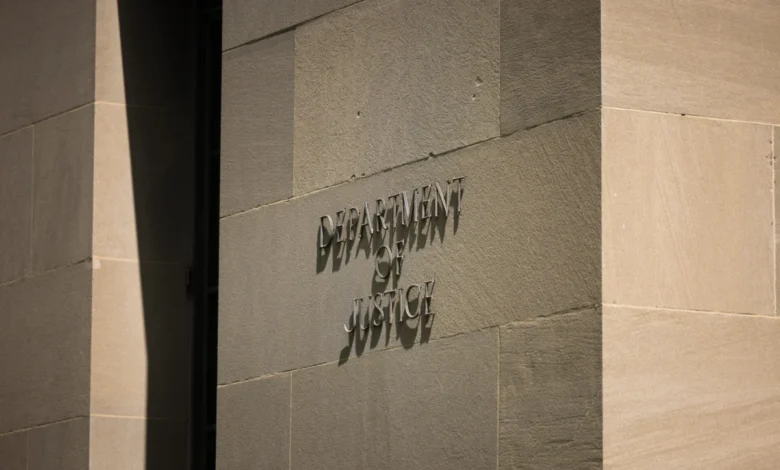
The United States Department of Justice has publicly downplayed the significance of a newly reached settlement between a coalition of state attorneys general and major media conglomerates, asserting that the concessions extracted by the states offer little in terms of novel antitrust protections. The legal maneuvering surrounds the massive $111 billion mega-merger uniting Paramount and Warner Bros. Discovery, a transaction that has dominated media industry headlines, sparked intense regulatory debate, and drawn scrutiny from both federal and state enforcers.
While the federal antitrust agency initially waved the deal through without demanding structural divestitures or asset sell-offs, a dissenting group of state officials fought back through the courts. The resulting settlement, announced earlier this week, imposes a series of behavioral remedies that last for five years. However, top Justice Department officials argue that these conditions merely codify promises the companies had already made voluntarily, leaving the federal agency’s original endorsement of the merger entirely vindicated.
The Genesis of the Megamerger and Federal Approval
The foundation of the current dispute was laid earlier this year when Paramount and Warner Bros. Discovery announced their intention to combine forces in an $111 billion transaction designed to reshape the global entertainment landscape. The proposed consolidation would merge two storied Hollywood studios, extensive television networks, and massive streaming libraries into a single corporate behemoth.
In June, the Department of Justice officially signed off on the historic merger. Unlike major antitrust interventions of the past, the federal review concluded without requiring Paramount to alter the transaction structure or divest any core business segments. The DOJ maintained that existing market dynamics, characterized by fierce competition from deep-pocketed technology companies and rival streaming services, would naturally incentivize the newly formed corporate entity to protect consumer interests and maintain competitive pricing.
However, the federal greenlight immediately drew fierce criticism from merger opponents, consumer advocacy groups, and independent industry analysts. Detractors argued that the DOJ’s review was rushed and insufficiently rigorous, alleging that political influences surrounding the Trump administration played a role in expediting the approval. With pressure mounting from critics who feared the creation of an insurmountable media monopoly, a coalition of a dozen state attorneys general decided to take matters into their own hands.
State-Level Resistance and the Legal Battleground
Driven by concerns over potential job losses, reduced creative output, and diminished consumer choice, twelve state attorneys general banded together to file an antitrust lawsuit aimed at halting the Paramount and Warner Bros. Discovery transaction. Led by California Attorney General Rob Bonta, the coalition argued that the federal government had failed in its duty to protect the public interest and that only structural remedies—specifically, the mandatory divestment of major corporate assets—could neutralize the anticompetitive threats posed by the merger.
The legal showdown quickly intensified as both sides braced for a high-stakes trial originally scheduled for March. The litigation carried immense financial urgency for the merging parties. Under the terms of the corporate acquisition agreement, Paramount faced a punishing financial penalty: a ticking fee of $7 million per day payable to Warner Bros. Discovery for every day the merger remained unclosed past September 30.
As the legal timeline compressed, the Department of Justice took the unusual step of siding with Paramount in court. The federal agency supported a defense motion requiring the state attorneys general to post a staggering $1.88 billion bond as a condition for prolonging the litigation, a financial hurdle that significantly increased the pressure on the opposing state officials.
The Terms of the State Settlement
Facing mounting financial pressures and the looming threat of the multibillion-dollar bond requirement, the coalition of state attorneys general ultimately pivoted from pursuing a full trial to negotiating a settlement. The consent decree, unveiled on Monday, establishes a series of behavioral conditions spanning a five-year period.
Under the terms of the agreement, Paramount has committed to specific theatrical output minimums. The company must release at least 30 films annually during the first and second years of the decree, increasing that commitment to 32 films per year for the third, fourth, and fifth years. Additionally, the settlement mandates a theatrical release window of at least 45 days before films transition to home viewing platforms.
During a press conference detailing the agreement, California Attorney General Rob Bonta hailed the settlement as a major victory for domestic labor and consumers. Bonta emphasized that the consent decree represents an enforceable commitment that will significantly bolster domestic film and television production, particularly within the traditional entertainment hub of Los Angeles and Hollywood.
Furthermore, the settlement requires Paramount to increase its domestic film production spending by $300 million annually. It also stipulates that Paramount and Warner Bros. must conduct cable channel negotiations independently to prevent unfair bundling practices. To ensure rigorous compliance, the agreement establishes an independent monitor to oversee corporate adherence to the mandated terms.
Despite Bonta’s initial insistence that only structural remedies—such as the divestment of major corporate assets—would suffice, the final consent decree does contain limited fail-safe provisions. Specifically, it includes requirements for the potential sale of Miramax and selected cable channels, but only in the event that Paramount breaches the primary behavioral settlement terms.
The Federal Response: Dismissing the Concessions
Despite the fanfare surrounding the state-level settlement, the Department of Justice remained steadfast in its assessment that the agreement offers little substance beyond what market forces and corporate self-interest already dictate.
Stanley Woodward, the associate attorney general, issued a pointed statement on Tuesday morning minimizing the value of the concessions wrung out by the state attorneys general.
"After a thorough review of the Paramount and Warner Bros. deal, the DOJ concluded that market dynamics create the necessary incentives to protect competition," Woodward stated. "The only antitrust-related provisions in the States’ settlement require that Paramount honor its already-stated commitments to maintain and grow its movie and TV businesses."
Woodward’s remarks underscored the federal government’s philosophical approach to modern antitrust enforcement under the current administration, which prioritizes speed, efficiency, and minimal regulatory friction when dealing with private enterprise.
"Consumers benefit when transactions close quickly after federal enforcers have concluded a substantive review," Woodward added. "Under President Trump’s leadership, the DOJ will continue to prioritize affordability and economic dynamism for all Americans across our economy."
Industry insiders note that Paramount CEO David Ellison had publicly affirmed his commitment to the 45-day theatrical window and the targeted annual film release quotas long before the state settlement was finalized. Consequently, federal officials argue that the state attorneys general essentially spent months in litigation only to secure legally binding promises for actions the studio was already planning to undertake.
Broader Industry Implications and Future Outlook
The conclusion of the legal saga surrounding the Paramount and Warner Bros. Discovery merger marks a defining moment in contemporary media consolidation. As legacy Hollywood studios grapple with the structural shift toward streaming profitability, traditional box office recovery, and intense competition from digital-first conglomerates, mergers of this scale are increasingly viewed by corporate leaders as matters of economic survival.
While the federal government champions the rapid closure of the transaction as a victory for market efficiency, critics and labor advocates remain cautious. The long-term efficacy of the five-year behavioral remedies will depend heavily on the vigilance of the appointed independent monitor and the willingness of state regulators to enforce the letter of the consent decree.
For now, the legal road blocks have been cleared. With the $111 billion mega-merger moving forward unhindered by structural breakups, the newly consolidated media giant faces the monumental task of integrating massive operations while satisfying both the federal government’s hands-off expectations and the strict behavioral guardrails demanded by the state attorneys general. The true test of whether market dynamics alone can safeguard consumer choice and creative labor will unfold across Hollywood and theaters nationwide over the coming five years.