Revisiting the Heavens of 709 BCE: Ancient Chinese Records Unlock New Insights Into Earths Rotation and Solar Activity

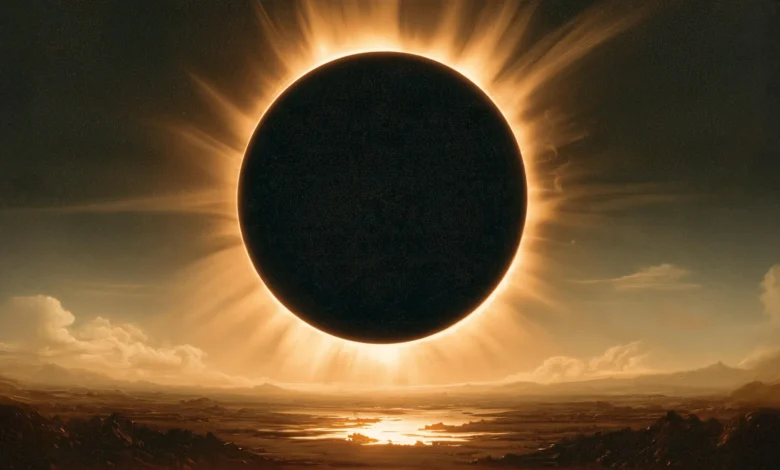
An international team of researchers has successfully unlocked new scientific data from one of the oldest precisely dated total solar eclipses in human history, shedding light on millennia of changes in Earth’s rotation and prehistoric solar behavior. By bridging ancient historical geography with cutting-edge astronomical computations, scientists reconstructed a total solar eclipse that plunged the ancient capital of China’s Lu Duchy into darkness on July 17, 709 BCE. The findings, recently published in the Astrophysical Journal Letters, demonstrate how meticulous record-keeping by court astronomers thousands of years ago continues to provide invaluable baseline data for modern geophysics and astrophysics.
The research required an interdisciplinary approach, drawing experts from stellar physics, historical climatology, and East Asian history. By meticulously cross-referencing archaeological site surveys, historical municipal layouts, and modern orbital mechanics, the investigative team resolved a longstanding geographical discrepancy that had previously frustrated astronomers attempting to model the event. The resulting dataset not only refines our understanding of how quickly our planet spun over two and a half millennia ago, but it also offers tantalizing, independent clues regarding the magnetic health of our Sun during an era long before the invention of the telescope.
Main Facts and the Discovery at Qufu
The core of the study centers on an astronomical event witnessed on a summer day in 709 BCE. Observers stationed within the court of the Lu Duchy—situated in present-day Shandong Province—recorded that the Sun was entirely blotted out by the Moon. This observation was immortalized in the Spring and Autumn Annals, a foundational historical chronicle compiled roughly two to three centuries after the event occurred. Centuries later, an additional passage was preserved in the Hanshu, or Book of Han, written roughly seven centuries after the eclipse took place. This secondary text contains a peculiar, poetic addendum describing the eclipsed Sun as "completely yellow above and below." Modern scientists have interpreted this phrasing as one of humanity’s earliest surviving written descriptions of the solar corona—the shimmering, pearly-white outer atmosphere of the Sun that remains hidden by intense glare except during brief moments of totality.
When modern researchers initially attempted to model the path of the 709 BCE eclipse using established estimations of Earth’s historical rotation, a puzzling contradiction emerged. According to standard astronomical back-calculations, a total solar eclipse should not have been visible from the coordinates historically attributed to the Lu capital of Qufu.
Rather than dismissing the ancient account as inaccurate, the research team dug deeper into historical geography and archaeological excavation reports. They discovered a subtle yet critical mapping error: earlier scientific studies had placed the ancient urban center of Qufu approximately eight kilometers away from its true historical footprint. By correcting this geographical discrepancy, the team recalibrated their computational models. The adjustment allowed the simulation to perfectly match the historical reality, proving that the ancient astronomers of the Lu court had witnessed a genuine total solar eclipse from their exact recorded position.
Chronology of the Records and Historical Context
To fully appreciate the weight of these findings, researchers must trace a timeline spanning nearly three millennia of human observation, societal evolution, and scientific inquiry.
The timeline of the 709 BCE eclipse and its documentation is marked by several key eras:
- 808 BCE to 717 BCE: The era known as the Neo-Assyrian Grand Minimum, or Homer Grand Minimum, during which solar activity dropped to exceptionally low levels for nearly a century, characterized by a dramatic scarcity of sunspots and muted solar cycles.
- July 17, 709 BCE: A total solar eclipse occurs over Qufu, capital of the Lu Duchy, recorded by court observers as an ominous disappearance of the Sun.
- 5th to 3rd Century BCE: The compilation of the Spring and Autumn Annals, cementing the core observation of the total eclipse into institutional history.
- 1st Century CE: The compilation of the Hanshu (Book of Han), which includes the crucial addendum describing the Sun as "completely yellow above and below," providing the potential historical description of the solar corona.
- Modern Era: Advanced interdisciplinary teams combine archaeological mapping, tree-ring radiocarbon analysis, and astronomical software to validate the ancient text, aligning human history with planetary science.
The survival of such detailed chronicles was no accident. In ancient China, celestial phenomena were treated with utmost gravity due to the sociopolitical framework of omenology. Eclipses, planetary alignments, and comets were not viewed merely as mechanical movements of clockwork bodies, but as moral messages from the cosmos directed at the sovereign. Successive imperial dynasties maintained specialized bureaus of astronomers tasked with monitoring the skies night and day. If an emperor failed to govern with virtue, disruptive celestial events were often interpreted as heavenly warnings. This institutionalized anxiety drove generations of court scribes to maintain remarkably precise records of eclipses, yielding a treasure trove of empirical data that modern science now relies upon.
Supporting Data: Measuring Earth’s Decelerating Spin
One of the most significant empirical contributions of this study lies in its measurement of Earth’s historical rotation speed. Planet Earth does not maintain a constant rotational velocity. Over geological and historical epochs, our planet’s spin has progressively slowed down. This deceleration is primarily driven by tidal friction—the gravitational interactions between the Earth, Moon, and Sun that generate ocean tides, continuously dissipating rotational energy as heat.
Because Earth spun faster in the past, calculating where historical eclipses would be visible requires accounting for accumulated time discrepancies. Scientists measure this using Delta T ($Delta T$), the difference between Universal Time (which is based on Earth’s actual rotation) and Terrestrial Time (a uniform time scale based on atomic clocks).
By utilizing the corrected geographic coordinates of ancient Qufu and matching them with the precise timeline of the 709 BCE eclipse, the researchers constrained $Delta T$ to a range between 20,264 and 21,204 seconds for that epoch. This tight bracket helps geophysicists model long-term tidal dissipation, changes in the Earth-Moon system, and fluctuations in core-mantle coupling over thousands of years. Accurate $Delta T$ values are essential not only for historical astronomy, but also for forecasting future variations in length-of-day measurements.
Insights Into the Sun’s Behavior and Grand Minima
Beyond the dynamics of our planet’s rotation, the study provides an intriguing proxy for understanding stellar evolution and long-term solar variability. The Sun undergoes a roughly 11-year cycle of magnetic activity, characterized by fluctuating numbers of sunspots, solar flares, and coronal mass ejections. However, the Sun can also slip into prolonged quiescent phases known as grand minima, during which normal cycles nearly flatline for decades or centuries.
The 709 BCE eclipse occurred right on the heels of the Neo-Assyrian Grand Minimum, which ended around 717 BCE. Scientists have long reconstructed these ancient solar cycles by measuring concentrations of cosmogenic isotopes, such as carbon-14, preserved in annual tree rings. Cosmic rays—high-energy particles originating from outside the solar system—constantly bombard Earth’s upper atmosphere, producing radiocarbon. When the Sun is active, its powerful magnetic field shields the inner solar system, deflecting cosmic rays and lowering radiocarbon production. Conversely, during grand minima, the weakened solar shield allows more cosmic rays to penetrate the atmosphere, leaving a distinct isotopic signature in ancient trees.
The possible description of the solar corona from the 709 BCE Hanshu addendum—depicting the Sun as "completely yellow above and below"—offers an independent point of validation for these tree-ring models. According to the research team, a corona described in such terms implies a robust, complex magnetic structure consistent with a star that had rapidly emerged from a grand minimum and was approaching the active peak of its 11-year cycle. While the researchers emphasize that the textual evidence for the corona must be approached with caution due to the centuries-long gap before its written codification, the alignment between the textual clues and the radiocarbon data is remarkably cohesive.
Official Responses and Academic Implications
The publication of these findings has drawn widespread praise within the global astrophysics and geophysics communities, highlighting the growing value of historical climatology and ancient astronomy.
Lead author Dr. Hisashi Hayakawa of Nagoya University’s Institute for Space-Earth Environmental Research emphasized the profound synergy between modern technology and ancient humanities. "What makes this record special isn’t just its antiquity, but the way a later addendum allows us to peer across twenty-seven centuries to glimpse the physical state of our star," Hayakawa stated. "By correcting minor spatial errors in our historical geography, we can extract precision measurements of Earth’s rotation and simulate the solar corona of the ancient world."
Co-author Dr. Mitsuru Sôma of the National Astronomical Observatory of Japan noted the technical precision achieved by the revised dataset. "This new dataset effectively resolves historical coordinate errors that have lingered in previous Earth rotation studies," Sôma explained. "It significantly sharpens our ability to date and reconstruct historical celestial phenomena with high confidence."
Meanwhile, space physicist and co-author Professor Mathew Owens of the University of Reading highlighted the broader implications for space weather and stellar modeling. "This unique historical reference for a potential coronal structure is critical," Owens noted. "It provides an independent spot-check on solar activity reconstructions derived from tree rings and ice cores, strengthening our confidence in models of long-term stellar variability."
Broader Impact and the Legacy of Ancient Observers
The implications of this study stretch far beyond academic curiosity, offering tangible benefits for modern technology and our understanding of planetary systems. As society becomes increasingly reliant on satellite infrastructure, power grids, and global communication networks, understanding the long-term patterns of solar activity and space weather is a matter of critical infrastructure security. By validating solar activity models against historical observations spanning millennia, researchers can better anticipate extreme space weather events and comprehend the limits of natural solar variability.
Furthermore, the research underscores the timeless nature of scientific inquiry. The court astronomers of the Lu Duchy could not have imagined that their anxieties and careful parchment records would one day be ingested by supercomputers to calculate the deceleration of a planetary crust or map the magnetic corona of a distant star. Yet, through the rigorous collaboration of modern historians, archaeologists, geophysicists, and astrophysicists, their observations have been brought back to life.
As Dr. Meng Jin of the Lockheed Martin Solar and Astrophysics Laboratory aptly summarized: "Some of our ancestors were remarkably skilled and dedicated observers. When we pair their meticulous historical records with modern computational methods, we find that the deep past still holds vital secrets about our planet and our star."