The Secret History of the Unproduced Elf Sequels and the Lost Script by The Edge

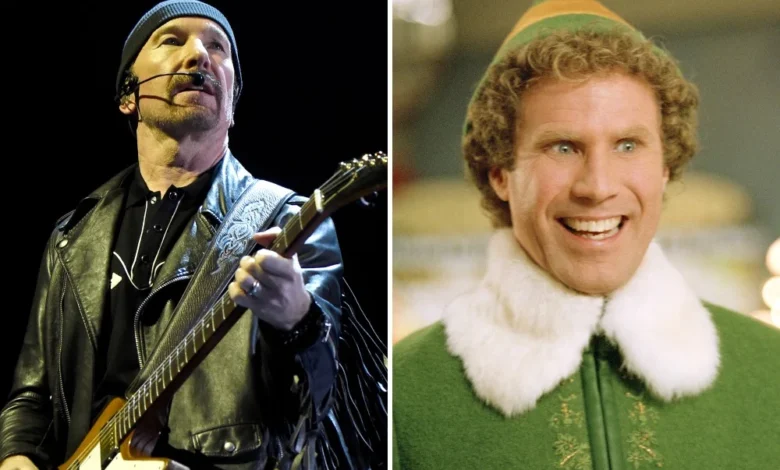
The enduring legacy of the 2003 holiday classic Elf has long been a subject of fascination for film historians and audiences alike. While the Jon Favreau-directed feature remains a cornerstone of seasonal cinema, recent revelations from actor and author Andy Richter have illuminated a hidden chapter in the film’s history: the existence of multiple, unproduced sequel scripts, including one penned by U2 guitarist David Howell Evans, known professionally as The Edge.
These disclosures, shared during an appearance on Obsessed: The Podcast, offer a rare glimpse into the internal mechanics of Hollywood development and the creative impulses that often surround successful intellectual property. Despite the massive financial and cultural success of the original film, the prospect of a follow-up—or the lack thereof—remains a testament to the fragile nature of creative legacy in the film industry.
The Genesis of the Lost Scripts
According to Richter, who appeared in the original film as a colleague of Walter Hobbs, the potential for an Elf franchise extension was far greater than the public ever realized. The most unexpected revelation concerns the involvement of The Edge. As Richter detailed, producer Shauna Robertson was once approached by a representative claiming that the U2 guitarist had not only developed a concept for a sequel but had completed a full-length screenplay.
"Somebody reached out to her and said, ‘The Edge from U2 has written a sequel to Elf, and he wants to talk to you about it,’" Richter stated. The scenario, while appearing anomalous, suggests the broad appeal the film held across various creative sectors in the early 2000s. Despite the industry’s typical appetite for sequels, the pitch reportedly "petered out" during initial communications, leaving the manuscript in the realm of industry lore rather than active development.
The Edge was not the only creative voice to attempt a return to the North Pole. Scot Armstrong, a writer known for his contributions to Old School and The Hangover Part II, also drafted a sequel script. Richter noted that Armstrong had been an uncredited contributor to the original 2003 screenplay, providing a narrative perspective that was intimately familiar with the tone established by Will Ferrell and Favreau. Armstrong’s vision reportedly involved a more high-stakes premise, featuring "the evil South Pole elves kidnapping Santa or something like that." This narrative shift—moving from the fish-out-of-water comedy of the original to a more action-oriented or darker fantasy plot—highlights the challenges studios face when attempting to replicate the specific, whimsical magic of a standalone hit.
The 2003 Phenomenon: A Retrospective
To understand why a sequel to Elf was contemplated—and why it ultimately failed to materialize—one must look at the film’s initial impact. Released on November 7, 2003, Elf served as a pivotal moment for Will Ferrell’s transition from Saturday Night Live breakout to bona fide movie star. Directed by Jon Favreau, the film followed Buddy, a human raised by elves at the North Pole, as he traveled to New York City to reconcile with his biological father, played by the late James Caan.
The film was a significant commercial success, grossing over $220 million worldwide against a production budget of approximately $33 million. Beyond its financial performance, the film achieved a rare status: it became a perennial staple of the holiday season, frequently cited alongside classics like It’s a Wonderful Life and A Christmas Story. The chemistry between Ferrell’s wide-eyed optimism and Caan’s cynical, grounded portrayal of Walter Hobbs provided the film with its emotional anchor, a dynamic that many studio executives likely feared could not be replicated.
The Case Against the Sequel
Andy Richter’s position on the matter—that a sequel is unnecessary and potentially detrimental—reflects a growing sentiment in modern Hollywood regarding the protection of original creative works. In his recent book, Elf Unwrapped: Behind the Scenes of a Modern Christmas Classic, Richter explores the meticulous effort required to achieve the film’s unique aesthetic.
"I’m on the side of ‘Let it stand,’" Richter asserted. "Just let Elf be Elf. You don’t have to use every part of the animal." This metaphor underscores a broader critique of the industry’s reliance on franchises. When a film becomes a cultural touchstone, it enters a state of grace where its value is derived from its completeness. Richter argues that the passage of time has only solidified this status. "Now that time has passed, the movie has become so special that I think that people, rightfully so, are loath to mess with it because we all can think of movies that have been tarnished by their sequels. And this is so special and so perfect and so beloved… Why risk it?"
Industry Implications and the "Franchise Trap"
The existence of these unproduced scripts serves as a case study in the "franchise trap." In the mid-2000s, the logic of the studio system dictated that any film performing at the level of Elf should, by default, receive a sequel. However, the creative failure to find a compelling, necessary narrative hook—even with high-profile talent like The Edge or established writers like Scot Armstrong—suggests that the creators themselves may have recognized the difficulty of capturing lightning in a bottle a second time.
Historical data suggests that sequels to comedy films often face an uphill battle. The "sequelitis" phenomenon, characterized by diminishing returns in both critical reception and box office performance, is particularly prevalent in the comedy genre, where the novelty of the premise is often the primary driver of audience engagement. By choosing not to move forward, the producers of Elf preserved the film’s integrity, allowing it to maintain its status as a "modern Christmas classic" without the dilution that typically accompanies multi-film iterations.
The Legacy of the North Pole
The cultural longevity of Elf is supported by its enduring presence in streaming catalogs and cable television rotations during the November and December months. While fans have long clamored for more of Buddy the Elf, the lack of a sequel has arguably contributed to the film’s longevity. It remains an isolated, perfectly contained story that requires no further explanation or expansion.
The revelations regarding The Edge’s script and Scot Armstrong’s concepts provide a fascinating "what-if" for cinema enthusiasts. They remind us that for every successful franchise, there are dozens of discarded drafts and abandoned pitches that exist in the archives of major studios. In this instance, the silence surrounding a potential Elf sequel is perhaps the greatest gift the filmmakers could have provided to the audience.
As Richter concludes in his analysis, the value of such a project is not measured in its potential for expansion, but in its ability to endure as a singular, cohesive experience. The "weirdest story" of a U2 guitarist attempting to pen a follow-up to a Christmas comedy may be a footnote in history, but it serves as a reminder that some stories are best left exactly where they ended.
Chronology of Elf’s Cultural Impact
- 2003: Elf is released to critical and commercial success, establishing Will Ferrell as a leading man.
- 2003–2005: Initial industry discussions occur regarding a potential follow-up, during which time scripts from figures like The Edge and Scot Armstrong are reportedly developed.
- 2010s: As the film reaches its 10th and 15th anniversaries, it solidifies its status as a definitive holiday classic, with Will Ferrell publicly stating his reluctance to participate in a sequel.
- 2024: Discussions regarding the film’s production history gain renewed interest through various long-form media, including podcasts and retrospective books.
- 2025: Andy Richter’s publication of "Elf Unwrapped" provides the most detailed account yet of the internal creative climate surrounding the film’s post-production and the decision to forgo a sequel.
Ultimately, the history of Elf is not one of what might have been, but of the wisdom in knowing when a creative work is complete. The mystery of the "lost" scripts remains a curiosity for fans, but the film itself remains, as Richter suggests, a piece of cinema that stands best on its own.
Related posts: