Automattic Appoints Jeremy Klaperman as Interim CFO Following Turbulent Leadership Shakeup and Boardroom Drama


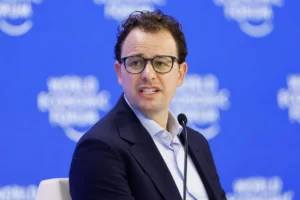
Automattic, the prominent web development company behind WordPress.com, WooCommerce, and Tumblr, has named Jeremy Klaperman as its interim Chief Financial Officer. Klaperman previously served as the CFO of WordPress VIP, the company’s enterprise-tier business unit. This executive transition, communicated internally to staff via a Slack message on Friday, represents the latest chapter in an unprecedented period of corporate governance turmoil that recently gripped the upper echelons of the tech giant.
The appointment of Klaperman comes on the heels of a chaotic power struggle that unfolded earlier in September 2026. During this brief but intense corporate crisis, members of Automattic’s board of directors attempted to oust long-serving CEO and co-founder Matt Mullenweg. The maneuver temporarily succeeded, forcing Mullenweg into a brief leave of absence. However, the boardroom coup quickly unraveled, leading to the dramatic exit of the board members who orchestrated the vote, alongside several high-ranking executives who aligned with the attempted coup—most notably former CFO Mark Davies and former Chief Legal Officer Andy Missan.
Following the collapse of the boardroom maneuver, Mullenweg swiftly reclaimed the chief executive position within days. As the company works to stabilize its operations and rebuild its executive ranks, Klaperman steps into the interim financial leadership role to steer Automattic through its post-crisis recovery.
Chronology of a Corporate Crisis: How the Automattic Boardroom Drama Unfolded
The sequence of events leading to Klaperman’s appointment highlights deep-seated tensions within Automattic’s leadership structure. The timeline of the executive shakeup underscores the rapid pace at which the crisis evolved and was subsequently reversed:
- September 9, 2026: Automattic’s board of directors forces CEO Matt Mullenweg into a sudden leave of absence, attempting to remove him from power. Mark Davies, the company’s then-CFO, is installed as interim CEO during Mullenweg’s absence.
- September 10–11, 2026: Reports emerge detailing reciprocal severance agreements signed between interim CEO Mark Davies and Chief Legal Officer Andy Missan during the brief leadership vacuum.
- September 12, 2026: Automattic officially confirms that Matt Mullenweg has successfully returned as CEO after the boardroom rebellion collapses. The directors who voted to oust him depart the company, marking a decisive victory for the co-founder.
- September 16, 2026: TechCrunch and other industry publications report on the controversial severance deals executed during Mullenweg’s 33-hour absence, casting a spotlight on governance and executive compensation practices at the firm.
- September 18, 2026: Mullenweg announces internally via Slack that Jeremy Klaperman has been appointed interim CFO, replacing Davies. Additionally, Mullenweg shares that a candidate has verbally accepted the position of Chief Legal Officer to succeed Missan.
- September 23, 2026: Automattic’s next scheduled board meeting, where further announcements regarding permanent board seats and governance structures are anticipated.
Leadership Transition and Executive Restructuring
In his internal communications to Automattic employees, Mullenweg provided reassurance regarding Klaperman’s qualifications for the interim CFO role. Klaperman is not an unfamiliar face to the company’s executive financial operations; he previously stepped in as Automattic’s acting CFO during periods when Mark Davies was on sabbatical.
While Klaperman assumes immediate control of the finance department, Mullenweg noted that the company’s newly forming board—whose composition remains largely unannounced following the exodus of the previous directors—will eventually need to conduct a thorough evaluation of both internal and external candidates before making a permanent appointment.
In tandem with the financial leadership change, Mullenweg revealed that a candidate has verbally agreed to take over as Automattic’s Chief Legal Officer. This incoming executive will replace Andy Missan, who departed the company in the wake of the failed boardroom coup. The departure of both Davies and Missan leaves significant operational gaps that Automattic is now systematically filling to restore administrative stability.
The controversy surrounding Davies and Missan was further intensified by revelations regarding their exit packages. Reports surfaced indicating that during Mullenweg’s brief 33-hour absence from the company, the interim leadership executed reciprocal severance deals designed to protect outgoing executives. These agreements drew internal scrutiny and raised questions among stakeholders regarding corporate governance standards during leadership transitions at privately held technology companies of Automattic’s scale.

Reassuring Stakeholders and Managing Financial Stability
Amidst the fallout from the executive departures, Mullenweg sought to project absolute confidence in Automattic’s financial health and operational runway. Addressing employees directly, the returning CEO emphasized that the company’s capital reserves and cash management remain entirely secure.
"I have 100% confidence in our cash and financial position," Mullenweg stated in his closing remarks to the staff. He acknowledged that considerable work remains to be done following the organizational disruption, but underscored that the company’s destiny rests firmly in its own hands. "There is still work to do, but everything is within our control and depends only on Automattic’s ability to execute."
The firm’s commercial ecosystem—which powers a massive percentage of the global internet through WordPress, provides enterprise-grade reliability via WordPress VIP, and manages high-traffic publishing platforms like Tumblr—requires continuous, uninterrupted financial oversight. Klaperman’s familiarity with the enterprise wing of the business positions him to maintain fiscal discipline while the wider organization navigates its structural rehabilitation.
The Road Ahead: Board Rebuilding and Governance Implications
As Automattic looks toward the future, attention shifts toward the reconstitution of its board of directors. The board played a pivotal role in triggering the September crisis, and their subsequent departure leaves several empty seats that must be filled to restore a balanced governance framework.
Mullenweg has advised employees to "stay tuned" for official announcements regarding new board appointments. In the interim, continuity is being maintained through figures such as special advisor Stephen Wolfram, the creator of Wolfram|Alpha, who remains firmly in his advisory position on the board. The upcoming board meeting scheduled for September 23 is widely expected to serve as the platform where Automattic outlines its renewed corporate governance strategy and introduces new directors to oversee the company’s next growth phase.
Broader Industry Implications and Analysis
The dramatic events at Automattic offer a compelling case study in the vulnerabilities of private tech governance, particularly when powerful founders clash with institutional boards. Unlike publicly traded corporations where shareholder activism follows strictly regulated statutory paths, private companies often rely heavily on internal voting blocs and shareholder agreements to resolve disputes.
The rapid mobilization of employees and the decisive counter-offensive by Mullenweg demonstrated the unique loyalty and influence founders can retain in tech enterprises. However, the episode also highlights the critical importance of robust succession planning, transparent severance protocols, and clear boundaries between executive management and board oversight.
For Automattic, the immediate priority is putting the governance drama behind it. With Jeremy Klaperman managing the balance sheet, a new legal chief preparing to step in, and a rebuilt board set to convene, the company is attempting to pivot back to its core mission: powering the open web and scaling its diverse portfolio of digital publishing and enterprise tools. Whether these leadership adjustments will permanently heal internal divisions will depend heavily on execution in the final quarters of 2026 and the transparency demonstrated by the incoming board members.
Related posts: