Lessons from the Smog: How Past Environmental Crises Can Inform Today’s Climate Action

By Rebecca Florsheim, Neil Vora, Peter J. Winch, and Connie Hoe
July 17, 2026
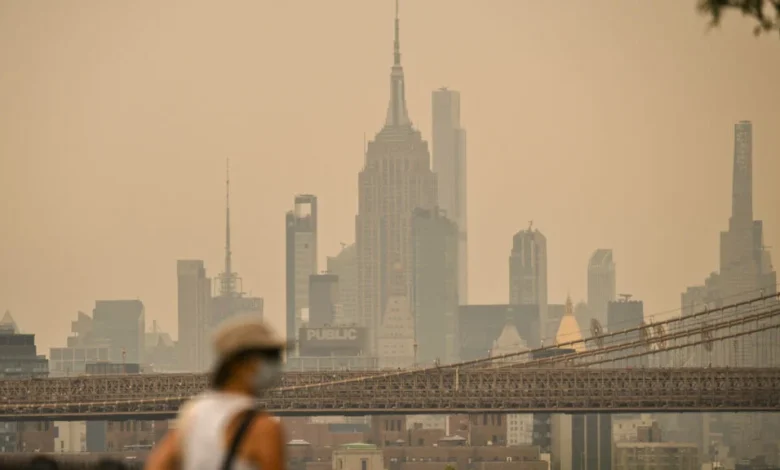
As Canadian wildfires rage, blanketing vast swathes of North America in thick smoke, major U.S. cities are grappling with unprecedented air quality deterioration. New York City, already battling the second major heatwave of the summer, experienced a stark surge in respiratory distress, with emergency room visits for asthma exacerbations escalating by a significant 31% by the close of the first day of severe smoke intrusion. This confluence of extreme weather events underscores a critical, cyclical relationship between human activity, a warming climate, and escalating public health crises. While the scale of these challenges can foster a sense of inevitability, historical precedent offers a powerful lesson: environmental health crises, however dire, can and must serve as catalysts for profound societal change and policy reform.
The Unseen Threat: Air Pollution in the Post-War Era
In the decades following World War II, industrialized nations, particularly urban centers, confronted an environmental adversary that, while distinct from today’s climate crisis, shared common roots in unchecked industrial emissions: pervasive air pollution. Long before the concept of global warming entered public discourse, many cities choked under skies laden with smoke and soot. Regulatory frameworks for air quality were rudimentary, if they existed at all. Waste management practices often involved the incineration of refuse, releasing further pollutants into the atmosphere. The burgeoning proliferation of automobiles, coupled with widespread reliance on coal as an energy source and a distinct lack of meaningful emission standards, created a toxic cocktail of airborne contaminants. This resulted in dangerously polluted air, with particulate matter and noxious gases becoming a constant, visible presence, settling on cars, windowsills, and public spaces.
At the time, scientific understanding of the specific health impacts of various air pollutants was developing. Components like carbon monoxide, particulate matter, ground-level ozone, sulfur dioxide, and nitrogen dioxide, now recognized by the World Health Organization as "classical air pollutants" and by the U.S. Environmental Protection Agency as "criteria air pollutants," were understood to pose distinct health risks based on their chemical properties. Despite this nascent understanding, the implementation of effective regulatory measures to mitigate these risks remained elusive for decades, a testament to the entrenched industrial interests and the slow pace of public and political recognition of the environmental threat.
The Tipping Point: The Great Smog and its Aftermath
The trajectory of air quality regulation shifted dramatically following a series of increasingly severe smog events that gripped cities worldwide. These events occurred when stagnant atmospheric conditions trapped pollutants, leading to a visible and palpable deterioration of air quality. The skies would take on an unnatural, bronzed hue, and a significant percentage of urban populations would fall acutely ill, with a disproportionate number suffering from or succumbing to lung and heart conditions.
The most catastrophic of these events was the Great Smog of London in December 1952. This dense, suffocating fog persisted for five days, blanketing the city and bringing daily life to a standstill. The environmental catastrophe resulted in an estimated 12,000 immediate deaths and tens of thousands more suffering from severe respiratory ailments. The profound human toll of the Great Smog served as an undeniable wake-up call, directly precipitating the passage of the Clean Air Act of 1956 in the United Kingdom. This landmark legislation introduced stringent regulations on industrial emissions, marking a pivotal moment in the global effort to control air pollution.
New York City’s Alarming Smog: A Catalyst for Action
In the United States, a similar, though less lethal, event galvanized public consciousness and spurred legislative action. On November 23, 1966, New York City experienced its most severe smog event on record. Air quality plummeted as levels of sulfur dioxide and carbon monoxide soared to dangerous heights. For the first time in its history, municipal authorities resorted to direct emergency appeals through television, radio, and print media, urging citizens to reduce energy consumption and limit automobile use. Those with pre-existing heart or lung conditions were strongly advised to remain indoors. The city’s municipal incineration services were temporarily suspended, leading to a noticeable accumulation of refuse. The intensely irritating and inflammatory nature of the smog afflicted hundreds of thousands of New Yorkers, causing widespread shortness of breath and exacerbating underlying heart conditions. Tragically, an estimated 200 people lost their lives during this period.
This devastating event acted as a powerful catalyst for public demand for environmental accountability and robust policy responses. Within a month, New York City’s administrative code was significantly updated. These amendments expanded the city’s air pollution surveillance capabilities and introduced stricter measures to curb emissions from various sources. The extensive media coverage of the crisis resonated deeply with vulnerable urban populations across the nation, highlighting the shared risks posed by poor air quality.
The impact of the New York City smog event reverberated to the highest levels of government. Just two months later, in January 1967, President Lyndon B. Johnson delivered a special message to Congress titled "Protecting Our National Heritage." In this seminal address, he explicitly referenced the New York smog incident, underscoring the urgent need for federal action. This led to the passage of the Air Quality Act of 1967, which established procedures for air pollution abatement. This legislation paved the way for the comprehensive Clean Air Act of 1970, a cornerstone of environmental law in the United States. The 1970 Act established National Ambient Air Quality Standards (NAAQS) for six "criteria air pollutants" known to induce smog and adverse health effects. Subsequent amendments and rigorous enforcement of this legislation have yielded remarkable results. By 2020, collective levels of these criteria pollutants had decreased by an astounding 78% compared to 1970 levels, with reductions in individual pollutants reaching as high as 91%. This success has largely eliminated the localized smog events that once plagued American cities.
The Interconnectedness of Pollutants: From Criteria to Climate
While the success in controlling criteria air pollutants is a testament to effective environmental policy, it is crucial to recognize their distinct yet inextricably linked relationship with greenhouse gases. Both categories of pollutants, including carbon dioxide, methane, nitrous oxide, and tropospheric ozone, originate from the combustion processes that power modern life. However, the pathways through which they impact human health and the planet differ significantly.
Criteria air pollutants exert their detrimental effects directly. Their physical and chemical properties interact with the human body, leading to a range of illnesses such as sinus inflammation, lung and heart disease, cancers, and premature death. Greenhouse gases, on the other hand, primarily contribute to climate change, which then indirectly causes disease and mortality through a cascade of environmental shifts. A warming climate manifests in increased injuries from extreme weather events, heightened allergenicity leading to more severe pollen seasons, the proliferation of smoke from wildfires, and the emergence and spread of infectious diseases.
The Climate Crisis: A Palpable Reality
More than half a century after the passage of the landmark Clean Air Acts, humanity is confronting another pressing environmental crisis that is becoming impossible to ignore: climate change. Much like the smog events of the past century served as undeniable proof of the dangers of local air pollution, the escalating frequency and intensity of natural disasters—including wildfires, hurricanes, floods, heatwaves, and droughts—have transformed climate change from an abstract scientific concept into a tangible, life-altering reality for hundreds of millions of people globally. Even for those not directly impacted by these catastrophic events, the indirect consequences, such as the visible haze from distant wildfires descending upon major metropolitan areas, are now undeniably palpable.
The scientific consensus on the impact of climate change is robust, and public perception is increasingly aligning with this reality. Pew Research Center data indicates that 67% of individuals across 25 countries now perceive climate change as a major threat. This awareness is even more pronounced among those who have directly experienced extreme weather. Over 80% of individuals who have faced extreme weather events recognize climate change as a contributing factor. Research further demonstrates that those who personally endure the harsh realities of extreme weather are more than twice as likely to view climate change as a crisis compared to those who have not experienced such events. This personal experience often translates into a greater urgency for action and a stronger belief in the necessity of policy interventions.
Leveraging Health Impacts for Climate Advocacy
The current environmental landscape, marked by recurring extreme weather events, presents a critical juncture for public health advocacy and policy development. Each extreme weather event, and its undeniable link to the underlying cause of climate change, must be brought to the forefront of public discourse. A strategic emphasis on the health risks associated with these events, and their substantial economic and social costs, offers a particularly effective avenue to engage and motivate individuals who may harbor skepticism towards climate science. The causal link between human activity, a changing climate, and adverse health outcomes must be communicated with clarity, efficiency, and unwavering conviction. This consistent and unapologetic messaging is essential to foster widespread understanding and support for necessary actions.
By making and diligently adhering to this commitment, the present era can be distinguished not only by the alarming escalations in environmental disasters fueled by a changing climate but, more importantly, by humanity’s collective resolve to harness these challenges as powerful motivators for securing a sustainable and healthy future for all. The lessons learned from past victories in tackling environmental health crises, such as the reduction of local air pollution, provide a roadmap and a source of inspiration for addressing the even greater existential threat posed by climate change. The urgency is undeniable, and the opportunity for transformative action is now.
Rebecca Florsheim is an environmental health physician at the NYU Grossman School of Medicine. Neil Vora is a physician and executive director of Preventing Pandemics at the Source. Peter J. Winch, M.D., M.P.H., develops and evaluates interventions to promote health behaviors for water, sanitation, infectious diseases, and environmental sustainability. Connie Hoe is a public health researcher who serves as endowed division head for policy and implementation research at the German Cancer Research Center and as adjunct associate professor at the Johns Hopkins Bloomberg School of Public Health.