Used Mazda CX-70 And CX-90 PHEVs Are The Affordable Family SUV You Might Have Overlooked

The contemporary automotive landscape is currently defined by a persistent affordability crisis that has fundamentally altered the purchasing habits of the average family. As interest rates remain elevated and vehicle inventory constraints—a legacy of the supply chain disruptions of the early 2020s—begin to stabilize, the primary barrier to entry for many households is the escalating cost of the average mid-size SUV. According to data provided by Kelley Blue Book, the average transaction price for a mid-size SUV has climbed toward the $50,000 threshold. While buyers have historically turned to the pre-owned market to mitigate these costs, the resale values of traditional stalwarts, such as the Toyota Highlander and Honda Pilot, have remained aggressively high, offering little relief to cost-conscious consumers.
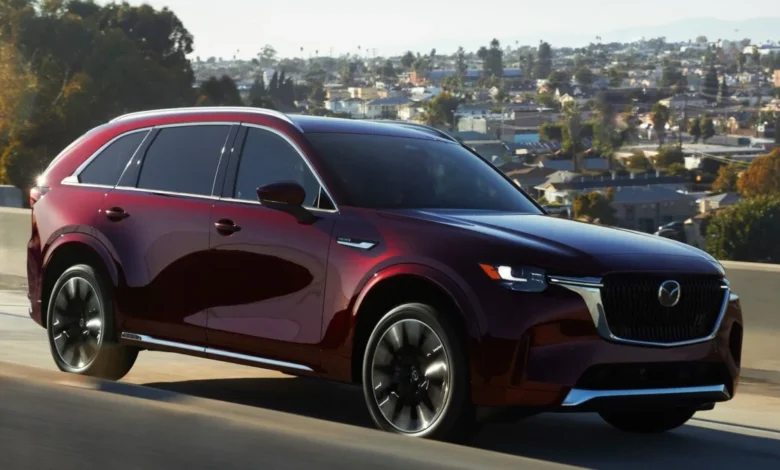
In this climate, a compelling alternative has emerged within the pre-owned sector: the plug-in hybrid electric vehicle (PHEV) variants of the Mazda CX-90 and its two-row sibling, the CX-70. While these vehicles were designed to offer a premium, near-luxury experience, market dynamics have resulted in a significant depreciation curve that now presents a unique value proposition for informed buyers.
A Chronology of the Mazda Large Platform Strategy
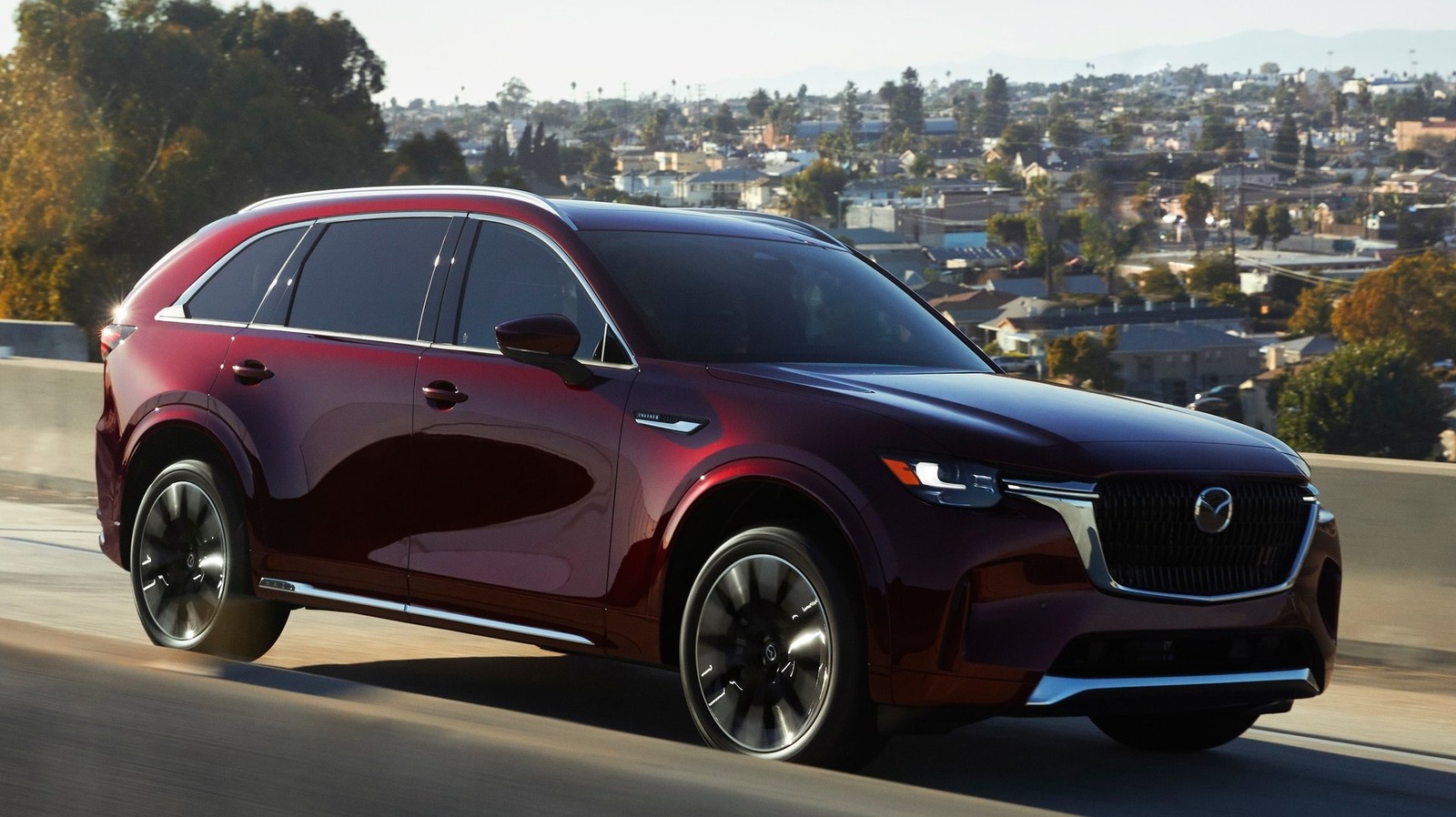
The introduction of the CX-90 and CX-70 represents a pivotal moment in Mazda’s corporate strategy. After years of operating as a mainstream brand with a focus on driving dynamics, the company embarked on an ambitious move up-market. The Mazda CX-90 was officially launched in early 2023 as a 2024 model, serving as the flagship for the company’s new longitudinal-engine, rear-wheel-drive-biased "Large Platform."
The CX-90 was engineered to compete directly with European luxury SUVs, featuring an inline-six-cylinder engine architecture that is increasingly rare in the segment. Following the successful introduction of the three-row CX-90, Mazda expanded its portfolio in 2025 with the CX-70. While the CX-70 shares the same wheelbase and powertrain options as the CX-90, it was marketed specifically for consumers who prioritize cargo capacity and a two-row configuration over the logistical requirements of a third row. Despite the variance in branding, the two vehicles are structurally and mechanically near-identical, creating a unique situation where both models now populate the pre-owned market with comparable depreciation patterns.
The Plug-In Hybrid Value Proposition
The PHEV versions of these SUVs utilize a 2.5-liter four-cylinder engine paired with an electric motor and a 17.8-kWh battery pack. This powertrain configuration provides approximately 26 miles of all-electric range, which is sufficient for many daily commutes, while offering a total combined range of roughly 490 miles.
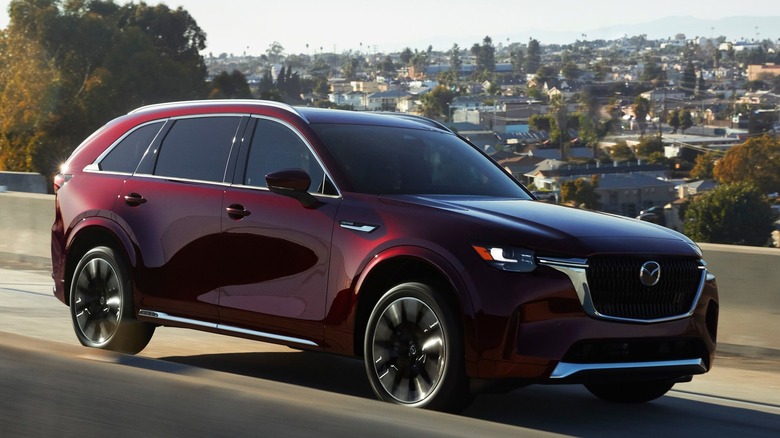
From a market perspective, these vehicles are currently experiencing what industry analysts describe as "EV-adjacent depreciation." Because the vehicles carry the "plug-in" designation, they are often conflated with pure battery-electric vehicles (BEVs). Consequently, the buyer pool is restricted to individuals who have the logistical capability to charge at home. This perceived barrier to ownership has suppressed demand in the secondary market, leading to aggressive price drops that significantly favor the buyer.
Data from inventory tracking platforms like Cars.com indicates a high volume of pre-owned inventory, with well over 1,000 units currently available. Notably, approximately 20 percent of these listings are priced below the $30,000 mark, a figure that is remarkably competitive given the original MSRPs of these vehicles, which often exceeded $55,000 when fully optioned.
Market Analysis: Evidence of Accelerated Depreciation
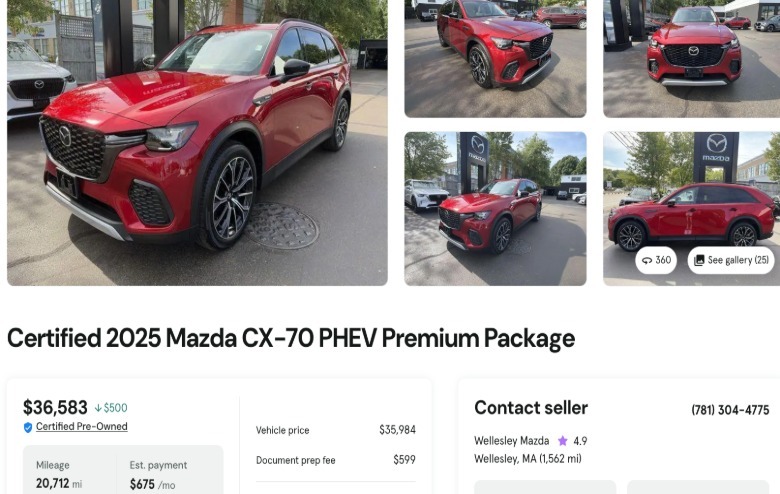
The discrepancy between the original sticker price and the current market value offers a substantial opportunity for cost-conscious consumers. For example, a 2025 Mazda CX-70 PHEV Premium, which carried an original MSRP of approximately $56,000, can now be sourced in the pre-owned market for roughly $36,500 with fewer than 21,000 miles on the odometer. This represents a depreciation of nearly 35 percent in less than two years.
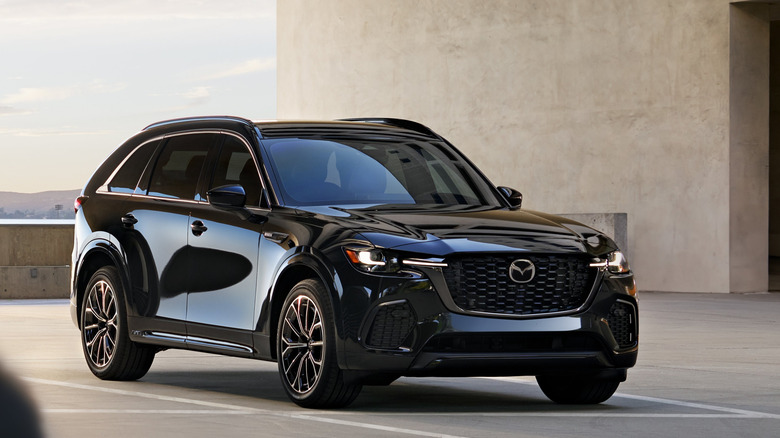
Similarly, the 2024 CX-90 PHEV models demonstrate even steeper value retention gaps. In some instances, certified pre-owned (CPO) units with under 25,000 miles have been observed at prices near $28,000—a nearly 50 percent reduction from their original $51,000 MSRP. Such pricing dynamics are historically uncommon for Japanese-engineered, premium-segment SUVs, which typically command higher residual values.
Technical and Ownership Considerations
While the financial incentives are clear, prospective buyers must weigh the practical implications of purchasing a PHEV. The primary caveat remains the charging infrastructure. While these vehicles do not require external charging to function—as they operate as traditional hybrids once the battery charge is depleted—the efficiency of the vehicle is optimized only when the owner utilizes the plug-in capability.
Furthermore, early production models of the 2024 CX-90 were subject to reports of teething issues, which are common with the rollout of entirely new platforms and architectures. Automotive industry experts generally advise that when purchasing a vehicle from the first or second year of a new production run, buyers should prioritize Certified Pre-Owned (CPO) programs. These programs not only provide an additional layer of warranty coverage but also ensure that the vehicle has undergone a rigorous multi-point inspection, mitigating the risk associated with early-production mechanical or software inconsistencies.
Strategic Implications for the Family SUV Segment
The availability of the CX-70 and CX-90 in the pre-owned market serves as a case study in how branding and powertrain labels influence consumer behavior. Mazda’s attempt to bridge the gap between mass-market utility and premium luxury has created a "middle-ground" vehicle that does not neatly fit into the standard categories that consumers use to filter their searches. By not fitting the traditional "Toyota or Honda" mental framework, these vehicles have remained under the radar for many shoppers.
For the average family, the implications are significant. Instead of settling for a base-model, high-mileage vehicle from a budget-focused manufacturer, a buyer can now access a sophisticated, high-feature, and modern SUV that offers a distinct "upscale" interior environment for the same price. As the automotive industry continues to grapple with the shift toward electrification, the depreciation of PHEVs like the Mazda CX-90/70 serves as a reminder that market perception, rather than just objective utility, remains the primary driver of vehicle pricing.
As of the current fiscal period, Mazda has not released specific statements regarding the secondary market performance of these models, but their strategy remains focused on maintaining the brand’s premium positioning. For the consumer, the objective reality is that the gap between the perceived value of these vehicles and their actual utility is currently at its widest point. As the market eventually reconciles this difference, it is likely that the current "bargain" pricing will begin to stabilize, making the present moment a potential window of opportunity for those who prioritize long-term value over brand-name legacy.
Related posts: