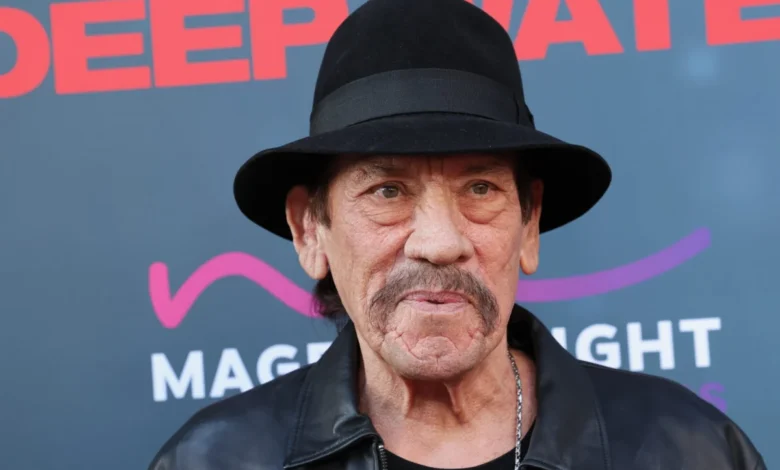
Danny Trejo Says He Tried to Exit Daily Wire’s Pro-ICE Film ‘Pawn Shop’ But Was Told They’d ‘Sue the Hell Out of Me’

A Conflict of Narratives
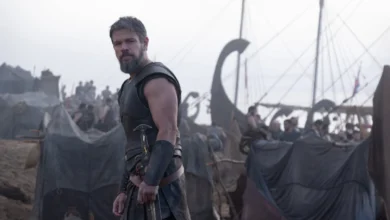
The film in question, titled Pawn Shop, centers on a controversial premise: a young ICE officer becomes trapped in a Minneapolis pawn shop with a Hispanic veteran and his grandson following a violent riot. The narrative depicts a "siege of honor," framing the ICE officer as a protagonist struggling to maintain the rule of law against a hostile, anti-government mob.
When news of the casting first broke, Trejo faced immediate and intense backlash from fans and activists who viewed his involvement as a betrayal of his long-standing reputation as an ally to immigrants and the Hispanic community. Trejo, who has frequently spoken about his own past and his commitment to social advocacy, found himself in a precarious position. When asked by reporters if he had attempted to resign from the project, Trejo was blunt: “You know what? I tried, and they said no, they’d sue the hell out of me.”
This revelation confirms months of speculation regarding the actor’s agency. Trejo explained that his only recourse was to modify his performance and the way he engaged with the script’s messaging. “I just didn’t say what they wanted me to say. You know, I just changed the lyrics a little… the first thing I said, they told me they’d sue me,” he noted, implying that the studio’s contractual iron grip prevented him from speaking openly against the production’s themes.
Chronology of the Controversy
The tension surrounding the film began to surface in late 2026 as production details leaked to the public. The timeline of events reveals a breakdown in communication between the actor’s management and the production entity:
- Initial Casting: Trejo joined the project, reportedly without a comprehensive understanding of The Daily Wire’s direct involvement or the specific ideological framing of the screenplay.
- Production Realization: Roughly two weeks into filming, the nature of the project became clear to the cast. It was during this period that Trejo’s son, Gilbert Trejo, later noted that his father had not even been aware of who Ben Shapiro was until he was briefed on the political controversy surrounding the studio head.
- The Public Backlash: As social media commentary began to mount, the public outcry reached a fever pitch. In October 2026, Trejo issued a statement via TMZ, attempting to clarify his position: “I am a proud Mexican who has always been and will always be a supporter of my community. I am also obviously pro-immigrant. I am not pro-ICE.”
- The Contractual Standoff: Following the statement, Trejo’s son, Gilbert, took to social media to provide further context, explaining that his father was effectively gagged by his contract. He clarified that the actor was legally forbidden from disparaging the film or the production company, creating a scenario where he was forced to finish a project that fundamentally conflicted with his personal values.
The Daily Wire and Conservative Cinema
The Daily Wire, co-founded by conservative commentator Ben Shapiro, has aggressively moved into the film industry as part of a broader "counter-culture" strategy. By producing content that challenges the perceived liberal hegemony of Hollywood, the company has sought to build a platform for conservative storytelling. However, this strategy has led to significant friction with talent who find themselves caught in the crossfire of the "culture wars."
Pawn Shop is not the only project from The Daily Wire to face public scrutiny. The involvement of established industry veterans like Rob Lowe in other Daily Wire projects has also sparked debate. Lowe, who recently signed on for the film Confession, faced similar questions about his professional associations. During an appearance on the podcast Conversations With Coleman, hosted by Coleman Hughes, Lowe addressed the criticism, framing his career choices as those of an independent professional rather than an ideologue.
“There were people who were definitely like, ‘Are you crazy?’” Lowe admitted. “But… I’m old enough, established enough, people know me well enough, to know that I’m not an ideologue at all. I’m not telling anybody how to live, how to think, on either side of the aisle.”
Contractual Obligations vs. Public Image
The legal threats reportedly leveled against Trejo raise significant questions about the nature of standard talent contracts in independent cinema. In the entertainment industry, "morality clauses" and "disparagement clauses" are common, designed to protect the studio’s investment by ensuring that lead actors do not undermine the commercial viability of a project. However, the application of such clauses to prevent an actor from distancing themselves from a film’s political content is a contentious issue.
Legal analysts suggest that if The Daily Wire included strict non-disparagement language in their contracts, they would be well within their rights to pursue damages for breach of contract should an actor attempt to derail the film’s marketing. This creates a "golden handcuffs" scenario: an actor who joins a project under a generic pitch may find themselves unable to exit once the ideological implications become clear, without risking massive financial penalties or career-ending litigation.
The Broader Impact on Hollywood
This incident serves as a bellwether for the increasing polarization of the entertainment industry. As media companies align themselves with specific political factions, the "neutral" ground in Hollywood is shrinking. For actors, the vetting process for scripts and producers is becoming as much about due diligence regarding corporate ownership as it is about the quality of the screenplay.
Furthermore, the Trejo incident highlights the power imbalance between studios and performers. While stars like Rob Lowe may have the professional capital to brush off criticism by claiming a "non-ideological" stance, actors who are known for specific community advocacy, like Trejo, face a higher cost to their personal brand. The public perception of an actor is their primary asset; when a contract forces them to act in opposition to their public identity, it creates a crisis of authenticity that can have long-term consequences for their careers.
Official Responses and Current Status
As of late 2026, The Daily Wire has maintained a low profile regarding the specific claims made by Trejo. Requests for comment from mainstream media outlets regarding the alleged threats of litigation have not yielded a detailed response from the production company. The company generally views its projects as legitimate artistic expressions that challenge modern narratives, and it likely views the controversy as part of the expected reception for its contrarian content.
For Danny Trejo, the situation underscores the necessity of granular legal oversight. As the industry continues to bifurcate, agents and talent representatives are likely to face increased pressure to ensure that their clients’ creative participation does not inadvertently entangle them in political disputes that could alienate their fan bases.
The controversy surrounding Pawn Shop is unlikely to fade quickly. As the film nears its release, the focus will likely shift from the behind-the-scenes legal disputes to the content of the film itself. Critics and supporters alike are waiting to see how the final product reconciles the intense political messaging described in its logline with the performances of its cast. Until then, the case of Danny Trejo stands as a stark reminder of the tension between contractual labor obligations and the individual’s right to political expression in a deeply divided society.