The Return of Jensen Huang to Nvidia Sparks Political Firestorm and National Security Scrutiny

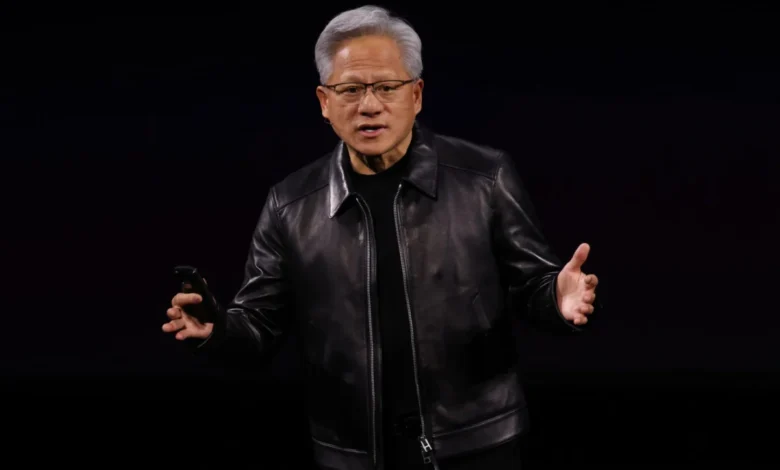
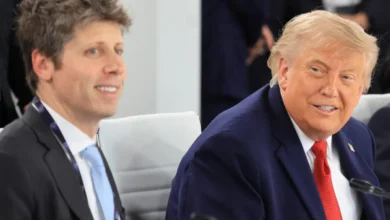
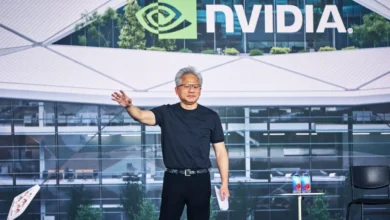
The landscape of global technology and geopolitics shifted dramatically on November 23, 2026, when Jensen Huang was reinstated as the Chief Executive Officer of Nvidia, just eleven days after his abrupt resignation. The decision, which triggered a near $1 trillion surge in market value, has placed the semiconductor giant at the epicenter of a high-stakes standoff between the White House and Congress. President Trump has claimed personal responsibility for the board’s reversal, stating, "I made the deal," and asserting that his intervention was pivotal in securing Huang’s return.
The reinstatement follows a tumultuous period for the world’s most valuable chipmaker. Huang had initially stepped down following reports of an extramarital affair with Alice Huang, a former executive at Singapore-based Megaspeed. While the two are not related, the association drew immediate attention from U.S. intelligence agencies due to Megaspeed’s alleged ties to the Chinese Ministry of State Security. The intersection of corporate leadership, personal scandal, and national security policy has created a complex web that Washington is now struggling to untangle.
A Chronology of the Crisis and Reinstatement
The sequence of events leading to the current legislative standoff began in early November 2026. Following the revelation of the affair and the subsequent security concerns regarding Megaspeed, Nvidia’s board, led by Harvey Jones, initially indicated that the company would transition to new leadership.
- November 12, 2026: Jensen Huang resigns as CEO of Nvidia following internal and external pressure regarding his relationship with Alice Huang and the potential compromise of company data.
- November 15, 2026: Reports surface detailing Megaspeed’s history of alleged chip diversion to Chinese military-linked entities, validating concerns previously raised by short-seller Culper Research.
- November 18–22, 2026: President Trump engages in what he described as "direct and indirect" contact with Nvidia’s board members, publicly advocating for Huang’s reinstatement, citing the need for stability in the AI sector.
- November 23, 2026: The Nvidia board votes unanimously to reinstate Huang, citing "input from senior levels of the U.S. government" as a factor in their decision. Nvidia shares rally by more than 30%, the largest single-day gain for the stock since May 2003.
- December 1, 2026: Jensen Huang is scheduled to appear before a closed-door session of the House Intelligence, Foreign Affairs, and China select committees.
The Financial and Strategic Stakes
The financial reaction to Huang’s return highlights the market’s dependence on his specific leadership style and his aggressive pursuit of the Chinese market. As of late 2026, Nvidia remains the crown jewel of the Fortune 500, holding a dominant position in the production of high-end AI processors. For investors, the return of the man who built the modern AI infrastructure is a signal of business continuity. However, for lawmakers, that same business continuity represents a potential liability.
The core of the congressional inquiry lies in the "H200 question." In January 2026, Huang successfully lobbied the Trump administration to permit the export of H200 chips to China, provided they passed a rigorous, independent third-party review. Despite this, national security officials have frequently expressed frustration with the oversight mechanisms currently in place. The argument presented by critics, including Senate Minority Leader Chuck Schumer and Senator Elizabeth Warren, is that the commercial interests of Nvidia cannot take precedence over the strategic necessity of denying the Chinese military access to cutting-edge computational power.
Intelligence and Allegations: The Alice Huang Factor
A critical point of contention for the upcoming December hearings is the nature of the relationship between Jensen Huang and Alice Huang. While the FBI has reportedly assessed that there is no definitive evidence proving Alice Huang is an official asset of Chinese intelligence, the lack of a "smoking gun" has not assuaged the concerns of the Senate Foreign Relations Committee.
The investigation is not merely into the affair, but into the potential for "coercive leverage." If the Chinese Ministry of State Security used the connection to gain insight into Nvidia’s supply chain or future chip architectures, the implications for U.S. national security would be profound. Megaspeed has vehemently denied any wrongdoing, maintaining that its operations are strictly commercial and compliant with international law. However, the recurring allegations that Megaspeed acted as a conduit for diverted chips have forced the Department of Commerce to reconsider its licensing protocols.
Official Responses and Legislative Oversight
The response from Capitol Hill has been one of skepticism, bordering on hostility. Senator Chris Coons has described the situation as an "insane relationship between the Trump Administration, Chinese spies, and AI billionaires," signaling that the Foreign Relations Committee will seek to uncover the full extent of the executive branch’s involvement in the board’s decision-making process.
Commerce Secretary Howard Lutnick is expected to face intense questioning during his scheduled testimony before the Senate Banking Committee. Chairman Tim Scott has framed the upcoming public hearing as a fundamental test of the U.S. government’s ability to enforce export controls without being swayed by corporate lobbying or presidential interference. The legislative push, which involves bipartisan support for tighter tracking of sensitive chips, reflects a growing consensus that the era of "business as usual" with China is coming to an end.
The Economic Reality of Decoupling
Beyond the political theater, there exists a stark economic reality: the global semiconductor supply chain is remarkably rigid. A report from the Federal Reserve in early 2025 noted that the semiconductor value chain is characterized by "extremely low substitutability," largely due to the massive capital expenditures and specialized human capital required to sustain production.
While China has poured billions into its "Made in China 2025" initiative, the Fed note highlights a critical weakness: while China leads the world in the volume of legacy chip production, it remains effectively incapable of producing the high-end chips required for advanced AI training. This reliance on U.S.-designed, high-end silicon is the primary leverage the United States holds. The central question for lawmakers is whether restricting these exports will effectively kneecap China’s military-AI aspirations or simply accelerate their drive toward total domestic self-sufficiency.
Future Implications and Policy Directions
The upcoming hearings in December are expected to be a watershed moment for U.S. technology policy. If Congress determines that the reinstatement of Jensen Huang was facilitated by an administration that prioritized market stability over security, the result could be a sweeping overhaul of how the U.S. monitors its most strategic corporations.
There is also the potential for new, more stringent export controls that move beyond simple licensing. Proposals currently being debated include mandatory "end-use monitoring" of all high-end chips, which would require Nvidia to implement tracking technology within its hardware to ensure that chips do not end up in the hands of prohibited foreign entities.
Whether these measures are enacted will depend on the testimony of Huang himself and the willingness of the Trump administration to defend its role in the boardroom negotiations. As it stands, the return of Jensen Huang has provided short-term relief to Wall Street, but it has opened a long-term, systemic challenge for the U.S. government: how to balance the dominance of a private-sector titan with the immutable requirements of national sovereignty in an age of artificial intelligence. The December hearings will likely set the tone for the next four years of U.S.-China technological competition, determining whether the rules governing the most important industry in the world remain flexible, or become, for the first time, truly ironclad.