The Legendary 25s: How Three 2001 Masterpieces Redefined the Trajectory of Modern Hindi Cinema

The year 2001 serves as a watershed moment in the annals of Indian film history. It was a period defined by a quiet, yet seismic, shift in the creative landscape of Hindi-language cinema. While the industry was traditionally dominated by the "potboiler" template—a formulaic mix of high-stakes melodrama, song-and-dance spectacles, and archetypal characters—three directors dared to deviate from the established norm. Farhan Akhtar’s Dil Chahta Hai, Ashutosh Gowariker’s Lagaan, and Madhur Bhandarkar’s Chandni Bar did more than merely achieve critical acclaim; they dismantled the prevailing cinematic conventions and pioneered a new vocabulary for storytelling in Bollywood.
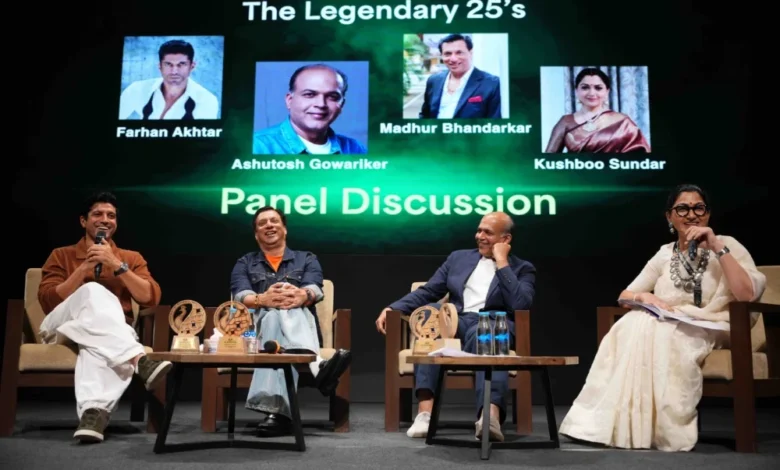
Twenty-five years later, the impact of these films remains profound. At the 57th International Film Festival of India (IFFI) in Goa, these visionary filmmakers convened for a special session titled "The Legendary 25s," moderated by actor and producer Khushboo Sundar. The discussion provided an intimate look at the risks, rejections, and creative convictions that birthed these enduring classics.
The Catalyst for Change: A Shift in Narrative Direction
The common thread linking these three filmmakers was a shared disillusionment with the rigid expectations of the commercial industry. For Gowariker and Bhandarkar, the decision to pursue unconventional paths followed professional setbacks. Gowariker, who currently serves as the IFFI festival director, recalled the period following his first two directorial ventures, which failed to make a mark at the box office.
"My next film had to be something I believed in," Gowariker remarked during the session. "It had to be something that I wanted to make first, and then I could hope to God that the audience would also like it." This philosophy of prioritizing internal creative integrity over market-tested formulas led to the genesis of Lagaan.
The concept was daring: a period drama set in the 19th-century British Raj, centered on a high-stakes cricket match between villagers and colonial officers. The premise was initially met with skepticism, most notably by lead actor Aamir Khan. However, the strength of the script—a meticulous blend of historical research and emotional resonance—eventually swayed the star. Khan’s eventual decision to produce and star in the film propelled Lagaan to an Academy Award nomination for Best Foreign Language Film, a rare feat that signaled to the global stage that Indian cinema was evolving.
Observations of the Underbelly: Bhandarkar’s Realism
While Gowariker looked to the past for inspiration, Madhur Bhandarkar turned his lens toward the stark, often uncomfortable realities of contemporary urban life. His film Chandni Bar was the product of six months of intensive field research in the dance bars of Mumbai.
"Even if, in retrospect, Chandni Bar had not done well at the box office, I would still be happy because this is the cinema which I wanted to make," Bhandarkar noted. The film, featuring an acclaimed performance by Tabu, did not merely entertain; it functioned as a societal mirror, exposing the exploitation and vulnerability inherent in the city’s margins.
Bhandarkar’s commitment to "social realism" established a blueprint for his subsequent works, including Page 3, Corporate, and Fashion. By consistently placing complex, often flawed women at the center of his narratives, Bhandarkar challenged the patriarchal norms of Hindi cinema, proving that stories centered on female protagonists could be both commercially viable and intellectually rigorous.
Redefining Urban Youth: The Legacy of Dil Chahta Hai
If Lagaan brought grit to the epic, and Chandni Bar brought empathy to the underworld, Farhan Akhtar’s Dil Chahta Hai revolutionized the depiction of modern urban friendship. For a generation of viewers, the film was a revelation. It moved away from the "cheesy" or overly dramatic tropes of the 1980s and 1990s, offering instead a nuanced, recognizable version of companionship among young men.
Akhtar noted that his perspective was heavily influenced by the films of his youth, particularly Mansoor Khan’s Qayamat Se Qayamat Tak. When asked about the controversial subplot involving an age-gap romance between characters played by Akshaye Khanna and Dimple Kapadia, Akhtar remained candid. He admitted that the narrative choice was rooted in personal experience, citing the "honest truth" of his own adolescent crushes on older women. By weaving personal vulnerability into the script, Akhtar ensured that the film felt authentic to the audience, effectively shifting the tone of Bollywood’s coming-of-age genre for the next two decades.
Industry Evolution and the Metrics of Success
A central theme of the IFFI session was the evolving nature of success in the film industry. The participants critiqued the modern obsession with opening-weekend figures, arguing that such metrics are reductive and often fail to capture the true cultural value of a film.
"Now the conversation is that I heard you had a great weekend," Akhtar said, highlighting a shift away from qualitative analysis. "But I would rather know what you thought of the film."
Gowariker echoed this sentiment, describing every new project as a "reset to zero." He argued that comparing films across different eras—from the days of "silver jubilees" and 100-day theatrical runs to the current era of streaming and rapid-fire box office reporting—is an exercise in futility. The panelists emphasized that a screenplay is a "living, breathing thing," subject to constant evolution during the production and editing phases. They suggested that the longevity of a film is determined not by its initial gross, but by its capacity to resonate with audiences across generations.
The Future of Filmmaking: AI and the Human Touch
As the industry grapples with the integration of Artificial Intelligence and advanced Visual Effects (VFX), the filmmakers shared a cautious but optimistic outlook. Bhandarkar, while acknowledging the utility of modern tools, maintained that technology should never be the primary driver of a story.
"AI and VFX can certainly enhance the visual experience and expand the possibilities of filmmaking, but they can never replace the human touch," Bhandarkar asserted. This philosophy aligns with the broader consensus among the session’s panelists: that technology is an instrument, but the heart of cinema remains the director’s unique vision and the actor’s ability to communicate silence and subtext. As Gowariker noted, "The true performance lies in the pauses where you’re not saying anything."
Implications for Contemporary Cinema
The legacy of the 2001 class is not merely historical; it continues to dictate the standards for independent and mainstream filmmakers alike. By proving that audiences were hungry for narratives that mirrored their own lives—whether in the history books, the dance bars, or the coffee shops of urban India—these directors opened the doors for the "New Bollywood" wave that has since dominated the 21st century.
For aspiring filmmakers, the lesson from the 57th IFFI is clear: original storytelling requires a departure from safe, bankable tropes. Farhan Akhtar’s advice to the younger generation remains a cornerstone of creative success: "Draw on your own unique experiences."
As the industry looks toward the next twenty-five years, the films of 2001 serve as a reminder that the most enduring art is that which is made with the courage to fail. When asked if they would change anything about each other’s work, the filmmakers were largely hesitant to touch the "classics." Gowariker, reflecting on his peers, noted that the difficulty of remaking such iconic films speaks to their perfection.
In conclusion, the session at IFFI did not just celebrate a nostalgic milestone; it reinforced the necessity of artistic risk. The cinematic landscape of India is richer because these three directors chose to challenge the status quo, and their enduring influence ensures that the "Legendary 25s" will continue to serve as a benchmark for quality, integrity, and innovation in the years to come. Through their commitment to their own vision, they transformed the industry, proving that when the filmmaker is true to the story, the audience will eventually follow.
Related posts: