Tesla Trims Falling Like Flies, Hyundai 2027 Lineup, and BYD’s Ultra-Luxury Rolls-Royce Competitor Headline This Week’s Sustainable Transport News


The global electric vehicle (EV) market is currently undergoing a period of profound structural transformation, characterized by aggressive pricing maneuvers, long-term strategic product roadmaps, and fierce competition at both ends of the economic spectrum. In the latest installment of the Electrek Podcast, industry analysts and automotive journalists dissect these sweeping shifts, focusing heavily on Tesla’s ongoing simplification of its vehicle trim lineups, Hyundai Motor Group’s ambitious future product strategy slated for 2027, and BYD’s bold foray into the ultra-luxury segment with a vehicle drawing direct comparisons to British marque Rolls-Royce.
As regulatory pressures mount, supply chains stabilize, and consumer demands shift toward either maximum affordability or uncompromising luxury, legacy automakers and EV pioneers alike are being forced to adapt. This week’s discussions provide a comprehensive window into how major industry players are positioning themselves for the latter half of the decade.
Tesla Trims Falling Like Flies: Rationalizing Production and Pricing
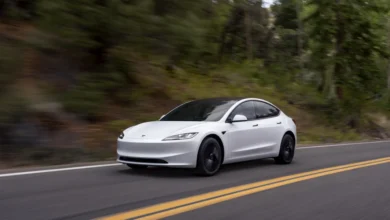
The narrative surrounding Tesla over the past several quarters has been defined largely by margin pressures, shifting global demand, and a relentless push toward manufacturing efficiency. One of the most prominent trends discussed in the automotive sector is Tesla’s systematic pruning of its vehicle trim hierarchy—a phenomenon colloquially described in the industry as trims "falling like flies."
Over recent years, Tesla has frequently altered its lineup across the Model 3, Model Y, Model S, and Model X families. Variants such as the Standard Range Rear-Wheel Drive editions, specific long-range configurations, and performance tiers have routinely appeared, vanished, and reappeared depending on battery chemistry availability, regulatory credit qualifications, and regional pricing strategies. For instance, the introduction of the standard-range variants equipped with Lithium Iron Phosphate (LFP) cells versus nickel-cobalt-aluminum (NCA) chemistries has continually shifted the goalposts for consumers trying to navigate the purchase process.

This trimming of options is not merely an exercise in catalog simplification; it is a calculated operational strategy. By reducing the number of distinct configurations coming down the assembly line, Tesla can significantly streamline its manufacturing footprint, lower tooling costs, and maximize throughput at gigafactories in Fremont, Austin, Berlin, and Shanghai. Fewer variables on the factory floor translate directly to higher production efficiency and reduced unit costs—a crucial metric as price wars initiated by Tesla globally continue to compress operating margins.
However, this strategy carries distinct trade-offs. Consumers looking for highly specific battery capacities, drivetrain layouts, or interior packages frequently find their choices limited. Industry observers note that while trimming variants helps Tesla maintain volume and manage supply chain bottlenecks, it risks alienating buyers who desire greater customization. Furthermore, frequent price adjustments and trim cancellations can impact residual values for existing owners, creating a complex psychological dynamic within the secondary EV market.
Hyundai’s 2027 Lineup: A Glimpse into the Next Generation of Mass-Market Electrification
While Tesla focuses on streamlining its immediate production realities, South Korea’s Hyundai Motor Group is actively looking toward the medium-term horizon with an aggressive product offensive. Detailed insights into Hyundai’s 2027 lineup reveal a comprehensive roadmap designed to solidify the conglomerate’s position as a dominant global force in sustainable mobility.
Hyundai, alongside its sister brand Kia and luxury arm Genesis, has capitalized heavily on the modular Electric Global Modular Platform (E-GMP). Vehicles such as the Hyundai Ioniq 5 and Ioniq 6 have garnered critical acclaim and strong market share by offering 800-volt charging architecture, vehicle-to-load (V2L) capabilities, and distinctive design language. Looking toward 2027, the automaker’s product strategy involves expanding this technological advantage into new vehicle segments, including compact urban crossovers, three-row family SUVs, and next-generation commercial utility vehicles.
A central pillar of Hyundai’s 2027 roadmap is the integration of advanced software-defined vehicle (SDV) architectures. The company has committed billions of dollars toward developing proprietary operating systems that will enable over-the-air (OTA) updates, enhanced autonomous driving capabilities, and personalized in-cabin digital ecosystems. This focus on software monetization and user experience represents a direct challenge to both traditional luxury competitors and software-first disruptors like Tesla and Rivian.

Moreover, Hyundai is preparing to introduce its next-generation battery technologies by the middle of the decade. This includes scaling up production of high-nickel NCM (nickel-cobalt-manganese) cells, exploring solid-state battery commercialization timelines, and expanding more affordable LFP options for entry-level models. By diversifying its battery supply chain and manufacturing partnerships across North America, Europe, and Asia, Hyundai aims to navigate evolving geopolitical trade policies—such as the Inflation Reduction Act in the United States—ensuring its vehicles remain eligible for lucrative consumer tax credits.
BYD’s Ultra-Luxury Ambitions: The Arrival of the Rolls-Royce Competitor
At the opposite end of the automotive spectrum, Chinese EV giant BYD (Build Your Dreams) is making waves by moving aggressively upscale. Known primarily for its high-volume, cost-effective battery electric vehicles and plug-in hybrids (PHEVs) that dominate the domestic Chinese market and are rapidly expanding across Europe, Latin America, and Southeast Asia, BYD is now challenging the most prestigious names in European automotive engineering.
The centerpiece of this strategy is the rollout of ultra-luxury vehicles under specialized sub-brands like Yangwang. Often dubbed in media circles as "BYD’s Rolls-Royce," vehicles such as the Yangwang U8 luxury SUV and Yangwang U9 supercar represent a massive technological and branding leap for a company that started as a battery manufacturer.
The Yangwang U8, for example, is a massive, highly capable off-road luxury SUV equipped with advanced quad-motor independent torque vectoring—an architecture that allows the vehicle to perform a 360-degree "tank turn" and maintain mobility even in the event of a tire blowout or water immersion via its emergency floatation mode. Priced well into the six-figure USD equivalent bracket, these vehicles are engineered to compete directly with traditional elite marques like Bentley, Range Rover, and Rolls-Royce, but powered entirely by advanced new-energy vehicle (NEV) propulsion systems.
This move upmarket signals a profound maturation of the Chinese automotive industry. Historically viewed as producers of affordable, low-margin commuter cars, companies like BYD are proving that they can master high-end craftsmanship, ultra-advanced chassis dynamics, and proprietary powertrain technology. The implications for legacy luxury European manufacturers are significant; as Chinese brands successfully conquer the ultra-luxury segment at home and expand these offerings globally, traditional European dominance in the high-end vehicle market faces an unprecedented challenge.

Broader Industry Implications and Economic Context
The convergence of these three distinct stories—Tesla’s trim consolidation, Hyundai’s 2027 software and hardware roadmap, and BYD’s luxury push—illustrates the multifaceted nature of the modern automotive transition. The global market is no longer in a simple phase of early adoption; it is a mature, fiercely contested battleground where survival requires mastery across multiple fronts simultaneously.
- Margin Defense vs. Market Share: Tesla’s trim adjustments reflect the harsh economic reality of maintaining profitability amid macroeconomic uncertainty and high interest rates. Automakers must carefully balance production simplicity with consumer choice to protect bottom lines.
- The Software Imperative: Hyundai’s focus on its 2027 lineup underscores that hardware alone is no longer sufficient. The transition to software-defined vehicles is redefining brand loyalty and creating new recurring revenue streams through digital services and advanced driver-assistance systems (ADAS).
- The Erosion of Traditional Luxury: BYD’s entry into the ultra-luxury space demonstrates that electrification is a great equalizer. Legacy prestige, built over a century of internal combustion engine development, provides no inherent immunity against well-capitalized new-energy competitors offering superior performance, technology, and pricing power.
As these trends continue to unfold throughout the decade, consumers can expect a rapidly evolving marketplace characterized by greater technological sophistication, shifting brand hierarchies, and an increasingly competitive pricing landscape across all vehicle segments. Weekly discussions hosted by industry analysts via platforms like the Electrek Podcast will continue to track these pivotal developments as the global transition to sustainable transport accelerates.
Related posts: